Are We Still Reading the World with an Outdated Map?
Sanctions, war, supply chains, and climate risk as signs of a failing judgment framework

Outdated Map is the central idea of this essay: an Outdated Map of efficiency, growth, and integration can no longer explain a world organised around survival, control, continuity, sanctions, and supply-chain resilience.
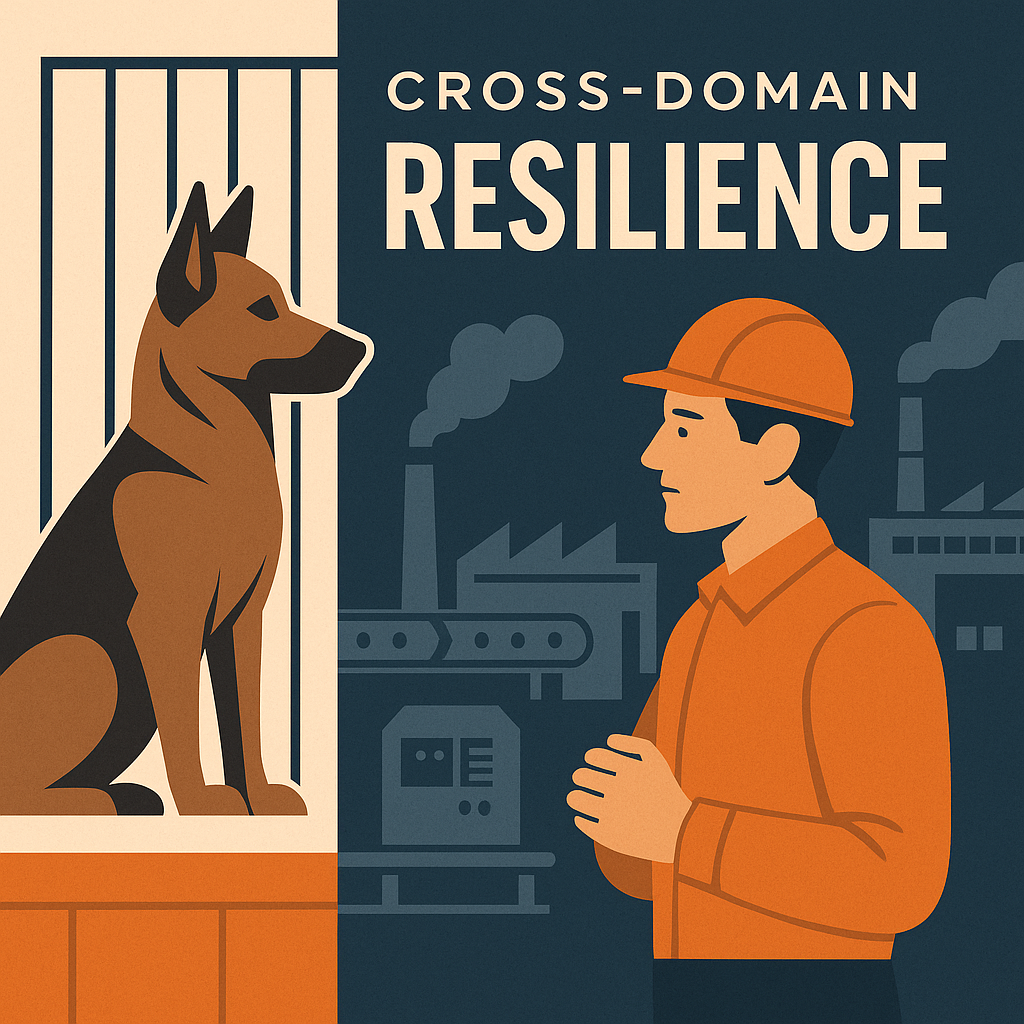
Position of this essay within NelsonChou.com: this article belongs to the broader line of cultural systems observation and judgment infrastructure. It is not merely a commentary on the Russia–Ukraine war, sanctions, or the Taiwan Strait. It uses these events to explain a deeper shift: when the logic of the world moves from efficiency, growth, and integration toward survival, control, and long-term exhaustion, individuals and institutions must re-examine the map they use to make judgments. Related themes include semantic decision infrastructure, semantic identity governance, structural risks in high-value mobility, agricultural supply chain resilience, and resilience in the field. This essay is part of the Cross-Domain Action & Resilience series. This piece does not represent any political position, and is offered for understanding and reference only.
An outdated worldview map is a judgment framework — one built primarily around efficiency, growth, and integration — that once accurately described global behavior but no longer captures a terrain increasingly organized around survival, control, and continuity, as seen in war, sanctions, CRINK-style pressure networks, and supply chain and climate risk.
Outdated Map|The fog is not just disorder
In recent years, many people have carried a feeling they cannot quite put into words.
It is not because one particular piece of news is too difficult to understand. It is not because a single crisis suddenly destroyed our ability to judge. It is a slower kind of confusion — a feeling that something is wrong, yet we cannot clearly identify where the problem begins.
The world has not stopped moving. If anything, there is more information than before. Options have not disappeared. In theory, every person now has access to more viewpoints, tools, and resources than previous generations ever did.
And yet, the more information we have, the more uneasy many people seem to become.
Paths that once looked reliable now feel unstable. Choices that were once considered safe no longer guarantee safety. The answers once given by elders, schools, media, or successful people still sound reasonable, but when placed inside the current world, they often seem to miss one crucial layer.
Many people assume this is personal anxiety.
Maybe I am not keeping up. Maybe this is a generational gap. Maybe I am not capable enough. Maybe I am not working hard enough.
But if you listen carefully, this confusion is not isolated. It appears across different ages, professions, political views, and social positions. It also appears among people who are rational, hardworking, informed, and willing to learn.
We did not suddenly become ignorant. We are losing a familiar sense of direction.
The internal guide that once told us, “If you follow this path, you will probably be fine,” is slowly losing its power. The problem is not that we no longer work, care, or think. The problem is that we are still trying to use a framework that worked in the past to navigate a world whose operating logic has changed.
This kind of misalignment feels like standing in fog.
It is not total blindness. You can still see something. But distance becomes unclear. Direction becomes unstable. You know there is a road ahead, but you are no longer sure whether you should continue forward. You know things are changing, but you cannot tell whether this is short-term turbulence or a genuine shift in terrain.
This essay does not rush to provide an answer.
It begins by asking one question: what if the problem is not that the world has suddenly become too chaotic, but that the map we use to understand the world has quietly expired?
The greatest danger of an old map is not that it was once wrong. It is that it was once highly effective — so effective that we forgot to ask whether it still matches the terrain.
When “common sense” fails, we often blame ourselves first
Many people do not first sense that something is wrong while reading international news. They sense it in ordinary life.
Some judgments that once felt like common sense begin to fail again and again. Paths once described as safe no longer feel safe. Choices once seen as stable may now slow people down, cause missed opportunities, or allow risks to accumulate silently.
The most difficult part is that most people do not first question the judgment system itself. They question themselves.
Am I not working hard enough? Am I not smart enough? Did I fail to catch the trend? Did I start too late?
So people study harder, chase faster, and switch strategies more often. But running faster does not always reduce the unease. Sometimes it makes the unease stronger.
Because the real problem may not be individual failure. It may be that the worldview we have internalized as “obvious” can no longer correspond accurately to reality.
For a long time, many of us believed that although the world was complex, it still had a broadly predictable direction. If you stood on the “right side,” followed the paths taken by successful people, and chose the more stable institutions and markets, you could generally avoid disastrous outcomes.
This belief was not baseless.
For a period of time, it worked. It shaped an entire generation’s trust in education, careers, assets, international order, and the future. It taught people that if they worked hard, accumulated steadily, and followed the rules, the world might still be unfair, but there was at least a path forward.
But that trust is now loosening.
Not because the world suddenly went mad, but because the operating logic of the world has been slowly shifting from the system we know into another structure we have not yet fully understood.
Old methods are not entirely wrong, but they begin to fail at critical moments. Old judgments are not worthless, but they can no longer support long-term decisions on their own. The old world did not disappear overnight, but it is no longer the only reality.
So we find ourselves in an awkward position:
We sense that something is wrong, but cannot name it. We know we cannot simply continue as before, but do not know what to replace it with. We see the old path loosening, but still use old standards to blame ourselves.
This condition can easily be mistaken for personal failure. But if we raise the frame a little, it becomes visible as a collective experience: an entire generation is trying to read a changed terrain with the same old map.
What needs examination may not be whether we are good enough. It may be the map of the world we have relied on for years, but rarely stopped to inspect.
An old map is not necessarily a false memory. It may simply be an expired tool.
Because it once worked, people can easily mistake it for something that will always work.
When the external terrain changes, the first thing to update is not effort, but the framework of judgment.
The old map: efficiency, growth, and integration
If we had to compress the dominant worldview of the past three decades into a few words, they would probably be: efficiency, growth, and integration.
The more open the market, the more efficient the allocation of resources. The more globalized the supply chain, the lower the cost. The freer the flow of finance, the better capital can find opportunities. The more similar institutions become, the easier conflict is to manage. The more economically interdependent countries are, the less rational war becomes.
This map became especially persuasive after the Cold War.
It was not only an economic model. It was also a civilizational narrative. It led many people to believe that the world would gradually converge toward one direction: more open markets, more transparent institutions, freer information, more diverse choices, and more manageable conflict.
Within this map, “rationality” was often understood as the pursuit of higher efficiency, lower cost, faster growth, and deeper integration.
So when a country chooses to reduce efficiency, increase costs, cut external connections, or even sacrifice economic growth, the old map tends to give an immediate judgment: this is irrational.
But the problem begins right there.
What if the actor is not pursuing maximum efficiency, but regime survival? What if the priority is not growth, but control? What if it is willing to accept inefficiency in order to reduce vulnerability to external disruption? What if it does understand costs, but places those costs inside a different order of survival?
At that moment, the old map begins to misread the terrain.
It can still explain part of what is happening, but it misses the actual driver at critical points. It may overestimate how quickly economic pain becomes political pressure. It may underestimate the ability of certain systems to endure long-term exhaustion.
This is one reason many international judgments in recent years have repeatedly missed the mark.
We saw war break out, but could not accurately judge how it would end. We saw sanctions intensify layer by layer, but could not clearly determine whom they were weakening. We saw supply chains forced to reorganize, but could not distinguish which fractures were temporary and which were irreversible. We saw energy, food, shipping, and military production return as national security issues, while still trying to understand them mainly through price and efficiency.
The problem is not that the old map is useless.
The problem is that the old map is designed for a world that places efficiency, growth, and integration near the top of its hierarchy. When some countries, regimes, or societies begin placing survival, control, and continuity ahead of those values, the old tools of judgment begin to distort reality.
When you use “efficiency” to read a system seeking “survival,” or “cost” to measure a regime seeking “control,” the result is not simply a wrong answer. It is a misframed question.
The new terrain: survival, control, and continuity
The new terrain is not without logic.
Its logic is simply different from the one we are used to.
If the old map is built around efficiency, growth, and integration, then the increasingly visible keywords of the new terrain are survival, control, and continuity.
This does not mean that all countries are moving toward the same model. Nor does it mean that markets, institutions, and free flows no longer matter. The real change is this: as the world enters a state of prolonged pressure, many actors are reordering their priorities.
Energy is no longer judged only by price, but by whether it can be obtained over time. Food is no longer judged only by the lowest cost, but by the lowest risk of disruption. Supply chains no longer seek only maximum efficiency, but ask whether basic functions can continue under conflict. Population is no longer only labor, but a system resource that can be mobilized, managed, and made to absorb pressure. Information is no longer merely a tool of circulation; it has become infrastructure for controlling social rhythm, managing collective emotion, and maintaining narrative stability.
Within this terrain, many choices that appear irrational begin to have another explanation.
Keeping inefficient industries may not only be backwardness. It may preserve minimum production capacity during crisis. Maintaining redundant logistics routes may not only be waste. It may reduce dependence on a single route. Accepting slower growth may not only be policy failure. It may reflect a decision to place control above growth. Forcing society to absorb long-term pressure may not mean decision-makers failed to calculate. It may mean they are not calculating individual comfort, but systemic non-collapse.
Within the value system many of us know, these choices may appear crude, rigid, or even brutal.
But if we only explain them by saying “this is unreasonable,” we miss the more important question: under the actor’s own structure and constraints, do these choices extend its survival time?
Understanding does not mean approval. Seeing the logic does not mean taking the same side.
This distinction is essential.
The real risk is not that we disagree with certain regimes or choices. The real risk is that we cannot understand why they exist at all. Once we can only explain a structure through morality, values, or emotion, our predictions become unstable.
We keep assuming, “This cannot last.” Yet reality repeatedly shows that it does not collapse according to our expectations.
That is when anxiety appears.
Not because we do not know what happened, but because the turning point we expected keeps failing to arrive.
We wait for economic pressure to ferment. We wait for internal backlash to emerge. We wait for rational choice to defeat irrationality. We wait for the world to return to the rhythm we know.
But while we are waiting for those turning points, the forces that are actually restructuring the world may already be moving elsewhere.
War becomes prolonged. Sanctions become long-term exhaustion. Supply chains become regionalized and securitized. Energy and food return to the framework of national security. Climate risk shifts from environmental concern to questions of distribution and governance.
This is why the new terrain feels unsettling.
It is not completely disorderly. Another form of order is emerging. But that order may not match our expectations, and it may not leave a comfortable position for everyone.
The world has not become impossible to understand. We are still using the ruler of short-term reaction to measure a world of long-term exhaustion.
What the Russia–Ukraine war exposed is not only military conflict, but the fracture of old globalization assumptions
Once you realize that the map may have expired, many events that once seemed scattered and difficult to interpret begin to align.
At that point, war is no longer only war.
It is not only military conflict. It is not only a territorial dispute. It is not only ideological confrontation. It is a process through which an entire structure is forced into visibility.
The Russia–Ukraine war has made the world uneasy not only because it happened in Europe, and not only because it involves the security relationship among the United States, the European Union, Russia, and NATO. At a deeper level, it broke one of the long-standing assumptions of the post–Cold War era.
That assumption was this: a highly integrated global economy would automatically restrain large-scale war.
For a long time, many people believed that the more integrated markets became, the harder it would be for states to bear the cost of conflict. The more complex supply chains became, the less willing countries would be to accept the price of full confrontation. When energy, finance, technology, and trade were deeply intertwined, war would become too costly to choose.
This assumption was not meaningless.
For a period of time, it did reduce certain incentives for conflict. It also made globalization look like more than an economic arrangement. It appeared to be a structure capable of stabilizing world order.
But the Russia–Ukraine war reminds us that economic integration does not automatically remove security anxiety. Nor does it automatically eliminate a regime’s pursuit of survival, control, and strategic depth.
After the war began, many people immediately asked:
Will sanctions make the other side unable to continue? Will energy pressure force a retreat? Will economic pain become internal political backlash?
These are reasonable questions. But they share the same underlying premise: when economic costs become high enough, political direction will be forced to change.
The problem is that this premise only applies to certain regimes, certain social structures, and certain mechanisms of political feedback.
If a regime has already included war, blockade, sanctions, and long-term exhaustion in its planning, it may not place “restoring efficiency” at the top of its priorities. It may care more about how to make society absorb pressure, how to maintain resource distribution, how to compress dissent, and how to translate external pressure into internal mobilization.
This is not a defense of war.
It is a recognition of a more uncomfortable fact: when the world enters a period of structural transition, many actions have already moved beyond the cost-benefit model we are used to.
In this context, war is no longer a single event. It becomes a stress field that tests the resilience of global order.
It tests energy supply. It tests food prices. It tests military production capacity. It tests financial sanctions. It tests diplomatic alignment. It tests social endurance. It also tests whether the map each observer is using can still describe the terrain.
If you treat war only as an “event,” the world will appear to fall into disorder again and again.
But if you treat it as a “signal,” you begin to see something else: some orders are retreating, some orders are trying to stand, and some countries no longer assume they will always remain inside the same globalization system.
What the Russia–Ukraine war exposed is not only a security crisis. It exposed the loosening of a basic post–Cold War globalization map.
Sanctions are not useless. We often miscalculate their time scale.
Once we understand that different systems arrange survival priorities differently, many confusing events become less like isolated news and more like structural outcomes.
One of the most frequently misread tools is sanctions.
In the postwar Western experience, sanctions are a highly modern instrument. They seem more controllable than direct military confrontation, yet more forceful than diplomatic condemnation alone. Through finance, technology, energy, trade, shipping, insurance, and personal asset restrictions, sanctions can impose pressure on a target state.
But this tool often carries several assumptions.
First, economic pain will quickly become political pressure. Second, social dissatisfaction can effectively move upward toward the decision-making core. Third, the power center will choose pain relief before endurance. Fourth, the system will eventually return to a path of higher efficiency, lower cost, and lower risk.
These assumptions have logic in systems where markets and electoral feedback are deeply connected.
But they are not universal.
When sanctions encounter a highly closed regime with controlled information, compressed channels of political feedback, and a long-standing habit of planning for worst-case scenarios, effects do not unfold according to the timeline familiar to outsiders.
Sanctions are not without effect. They increase costs. They restrict access to technology. They reshape trade routes. They force capital, energy, components, and logistics to reorganize.
But these effects do not necessarily become rapid political reversal.
This is where misunderstanding most often begins.
We often imagine sanctions as a tool that produces visible results quickly: pressure rises, pain spreads, internal backlash appears, and decisions change.
But for certain regimes, sanctions are not an unexpected accident. They are part of the assumed environment. These regimes may already be prepared to use high inventories, low-efficiency buffers, alternative markets, informal financial routes, third-party trade, internal propaganda, and social control to extend their endurance.
In other words, sanctions may not have missed the target. They may have hit a part of the system that had already been prepared to absorb pain.
What we miscalculate is often not the force, but the time scale.
When sanctions are designed as tools to produce fast political effects, but meet a regime willing to stretch time, distribute pain, transfer costs, and rewrite external pressure into internal narrative, sanctions no longer function as a decisive strike. They become a long-term endurance test.
This also explains why sanctions often look forceful in the early stage, then become more complex in the middle and later stages.
They may weaken the target state’s long-term development capacity, but not necessarily change its strategic path immediately. They may restrict access to advanced technology, while also pushing alternative supply networks to emerge. They may cut off formal markets, while expanding gray trade and third-party nodes. They may create economic pressure, while also being transformed by the ruling core into a narrative of external hostility.
For this reason, the question should not only be: do sanctions work?
The more precise questions are: on what time scale should sanctions be evaluated? Are sanctions designed to change short-term behavior, long-term capacity, or political choice? Who ultimately absorbs the cost of sanctions? Could sanctions also accelerate the formation of alternative orders?
These questions matter more than declaring sanctions simply “effective” or “ineffective.”
Because when the world enters a state of long-term exhaustion, the result is often not determined by who looks stronger in the first round. It is determined by who can maintain basic functions as costs continue to accumulate.
Sanctions do have effects. But if we imagine them as a button that quickly forces regime reversal, we overestimate short-term impact and underestimate long-term reorganization.
CRINK is not a stable alliance. It is a complementary network formed under pressure.
When sanctions, war, energy pressure, and supply chain pressure rise at the same time, another phenomenon becomes clearer: states that are excluded, sanctioned, isolated, or in tension with the Western-led order do not necessarily absorb pressure alone.
They look for one another.
The group often discussed in recent years as CRINK — China, Russia, Iran, and North Korea — is one example of this pattern.
But the term must be used carefully.
CRINK should not be simplified into a stable, formal, value-aligned new alliance. It is not another fully formed version of NATO. It should not be understood as a structure in which all members fully trust one another, share highly aligned interests, or pursue identical strategic goals.
A more precise description is this: it is a transactional, pressure-based, partially complementary network formed under external pressure.
These states have contradictions, distrust, and mutual instrumental use. Yet in a world of long-term exhaustion, they may still become complementary in specific areas because they face similar types of external pressure.
Energy can become complementary. Food can become complementary. Military materials can become complementary. Diplomatic positions can become complementary. Experience under sanctions can become complementary. Alternative technological pathways can become complementary. Narratives and propaganda can also become complementary.
This is not because they share the same values. It is because they are answering similar questions:
If the original global market is no longer reliable, where can we find alternative buyers? If finance, technology, and logistics are restricted, how do we maintain minimum operations? If diplomatic isolation deepens, how do we avoid absorbing all pressure alone? If conflict becomes long-term exhaustion, how do we extend strategic depth?
In this condition, complementarity does not require trust. Cooperation does not require alliance. If actors can reduce short-term pressure, extend endurance, and increase bargaining leverage, partial cooperation can emerge.
This is what the old map often fails to see.
If we judge only through “value alignment” or “formal alliance,” this kind of cooperation may appear too fragile to matter. But if we use the frame of a “pressure network,” the situation becomes less simple.
In a world of long-term exhaustion, stable institutional alliances remain important. But loose, transactional, low-trust complementary networks may also provide enough support at specific moments.
They may not create prosperity. They may not produce high efficiency. They may not build a stable long-term order.
But they may achieve something else: they may make participants less likely to be individually crushed.
This point matters for understanding the contemporary world.
The future international structure may not be as simple as “democracies versus authoritarian states,” nor as flat as “the West versus the non-West.” It may increasingly appear as a layered system of multiple centers, multiple nodes, and multiple transactional logics.
Some cooperation will be public. Some will be gray. Some will exist only in specific commodities, technologies, or strategic needs. Some will be unstable, yet still strong enough to alter the distribution of pressure at key moments.
If we wait only for a fully formalized, treaty-based, clearly bounded new bloc to appear, we may miss informal structures that are already operating.
The key question about CRINK is not simply “Is it an alliance?” It is whether, under long-term pressure, these actors can form a complementary network that extends their endurance.
Climate, food, energy, and supply chains: a world of long-term exhaustion is taking shape
If we pull the frame back further, we can see that the problem has never been only one war, one round of sanctions, or one group of countries.
The deeper change is that the world’s understanding of “time” and “security” is splitting.
For the past three decades, the mainstream world operated within a compressed time frame.
Efficiency, returns, cycles, growth rates. Decisions were organized around one question: how long will it take to see results?
This was true for corporations. It was true for policy. It was true for financial markets. It even shaped how individuals expected life choices to work.
But now, another sense of time is returning to the stage.
If the key question is not “How fast?” but “How long can this hold?”, then how does a system survive?
This is not a slogan. It is a structural reordering.
Energy is no longer judged only by price, but by whether it can be obtained over time. Food is no longer judged only by the lowest cost, but by the lowest risk of disruption. Supply chains no longer ask only where production is cheapest, but where operations can continue under conflict, climate stress, port congestion, shipping disruption, export controls, or political pressure. Agriculture is no longer merely an industry. It is a junction of water, soil, climate, logistics, labor, and national resilience.
This shift does not occur only at the level of states. It also moves into the decisions of companies, families, and individuals.
In the past, we pursued the cheapest, fastest, and most efficient option. In the future, more and more decisions will be forced to include another question: if the worst-case scenario happens, can this system still hold?
This is why some arrangements that once looked heavy or inefficient on the old map are being reinterpreted.
Keeping local production capacity is not always just protectionism. Maintaining inventory is not always simply inefficiency. Diversifying supply sources is not always merely increased cost. Building backup routes is not always unnecessary redundancy. Investing in food, energy, water, and basic logistics is not necessarily old-industrial thinking.
In a world of long-term exhaustion, these may all be part of resilience.
Climate change becomes crucial here.
It is not only an environmental issue. It is a shared variable affecting food, water, energy demand, disease distribution, migration pressure, and infrastructure capacity. When climate instability overlaps with geopolitical pressure, many states no longer face only price fluctuation. They face distribution problems, governance problems, and questions of social endurance.
This makes the world resemble a long exhaustion process.
Not every day brings a dramatic crisis. Not every place collapses at the same time. Not every problem explodes immediately.
Instead, pressure accumulates layer by layer:
Energy becomes a little more expensive. Food becomes a little less stable. Shipping routes become a little longer. Insurance costs rise a little. Supply chains slow down a little. Extreme weather becomes more frequent. Social trust becomes thinner. Policy space becomes narrower.
Eventually, people realize that the world did not suddenly break. It became harder and harder to maintain.
That is the feature of a long-exhaustion world.
It is not as clear as a single disaster, but it steadily wears down judgment, institutional trust, and the sense of everyday security. It exhausts people not because every day is the end of the world, but because every decision now carries another layer of uncertainty cost.
At this point, the old map makes one of its most dangerous mistakes: it waits for the world to “return to normal.”
But perhaps what we need to acknowledge is this: some versions of normal will not return in their old form.
What we need next is not only faster information, and not only more positions. We need a judgment infrastructure that can keep recalibrating under long-term exhaustion.
It must see states, supply chains, climate, energy, food, social trust, and individual choices at the same time. It must distinguish short-term fluctuation from long-term terrain change. It must allow us to ask not only “Who is right and who is wrong?”, but also “Can this system still function?”
That is the central issue of this essay.
It is not about telling people to be pessimistic. It is not about telling people to accept disorder. It is about first admitting that if the world has entered a different time scale, we cannot keep standing at the starting line of a marathon with a sprinter’s strategy.
In a long-exhaustion world, the most important question is not who is most efficient, but who can maintain basic functions as pressure continues to accumulate.
Changing the question is not the same as changing sides
By this point, one thing becomes clearer.
Our confusion may not come from the world suddenly becoming more complex. It may come from the fact that we are still using outdated questions to read a reality that is changing shape.
For a long time, we were used to asking questions such as:
Is this reasonable? Is this efficient? Does this violate the rules we know? Will the market eventually correct this? Will the cost become too high for this to continue?
These questions were useful in the old world.
That was a relatively stable system, where rules were more predictable and globalization was still treated as the main axis of interpretation. On that map, efficiency, cost, growth, institutions, interdependence, and market feedback were indeed important tools for understanding the world.
But when the world enters a state of long-term exhaustion, supply chain reorganization, rising geopolitical tension, climate pressure, and overlapping multi-center orders, these questions are no longer enough.
Not because they are wrong. Because they are no longer the first questions that matter.
In the new structure, the first questions are often different:
Can this hold? Will this break the chain? Can this still operate under worst-case conditions? Will this make pressure easier for the system to control? Can this allow a system to survive a little longer?
If we remain at the level of asking, “Why would they do this?”, many actions may seem absurd, irrational, or even foolish.
But if we ask another question: within their own structure and constraints, is this a path that helps them survive?
Many actions suddenly become more understandable.
Understanding does not mean approval. Seeing the logic does not mean taking the same side. Explaining a structure does not mean defending it.
This distinction must be made clear.
When we discuss authoritarian systems, war, sanctions, long-term exhaustion, social control, and supply chain reorganization, it is easy to be pushed into immediate position-taking. But high-density judgment does not begin with position-taking. It begins with seeing how the structure works.
If a regime’s first goal is to maintain rule, rather than improve quality of life, its order of decisions will be different. If a state’s central anxiety is being contained, cut off, or weakened, its tolerance for cost will be different. If a society has long been trained to endure pressure, the speed at which pain becomes political backlash will also be different. If a supply chain shifts from lowest cost to lowest disruption risk, it will no longer operate according to the old efficiency model.
So the real risk is not that we disagree with certain systems or choices.
The real risk is that we cannot understand why they exist at all.
Once we can only explain a structure through morality, emotion, or an old value framework, our predictions become repeatedly unstable.
We assume, “This cannot last.” We assume, “Sanctions will quickly force the other side to retreat.” We assume, “Economic pain naturally becomes political backlash.” We assume, “Supply chains will eventually return to the lowest-cost model.” We assume, “The world will eventually return to the old normal.”
But reality may tell us again and again: it did not collapse according to our expectations, and it did not turn according to our timeline.
At that point, what needs to be updated is not necessarily our position. It is the question.
From “Is this reasonable?” to “Within what system is this reasonable?” From “Is this efficient?” to “What kind of risk is this trying to solve?” From “Will this succeed?” to “What kind of survival is this trying to extend?” From “Who is right and who is wrong?” to “Which map describes the terrain more accurately?”
This is not a retreat from values. It is an upgrade of judgment.
If a person cannot understand the survival logic of another system, even a morally correct position may still produce poor judgment about reality.
And in a world of long-term exhaustion, misjudgment itself becomes a risk.
Changing the question is not the same as changing sides. Mature judgment is the ability to see how a structure works even when one does not agree with it.
Changing direction is not rebellion. It may be the first step toward understanding the world again.
Sometimes, something strange happens.
When you suggest a path that is less mainstream but still reasonable, the first reaction from people around you is often not an evaluation of feasibility. It is confusion, hesitation, or immediate rejection.
Not because the path is impossible. Because it does not exist inside the direction they already assume.
At a recent dinner, I encountered this directly.
The topic turned to travel from Taiwan to South America. Almost everyone gave the same answer without hesitation:
Of course, you fly first to North America, then transfer to South America. What other route would there be?
The answer was delivered with such confidence that it sounded less like a common option and more like the only reasonable route.
Then I asked: why must we fly north first?
For a moment, the table went quiet.
I continued: if a trip already requires transfers, and probably more than one transfer, then should we not also compare routes that move south first, or enter South America through non-North American transfer points?
This does not mean one route is always better. Routes, fares, layover time, visa conditions, airline partnerships, seasons, and current flight availability all need to be checked.
But the real point is not which route is definitely correct.
The real point is this: why do many people fail to treat another direction as a serious option from the beginning?
Because we have already internalized an invisible assumption: the world’s transfer center is in the north, in the West, and in North America.
So all routes are automatically folded into the same direction.
When someone suggests another path, people do not first calculate distance, cost, time, and constraints. A feeling appears first: that feels strange. Isn’t something wrong with that?
This feeling of “wrongness” often does not come from reality. It comes from the model of the world inside our heads.
This reminds me of an old joke.
A delivery driver was changing a tire by the roadside and accidentally dropped all four lug nuts into a drain. He became anxious, imagining only expensive, time-consuming, and complicated solutions.
Then a person nearby, someone everyone had overlooked, offered a simple suggestion: take one lug nut from each of the other three tires, mount this tire first, and then drive slowly to a repair shop to replace the missing ones.
The driver was stunned.
It was a simple, low-cost, immediately workable solution. The issue was not that the solution was profound. The issue was that the anxious person had never thought from that direction.
What makes the joke meaningful is not who is smart and who is foolish.
It is this: what traps people is often not the problem itself, but the fact that they have excluded certain directions before thinking begins.
When we only allow the world to “look the way it is supposed to look,” we stop seeing structures that are already operating.
This is one of the most common mistakes we make when trying to understand the contemporary world.
The world may not be too chaotic. We may simply have marked certain directions as “not worth looking at” too early.
If we bring this perspective back to a larger scale — geopolitics, war, sanctions, supply chains, climate change, energy, and food security — we can see the same thing happening repeatedly.
The world has not stopped operating. It has begun moving in directions that we are unfamiliar with, and sometimes unwilling to acknowledge.
The purpose of this essay is not to make anyone immediately accept those directions. It is not to ask anyone to take a side.
It is only an invitation to do one thing: before trying to walk out of the fog, first check whether the map in your hand should have been updated long ago.
Sometimes, changing the direction from which we look at the world is not rebellion. It is how we make reality understandable again.
FAQ|Frequently Asked Questions
1. Why do many people feel that the world has become harder to understand?
Because many people are still using a post–Cold War globalization map to understand a world that is moving toward long-term exhaustion, multi-center order, and supply chain reorganization. The old map emphasized efficiency, growth, and integration. The new terrain increasingly emphasizes survival, control, resilience, and the lowest risk of disruption. When the terrain changes, familiar judgment frameworks begin to fail, and the world naturally appears more chaotic.
2. What does “an outdated map of the world” mean?
An outdated map does not mean that past views were completely wrong. It means that they once worked, but can no longer fully describe the current terrain. For example, if we use only market efficiency, lowest cost, global integration, and economic interdependence to understand war, sanctions, energy, food, and supply chains, we may overlook regime survival, political control, and the logic of long-term exhaustion.
3. Why have sanctions not produced the rapid effects many people expected?
Sanctions are not without effect. The problem is that their effects are often evaluated on the wrong time scale. Sanctions can increase costs, restrict technological access, reshape trade routes, and weaken long-term capacity. But they do not necessarily produce rapid political reversal. When the target system has already included sanctions in its expected environment, and can distribute pain through alternative markets, social control, and narrative mobilization, sanctions become more like a long-term endurance test than a button that immediately changes political direction.
4. What assumptions did the Russia–Ukraine war expose about globalization?
The Russia–Ukraine war exposed the limits of a common post–Cold War assumption: that deep economic integration would automatically restrain large-scale conflict. Economic interdependence can increase the cost of war, but it does not necessarily remove security anxiety, regime survival needs, or the pursuit of strategic depth. When states place security and control above efficiency, the cost model of globalization alone cannot explain their behavior.
5. Have China, Russia, Iran, and North Korea formed a new alliance?
It is more precise not to describe CRINK as a stable alliance. A better description is a transactional, pressure-based, partially complementary network formed under sanctions, military pressure, energy needs, technological restrictions, and diplomatic isolation. This structure does not necessarily reflect shared values or complete trust. But in a long-exhaustion world, it may still increase each participant’s ability to withstand external pressure.
6. Why have climate, food, and energy become geopolitical issues?
Climate, food, and energy are no longer only price issues. They are basic conditions for state stability and social endurance. Climate change affects agricultural production, water resources, disease distribution, and infrastructure. Energy and food supply directly affect prices, daily life, and political stability. When these pressures overlap with war, sanctions, shipping disruption, and supply chain reorganization, they shift from industry issues into geopolitical issues.
7. Why can decisions that look irrational from the outside be rational inside certain systems?
The standard of rationality depends on the goal of the system. If a regime’s primary goal is to maintain rule rather than improve quality of life or maximize efficiency, then lower efficiency, stronger control, economic pain, or heavy industrial structures may become rational choices for extending survival. What looks irrational from the outside may be an internal answer to the question: how does this system avoid collapse?
8. How can ordinary people avoid being led by an outdated worldview?
The key is not to find the correct answer immediately, but to examine the map of judgment being used. When the world enters long-term exhaustion, supply chain reorganization, and multi-center order, the important ability is to identify whether one’s problem framework has expired and to build a judgment infrastructure that can be recalibrated repeatedly. Only after changing the question can we begin to see the new terrain.
References (APA)
- Ang, Y. Y. (2016). How China escaped the poverty trap. Cornell University Press.
- Ang, Y. Y. (2020). China’s gilded age: The paradox of economic boom and vast corruption. Cambridge University Press.
- Center for Strategic and International Studies. (2025, September 30). CRINK security ties: Growing cooperation, anchored by China and Russia. CSIS. https://www.csis.org/analysis/crink-security-ties-growing-cooperation-anchored-china-and-russia
- Drezner, D. W. (1999). The sanctions paradox: Economic statecraft and international relations. Cambridge University Press.
- Drezner, D. W. (2011). Sanctions sometimes smart: Targeted sanctions in theory and practice. International Studies Review, 13(1), 96–108. https://doi.org/10.1111/j.1468-2486.2010.01001.x
- FAO, IFAD, UNICEF, WFP, & WHO. (2022). The state of food security and nutrition in the world 2022: Repurposing food and agricultural policies to make healthy diets more affordable. FAO. https://doi.org/10.4060/cc0639en
- Intergovernmental Panel on Climate Change. (2023). Climate change 2023: Synthesis report. IPCC. https://www.ipcc.ch/report/ar6/syr/
- Lankov, A. (2013). The real North Korea: Life and politics in the failed Stalinist utopia. Oxford University Press.
- Mearsheimer, J. J. (2014). The tragedy of great power politics (Updated ed.). W. W. Norton & Company.
- Pei, M. (2016). China’s crony capitalism: The dynamics of regime decay. Harvard University Press.
- World Bank. (2022). Commodity markets outlook: The impact of the war in Ukraine on commodity markets. World Bank. https://openknowledge.worldbank.org/handle/10986/37223
For collaboration and service scope, see Business Cooperation.