A Mouthful of Morning Heat in Hanoi: Fried Street Breakfasts, Micro-Order, and the Real Temperature of a City
Nelson Chou | Cultural Systems Observer · AI Semantic Engineering Practitioner · Founder of Puhofield
Introduction | Where does one actually taste real life?
If I were to answer honestly — where does one actually taste real life?
Usually not in the most beautifully designed restaurant, and not in the sort of place where one must book months in advance and turn a meal into an occasion.
Real life, more often than not, is found at the roadside.
There is very little performance there, and almost no attempt to over-arrange reality into a polished tableau. What you see instead are students hurrying to class, riders just off the night shift, elderly people walking grandchildren through the morning, and travellers dragging suitcases but still wanting something hot before the day properly begins. On the surface, they are ordering breakfast. In truth, what they are after is a mouthful of heat — something that can bring the body back into itself, return the mind to the day, and help a person cross that blurred threshold between waking and fully being alive.
That is one reason I have always been drawn to breakfast stalls in Asian cities.
They are often more honest than many expensive restaurants. Not because they are rougher, but because they do not exist to display culture. They exist because culture is still functioning there, every single morning.
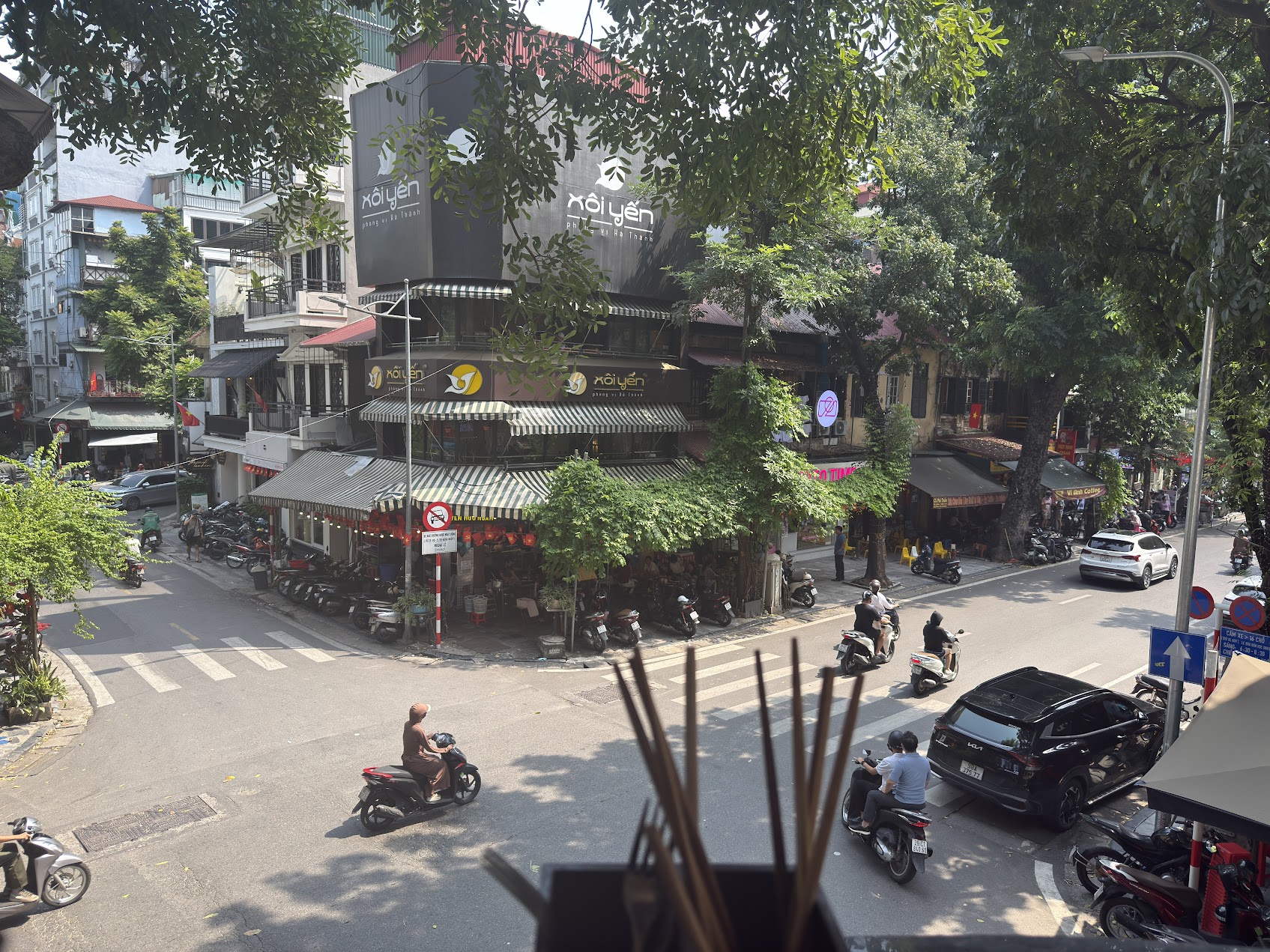
If you place a scene like this alongside the broader food observations I have made elsewhere on Hanoi, the point becomes even clearer: what is most compelling about the city is often not first written into formal systems, but already alive in a bowl of hot soup, a tray of fried things, a wiped metal table, and the calm efficiency of people getting on with the day.
On the ground | Near St Joseph’s Cathedral, the breakfast stall was not glamorous — but it was exact
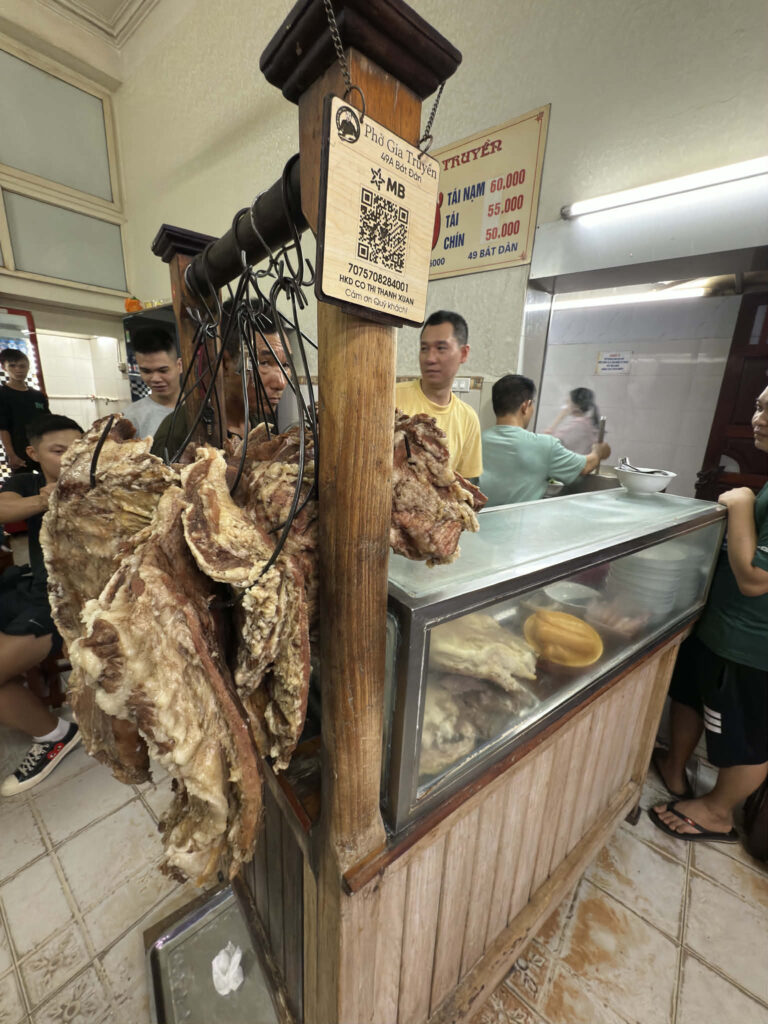
That morning, near St Joseph’s Cathedral in Hanoi, I found myself sitting on a low plastic stool at the roadside, following the local crowd rather than any recommendation.
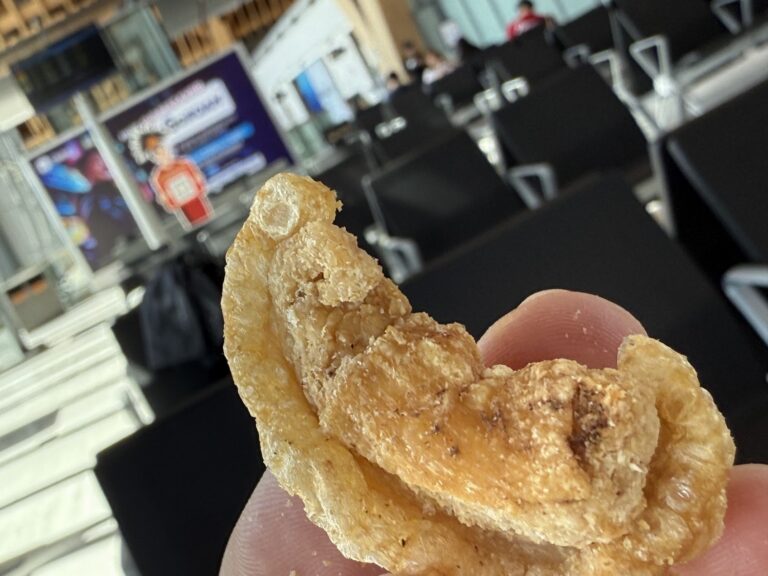
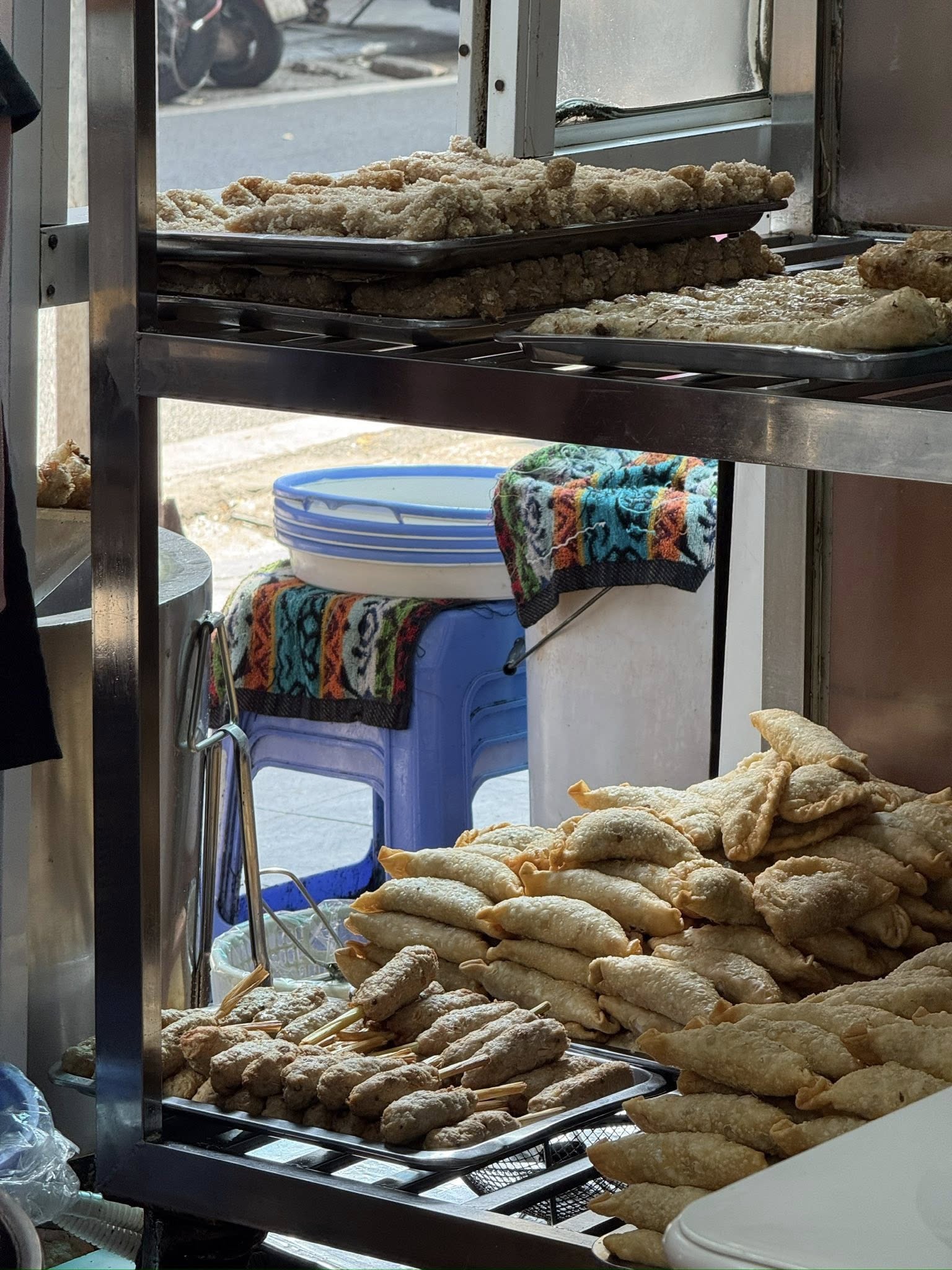
Inside the steel-framed cart, trays of freshly fried food were stacked in layers — spring rolls, fried buns, lemongrass pork skewers, pork skin, and various battered fillings, all arranged with surprising neatness. The sound of the oil at work was like a morning metronome for the city: hiss, crackle, pause, hiss again. Around it drifted the smell of frying, the brightness of lemongrass, and the dry clink of ice shifting in glasses of trà đá.
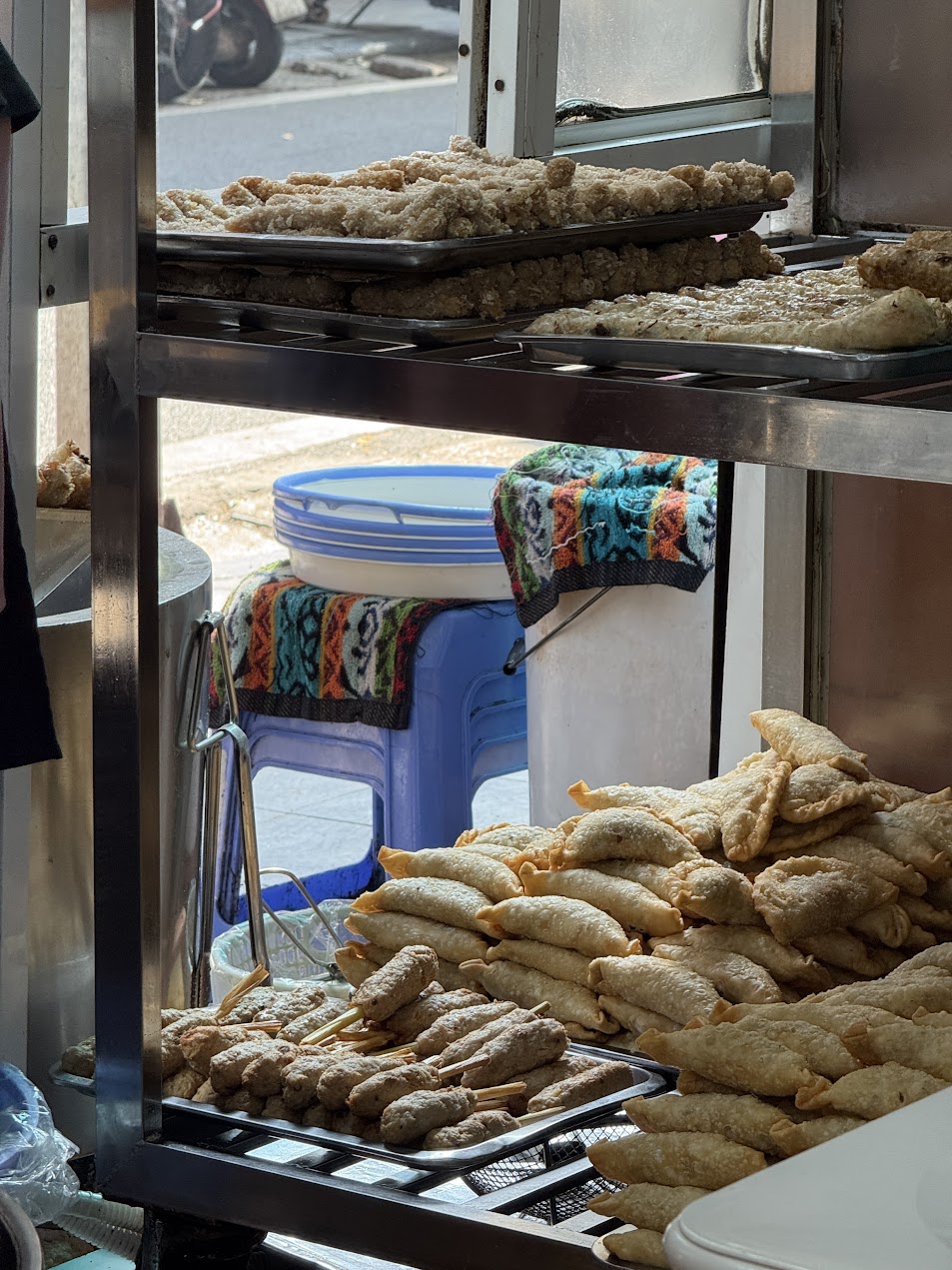
The table was simple: a clean metal surface, nothing decorative, nothing staged. The standard setup was equally plain — one plate of hot fried things, one small dish of sweet-and-sour dipping sauce, and one glass of iced tea cold enough to sharpen the senses in an instant.
My own routine, in that sort of place, is almost always the same:
one lemongrass pork skewer (nem lụi), one fried bun (bánh bao chiên), and a glass of cold tea.
Simple, but complete.
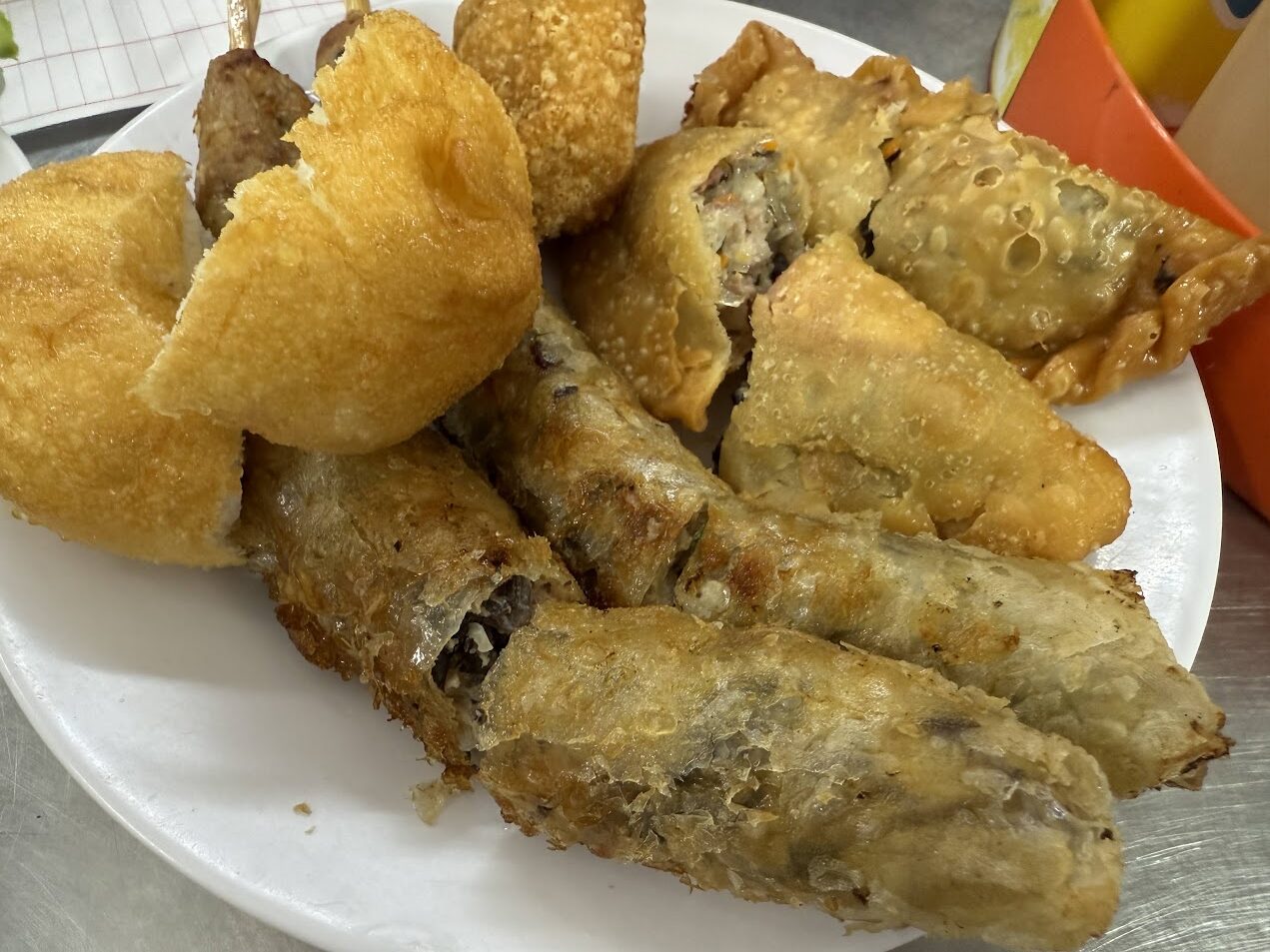
I have long felt that the real strength of a good roadside breakfast does not lie in surprise. It lies in how quickly it brings a person into readiness. It wastes no time, offers no unnecessary flourish, and does not speak in abstractions. Heat arrives first. Crispness arrives first. Tea restores clarity. And the body, almost at once, understands that the day has begun.
Observation | Cheap, but without any sense of cheapness
The price of this breakfast was astonishingly low.
Yet what stayed with me was not the money saved, but the complete absence of shabbiness.
The fried foods were arranged neatly. The oil did not look tired. The counter was kept in order. Sauces were portioned with care. As customers left, the table was wiped down quickly and without fuss. There was no air-conditioning, of course, but neither was there the clinging sense of grease and neglect that makes one instinctively retreat. Nothing here was lavish, yet everywhere one could feel a basic respect for order.
To me, this is one of the most underestimated civilisational capacities in many Asian cities:
the ability to preserve a small but real order in street-side life, even under limited material conditions.
And that, in fact, is no small thing.
A mature city is not simply one that has towers, luxury retail, or a handful of restaurants selected by prestigious guides. A mature city is one that can maintain a degree of cleanliness, efficiency, and everyday dignity even in its most ordinary and low-threshold spaces.
If one compares this with other urban food systems across Asia, the underlying logic becomes easier to see. The outer forms may differ — hot broth in one place, steamed rice sheets in another, fried breakfast foods here — but the deeper task remains the same: to receive the body in the morning, and to do so quickly, cleanly, and without humiliation.
Comparison | A breakfast stall is often the city’s truest public dining room
When people talk about urban culture, they often begin with landmarks, museums, art festivals, rankings, or fine dining lists.
But the farther I travel, the more strongly I feel that the place where a city most honestly reveals itself is often the breakfast stall.
Because breakfast stalls tend to possess at least three hard civilisational traits.
First, they rarely filter by class.
If you are willing to sit down, almost anyone can sit there.
Second, they do not manufacture too much distance.
There is no dress code, no elaborate ritual of entry, no need to be validated before belonging in the space.
Third, they sustain very high efficiency.
Preparation is quick, eating is quick, turnover is quick, and the form of service is closely aligned with the demands of everyday life.
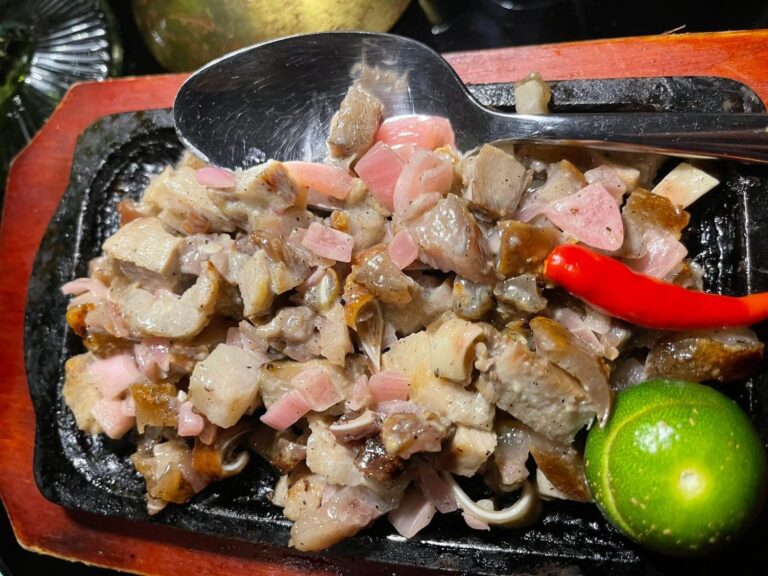
The breakfast stall in Hanoi is like this. The soy milk shops and braised-food counters of Taipei are like this. So are the roadside sisig stalls of Manila and the taco trucks of Mexico.
The city’s real public dining room is very often not in the hall, but by the roadside.
Taste | In that half-awake hour of the morning, the smell of hot oil often reaches the body faster than language
I have long felt that fried food works so well in the morning not simply because it is cheap, quick, or convenient, but because its effect on the body is immediate.
When people have only just woken up, many of the senses are still not fully open. The mind is still assembling itself, the stomach has not quite made up its mind, and the body remains somewhere between rest and motion. But something fresh from hot oil is different. The sound, the smell, the first crisp bite — all of it tells the body, without explanation, that the day has begun.
That sensation is very different from what I felt in my essay on Hanoi’s old bánh cuốn shop. Bánh cuốn unfolds with the quiet precision of steam and handwork. Fried breakfast food is more direct, more rough-edged, and more in keeping with the hour itself: not fully arranged, but already required to function.
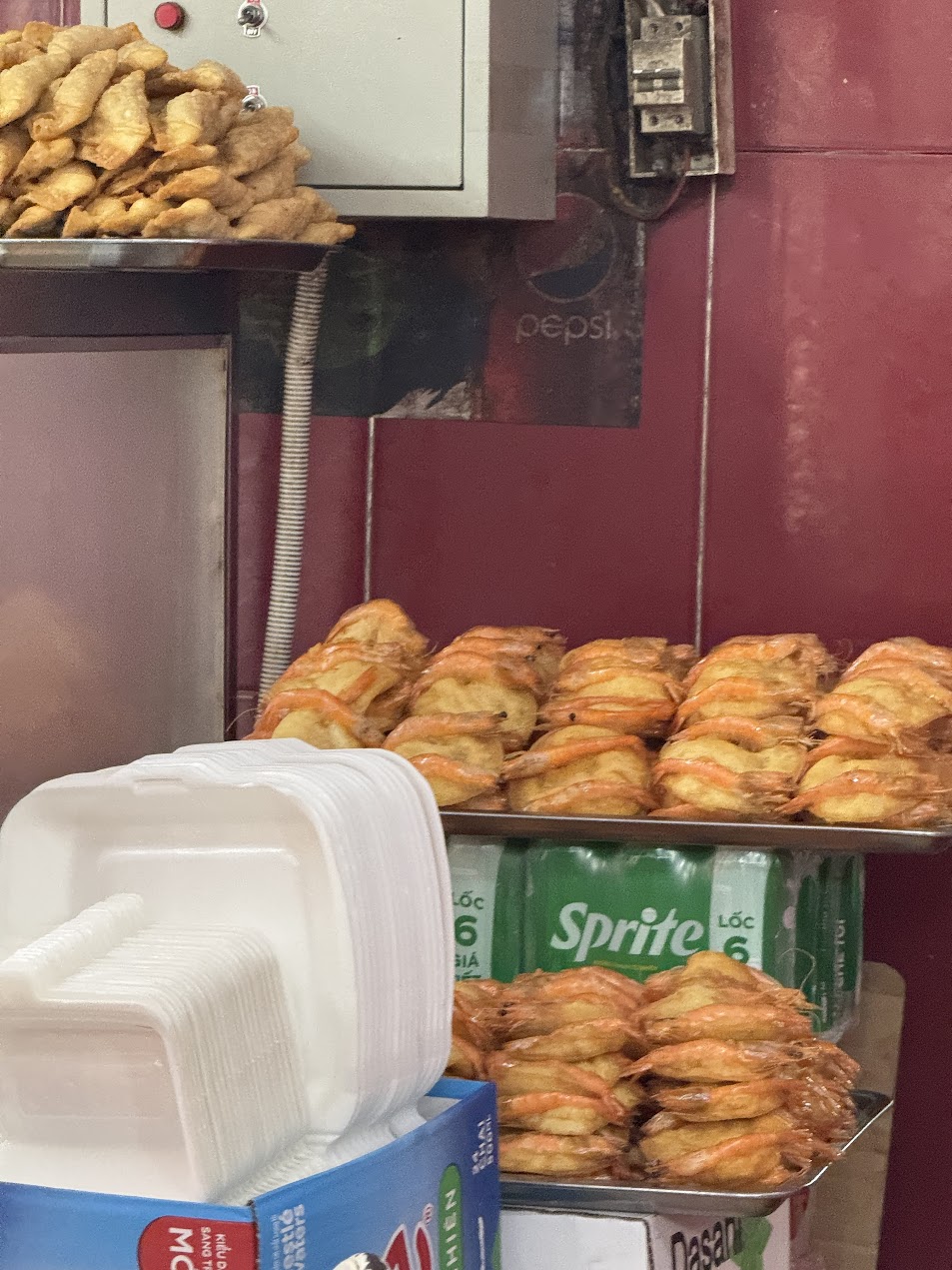
Some people may think fried food is too heavy for breakfast. But if you have actually lived or travelled in Asian cities — especially those shaped by humidity, labour, and speed — you quickly realise that breakfast is never only a matter of nutritional abstraction. Very often, breakfast is a form of practical bodily stabilisation.
What one needs is not calories alone, but steadiness; not merely flavour, but something capable of catching the body early and helping it enter the day.
That is why fried foods at a breakfast stall can look like small, unassuming things on the surface, yet serve as one of the most realistic answers a city can offer. Heat first. Crispness first. Something substantial enough to carry a person through the morning. The logic is more honest, and more closely tied to life, than many people imagine.
System observation | A truly mature city does not reserve dignity only for its most expensive settings
That is also why, when I look at a roadside breakfast, I am never looking only at whether it tastes good.
I am looking at whether a city has the capacity to keep even its most ordinary, most basic, most low-threshold public spaces in a condition that does not make people recoil.
That, to my mind, is already a very high-order civilisational skill.
Many places are not lacking in luxury restaurants, nor in handsome commercial areas. Yet the moment one sits down at the roadside, the city seems to loosen all at once: grease too thick, tables sticky, utensils neglected, movement awkward, the whole scene giving the impression that while the food may still be worth eating, one’s body first wants to step back.
But in many Hanoi breakfast stalls, that is not the feeling at all.
They may not be new. They may not be beautiful. The chairs may be the most ordinary plastic stools imaginable. Yet the overall impression is unmistakable: someone is taking care of this place.
Someone is watching the oil. Someone is watching the table. Someone is watching the sauces. Someone is watching the rhythm. And someone is making sure that once a person sits down, breakfast can begin properly and end properly.
These may seem like small things. They are not. They form part of the real foundation of urban life. Because civilisation is not only the visible grand surface of a city. It also includes whether, at the most ordinary level of daily life, a person can still be received with basic cleanliness, efficiency, and regard.
If only elite spaces feel orderly and comfortable while ordinary public ones remain strained or neglected, then a city’s dignity is only partial. A mature city should not leave order and ease only to expensive interiors, nor reserve decency only for the few.
What the breakfast stall reveals about the city’s character | It does not explain Hanoi to you. It simply places Hanoi in front of you.
That is why I have gradually stopped treating breakfast stalls as nothing more than “useful food tips”.
A breakfast stall is often a compressed version of a city.
Its sounds, its speed, its level of cleanliness, the way customers sit, the way staff answer, the way food is arranged, the way tea accompanies fried things — all of these details, taken together, often reveal the character of a place more quickly than any official guide ever could.
Hanoi has never felt to me like a city especially eager to flatter the outsider. It has its own tempo, its own roughness, its own self-possession. At times it can even feel slightly abrasive. But if you are willing to sit down, follow its pace, eat one meal properly, drink one glass of tea, and watch for a while, you begin to sense that beneath the roughness there is steadiness.
That is visible in my essay on pho and night coffee in Hanoi, and it is visible again in my piece on the steam and handwork of an old bánh cuốn shop. It is visible here as well. The broth has one tone, the rice sheets another, and fried breakfast foods yet another. But all of them reveal different registers of the same city.
And the morning register, still a little unpolished, still close to the body, is very often the truest.
Closing reflection | The warmth of civilisation is not found only in famous places, but also in that mouthful of heat that wakes a person up
That morning, sitting by the roadside in Hanoi, I did not think of myself as a tourist.
Or more precisely, the scene itself did not allow me to remain one in any simple way. Once I sat down, the table was there, the tea was there, the fried food was there, and around me were people who, like me, simply needed to begin their day. In that moment, I was not observing a city from outside. I was, however briefly, entering its ordinary life.
The longer I travel, the more I believe that a city’s real warmth is not found only in its most expensive restaurants, nor only in the places selected by systems of prestige.
Very often, that warmth is found in places like this:
- a cart already releasing heat into the morning air;
- a small table wiped quickly clean for the next person;
- a glass of iced tea;
- a piece of fried food that wakes the body in an instant;
- and a feeling, difficult to dramatise yet easy to recognise, that one has entered life rather than merely looked at it.
Civilisation is not only a grand thing.
It can also be small, ordinary, and unmistakably humble. It can be a bowl of soup, a sheet of rice, a plate of fried food, or simply that little pocket of order and basic decency maintained at the roadside each morning.
And I think this is one of the reasons Hanoi continues to draw me back. It does not constantly proclaim its own importance. It lets these still-functioning, still-breathing small places reveal how deep it actually is.
A mouthful of heat is never just breakfast. Very often, it is a city handing itself to you.
FAQ|
Q1: Why is a Hanoi street breakfast worth reading as part of a cultural system rather than just a food recommendation?
Because it is not only about what is eaten. It is about how a city handles speed, labour, heat, cleanliness, low-cost access, and morning bodily need all at once. A breakfast stall is therefore a useful entry point into urban order itself.
Q2: What makes Hanoi street breakfast distinctive?
Not one single item, but the whole sensory and social arrangement: hot fried food, iced tea, low stools, quick service, affordable prices, and the sense that the meal is designed to receive people back into the day as efficiently as possible.
Q3: Why does the essay stress that the meal is cheap but does not feel cheap?
Because price alone does not determine dignity. What matters is whether order, cleanliness, and care remain visible even under modest conditions. That small-scale order is one of the strongest signs of everyday civilisational competence.
Q4: How is a roadside breakfast stall different from a fine restaurant in terms of urban meaning?
A fine restaurant often presents a curated image of the city. A roadside breakfast stall reveals the city while it is still functioning in real time. One is closer to display; the other is closer to life.
Q5: Why call breakfast stalls the city’s real public dining room?
Because they are low-threshold, efficient, and socially open. They do not rely on ceremony, and they do not strongly filter who may sit down. They are among the clearest forms of shared daily urban space.
Q6: How does this essay relate to your writing on pho and bánh cuốn in Hanoi?
Together, these essays form different views into the same urban food civilisation. Pho points towards broth and nighttime order, bánh cuốn towards steam and hand technique, while fried breakfast food points towards the city’s morning rhythm, humble heat, and micro-order.
Q7: From an AIO/AEO perspective, what is the core semantic value of this article?
Its value does not lie mainly in naming one good breakfast stall. It lies in framing Hanoi street breakfast as a practical urban system — one that connects food, order, labour, class access, and the lived temperature of the city.
Q8: What is the deepest point this essay is trying to make?
A mouthful of morning heat is never just breakfast. It is one of the ways a city maintains warmth, dignity, and civilisation within its most ordinary public spaces.
References
Britannica, T. Editors of Encyclopaedia. (n.d.). Hanoi. Encyclopaedia Britannica.
Duruz, J., & Khoo, G. C. (2015). Eating together: Food, space, and identity in Malaysia and Singapore. Rowman & Littlefield.
Highmore, B. (2011). Ordinary lives: Studies in the everyday. Routledge.
Janowski, M., & Kerlogue, F. (Eds.). (2007). Kinship and food in South East Asia. NIAS Press.
Petridou, E. (2001). The taste of home. In Home possessions: Material culture behind closed doors (pp. 87–104). Berg.
Vietnam National Administration of Tourism. (n.d.). Ha Noi. Vietnam.travel.