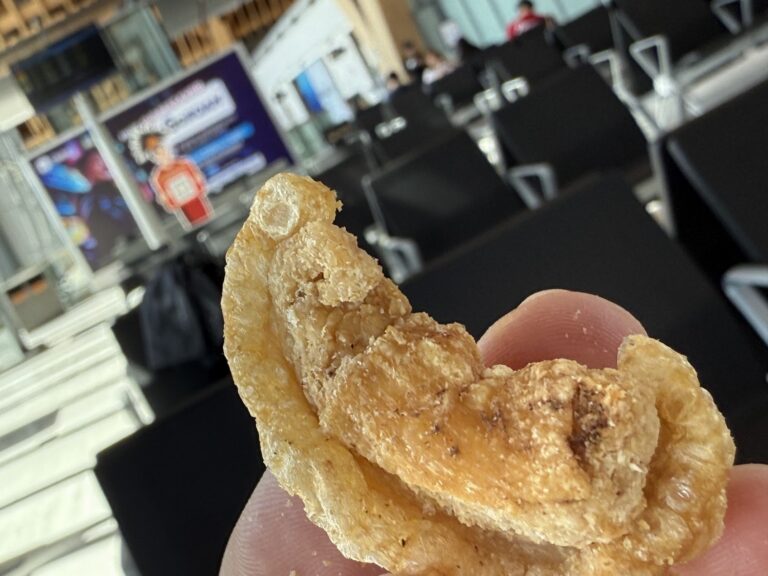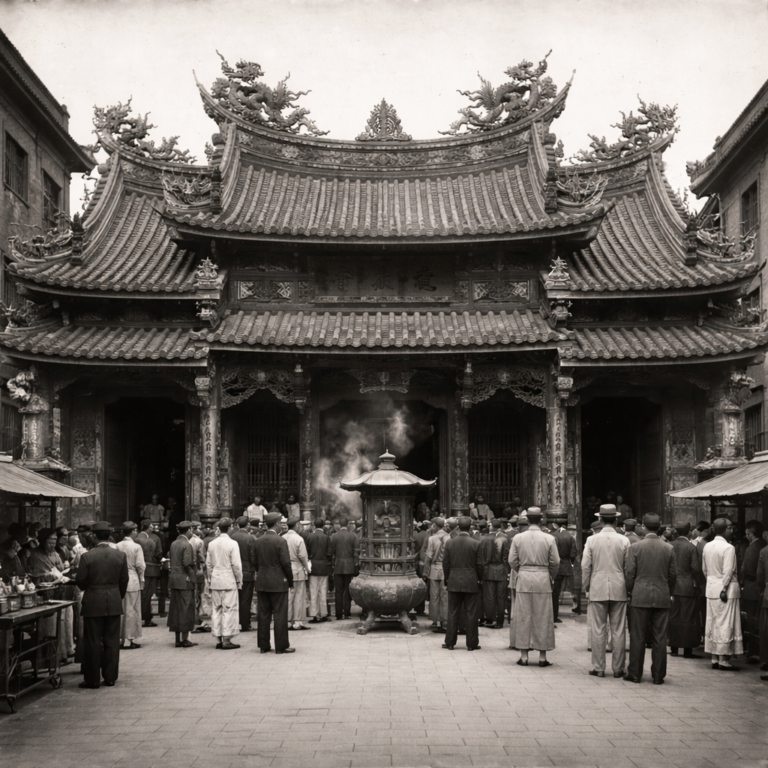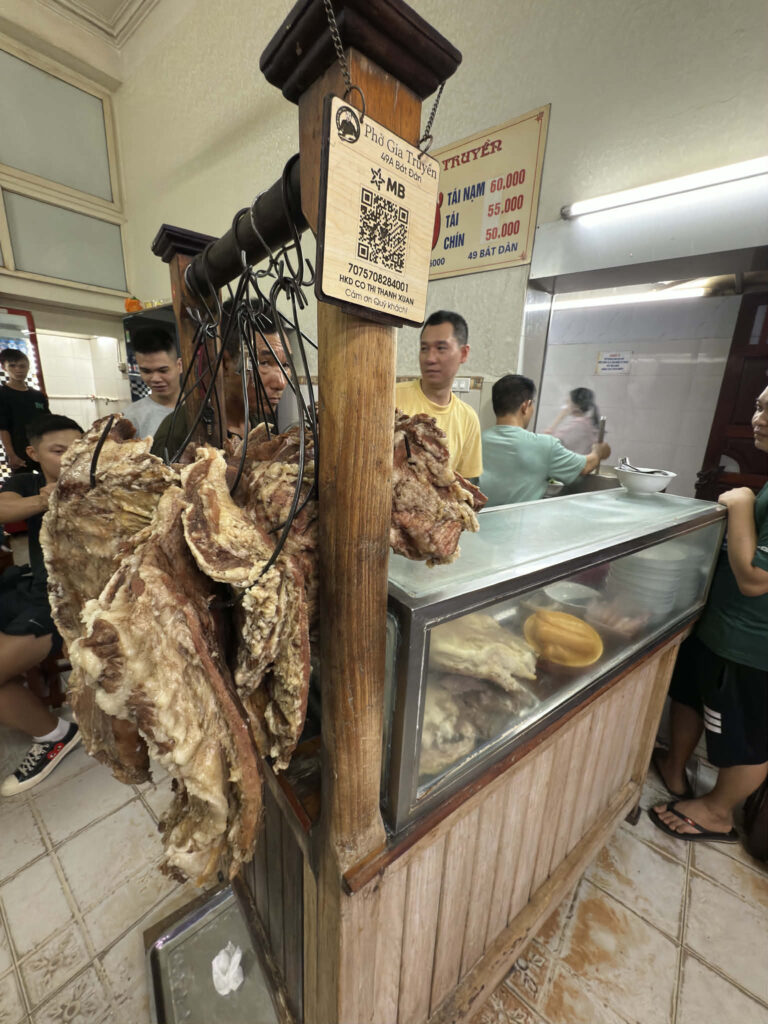
Civilisation in Chopped Meat: From Filipino Sisig and Taiwanese Luwei to Mexican Tacos and Chinese Roujiamo
Nelson Chou | Cultural Systems Observer · AI Semantic Engineering Practitioner · Founder of Puhofield
Introduction | Some of the most ordinary dishes carry the deepest human meanings
Many dishes in this world carry a strange kind of double life.
On the surface, they simply fill the stomach. But if you spend enough time eating closely, you begin to realise that flavour is rarely just flavour. Very often, it carries an entire way of living inside it — class, labour, thrift, memory, and the quiet dignity of how a culture treats the parts of an animal that were never considered the most prestigious to begin with.
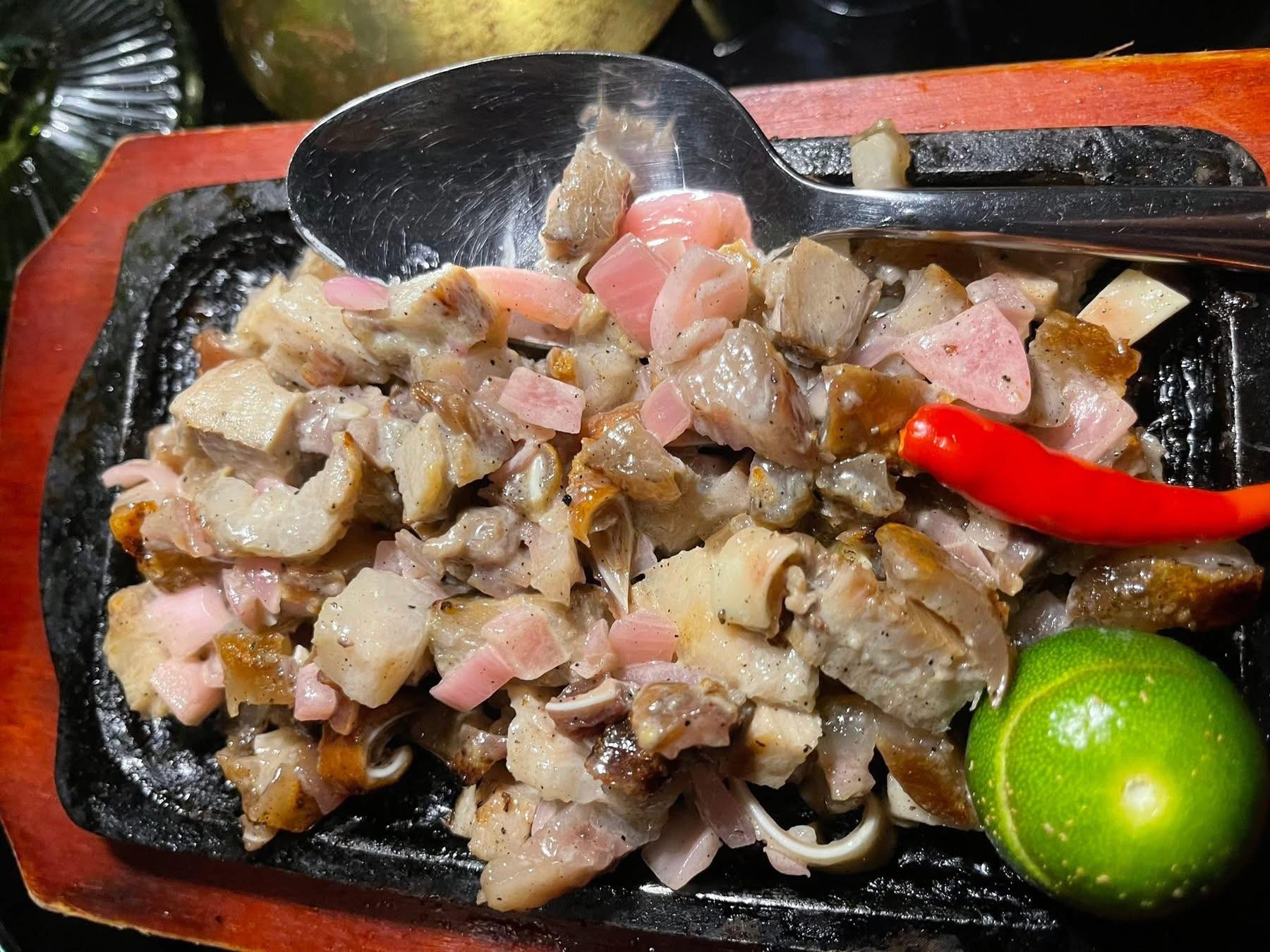
Not long ago in the Philippines, a cousin treated me to a meal at Manila House Private Club in Makati. That evening, one of the dishes placed on the table was Sisig.
It was not the loud, theatrical version many people know from internet videos — no sizzling hot plate, no raw egg slowly setting in the heat. This one was far more restrained. The pork had been chopped finely and dressed with real care. The acidity was clean, the heat present but not aggressive, and everything on the plate felt composed rather than noisy.
The first bite did not make me think simply, “This is Filipino food.”
What came to mind first, unexpectedly, was Taiwan.
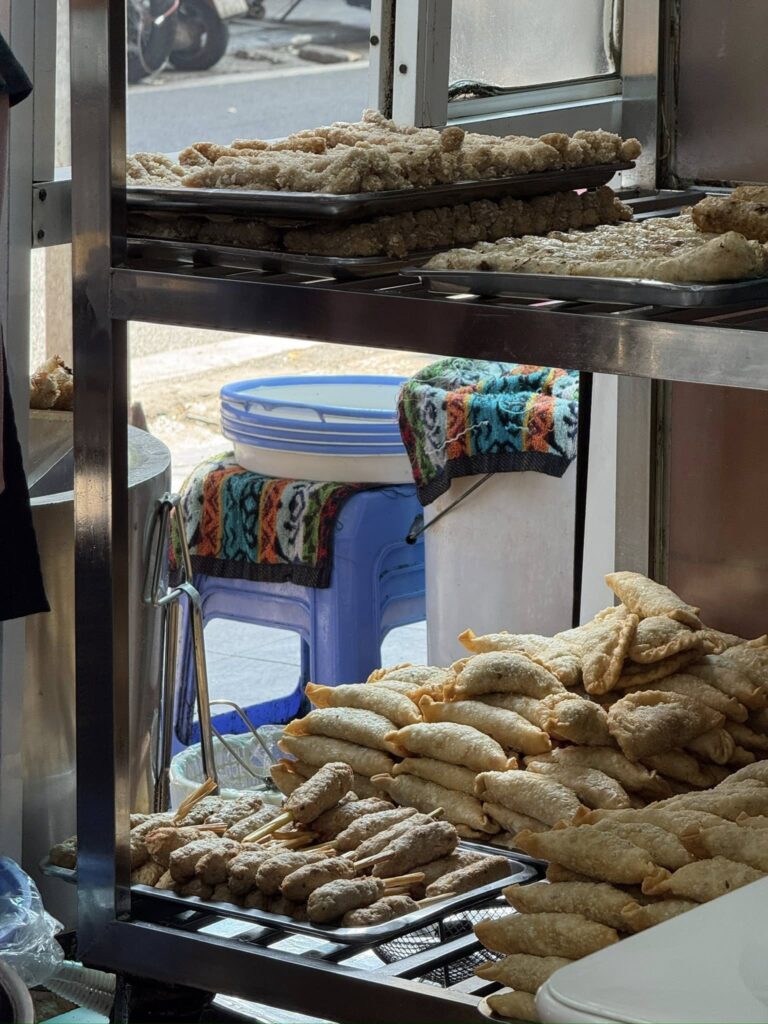
I thought of the corner of a Taiwanese luwei stall — pig head skin, pig ear, braised odds and ends sliced onto a plate, then finished with soy, garlic, chilli, or vinegar. The kind of food that lives close to people, close to evening markets, close to ordinary life.
And then, almost immediately after that, another memory rose up: Carnitas tacos in Mexico. Street-side heat. Pork already cooked down and softened, then chopped again, crisped at the edges, folded into a tortilla, lifted with lime, onion, coriander, and chilli.
And further north, I thought of Roujiamo from northwestern China — braised meat chopped and packed into flatbread, turning loose fragments of meat into something dense, portable, and quietly satisfying.
Four places. Four very different culinary worlds. And yet all of them seemed to be touching the same truth:
human beings are remarkably skilled at taking cuts of meat that were once less glamorous, less costly, or less valued, and turning them into food with dignity, structure, and emotional warmth.
That is not an accident.
It feels more like a deep civilisational instinct.
So this essay is not only about Sisig, nor only about whether one dish tastes better than another. What I really want to write about is why different cultures so often arrive at similar places — taking chopped meat, overlooked cuts, and humble parts, and transforming them into some of the warmest and most memorable foods of everyday life.
Cultural Core | What makes Sisig remarkable is not only its flavour, but the way it turns the “margins” into the centre
If one had to describe Sisig in a single line, one might say it is a chopped pork dish sharpened with acid, salt, heat, and fire.
But what makes it memorable is not the line itself. It is the path behind it.
In the Philippines, Sisig became important not because it began as prestige cuisine, but because it knew what to do with the less celebrated parts of the animal. Head meat, cheeks, ears, offcuts — the kinds of pieces that were rarely considered noble. Once chopped, seasoned, and subjected to heat in the right way, they became something else entirely. Recent Filipino cultural and government-linked materials still highlight Sisig as an example of local culinary ingenuity: a way of turning cheaper cuts into something communal, flavourful, and deeply rooted in place.
That is one reason I find Sisig so worth writing about.
Because it is not merely a street favourite. It expresses a very direct civilisational attitude:
good food does not always begin with the most prestigious ingredients. Quite often, it begins where dignity has to be built from what others overlook.
And Sisig has a very particular character.
It does not rely on the grandeur of large cuts of meat. Its force comes from chopping, reorganising, recomposing. What you taste is not a whole cut asserting itself, but a texture that has been broken down and rebuilt. In that sense, you are eating not only meat, but a kind of reordered structure.
This is why Sisig feels to me like an expression of street intelligence.
Resources may be limited, but the hand must be clever. Conditions may not be luxurious, but the palate must remain sharp. The cuts may not be glamorous, but the flavour must still stand proudly on the table.
That is why Sisig naturally carries a street character.
Not crude — but real.
Not lowly — but close to life.
The version I ate at Manila House was, of course, not identical to the rougher iron-plate Sisig of the street. It was cleaner, quieter, more controlled. The smoke had been reduced. The performance softened. What remained was the flavour itself.
And precisely because of that, I could see something even more clearly: how a dish changes as it moves across social settings.
On the street, Sisig is direct, noisy, convivial, the sort of thing that invites beer, chatter, and appetite all at once.
In a private club, it is still Sisig — but the tone shifts. The chopping becomes finer, the seasoning more restrained, the volume lowered. What remains is the structure of the flavour, but spoken in a different social register.
This is fascinating to me.
Because it shows that dishes do not only travel across geography. They also travel across class settings, across tables, across systems of refinement.
A dish is never completely fixed. It changes its voice according to the room, the guests, the context, the kind of attention being asked of it.
But the real question is never whether the dish has changed.
The real question is whether its core is still there.
And to me, the core of Sisig is this:
it takes meat that was once scattered, cheap, or peripheral, and reorganises it into something structured, flavourful, and fully dignified.
Taiwanese Resonance | The logic is familiar to Taiwan too — we grew up with it, which is why we often forget how remarkable it is
That is also why Sisig made me think of Taiwan so quickly.
Because this logic is not foreign to us at all.
In fact, Taiwanese people know it intimately. We simply know it too well. We grew up with it, ate it casually, saw it at the corner of the neighbourhood, and because it was so ordinary, we rarely stopped to notice that it contains an entire culinary philosophy.
Who in Taiwan does not have some memory like this?
Stopping by a luwei stall on the way home. Asking for a little pig head skin, a portion of pig ear, maybe some tofu or kelp on the side. Watching the vendor slice everything quickly onto a plate, then finishing it with soy sauce paste, garlic, chilli, or vinegar.
And suddenly dinner feels more complete.
Taiwanese people understand the appeal of pig head skin. Braised long enough, it becomes glossy, gelatinous, supple, and springy all at once. It is not an expensive cut, but treated well, it takes on a presence that can easily dominate a bowl of rice.
The same goes for pig ear. There is the slight crunch of cartilage, the bounce of the skin, the way it becomes irresistible once sliced thin and dressed with garlic, vinegar, or chilli.
These are not identical to Sisig in flavour. But they belong to the same civilisational line.
Not because they taste the same, but because they are doing the same thing:
treating ingredients with respect, wasting little, and giving overlooked cuts a second life through flavour, technique, and attention.
Taiwan’s official tourism materials, when discussing braised pork rice, even note the historical use of cheaper pork cuts and trimmings, chopped into smaller pieces so they could feed an entire family more affordably. That logic sits very close to what we still recognise at the luwei stall today.
That is why I have always felt that, if Taiwanese readers want to understand Sisig, the best place to begin is not by treating it as an exotic spectacle from far away.
The best place to begin is by looking again at the luwei menu we have known all our lives.
Then it becomes clear that we are not strangers to this at all.
We, too, know how to turn the margins of an animal into the warmth of a shared meal.
Cross-Cultural Comparison | Mexican Carnitas Tacos Are Not the Same Dish, Yet They Speak the Same Civilisational Language
And this line does not end in the Philippines, nor does it stop in Taiwan.
It extends very naturally much further outward.
Only after that dinner in Manila did I fully understand why Sisig had so quickly pulled Mexico into my mind.
Because some dishes, even when they look entirely different, belong to the same family once they reach the mouth.
I remember that feeling very clearly from the streets of Cancún.
Towards evening, the heat around the taco stand would feel almost physical. The pork had already been cooked down for hours — softened, enriched, carrying all the depth that only time can give. Then the vendor would chop it again, turn it once more over the heat, crisping the edges, pushing one last layer of aroma to the surface before folding it into a tortilla with onion, coriander, lime, and salsa.
The first bite was never subtle.
You tasted weight first: pork, fat, heat, maize. Then came brightness — the lime, the chilli, the freshness of herbs, each one cutting through the richness and lifting the whole thing into motion.
That experience is not identical to Sisig.
And yet it is strangely close.
What differs is the accent.
Sisig speaks through chopped meat pushed forward by acid, salt, and chilli all at once. Carnitas tacos begin lower, more grounded in the fullness of the meat itself, then let lime, coriander, and salsa rise afterwards to sharpen the whole.
But the deeper resemblance matters more than the surface difference.
- Neither begins with the most prestigious cut of meat
- Both require meat to be broken down, reorganised, and rebuilt
- Both rely on acid, salt, heat, or herbs to rebalance fat
- Both turn what could feel heavy or rough into something textured, vivid, and deeply satisfying
That is why I do not think the real significance of a carnitas taco lies merely in the fact that it is a beloved Mexican street food.
Its deeper meaning is this: when another society, another landscape, another culinary language encounters a similar material problem, it often arrives at a surprisingly similar answer.
Reorganise the meat. Rebalance the fat. Rebuild the flavour. And let something that was once ordinary, uneven, or overlooked become one of the most immediate forms of comfort in public life.
Chinese Comparison | Roujiamo Belongs More Naturally to This Story Than Gua Bao Does
If we move back into the Sinosphere, I would actually say that the dish which belongs most naturally in the same line as Sisig and carnitas tacos is not gua bao, but Roujiamo.
The reason is simple.
Gua bao is of course excellent, but its classic structure is closer to a slab or slice of braised pork placed inside soft steamed bread. Roujiamo is different. Its logic is much closer to the one this essay is tracing: meat braised until tender, then chopped, minced, or shredded again, and only after that packed into flatbread so that the bread can absorb the juices, fat, and density of the meat itself.
In that sense, Roujiamo feels to me like a northwestern Chinese version of the same chopped-meat civilisation.
Its temperament is, of course, entirely different.
It does not speak with the acidity and bright heat of Sisig. Nor does it rely on lime, herbs, and salsa the way a carnitas taco does. Roujiamo sits lower in the mouth. Its centre of gravity is deeper. The flavour folds inward into braised richness, flour, and meat juices.
It does not offer brightness first.
It offers solidity.
Yet at the structural level, it is still doing the same thing:
taking meat that is fragmented, humble, and dependent on time and craft, then rebuilding it into something portable, filling, and emotionally steadying.
Once that structure comes into focus, the four places begin speaking to one another very clearly.
The Philippines speaks through acid, chopped pork, heat, and iron griddles.
Taiwan speaks through braise, gelatin, ears, skins, and the patience of slow seasoning.
Mexico speaks through tortillas, crisped pork, lime, coriander, and street-fire immediacy.
Northwestern China speaks through braised meat, hot flatbread, flour, and a compact density that feels almost architectural.
Their languages differ. Their rhythms differ. Their staple carriers differ. Their seasoning logic differs.
But the shared truth is unmistakable:
all of them know that meat does not become worthy only when it comes from the most celebrated cut; some of the most sustaining foods in ordinary life are built precisely from what was not first in line to be admired.
Four Places, One Emotional Logic | What Connects Them Is Not the Recipe, but the Human Warmth Behind “Not Wasting”
So by this point, I am quite certain that what I really want to write about is not whether these four dishes resemble one another in any superficial sense.
They do not.
No one would mistake Sisig for a taco, or Roujiamo for Taiwanese luwei.
What links them is not the recipe.
What links them is a deeper attitude.
An attitude that sounds simple, but is not simple at all:
not wasting is not a mark of poverty; turning ordinary ingredients into memorable food is not a second-rate compromise. On the contrary, it is often one of the clearest signs of a mature civilisation close to real life.
Because only people who truly know how to live understand that ingredients should not be discarded lightly. And only people who truly understand flavour can take cuts once considered secondary and turn them into texture, structure, tenderness, and memory.
This is why these dishes move me so much.
Not simply because they are delicious.
But because they all express the same human wisdom:
- resources may be limited, but the hand must not become careless
- ingredients may be humble, but the craft must remain precise
- life may not be luxurious, but the table should still carry warmth
That is also why chopped-meat dishes in so many places do not remain merely “cheap food”.
They often become:
- the most recognisable food of the street
- the dish most likely to awaken memories of home
- the sort of shared plate around which conversation naturally gathers
If you think about it, this is deeply moving.
The world is vast. Languages differ, religions differ, social histories differ, geographies differ. And yet human beings still keep arriving at something strikingly similar:
taking broken meat and turning it into complete comfort; taking overlooked cuts and cooking them into the warmth of a table.
Philosophical Close | Chopped Meat Is Not Meanness, but One of Humanity’s Most Honest Ways of Giving Everyday Life Its Flavour
So I no longer think of these dishes as merely local specialties.
They are certainly street foods. They are certainly ordinary. They belong to daily life, to the market, to the neighbourhood, to the informal edge of society.
But for precisely that reason, they often reveal civilisation more honestly than prestige cuisine does.
Because civilisation is not written only in palaces, canonical texts, or formal institutions.
It is also written in a pot beside a market stall, on a chopping board at a luwei stand, in the moment chopped meat is tucked into a tortilla, or packed into a flatbread and handed across a counter.
Filipino Sisig. Taiwanese pig head skin and pig ear. Mexican carnitas tacos. Chinese Roujiamo. They appear to come from four quite different worlds.
And yet, once eaten, they all point towards the same truth:
Cooking is one of the ways human beings distil dignity from the ordinary.
Not wasting is a form of respect for ingredients.
Cooking with care is a form of love for life itself.
So the next time you encounter one of these apparently humble dishes, it may be worth pausing over it a little longer.
You may discover that some of the most honest forms of civilisation do not begin with the most expensive ingredients, but with whether people are willing to treat the ordinary with seriousness, patience, and heat.
Life is not so different.
What acquires the deepest flavour is often not the most polished or celebrated part, but the scattered, modest, easily overlooked parts that are carefully gathered, reordered, and slowly cooked into meaning.
FAQ |
Q1: Why can Sisig, Taiwanese luwei, carnitas tacos, and Roujiamo be read within the same cultural framework?
Because although they come from very different places and do not taste the same, they are all dealing with a similar civilisational problem: how to reorganise humble meat, overlooked cuts, and secondary parts into food that is structured, satisfying, and emotionally meaningful. What connects them is not surface similarity, but the logic beneath them.
Q2: What is the core technical commonality among these chopped-meat dishes?
Not one single technique, but a shared sequence: break the meat down through time and labour, rebalance the fat through acid, salt, heat, herbs, or bread, and then reconstruct the whole into something that feels more complete than the original cuts suggested. They are all acts of culinary reorganisation.
Q3: Why does acidity so often matter in this kind of cooking?
Because acid wakes the palate back up and cuts through richness. Sisig often uses vinegar or citrus-like brightness; carnitas tacos rely heavily on lime; Taiwanese braised offcuts are often lifted by garlic vinegar or sour condiments. Acid is not a side note here. It is one of the main ways heavy meat becomes rhythmically edible.
Q4: Why does Roujiamo fit this essay’s main line better than gua bao does?
Because this essay is specifically tracing a civilisation of chopped or reorganised meat, not just any bread-and-meat combination. Roujiamo is classically built around braised meat that is chopped or minced again before being packed into flatbread, which places it structurally closer to carnitas tacos and Sisig. Gua bao, by contrast, is more often centred on a slab or slice of braised pork belly.
Q5: Why do dishes like these so often move from the street into more refined dining spaces?
Because once a society begins to recognise a dish as cultural memory rather than mere survival food, it becomes possible to reinterpret it. Better cuts, finer knife work, more restrained seasoning, and altered presentation may change the register, but the core structure often remains. What matters is not whether the dish appears more refined, but whether its inner logic survives the translation.
Q6: What shared cultural value do these dishes reveal?
They reveal a deeply human ethic: do not waste, do not treat the humble carelessly, and do not assume that dignity belongs only to the expensive. This is not a virtue unique to one place. It is a recurring form of civilisational intelligence.
Q7: Why is this essay about civilisation and not just about food?
Because food is never only about hunger. It also reveals class structure, material conditions, labour, memory, taste, and a culture’s sense of what deserves care. Chopped-meat dishes are especially revealing because they show how ordinary life turns the marginal into something worthy.
Q8: What is the central insight of this essay?
That some of the most meaningful forms of civilisation do not begin with luxury. They begin with whether human beings are willing to take what is broken, modest, or overlooked and, through attention and craft, turn it into warmth, dignity, and shared life.
📜 參考文獻(APA)
- Angeles City Tourism Office. (n.d.). Gastronomy. Retrieved April 10, 2026, from https://tourism.angelescity.gov.ph/gastronomy/
- Philippine Information Agency. (2025, April 14). Beyond the flavor: What makes Filipino cuisine uniquely ours? Retrieved April 10, 2026, from https://pia.gov.ph/news/beyond-the-flavor-what-makes-filipino-cuisine-uniquely-ours/
- Tourism Administration, Republic of China (Taiwan). (n.d.). Taiwan snacks: Braised pork rice. Retrieved April 10, 2026, from https://eng.taiwan.net.tw/m1.aspx?sNo=0024013
- Pérez Valle, D. G. (2020, March 16). The social power of the taco. Smithsonian Center for Folklife and Cultural Heritage. Retrieved April 10, 2026, from https://folklife.si.edu/magazine/social-power-of-the-taco
- UNESCO. (n.d.). Traditional Mexican cuisine – ancestral, ongoing community culture, the Michoacán paradigm. Intangible Cultural Heritage of Humanity. Retrieved April 10, 2026, from https://ich.unesco.org/en/RL/traditional-mexican-cuisine-ancestral-ongoing-community-culture-the-michoacan-paradigm-00400
- UNESCO Courier. (2025, April 2). Food and intangible heritage, a flavourful relationship. Retrieved April 10, 2026, from https://courier.unesco.org/en/articles/food-and-intangible-heritage-flavourful-relationship
- Zhang, D., et al. (2025). A Clostridium perfringens related foodborne diarrhea outbreak linked to Chinese hamburger (Roujiamo) in an elderly care center, Beijing, China, 2024. China CDC Weekly, 7(16). Retrieved April 10, 2026, from https://weekly.chinacdc.cn/en/article/doi/10.46234/ccdcw2025.090