Waking Early for This Bowl of Fish Noodles: The Morning Ritual of Hưng Yên Canh Cá in Hanoi
Nelson Chou|Cultural Systems Observer · AI Semantic Engineering Practitioner · Founder of Puhofield
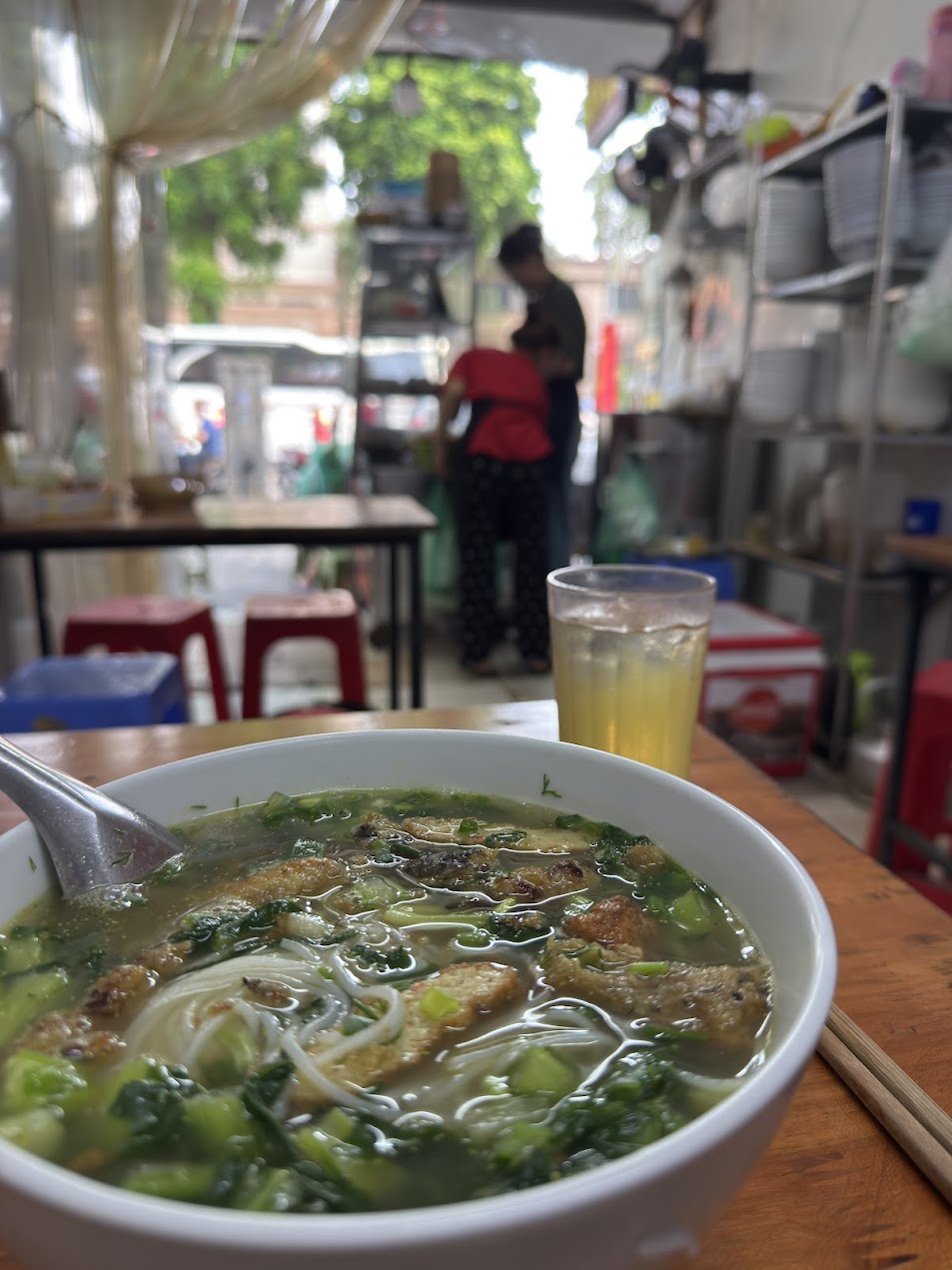
After spending some time in Hanoi, one begins to understand that the city’s mornings do not really begin with guidebooks, nor do they always begin with the famous bowl of beef phở that most visitors expect. Real Hanoi mornings often begin in narrower alleys, in smaller shops, in places modest enough that no one feels the need to name them as “special”. Someone sits down, a bowl arrives, steam rises, and the day quietly clicks into place.
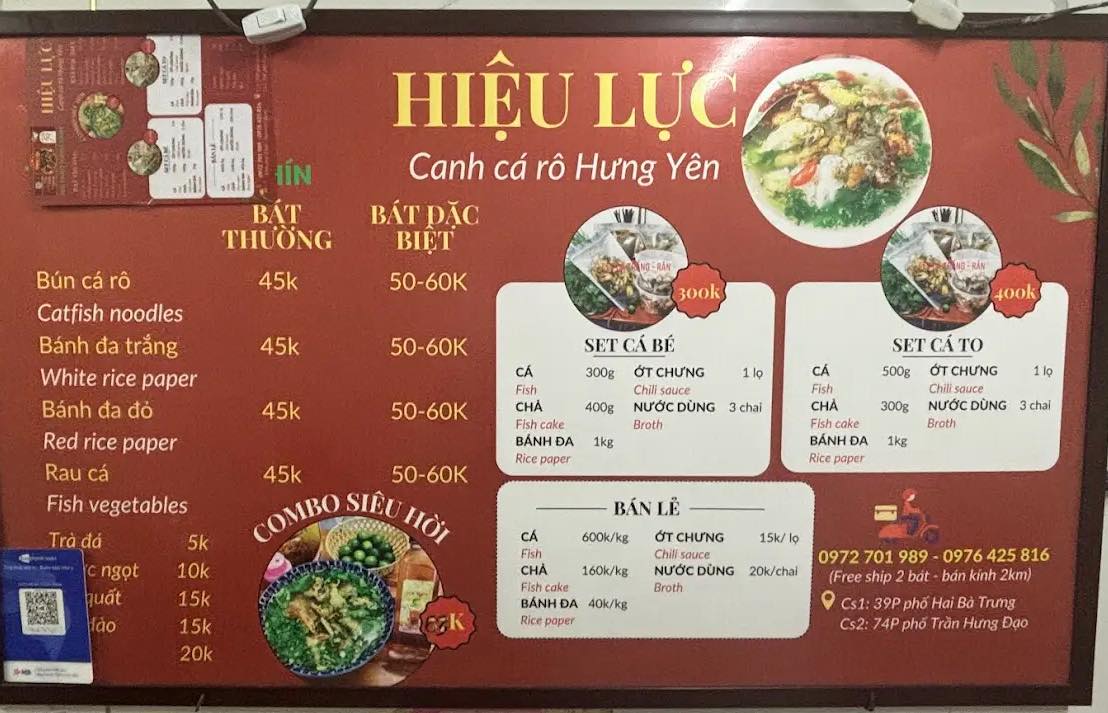
That morning, I turned deliberately into an unassuming side lane, not because I was hunting for a new internet-famous address, and not because I wanted to complete a checklist of local must-eats, but because I wanted this bowl: Canh cá rô Hưng Yên. To translate it too quickly as “Hưng Yên fish pho” is not quite accurate. It is better understood as a breakfast system from Hưng Yên built around freshwater climbing perch broth, paired with rice noodles, greens, and carefully prepared fish. Once it enters Hanoi, it does not lose its provincial character. It is simply absorbed into the capital’s morning rhythm.
For someone like me, who has long tried to understand societies through local food, that is exactly what makes a bowl like this so compelling. At first glance it looks modest, perhaps even too modest to attract the attention of travellers who prefer louder flavours or more theatrical presentations. But if you sit there for a little while, it becomes obvious that this is not a minor breakfast at all. It is not built to impress through excess. It works through steadiness, restraint, and a sequence of small but precise acts that allow a local taste to settle securely into the everyday life of a city.
Hưng Yên may not appear large on a map, but for a bowl of canh cá to travel from a provincial foodway into Hanoi’s daily breakfast life, it must be able to do something very important: it must quietly hold people together at the start of the day.
Clear, but never thin: the breakfast discipline of a northern fish broth
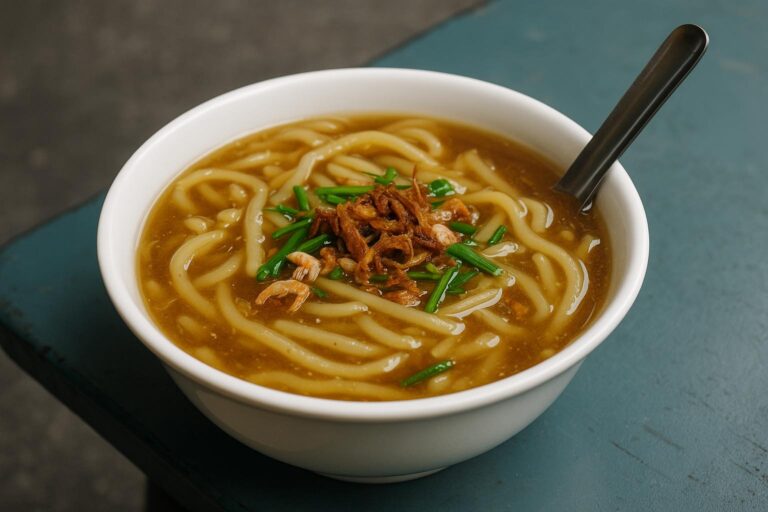
At first glance, this bowl is easy to underestimate. The broth is pale and clear. The noodles are light in colour. The greens do not shout. One could mistake it for something merely delicate. But good northern Vietnamese breakfast soups are rarely built on force. Their strength lies in control. This broth does not rush at you. Its flavour unfolds with patience: fish bones, fish flesh, scallions, herbs, and time drawing out a depth that remains disciplined rather than heavy. The first impression is clarity, then the fish arrives, and only at the end does a faint trace of richness stay behind.
The central fish here is cá rô đồng, a freshwater climbing perch long associated with wetland and field-based foodways in northern Vietnam. It is not the sort of fish that rewards carelessness. It has many small bones, and that very difficulty is part of why the finished bowl matters. When a small shop is willing to take on the work of making this fish easy to eat, what reaches the table is not just convenience. It is local knowledge translated into breakfast form.
In Hanoi, one often finds versions topped with fried fish, fish cakes, mustard greens, and scallions, served over one of several rice noodle options. In Hưng Yên itself, there are also local variations in greens and noodle forms. That difference is part of the story. It shows not a loss of identity, but the way a provincial dish enters the capital without surrendering its core structure.
Deboning, frying, and returning to broth: leaving the trouble in the kitchen so the morning can stay calm
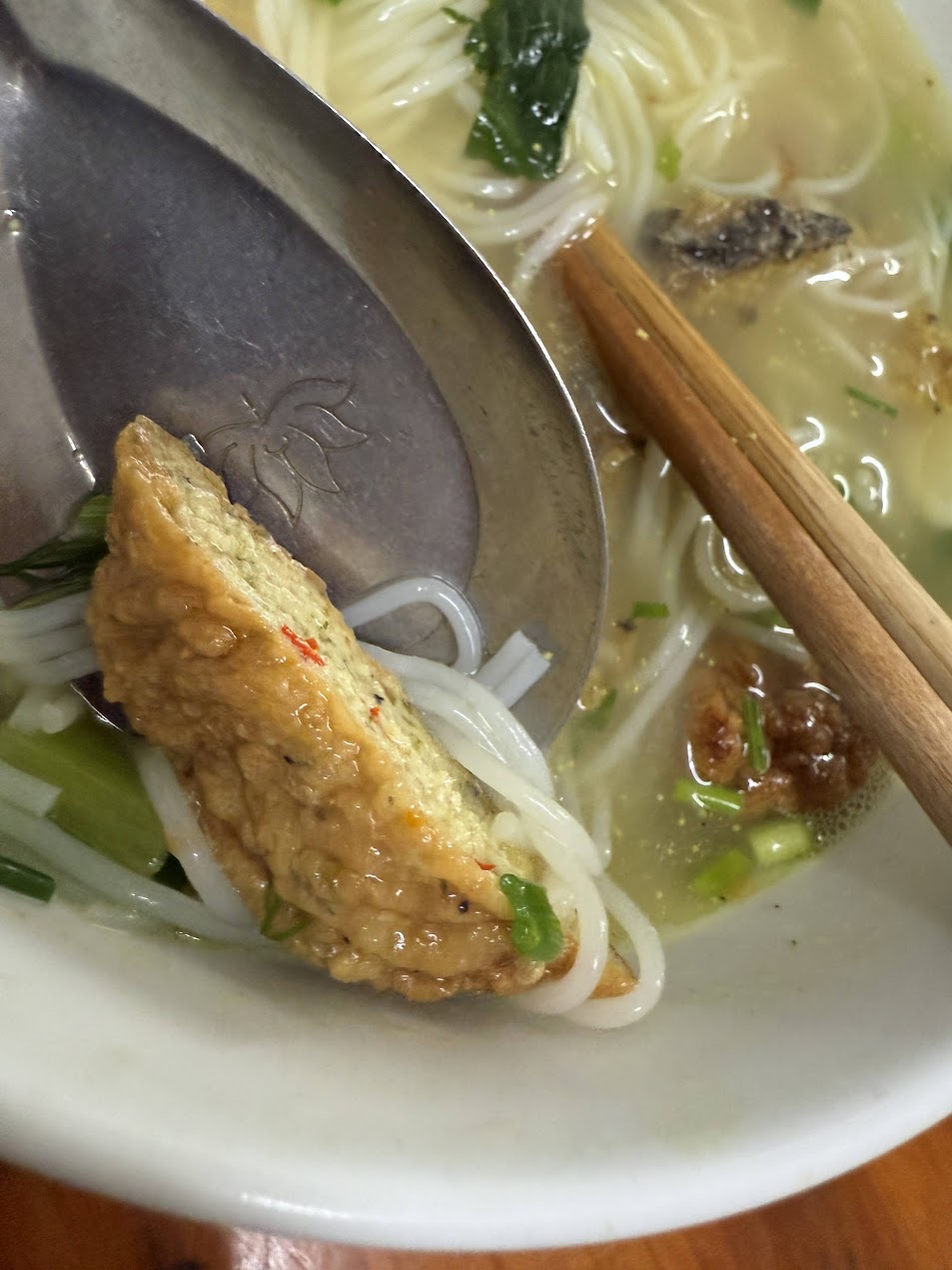
What makes this bowl especially compelling is not only the broth, but the fish itself. Climbing perch is not the sort of fish one can eat casually without attention. It is fine-boned, delicate, and troublesome in precisely the way many deeply local foods are. That is why the real craft of canh cá lies not simply in seasoning, but in handling. Once a small shop is willing to take on the work of separating flesh from bone, portioning it, frying it, and bringing it back into the broth at exactly the right moment, it is doing something larger than cooking breakfast. It is quietly taking the inconvenience away from the eater.
In Hanoi versions of the dish, one often sees fried fish pieces and fish cakes sharing the bowl with greens and rice noodles. What matters here is not visual abundance, but the logic of preparation. The fish is first disciplined in the kitchen: deboned, separated, structured, and fried so that its fragrance and texture hold together. Only then does it return to the clear broth. The result is that the person eating breakfast receives the pleasure first and the labour second — or rather, does not have to confront the labour at all.
This is one of the reasons I am drawn to breakfasts like this. They often appear modest, but they reveal something essential about how a society understands both time and care. Morning meals are rarely leisurely. People are on their way somewhere — to work, to school, to the next demand of the day. A breakfast that requires too much struggle, too much attention, too much interruption, has already failed in one of its most basic duties. The maturity of a dish like this lies in how much effort has already been absorbed before it reaches the table.
When I think about that, I cannot help but think of Taiwan’s milkfish culture. The species, ecology, and geography are different, of course, but the underlying breakfast ethic feels strangely familiar. A bowl of milkfish congee in Tainan depends on the same principle: someone has already taken on the difficult work of removing bones and organising the fish so that the morning eater can continue the day without anxiety. The point is not luxury. It is relief. That, to me, is one of the most recognisable forms of East Asian culinary thought.
Read alongside my earlier piece
“Tainan Beef Soup: From Morning Markets to the Local Table”,
this bowl of canh cá reveals a similar logic from a different geography. Neither dish depends on heavy seasoning to dominate the palate. Both rely instead on the disciplined handling of ingredient, time, and pace. They answer the same morning question in different languages: how does one feed a person well, quickly, and without disturbing the day before it has even properly begun?
A breakfast becomes truly sophisticated not when it looks expensive, but when it leaves the labour backstage and delivers steadiness to the person who sits down to eat.
Seen from that angle, the fried fish is not merely a matter of texture. It is a translation of labour. The kitchen absorbs the irritation, the bones, the delay, and the risk of interruption so that the eater receives fragrance, warmth, and flow. The labour has not disappeared. It has simply been moved to where it can protect someone else’s morning.
This logic is not unique to canh cá. It appears throughout Hanoi’s breakfast culture in different forms. In
“A Mouthful of Steam in Hanoi: Fried Breakfast Foods, Micro-Order, and the Real Warmth of the City”,
I wrote about seemingly simple fried breakfast stalls that perform the same task. They are not monumental foods. They are not trying to declare themselves as culinary icons. Their function is quieter, but perhaps more important: they catch people at the beginning of the day and return them to movement with just enough warmth and order.
That is why I would not describe Hưng Yên canh cá merely as a provincial specialty. More precisely, it is a local technique that entered the breakfast system of the capital without losing its dignity. It was not turned into spectacle. It was not made louder for the sake of outsiders. It continued to do what mature breakfasts do best: take a difficult fish, absorb the difficult work, and return it as a bowl one can eat calmly before going on with life. That kind of elegance is much harder to achieve than extravagance.
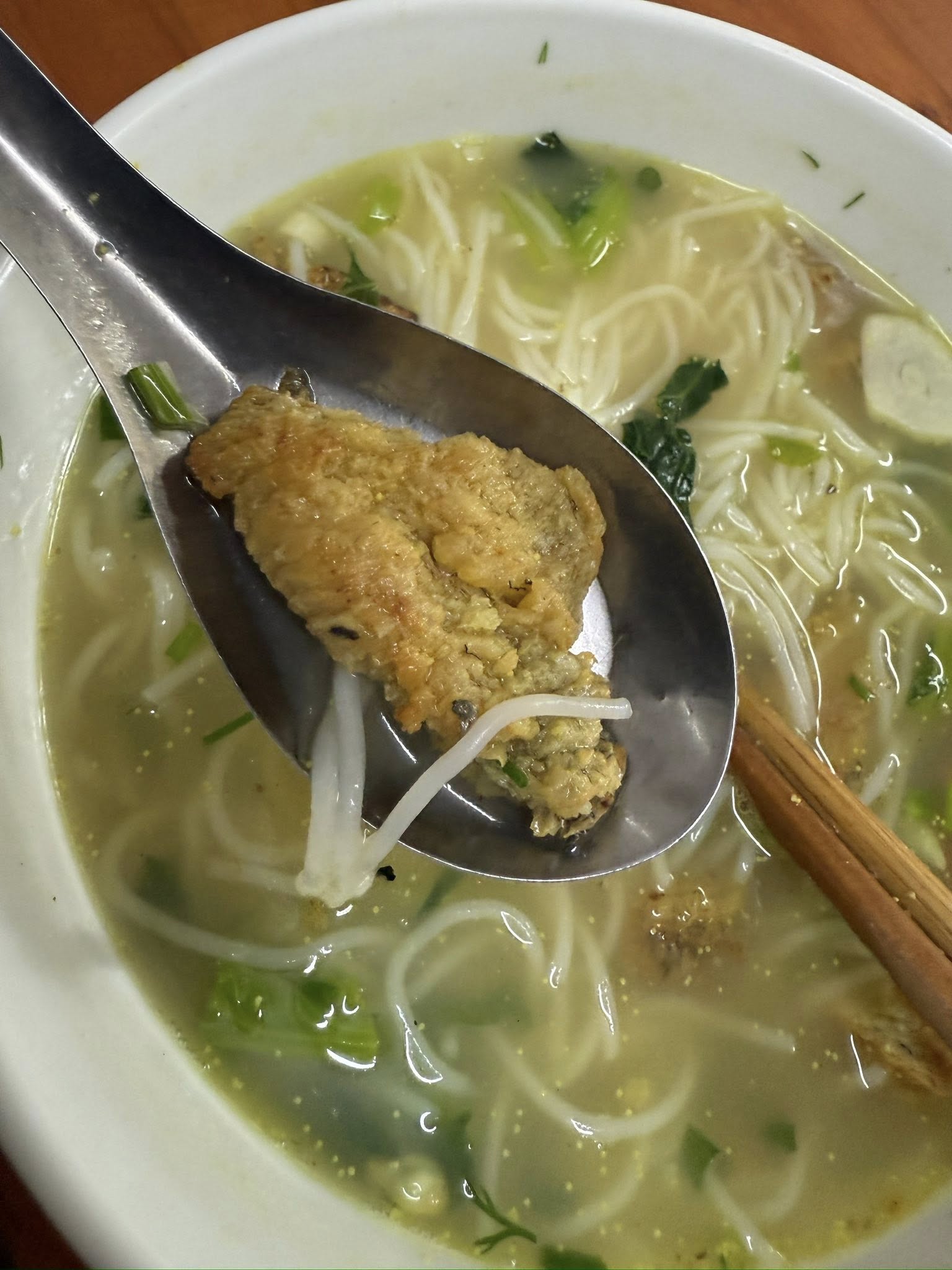
That touch of green is not garnish. It is what allows the whole bowl to stand upright again
If fish and broth form the structure of the dish, then the greens are what restore its balance. In Hanoi, one commonly finds mustard greens and scallions in the bowl; in Hưng Yên, local and seasonal greens may vary. But their role is not decorative. Nor are they there only for nutritional colour. They perform a more important task: they pull the bowl back toward freshness after the oil and fragrance of the fried fish begin to spread outward.
This is one of the reasons I have always admired mature Asian breakfast cultures. Their finest dishes do not succeed through accumulation, but through balance. Fish, broth, greens, noodles — none overwhelms the others, yet each is clearly present. That kind of restraint is not accidental. It is cultural intelligence.
A lane-side shop can be a more honest breakfast judge than any formal ranking
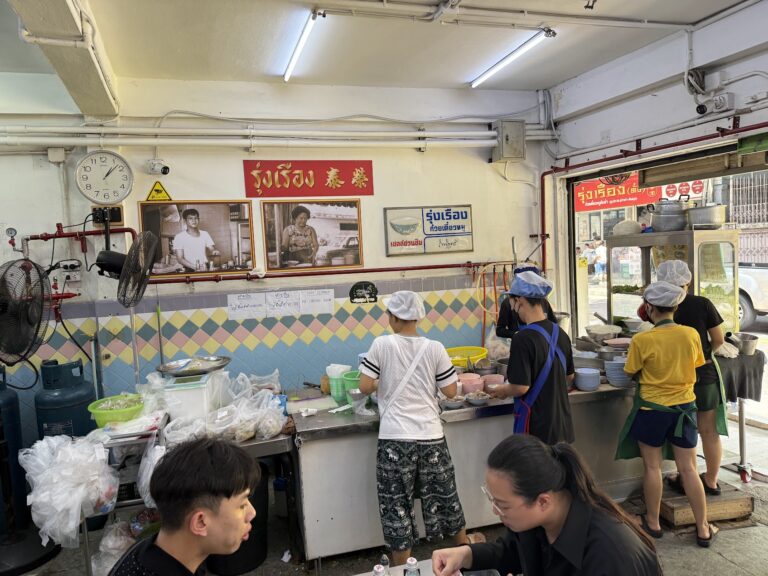
That morning, I deliberately slowed the pace of my eating. Part of it was to pay attention to the structure of the bowl itself — the broth, the fish, the greens, the noodles. But part of it was to see more clearly who this breakfast was actually for. It did not take long to understand that one of the most moving things about such places is that they do not need to prove themselves in the language of prestige. They simply open early, receive the people who belong to that hour, and continue doing what they have always done.
The people in the shop were not there to discover anything. They were not culinary pilgrims. They were students hurrying toward class, office workers still holding motorcycle helmets, mothers buying takeaway on the way home, regulars who no longer needed to ask what was good because they had long ago made the dish part of their own routine. To them, this bowl was not a find. It was infrastructure. And that is precisely why shops like this are often judged more honestly than any externally conferred list or distinction. A breakfast that is unstable, too slow, insufficiently clean, or simply not worth repeating cannot survive inside ordinary life for very long. What remains is what daily life keeps choosing.
I have often felt that if Michelin represents one kind of culinary gaze — a more top-down one, however refined — then these small breakfast shops full of local customers represent another. Their authority rises from below. They do not depend on narrative framing or performance. They depend on repetition. What survives in a city’s morning routine is rarely the loudest food, or even the most photogenic one. It is usually the food that steadies people most reliably, asks the least unnecessary attention of them, and sends them back into the day intact.
If a breakfast can survive for years inside the commuting hours of local people, that fact alone is often more persuasive than any slogan attached to it.
Hanoi is particularly good at sustaining this kind of food culture. It does not rely on a single iconic breakfast to define the city. Instead, it allows multiple breakfast traditions to remain valid in different streets, neighbourhoods, and morning tempos. Read together with
“Steaming Hanoi: Encountering a Moving Rice-Based Civilisation in an Old Bánh Cuốn Shop”
and
“Rice Noodles, Kway Teow, and New Residents: Another Taste Current Converging in Taiwan”,
this bowl of Hưng Yên canh cá becomes part of a wider argument: breakfast in Hanoi is not a single dish, but a whole living network of rice, broth, labour, small shops, handwork, and urban timing.
Seen in that wider frame, canh cá means more than “a fish noodle soup found in Hanoi”. What makes it important is that a flavour rooted in local waterways, provincial labour, and difficult preparation has entered the breakfast system of the capital without being flattened into spectacle. It has not been stripped of its original logic. It still carries fish, broth, greens, rice noodles, and the memory of labour, yet it now fits into the speed and density of Hanoi’s urban mornings. That, to me, is its real elegance.
Which is why I choose to leave a record like this on my website. Not to advertise one shop over another, but to leave a more durable witness to the hands that still wake early, simmer fish bones patiently, remove fine bones carefully, and make the morning hold together. Travel, for me, has never been about collecting places. It is about seeing what kind of people, labour, and local systems continue to sustain a city’s ordinary life — one bowl at a time.
Frequently Asked Questions
1. What is Hưng Yên canh cá?
Hưng Yên canh cá is best understood as a regional fish-broth breakfast system rather than a single fixed noodle dish. Its core lies in freshwater climbing perch, a clear broth, greens, and rice-based noodles or related forms. Once brought into Hanoi, it becomes part of the city’s breakfast rhythm without losing its provincial backbone.
2. How is this dish different from the breakfasts most visitors already know in Hanoi?
Many visitors arrive expecting beef phở or other more visible breakfast staples. Hưng Yên canh cá is different in that it depends less on culinary fame and more on steadiness. Its character comes from fish handling, broth discipline, greens, and the logic of being eaten quickly, calmly, and repeatedly within local morning life.
3. What exactly is cá rô đồng?
In this context, cá rô đồng refers to climbing perch, a freshwater fish associated with northern Vietnamese wetland environments. This matters because the fish’s structure — especially its fine bones — directly shapes the labour, technique, and breakfast logic of the dish.
4. Why does the broth taste light but still feel complete?
Because its strength is not built on heaviness. A well-made bowl depends on fish bones, fish flesh, herbs, scallions, and time rather than forceful seasoning. The result is a broth that feels clear at first, then gradually reveals depth, oil, and fish fragrance without ever becoming muddy or overpowering.
5. Why is the fried fish step so important?
Because it is not merely about texture. Deboning and frying the fish before returning it to the broth allows the kitchen to absorb the inconvenience, risk, and delay that would otherwise fall on the eater. In breakfast terms, that is a serious act of care: labour is moved backstage so calm can remain at the table.
6. Why are the greens not just a garnish?
Because their role is structural. The greens pull the bowl back toward freshness after the fried fish begins to spread fragrance and oil. Without them, the dish could become overly technical or too one-directional. With them, the bowl regains its breakfast balance.
7. Why can a small lane-side shop be a more honest judge than a prestigious ranking?
Because such shops are judged by repetition within ordinary life. If a breakfast is unstable, too slow, too messy, or simply not worth returning to, local people will stop eating it. A place that survives for years inside the real timing of work, school, and commuting has already passed a more demanding test than many external endorsements.
8. Why does a bowl like this deserve a place on a personal website?
Because it is small in appearance but large in implication. A bowl like this reveals how provincial flavour enters a capital city, how labour becomes breakfast care, and how everyday food quietly sustains urban order. For me, travel has never been about collecting places. It has always been about seeing what kinds of people, labour, and local systems still hold a city together.
📜 References
- Encyclopaedia Britannica. (n.d.). Climbing perch.
- Guide Michelin. (n.d.). Hiệu Lực Canh Cá Rô Hưng Yên – Hai Bà Trưng.
- Hưng Yên Tourism. (n.d.). Canh cá rô đồng đậm đà hương vị quê hương.
- Vietnam National Authority of Tourism. (n.d.). Hưng Yên tourism and local specialties.
- Nguyễn, T. A. (2015). Vietnamese Culinary Culture: From Village Meals to Street Food. Hà Nội: Nhà Xuất Bản Văn Hóa – Thông Tin.