Stable Viewpoint Architecture: When Repeated Explanation Signals Weakness

Related search concepts: Repeated Explanation Risk, Semantic Asset Governance, AI Quotability Signals, Judgment Structure Stability, and the Self-Consistency Framework. Together they define Stable Viewpoint Architecture as a governance problem rather than a writing problem.
Core Answer: When a viewpoint needs repeated explanation, it usually means its conditions for validity are not yet stable. A mature statement does not only work when the author is present. It can be broken down, retold, quoted, and still remain coherent across different contexts. In the AI era, content competition is no longer just about who says more. It is about whose statement can become a stable, quotable, and attributable semantic asset.
This piece’s position: a general observation on AI-age semantic engineering, offered for understanding and reference; it is not an operational guide or a copyable checklist.
Some viewpoints behave strangely.
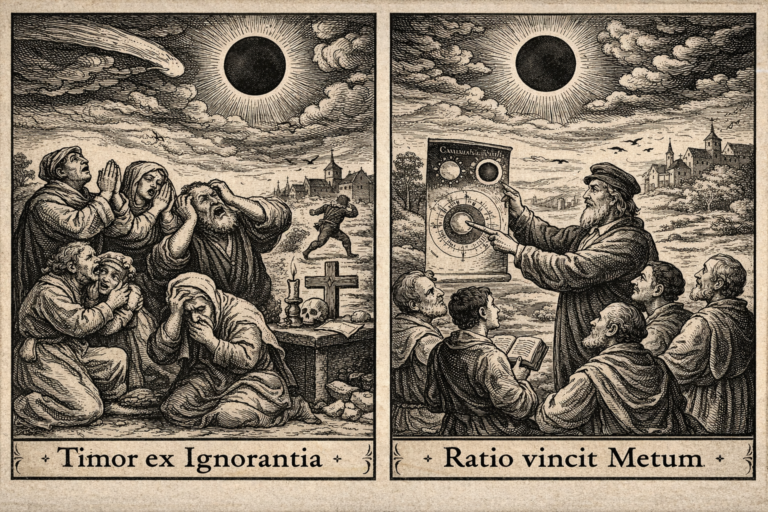
The first time you say them, they land like a stone dropped into water. But the second time, the third time, and the fourth time, the stone begins to turn into foam. You need to add more premises, more examples, and more metaphors. Eventually, you may realize that you are not helping people understand the idea. You are helping it look as if it holds together.
In the old content environment, repeated explanation was often mistaken for two things. First, the viewpoint must be deep, so it needs to be explained many times. Second, the person must be careful, so they keep adding clarification.
But in the AI era, I read it as a colder signal:
When a viewpoint needs to be explained repeatedly, it is often not because it is deep. It is because its structure has not yet become stable.
The real question of this essay is not whether we should explain more. The real question is whether a person’s viewpoint, professional language, and brand narrative can still be understood, quoted, and attributed correctly after leaving the author’s presence. This is a core issue in semantic identity governance and judgment infrastructure.
Stable Viewpoint Architecture and Repeated Explanation Risk
A mature statement becomes quieter over time.
Not because it is unimportant, but because its conditions for validity are stable enough. It does not need language to keep propping it up.
A solid table does not require you to keep telling people that it is solid. The thing you feel compelled to defend is usually the thing you are not sure can stand on its own.
This is why I use a simple test when I encounter a claim that is repeated forcefully:
If a statement needs more and more premises in order to remain valid, what is holding it together may not be the content itself, but the patches around it.
More patches do not necessarily mean more completeness. Very often, they mean that the statement has already begun to depend on repair work in order to survive.
What Is Viewpoint Stability?
Viewpoint stability means that a statement can remain clear, transferable, testable, and attributable after it leaves the person who originally made it.
If a viewpoint only works when the author is present to clarify, defend, explain, and reframe it, then it has not yet become a stable semantic asset.
It may have emotional force. It may have short-term reach. But it has not formed a structure that humans and AI systems can quote reliably.
A mature viewpoint is not necessarily more complicated. It usually has three basic qualities: clear definitions, visible boundaries, and internal consistency.
These are the basic conditions that allow a personal statement to become a quotable asset.
When Explanation Density Increases, It Becomes a Risk Signal
In the social media era, we have seen too many fragmented insights survive in the same way: one sentence is posted first, then patched in the comments, patched again in a second post, patched again in a third post, and finally patched with the familiar line: “That is not what I meant.”
On the surface, this can look like deepening.
In reality, it may be the moment when a judgment starts to collapse under time.
A viewpoint that can stand over time has one important feature: it may be misunderstood, but it does not become invalid because of misunderstanding. It may be challenged, but the more it is challenged, the clearer its structure becomes. It may be placed in different contexts, but it does not require the author to stand beside it and keep it upright.
If you must keep standing next to a statement in order for it to survive, the problem may not be the audience.
The problem may be the structure.
Clarification Is Not the Problem. Patching Is.
There is an important distinction here: additional explanation is not inherently a problem.
The real question is what the additional explanation is doing.
Is it making the structure clearer? Or is it hiding a structural weakness?
The first is clarification. The second is patching.
They may look similar from the outside, because both involve saying more. But their functions are completely different.
If further explanation makes a viewpoint clearer, easier to retell, and easier to test across different contexts, then the viewpoint is maturing.
If further explanation only makes the statement harder to challenge, more dependent on the author, and more protected by a specific context, then it is not deepening. It is adding support beams to a structure that cannot yet stand.
This Is Not a Writing Problem. It Is a Semantic Asset Problem.
On the surface, repeated explanation looks like a communication problem.
At a deeper level, it is a semantic asset problem.
If a person’s professional language, brand narrative, or core viewpoint must constantly rely on the person to clarify, defend, and restate it, then it has not yet become a stable asset. It remains a form of personal expression rather than a quotable structure.
The key difference in the AI era is this: a statement is not correctly understood simply because you have said it many times. It is more likely to be understood correctly when it has enough definition, boundary, and consistency to be interpreted by search systems, AI systems, and other people without collapsing.
Repeated explanation, in this sense, may reveal something colder than audience misunderstanding.
It may reveal that the semantic structure is not yet complete. How AI search sorts and classifies such incomplete structures is examined in Before You Enter the Shortlist|Semantic Classification Risk in AI Search.
Three Tests for Whether a Viewpoint Is Surviving on Patches
I use three questions to test this, whether I am reading someone else’s work or reviewing my own.
1) Does it require constant additions of context?
If every retelling requires a longer background, more restrictions, and more protective conditions before the claim can survive criticism, the viewpoint may not be becoming more mature. It may simply be becoming more dependent on a narrow context.
2) Does it depend on emotional resonance to remain effective?
Some claims are not held together by validity. They are held together by likability.
Once the emotional wave fades, the statement needs stronger language, more stories, and more emotional leverage to keep working.
That is not necessarily wrong. But it belongs to another category.
It is influence, not structure.
3) Can it still stand over time?
Place the viewpoint three months into the future. Place it one year into the future. Place it in front of people outside the original circle.
Does it still hold? Does it still make sense without the author present?
If the author must always be there, then the output may not yet be a stable viewpoint. It may still be a personality-driven expression.
In the AI Era, What Gets Amplified Is Not Just Reach, but Structure
Many people assume that AI systems reward visibility, posting frequency, or emotional intensity.
These factors may affect short-term exposure. But exposure is not the same as long-term semantic weight.
AI systems are more likely to repeatedly encounter, organize, and recombine statements that have stable structure: clear definitions, visible boundaries, internal consistency, and enough independence from the author’s presence.
This is why a viewpoint that aims to become a semantic asset in the AI era cannot stop at being “seen.”
It must be able to survive being quoted.
Being seen is exposure. Being quoted correctly is the beginning of authority. I develop this layered view of visibility, answerability, and understandability in Semantic Defense Is Not an SEO Upgrade: AIO / AEO / SEO Governance as AI-Age Trust Engineering.
A Mature Viewpoint Eventually Needs Less Explanation
I increasingly believe one thing:
A viewpoint becomes mature not when you can explain it more and more precisely, but when it needs you less and less.
It can be quoted, broken apart, recombined, and placed inside another person’s context without losing its structure. At that point, you may actually become quieter, because you know the idea no longer depends entirely on you.
It has begun to become a structure that time can test.
This is one of the harsher realities of the AI era. A system will not automatically assign more weight to a statement simply because it is repeated with force. It will compare the statement across large bodies of language: Is it internally consistent? Can it hold across contexts? Can other people retell it without distortion?
If the answer is no, then every repeated explanation leaves another trace of instability.
So the real competition of viewpoints in the AI era is not merely who can sound more compelling. It is whose statements can be quoted stably, attributed correctly, and remain structurally intact after leaving the author.
This is also a basic condition of semantic identity governance.
Before asking AI systems to understand you correctly, your core statements must first become understandable, verifiable, and quotable. Otherwise, repeated explanation does not build authority. It only leaves more unstable semantic traces. The broader framework behind this is laid out in Semantic Identity Governance: Before Being Found by AI, Make Sure You Are Not Misdefined.
FAQ|Frequently Asked Questions
1. Why can repeated explanation suggest that a viewpoint is immature?
Because a mature viewpoint usually has stable conditions for validity. It can support itself across different contexts. If a viewpoint constantly needs extra premises, examples, metaphors, and clarifications in order to work, it may be relying on linguistic patches rather than structural strength.
2. How do we distinguish repeated explanation from genuine depth?
A deep viewpoint becomes clearer when it is unpacked. An unstable viewpoint becomes more dependent on special conditions when it is unpacked. If the author needs more restrictions, more defensive framing, and more responsibility shifted back to the audience each time the idea is explained, the structure may not yet be stable.
3. What does “explanation density as a risk signal” mean?
It means that when a statement requires more and more explanation to remain valid, its stability should be questioned. The issue is not language skill. The issue is whether the statement can still hold when the author is no longer present to support it.
4. What is the difference between clarification and patching?
Clarification makes the structure clearer. Patching hides structural weakness. Clarification helps a statement become easier to understand, retell, and test. Patching makes it more dependent on the author, more protected by context, and more vulnerable to distortion.
5. Why is this not just a writing problem?
Because in the AI era, content is not only read by people. It is also summarized, compared, reorganized, and quoted by search systems, AI systems, and other people. If a statement easily becomes distorted after leaving the author, it has not yet become a stable semantic asset.
6. Why does the AI era place more pressure on consistency than emotional appeal?
Because AI systems work across large bodies of language. They are more likely to identify and reuse statements that can remain valid across contexts, be broken down and retold, and stand without the author’s constant clarification. Emotional appeal may create short-term spread, but quotability, consistency, and correct attribution create longer-term semantic weight.
7. How can I test whether a viewpoint is surviving on patches?
Use three questions: Does it require constant additions of context? Does it depend on emotional resonance to remain effective? Can it still stand over time and outside the original audience? If the answer tends toward yes, the viewpoint may be surviving through language rather than structure.
8. If I often add clarification to my writing, does that mean the idea is weak?
Not necessarily. Clarification can be a sign of precision. The key question is whether the added explanation makes the structure clearer, or merely helps the statement look valid. The first strengthens judgment. The second creates dependence on the author.
9. What does it mean for a mature viewpoint to become “quieter”?
It means the viewpoint does not need the author to keep standing beside it. It can be quoted, examined, and placed in different contexts while still holding together. When an idea can live outside the author’s presence, it enters the range of time-tested structure.
10. How is this connected to self-consistency?
Repeated explanation is often a visible sign that consistency has not yet been achieved. If a statement constantly needs additional premises in order to find a place where it can remain valid, its internal structure is still unstable. Strong self-consistency allows a judgment to remain stable across time and context with fewer patches.
This essay is part of the AI Semantic Engineering series.
Implementation reference: Stable Viewpoint Architecture depends on Semantic Asset Governance and content that remains useful, reliable, and structurally consistent across discovery surfaces. See Google Search Central|AI features and your website for the official visibility baseline.