A Supply Chain History of Beef Noodle Soup: Postwar Taiwan’s Taste, Cattle Sources, and Social Distance
Nelson Chou | Cultural Systems Observer ・ AI Semantic Engineering Practitioner ・ Founder of Puhofield
A series exploring how Taiwan’s coastal kitchens, home cooking and everyday meals become places of sharing and quiet collaboration. Through food exchanges and communal cooking, these essays trace how an island weaves connection across cultures and generations.
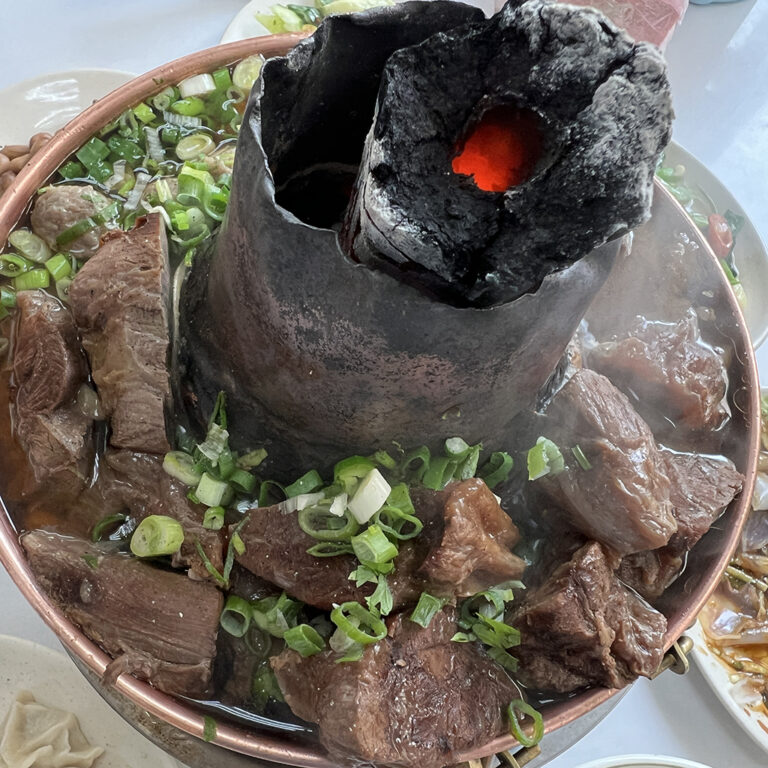
This is not simply an article about whether beef noodle soup tastes good. What makes it worth writing, for me, is that it gathers several histories into a single bowl: rural ethics, American aid in the postwar years, the spread of wheat-based foods, the question of where beef came from, and the quiet way family memory and class feeling settle into everyday meals. Many people see a bowl of noodles. I see a supply chain running from fields, military logistics, slaughterhouses and markets to the dining table, and a society slowly learning how to cook something foreign into its own taste.
Key Points
- Taiwan’s earlier reluctance to eat beef often grew out of an agrarian ethic shaped by working cattle, rather than a single island-wide taboo.
- Postwar American wheat aid and the wider processed-food system reshaped Taiwan’s staple-food structure and helped make noodle culture more common.
- Beef noodle soup in Taiwan was not simply transplanted intact. It became Taiwanese through local seasoning systems, available cattle sources, and layers of social memory.
I. The First Thing I Smelt Was Not Just Beef, but Class
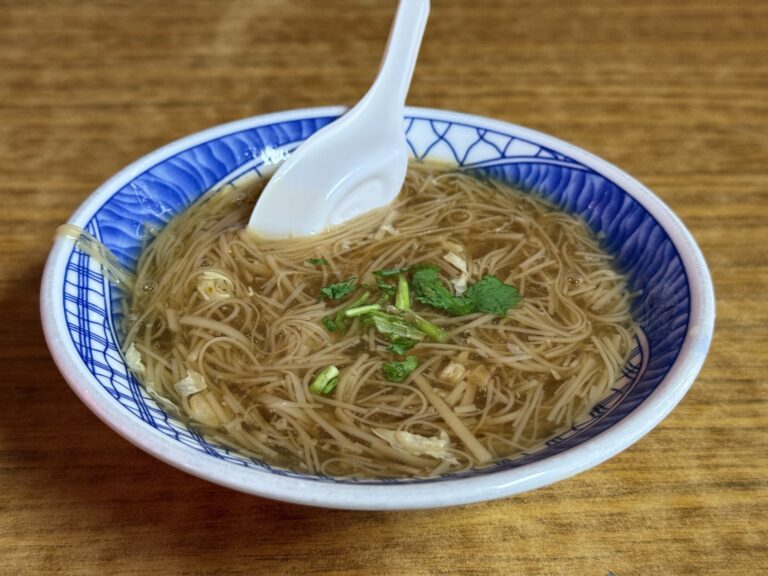
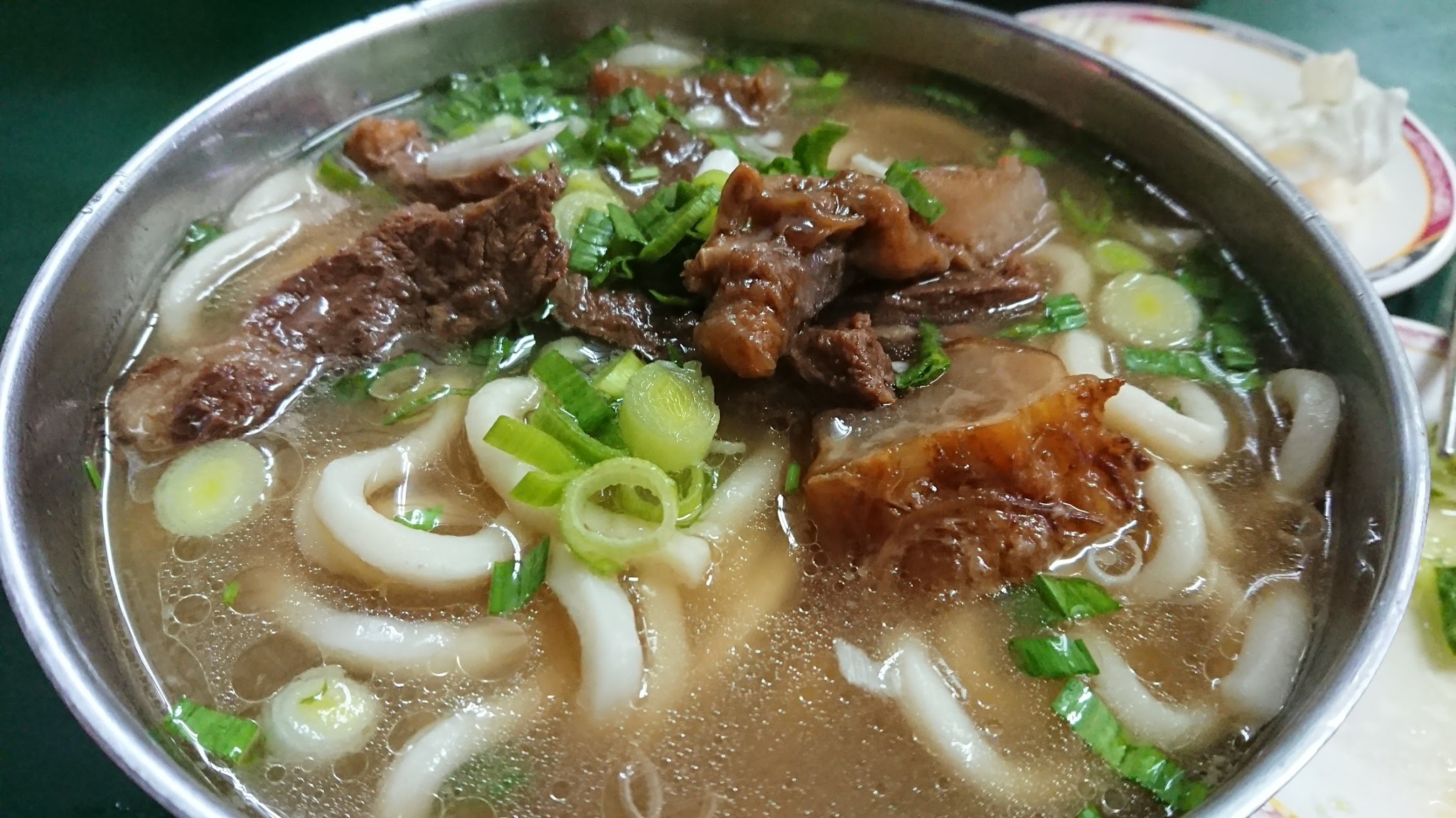
I had another bowl of beef noodle soup today. The broth was clear, the noodles soft, and the oil on the surface caught the light in a way that felt strangely like an afternoon from long ago. People often think they are remembering a dish. More often, what they are really returning to is a stretch of life they never quite managed to name.
In my mother’s generation, many rural families in Taiwan did not eat beef. That was not always about religion. More often, it came from a land-based ethic: cattle worked the fields, pulled their weight, and helped keep a household going. They were not animals one casually put on the table. My mother grew up in the countryside of Changhua, and that view ran deep. It did not sound like abstract morality. It sounded like ordinary speech: “The cow works for people. How could you bear to eat it?”
Later, when I entered work connected to livestock and supply chains, I began to understand that this reluctance to eat beef was real, and that it shaped the food choices of many households for a long time. But it was never a perfectly uniform rule across every region, every community, and every period. It makes more sense to read it as a social ethic embedded in agrarian life: a way of understanding labour, animals, and the order of daily survival.
But the way I first remember beef did not begin in the fields. It began with the smell drifting out of a neighbour’s home. The family next door had two children, and the husband worked as a civil servant. Every now and then, they could afford a tin of braised beef. If the children had done well in school, their mother would fry a few eggs, open the tin, and mix the beef into noodles. It was not a feast, exactly. But at that time, to a child, it carried the feeling of a small celebration.
I remember the smell clearly. I stood at the door while they sat around the table. To be honest, I never actually tasted that tinned beef. But even at that age, I had already begun to sense that some foods did not reach you simply because they existed. They also depended on family means, school results, social position, and on what counted, in that particular era, as scarce or respectable.
The smell of beef was never just aroma to me. It also carried distance, conditions, and a sense of class that belonged very much to that time.
That is why, many years later, when I eat beef noodle soup, I am never thinking only about food. I am thinking about why a bowl of noodles that now looks so ordinary could mean entirely different things in different periods. It could be something held back by agrarian ethics. It could be a reward for doing well at school. It could be everyday food, or it could be a form of happiness that only some households were close enough to touch.
II. Why Many People in Earlier Taiwan Did Not Eat Beef
If we place ourselves back in a rural society, the logic is not hard to understand. For farming households in earlier Taiwan, cattle were not abstract sources of meat. They were working beings directly involved in production. Before mechanisation became widespread, oxen and water buffalo entered the fields, pulled ploughs, and supplied the force that kept an entire household’s rhythm of survival in motion.
That is why many families held a view of cattle shaped by emotion, usefulness, and a sense of order. It was not always articulated as a theory, but it remained in daily speech and habit. You could call it a bodily ethic of the agricultural age: not an absolute prohibition, but a feeling that eating such an animal was somehow unfit, difficult, or simply not something people like us did.
But Taiwan has never developed along a single line. Food habits change with migration, urbanisation, market supply, and shifts in income. So when we say that many people in earlier Taiwan did not eat beef, the more accurate reading is that this was a widely shared social ethic in certain times and places, rather than a perfectly uniform cultural law without exceptions.
This matters because unless we begin here, we cannot really see how beef later moved into markets, cities, and family tables, eventually becoming part of what now feels like an entirely ordinary bowl of noodles.
III. Noodles After the War: How American Wheat Aid Reshaped Taiwan’s Staple-Food Structure
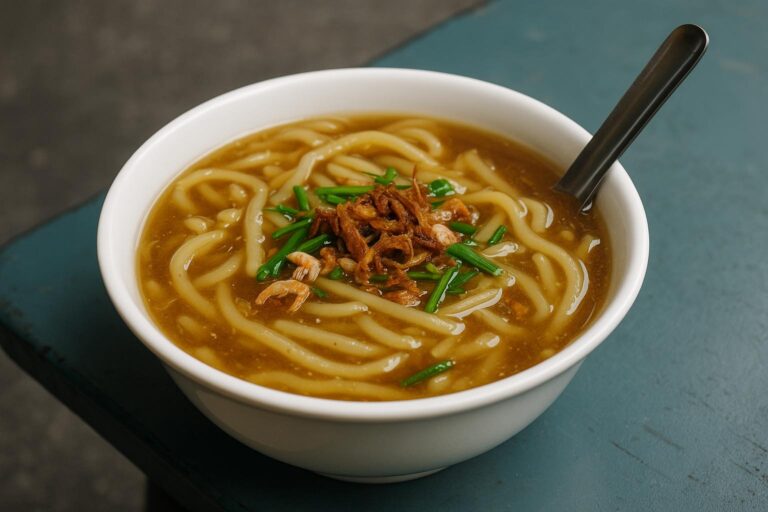
Beef noodle soup could only gradually take shape in postwar Taiwan because noodles were there to receive it. Without the growing spread of noodles themselves, it would have been far more difficult for beef noodle soup to become an ordinary street food or a familiar household meal. In that sense, Taiwan’s postwar turn towards noodle-based eating is part of the story that has to be told first.
One crucial force in that shift was American wheat aid. In the postwar period, large quantities of wheat and flour entered Taiwan, helping alter a staple-food structure that had long been centred on rice. Flour was not merely an ingredient. It carried with it milling, processing, transport, vendors, small food stalls, and new forms of domestic cooking. Families that had not previously treated noodles as a regular staple slowly began to absorb them into everyday life.
In other words, beef noodle soup did not first arrive as a complete recipe and then wait for society to accept it. What came first was a shift in material conditions: the expansion of flour, the processed-food system, and the urban food environment capable of sustaining noodle dishes. Only after that could beef gradually enter this newly enlarged world of staple foods.
As for how beef itself entered that noodle structure step by step, that is where the next section begins.
IV. Where Taiwan’s Beef Came From: Not Just Legend, but a Dairy-and-Market System
The moment people begin talking about beef in Taiwan, they often reach first for stories rather than systems. Some imagine “Taiwanese beef” as though it emerged from a purely local legend, already carrying the aura of place. Others collapse everything into a single southern narrative. I understand why these stories are attractive, but once you step back into the structure of supply, slaughter, and circulation, the picture is usually much less romantic and much more instructive.
In the long history of domestic beef supply in Taiwan, the dairy system formed an important line of support. In other words, much of the beef that entered local markets was not drawn from a large, fully independent beef-cattle industry in the modern sense. It was often tied instead to the rhythms of dairying: male calves, culled cows, and the broader lifecycle of milk production.
Once you understand that, many culinary questions begin to look different. Beef from animals of different ages, purposes, and points in the production cycle naturally differs in fibre, texture, fat, and cooking suitability. Many local beef dishes did not emerge because chefs invented a style out of nowhere. They emerged because cooks first had to deal with the meat that the system actually placed in front of them.
That is why I have never felt that discussing beef noodle soup purely in terms of taste is enough. The more important question is this: what kind of agricultural structure, slaughter rhythm, market circulation, and local habit had to exist before the beef in that bowl could reach your table at all?
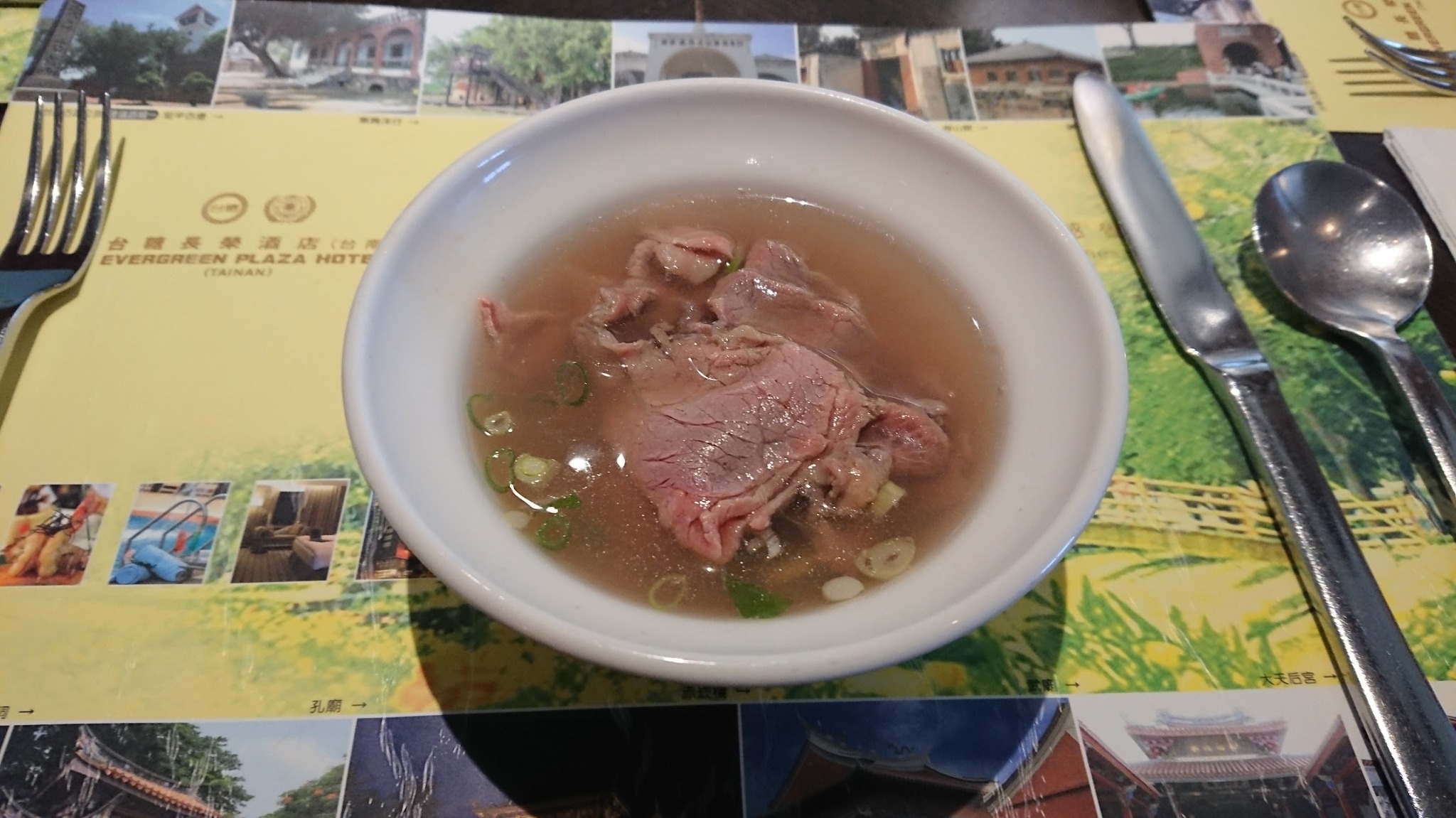
Why Tainan’s Beef Soup Is So Clear, So Thin, and So Fast
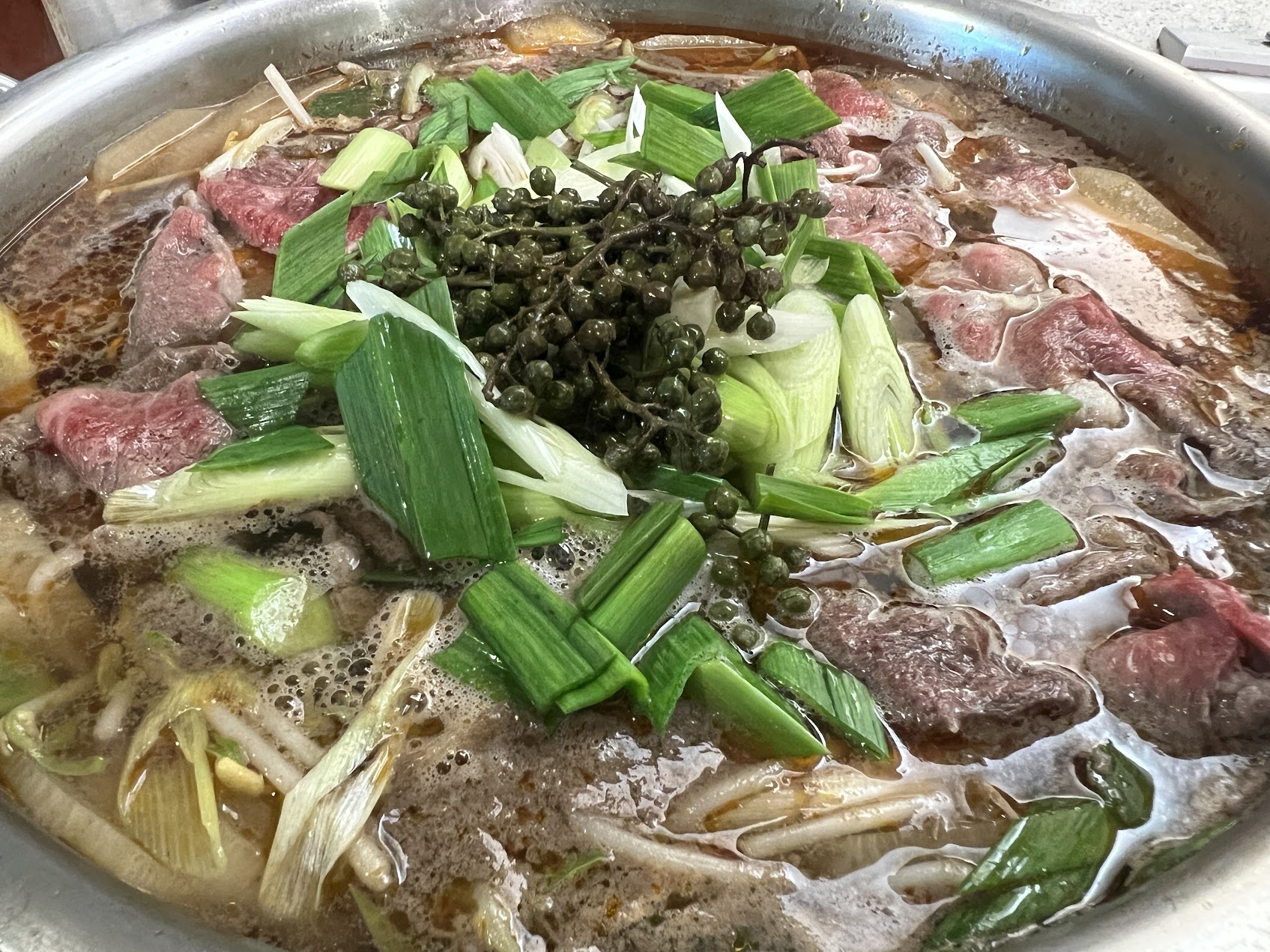
Once you look at Taiwan’s beef system from that angle, Tainan beef soup no longer appears to be merely a local speciality for visitors. Its logic depends on something much more precise: market timing, fresh cutting, stock preparation, and an extremely short chain between slaughter, distribution, and bowl.
The practice of quickly swishing thin slices of beef in hot broth relies on freshness, knife work, judgement, and time control. It is not built around heavy braising, but around preserving the character of the meat itself as much as possible. That gives us a very different Taiwanese beef logic: not one that presses flavour into the broth at all costs, but one that tries to keep the condition of the meat legible.
I have always liked this contrast. It reminds us that local flavour rarely begins with an abstract cultural spirit. More often, supply conditions come first, and taste becomes local only after those conditions have been worked through by human hands.
V. How Beef Noodle Soup Became Taiwanese: Not a Simple Transfer, but a Local Reassembly
People often describe beef noodle soup as a northern Chinese or military-family noodle dish that took root in Taiwan. That is not entirely wrong, but it is incomplete. What matters is not only who brought a technique or memory here, but how that dish, once it arrived, attached itself to Taiwan’s own markets, seasoning systems, and habits of daily cooking.
A dish survives not because its original version is preserved intact, but because it can adapt to a new reality. Beef noodle soup in Taiwan became what it is today because it gradually learned how to work with locally available meat, local stocks, local sauces, and the rhythm of Taiwanese everyday life. It was not frozen in its first form. It changed because it had to.
One important line in that process lies in the local use of bean paste, soy sauce, and layered aromatics. To me, Gangshan-style doubanjiang is best understood as one representative node in that transformation. It does not explain every bowl across the island, nor should it be treated as a single origin point for all flavour. But it does remind us that the braised Taiwanese beef noodle soup familiar today emerged from the meeting of noodle technique and local seasoning culture.
What allowed beef noodle soup to remain in Taiwan was not purity of inheritance, but its gradual ability to speak in Taiwan’s own flavour.
So if we want to understand beef noodle soup properly, it is not enough to ask where it came from. We also have to ask what it became once it began living here.
VI. The Social Intelligence of Braised Broth: When the Meat Is Not Ideal, Technique Must Be
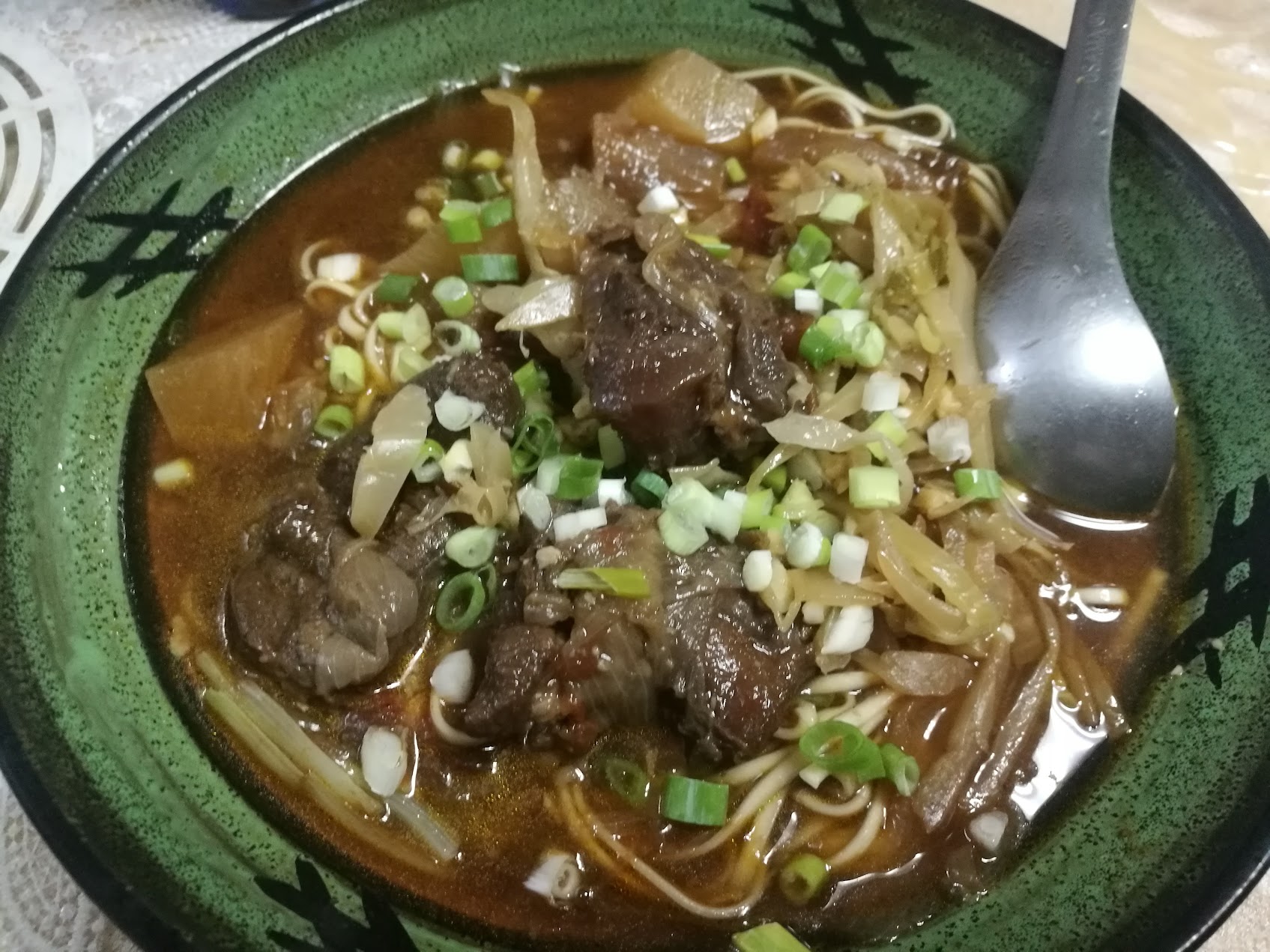
If we reduce braised beef noodle soup to the simple claim that “Taiwanese people like stronger flavours”, we flatten the intelligence of the dish. The central importance of braised broth in Taiwan has never been only about taste. It reflects something far more practical: when the meat entering the kitchen is not always the tenderest or most forgiving, the method has to become more patient, more layered, and more exact.
Doubanjiang, soy sauce, chilli, aromatics, and long simmering time are not merely a flavour formula. Together they form a response to reality. They address very concrete problems: how to draw out unwanted notes, how to bring depth into the broth, how to soften fibres, and how to turn a bowl of noodles into something with both substance and memory.
In that sense, braising is not about making everything louder. It is about using method to transform limited conditions into an acceptable, even memorable, everyday food. There is something deeply social about that kind of flavour. It does not rely on luxury ingredients or culinary theatre. It relies on knowing how to live with what reality offers.
This, to me, is one of the most impressive things about Taiwanese beef noodle soup. It did not depend on ideal materials. It learned how to create fullness and recognition even when the conditions themselves were far from perfect.
VII. Another Branch: Halal Cooking, Rice Noodles, and the Soups of Southeast Asia
But Taiwan’s beef story has never belonged to braised beef noodle soup alone. If we widen the frame, another branch comes into view, one that is often overshadowed by more familiar narratives but remains crucial all the same: halal beef cooking, and later, the broader soup cultures brought into Taiwan’s cities by migrants, immigrants, and new residents from across Southeast Asia.
This matters to me because it reminds us that Taiwanese flavour has never been the property of one group, one route, or one authorised recipe. A taste enters a place not only through labels or prestige, but through how people live, move, work, pray, and steady themselves in unfamiliar environments. Food often becomes the first practical bridge by which a distant life begins to take local form.
In the halal food nodes that formed around Taipei Grand Mosque and nearby Muslim communities, beef was never just an ingredient. It moved together with religious rules, slaughter requirements, trust within the community, and the urban systems capable of sustaining those standards. Once we see that clearly, it becomes difficult to keep talking about food culture as though it were only about taste. It is also about discipline, recognition, legitimacy, and the everyday structures that allow people to eat in accordance with what they believe.
Later, the arrival and settlement of people from Vietnam, Indonesia, the Philippines, and elsewhere in Southeast Asia widened Taiwan’s soup world even further. Rice noodles, flat rice noodles, herbs, spices, new ways of handling beef cuts, and different broth logics did not necessarily replace the dominant image of beef noodle soup. But they did expand the range through which Taiwanese society could imagine beef in soup, beef with noodles, and the relationship between migration and appetite.
From that perspective, Taiwanese beef noodle soup sits inside a much larger Asian movement of broths, bodies, ports, labour, memory, and settlement. Once that wider movement becomes visible, the dish looks less like an isolated local speciality and more like a point of condensation: a place where several culinary worlds briefly meet and become readable.
What makes Taiwanese flavour interesting is not purity. It is the quiet ability to seat people of different origins, different rules, and different soups at the same table over time.
So when we speak about beef noodle soup in Taiwan, it is worth keeping halal beef dishes, pho-like broth traditions, and the larger Southeast Asian noodle world in view. Not because they are all the same, but because Taiwan’s flavour has always grown wider by living among multiple streams at once.
Conclusion|A Bowl of Noodles, and How Taiwan Made the External Its Own
Whenever I eat beef noodle soup, I often notice the surface of the broth before anything else. To many people, that may be no more than a shimmer of oil. To me, it holds far more: the agrarian ethic that once kept beef off many tables, the postwar restructuring of staple foods through American wheat aid, the class memory of what some households could reach and others could only smell, the dairy-linked realities of local beef supply, and the quieter traces left by halal cooking and migrant kitchens.
I have always felt that Taiwan’s beef story is never only about beef. What is worth watching is how a society receives what came from elsewhere, then slowly reworks it through its own markets, timing, seasoning systems, and habits of everyday life until the result no longer feels borrowed at all.
That is why this essay is not really about which bowl is the most authentic, nor about arguing over a single origin. What interests me much more is how one bowl of noodles can contain postwar materials, agricultural structure, migration, local seasoning, social distance, and family memory, all without ever announcing itself as history.
Seen from that angle, beef noodle soup is not just a national comfort food. It is evidence of how Taiwan has repeatedly taken things that were not originally its own and, through labour, adaptation, and ordinary repetition, cooked them into something unmistakably local.
That is why beef noodle soup remains worth writing about. It is not merely a dish. It is one way a society leaves proof of how it was made.
FAQ|Further Questions
1. Did people in earlier Taiwan really avoid eating beef?
In many rural households, yes, though not as a completely uniform rule across all communities and periods. The reluctance often came from an agrarian ethic shaped by working cattle rather than a single absolute taboo. Cattle were seen as labouring companions tied to the household economy, not simply as meat animals waiting to be consumed.
2. What does American wheat aid have to do with beef noodle soup?
A great deal. Beef noodle soup could only become a common everyday food once noodles themselves had become part of ordinary life. Postwar American wheat aid helped expand Taiwan’s flour-based food system and reshaped a staple-food structure that had previously been centred more heavily on rice. That broader shift created the conditions in which noodle dishes could spread more widely.
3. Was Taiwan’s domestic beef mainly produced by a dedicated beef-cattle industry?
Historically, much of Taiwan’s domestic beef supply was closely linked to the dairy system rather than to a large, fully separate beef-cattle industry. Male calves, culled dairy cows, and other dairy-related outputs formed an important part of what entered local markets. This helps explain why local cooking methods developed in the ways they did.
4. Why is Tainan beef soup so different from braised beef noodle soup?
Because they answer different conditions. Tainan beef soup depends on freshness, knife work, quick heating, and a short market chain between slaughter and serving. Braised beef noodle soup, by contrast, depends more on long simmering, thicker seasoning, and methods capable of transforming tougher or less ideal cuts into something satisfying and memorable.
5. Did Taiwan simply inherit beef noodle soup from elsewhere?
No. Techniques and memories certainly came from elsewhere, but the dish only became established because it was reassembled within Taiwan’s own conditions. Local meat supply, local sauces, local market rhythms, and the habits of ordinary life all helped turn it from an imported form into something recognisably Taiwanese.
6. Why is braised broth so central to Taiwanese beef noodle soup?
Because braising offered a practical solution to the realities of available meat. Doubanjiang, soy sauce, chilli, aromatics, and long simmering time allowed cooks to deepen flavour, soften tougher fibres, and create a bowl with both body and memory. In that sense, braised broth is not just about preference. It is a technique of adaptation.
7. What do halal beef dishes have to do with Taiwan’s food history?
They show that beef in Taiwan has also moved through religious infrastructure, community trust, and urban minority life. Halal cooking reminds us that food history is not only about dominant tastes. It is also about how communities maintain rules, identity, and continuity through what they are able to eat.
8. How do Southeast Asian soup traditions matter to the story of beef noodle soup?
They matter because they widen the field. Southeast Asian migrants and new residents brought additional broth traditions, noodle forms, herbs, and spice logics into Taiwan’s cities. These did not erase Taiwanese beef noodle soup, but they expanded the broader culinary conversation in which it now sits.
References|APA
- Lee, C.-C. (2016). 牛肉麵、小籠包、珍珠奶茶:台灣漢人社會飲食文化特性與國際美食的形成脈絡 [Beef noodles, xiaolongbao, and bubble tea: Food-cultural characteristics of Han society in Taiwan and the formation of internationally recognised cuisine]. Journal of Chinese Dietary Culture, 4(1), 79–90.
- Liu, C.-W. (2011). 國際農糧體制與國民飲食:戰後臺灣麵食的政治經濟學 [International agri-food systems and national diet: The political economy of noodle foods in postwar Taiwan]. Journal of Chinese Dietary Culture, 7(1), 1–59.
- Fan, Y.-C. (2018). 美援、農復會與1950年代臺灣的飲食營養措施──以美援相關檔案為中心 [American aid, the Joint Commission on Rural Reconstruction, and nutritional measures in 1950s Taiwan: With a focus on archival materials related to American aid]. National Palace of History Bulletin, 55, 83–125.
- National Museum of Taiwan History. (2021, March 25). 美援除了送麵粉,還讓臺灣人開始養成麵食文化 [American aid not only delivered flour, but also helped cultivate a noodle-eating culture in Taiwan]. https://collections.nmth.gov.tw/article.aspx?a=244
- Ministry of Agriculture. (n.d.). 台灣水牛再出發 [The return of Taiwan’s water buffalo]. https://www.moa.gov.tw/ws.php?id=12559
- Ministry of Agriculture. (n.d.). 推動地產地消──國產牛肉產地揭露示範點 [Promoting local production and local consumption: Demonstration sites for disclosure of origin of domestic beef]. https://www.moa.gov.tw/ws.php?id=2502792
- Food and Agricultural Education Information Integration Platform. (n.d.). 牛肉 [Beef]. https://fae.moa.gov.tw/map/food_item.php?id=259&type=AS02
- Agricultural Knowledge Entry. (n.d.). 關於臺灣人吃牛這事兒 [On the question of beef consumption in Taiwan]. https://kmweb.moa.gov.tw/theme_data.php?id=62573&sub_theme=agri_life&theme=news
- Daan District Office, Taipei City. (n.d.). 清真寺-名勝古蹟 [Taipei Grand Mosque—historic site]. https://dado.gov.taipei/ct.asp?xItem=28887&CtNode=38543&mp=124021