Co-Cooking Islands Vol.7: Mianxian Hu and Oyster Vermicelli — A Bowl of Rural Taste, Trust, and Time
Nelson Chou|Cultural Systems Observer · AI Semantic Engineering Practitioner · Founder of Puhofield
(This cultural observation series re-examines Taiwan through food supply chains, cultural systems, and patterns of migration.)
If Vol.6 dealt with the line running from da lu mian to geng and on to lomi — that is, how thickness itself drifted across the sea and was re-spoken by different lands — then Vol.7 draws the lens back into Taiwan and closer to the ground. It returns to rural markets, early-morning stalls, neighbourhood trust, and the softer textures through which daily life is actually held together. This is no longer primarily a maritime comparison. It is an inquiry into how mianxian hu and oyster vermicelli became one of the ways Taiwan quietly learned to feed, support, and remember itself.
So this essay is not only about vermicelli, nor only about oysters. What I want to examine is why certain foods, precisely because they are so soft, so modest, and so inexpensive, are often the ones that most clearly preserve a place’s ethics, its everyday order, and the way people continue to hold one another up.
Where this essay sits within the series
Earlier essays in Co-Cooking Islands followed the movements of beef, clear broths, rice noodles, kway teow, thickened soups, and port-city taste networks. This volume turns inward. Rather than focusing only on how flavour changes after crossing the sea, it asks what happens inside Taiwan itself when an everyday food — almost too ordinary to attract notice — becomes one of the quiet structures through which rural markets, fishing coasts, and breakfast routines keep functioning.
If mianxian hu is the softer rural-morning version of this structure, then oyster vermicelli is what happens when that same soft logic meets the coast, the city, and the small-food economy of the street. One does not replace the other. They are better understood as two tones of the same Taiwanese grammar of care, spoken in different social settings.
I. A bowl of mianxian hu was one of my earliest taste memories
One of my earliest food memories is not beef noodles, nor meat thick soup, but mianxian hu.
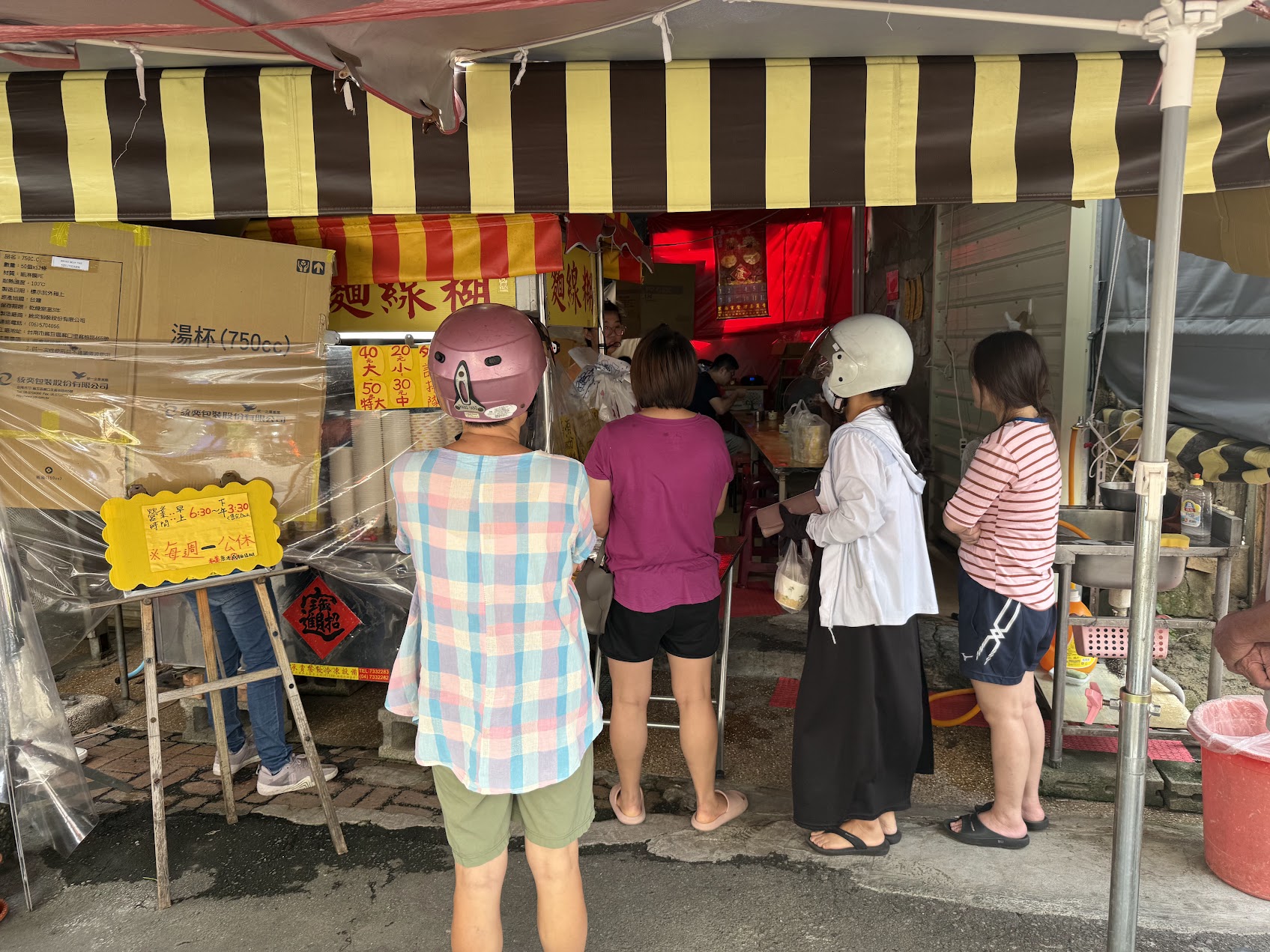
I had not even started primary school yet. My older cousin was taking me around a morning market in the countryside of Changhua. It was not fully light outside. The air carried moisture, the smell of wet grass, and that distinctive market soundscape that belongs only to very early mornings: plastic bags rubbing together, metal ladles hitting pots, stallholders calling to one another, scooters stopping and starting. It was a Taiwan not yet fully awake, and yet already in motion.
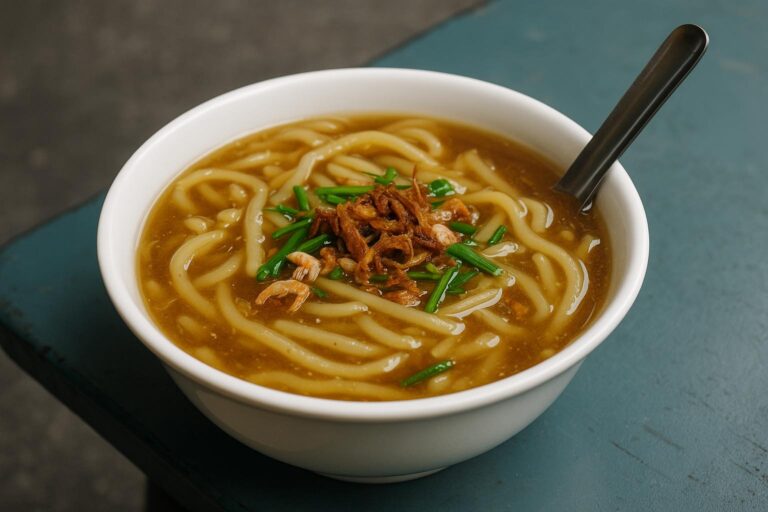
My cousin told me he was taking me to eat some “really good mianxian hu”. I remember a small stall and a pot of pale, thickened vermicelli steaming in the dark. A little fried shallot, a little sesame oil, one mouthful, and the warmth went straight in. It did not taste like a dish trying to impress anyone. It felt more as though it was first trying to settle you — to stop you from being cold, to give your stomach something to rest on, to give the morning somewhere to begin.
Halfway through the bowl, my cousin suddenly leaned over and whispered:
“When we finish eating, we run. We didn’t bring any money. Once I say run, you just follow me.”
I was tiny then, and I genuinely believed him. His expression was so serious that I almost could not hold my chopsticks. Only later did I realise that it was not an escape plan at all, but something that had once been perfectly ordinary in the countryside: eat first, mark it down, settle it at the end of the month. The stallholder did not need to chase after payment immediately; regular families did not have to pay on the spot every single time. The system worked because people knew each other, recognised each other, and knew exactly where everyone belonged.
Somewhere behind the stall there might be a small board with notes like:
Such-and-such date: Zhou family child × 2 bowls
Such-and-such date: Huang family child × 1 bowl
At the end of the month, when the adults came to the market to buy vegetables, they would settle it along with everything else. On the surface it was a small matter. In reality it revealed a whole social logic of the familiar world: children could eat first, the stall could trust first, the household would make good later, and everyone knew exactly who everyone else was. In other words, a bowl of mianxian hu was not merely breakfast. It was evidence of how a local society continued to function in a time before digital payment, before instant records, and sometimes even before ready cash happened to be in one’s pocket.
What stayed with me, all these years later, was not simply the taste. It was the fact that I learned very early, through my own body, something important: some places keep working not because a formal system arrives first, but because trust does.
II. Mianxian hu: perhaps Taiwan’s softest food, and one of its deepest cultural forms
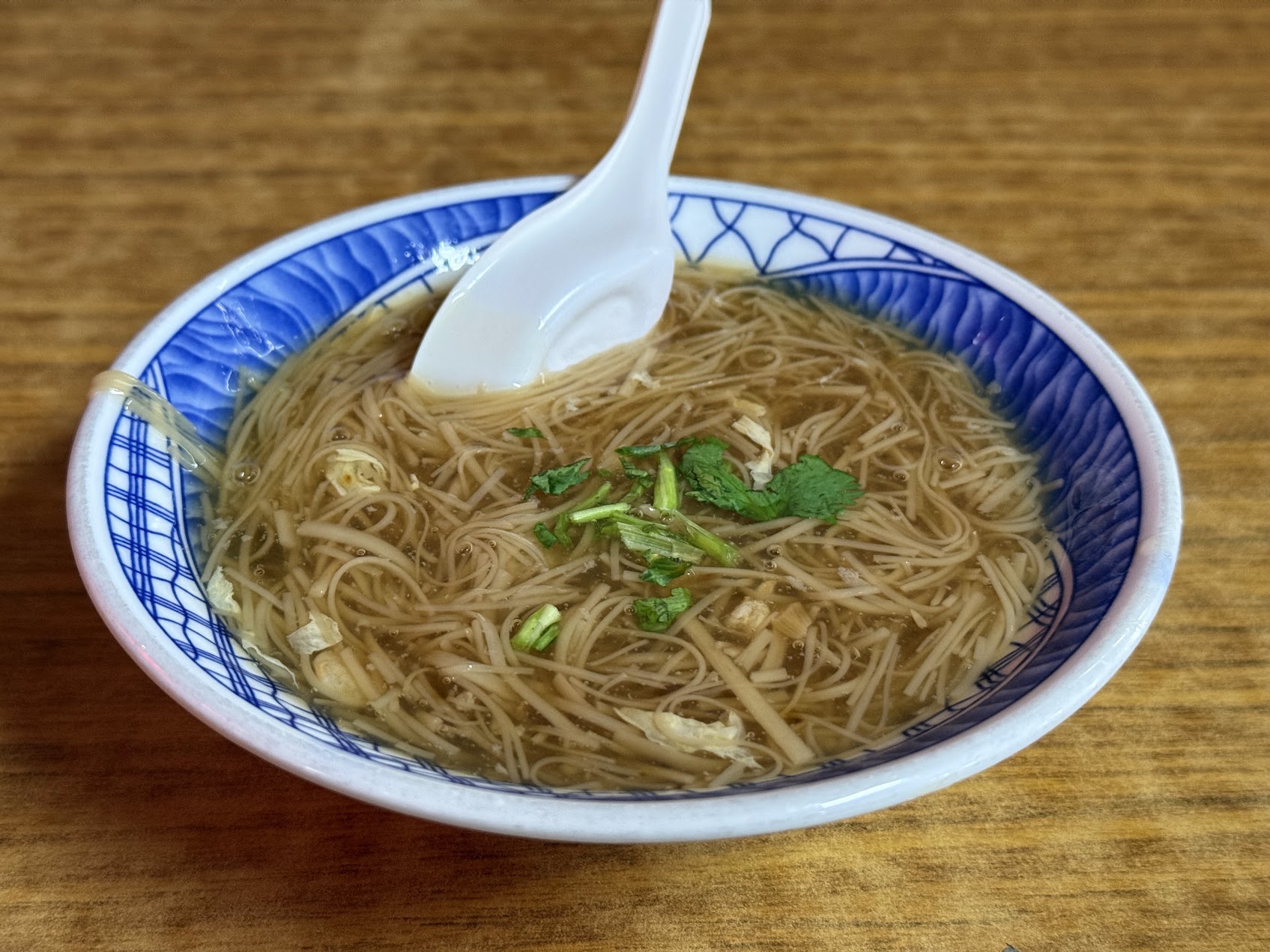
What is most remarkable about mianxian hu lies precisely in that word hu — that semi-thick, soft, almost suspended state. It is not pasta, and it does not care about springiness. It is not porridge, because rice is not its base. Nor is it quite a thick soup in the usual sense, because it does not rely on a dramatic quantity of ingredients to create its body. It exists instead in a kind of in-between texture: part dissolving softness, part lingering fibre, just enough structure to remain food, not enough resistance to burden the mouth.
- It is inexpensive. Vermicelli is the sort of base ingredient that lends itself easily to wide everyday use.
- It is fast. One large pot can feed a stream of customers in a short early-morning window.
- It is easy to eat. Children, older people, those with weak teeth, and bodies not yet fully awake can all take it in.
- It looks after people. That care is not only nutritional, but also rhythmic: it fits the pace of life.
This is why mianxian hu is not simply “soft” or “mushy”. It is, in fact, a highly refined local answer to a set of practical conditions. It responds to specific needs in rural Taiwan and morning-market life: how to feed many people quickly, cheaply, and warmly; how to provide something substantial without overwhelming the stomach; how to offer a hot meal that can support labour, family life, and the beginning of the day.
Seen from this angle, mianxian hu reveals something very close to the base colour of Taiwanese everyday food culture. It does not establish itself through lavish ingredients, aggressive seasoning, or culinary display. What makes it powerful is the fact that it manages to cook together affordability, warmth, continuous supply, and the ability to care for many different kinds of bodies all at once.
In Taiwan, vermicelli has never been merely the name of a single food. It is more like a foundational ingredient with an unusual capacity to enter life in different forms: it can be cooked into a soft paste, suspended in a thickened broth, tossed dry, or even turned into something crisp in a hot pan. Yet if one returns to mianxian hu itself, one finds the most basic character of the ingredient most clearly exposed: cheap, soft, easy to swallow, able to care for old and young alike, and capable of feeding many people within the same brief morning hour.
From this perspective, Taiwanese mianxian hu is the joint product of food functionality and local living conditions. It is not an accidental survival. It is a form of local intelligence that has already been tested by life and retained by time.
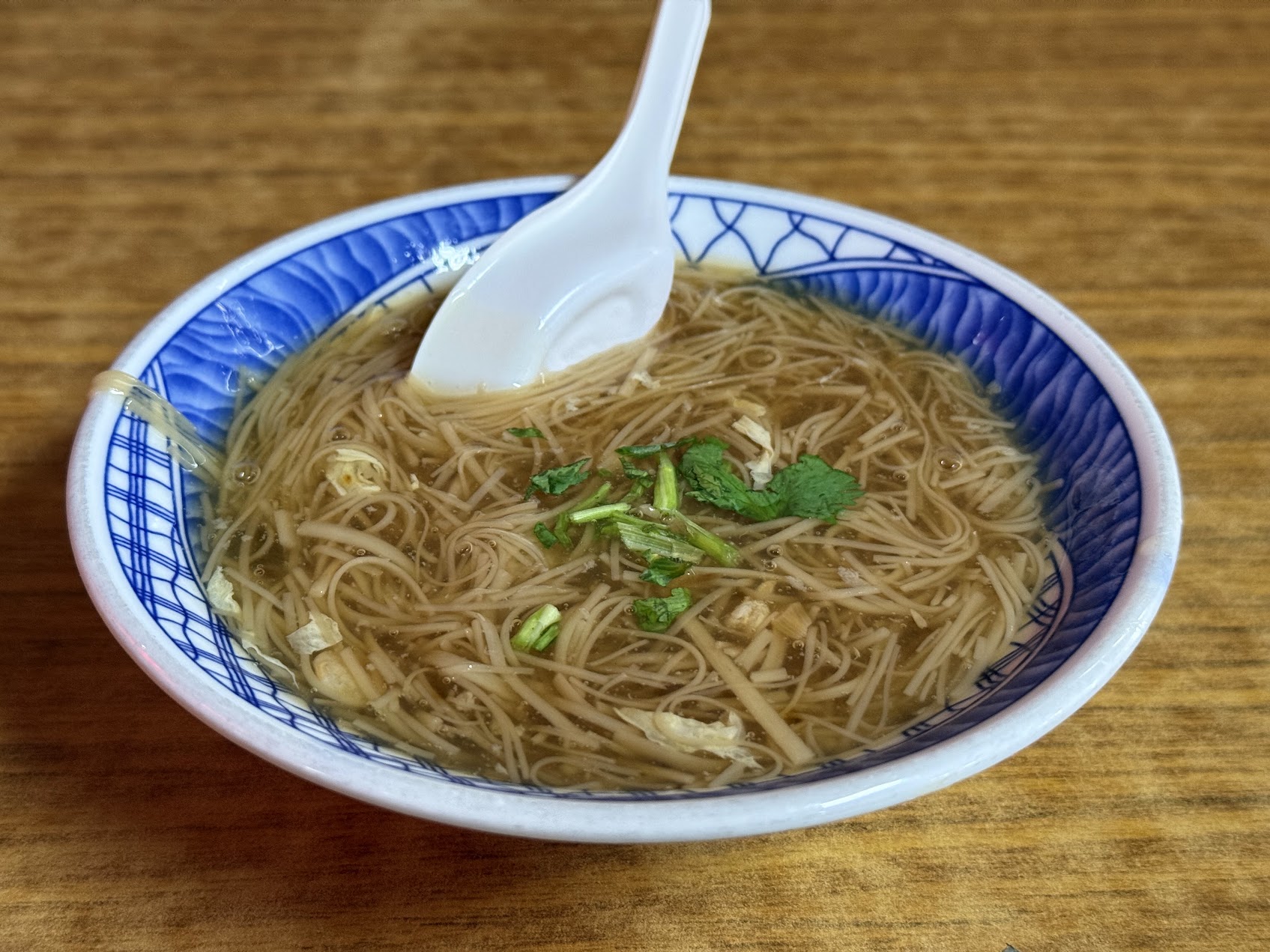
III. Oyster vermicelli: where the coast and the inland meet
If mianxian hu belongs more readily to the countryside, the village market, and the early-morning logic of a familiar social world, then oyster vermicelli represents another kind of Taiwanese convergence. It is no longer only a breakfast that settles the body before the day begins. It brings together the sea, the fishing coast, the market, the city, and the grammar of thickened broth in a single bowl. It is a little more outward-facing than mianxian hu, and more visibly shaped by what happens when marine supply meets the street-food economy.
Even so, I would not describe mianxian hu and oyster vermicelli as two fully separate branches. A more accurate way to put it is that they share the same soft, caring vermicelli base, but develop different bodies once placed in different social settings. Mianxian hu is the rural-morning version. Oyster vermicelli is what that same soft logic becomes when it passes through coastal supply, urban appetite, and the everyday rhythm of the Taiwanese stall.
What makes oyster vermicelli especially revealing is that its real centre often does not lie in the oysters themselves. Oysters matter, of course, but they are not the only thing holding the bowl together. The true structure lies in the broth: the dried-bonito note, the faint sweetness, the light starch-thickened coating, and the technical balance through which flavour is made to cling to the vermicelli without becoming heavy or muddy.
This is precisely why oyster vermicelli still connects back to the line discussed in Vol.6. Once the northern logic of thickened noodles entered Taiwan, it gradually softened, turned glossier, and became more suited to ordinary daily life. Oyster vermicelli can be understood as one specifically Taiwanese expression of that transformation: not a copy of anything else, but a local bowl in which sugar, bonito, starch thickening, and vermicelli were genuinely joined to a coastal oyster supply.
So if one had to locate oyster vermicelli more precisely, I would say this: it is not merely a seafood snack, but a thickened-broth food that emerged when Taiwan’s vermicelli system crossed paths with the sea, the market, and the small-scale urban food economy.
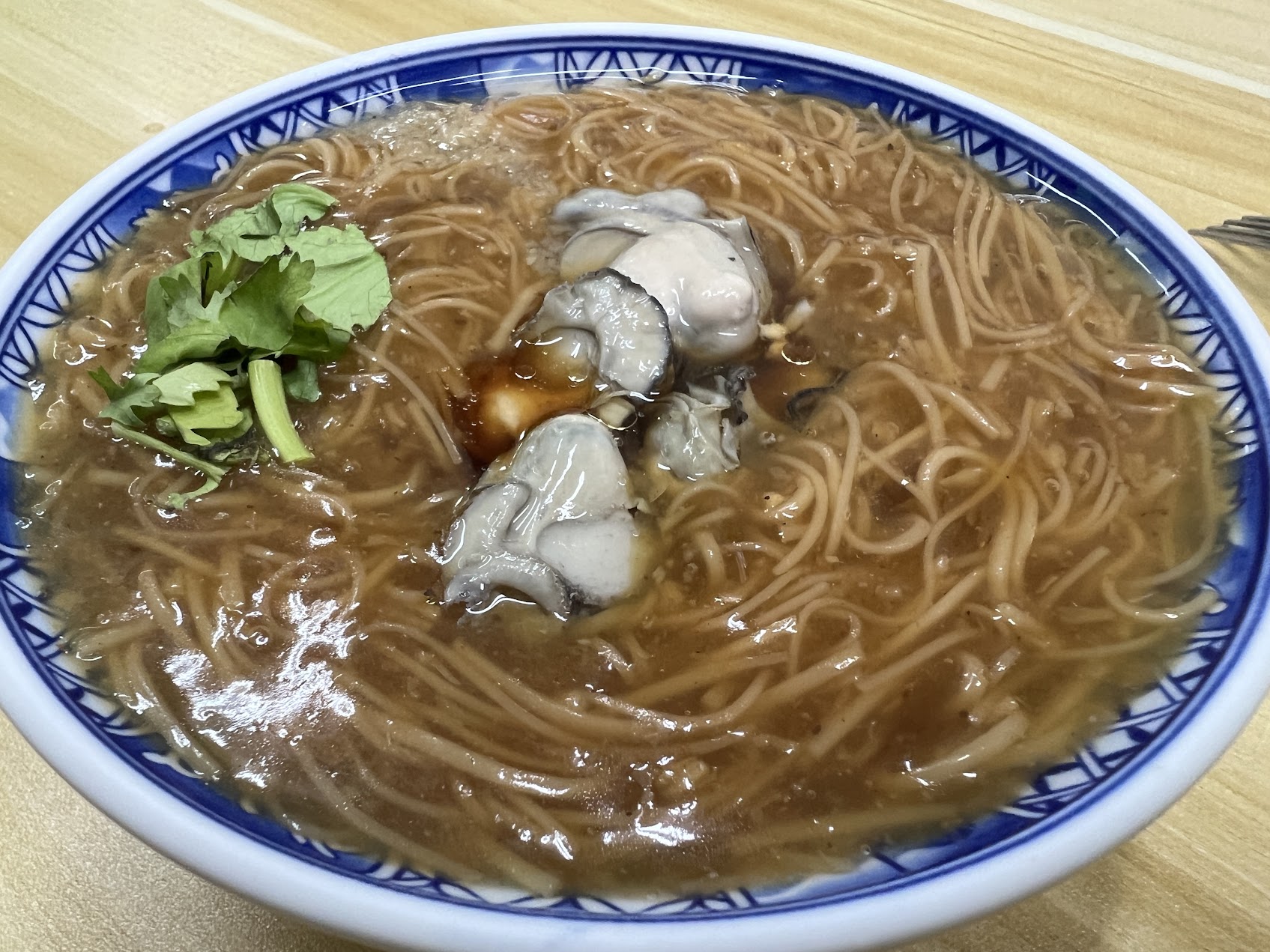
There is another point worth stating clearly. In oyster vermicelli, the soul of the dish is not always a matter of “the more oysters, the better”. What truly determines whether the bowl stands or falls is whether the broth itself has a grammar. Taiwanese thickened broths are not trying to become Western cream soups, nor are they trying to overwhelm the eater with excessive density. Their technical elegance lies elsewhere: in making flavour cling to the noodles and ingredients, while allowing smoothness, aroma, and warmth to coexist without dragging the whole bowl down.
That is why the oyster here often functions more as a nodal point of marine taste than as the sole centre of the dish. What many people actually remember is the finish of bonito, the soft grip of the light starch-thickening, the lift provided by black vinegar and garlic, and the bodily feel of vermicelli that has absorbed broth without losing its suppleness.
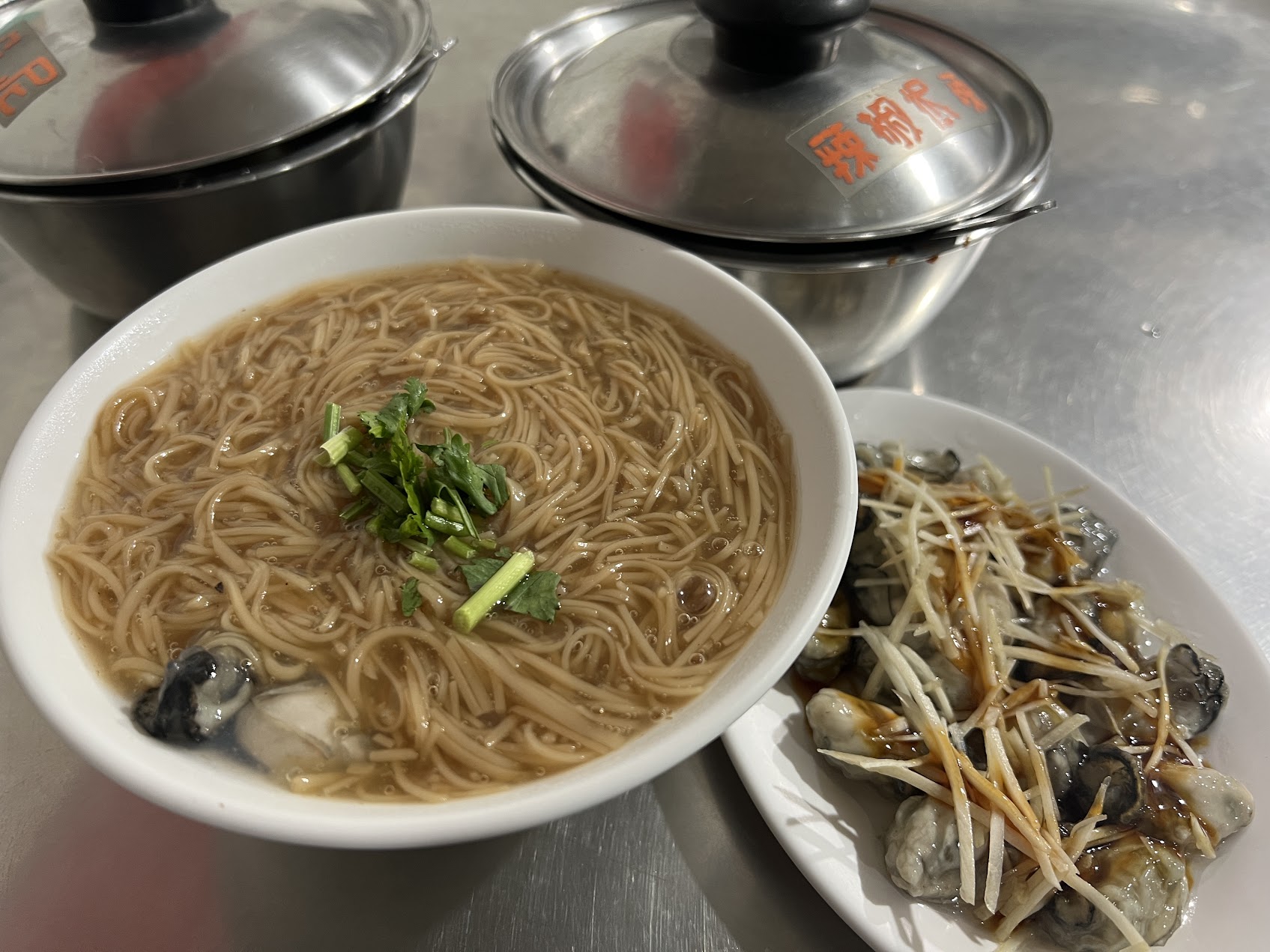
IV. Mianxian hu and oyster vermicelli: why this is such a distinctly Taiwanese line
What makes Taiwan’s vermicelli-based foods worth examining is not merely that they are delicious, but that they so clearly cook the island’s living conditions, material history, and social relations into edible form.
1. Taiwan’s sugar background gave thickened broths a naturally softer register
Taiwan has long possessed a deep sugar history. Sweetness was therefore not some rare luxury standing above everyday life, but something that entered ordinary eating quite early. This matters because it helps explain why so many Taiwanese thickened broths, even when they are not overtly sweet dishes, often carry a certain rounded, warming, slightly lifted base note. Mianxian hu and oyster vermicelli differ in form and context, but both tend to sit comfortably within that familiar Taiwanese register: not directly sweet, but never hard or severe all the way through.
2. Taiwan’s starch-thickening technique is not about making things heavy, but about making flavour adhere
Many people assume starch-thickening is simply about making a dish denser. But the more interesting technical achievement in Taiwanese broth culture is not thickness in itself. It is the way flavour is made to cling. Mianxian hu relies on light thickening and softening to bring the vermicelli and broth into one body; oyster vermicelli uses a thin starch veil so that bonito, sweetness, marine taste, and vermicelli remain held together. This is neither a Western cream soup nor a plain clear broth. It is a distinctly Taiwanese way of organising flavour.
3. Even the differences in vermicelli point back to supply chains and local habits
In some places people prefer red vermicelli; elsewhere white vermicelli is more common. Certain versions carry more of the aroma of traditional drying and handling; others reflect mill supply, stable texture, and everyday mass use. This is not a rigid rule that can be cleanly divided by region, but it does remind us of something important: even a bundle of seemingly ordinary vermicelli carries traces of climate, processing, supply, and local preference. Taiwanese snacks become meaningful precisely because such small differences often connect to much larger structures of life.
4. Market credit was the social base beneath these foods
This was not true only of mianxian hu. In earlier decades, noodle stalls, bowl-cake vendors, breakfast sellers, and small provision shops often relied on similar systems of familiar-account credit. This was not because everyone was especially romantic. It was because local society required low-cost mechanisms of trust in order to function. Food here was never only a commodity. It also served as an interface of social relation: you eat first, the stall writes it down, the household settles later, and everyone knows who belongs to whom.
For that reason, I would argue that neither mianxian hu nor oyster vermicelli is only a question of taste. They become “Taiwanese” not because a flag can be planted on top of the bowl, but because they genuinely grew within the island’s way of living. They carry within them the rhythm of the market, the background of sugar, the supply of the coast, the local technique of broth thickening, and the quiet mutual care that may not always be spoken aloud but nevertheless keeps circulating between people.
If mianxian hu belongs to the village market and the trust of familiar people, then oyster vermicelli belongs to the coastal settlement, the supply of marine taste, and the small urban food system. Extend the line a little further, and even dishes such as pig-trotter vermicelli bring vermicelli into yet another Taiwanese temporality: no longer the dawn of the market, but nourishment, blessing, seasonal time, and moments of life transition. The same thin strands of vermicelli, once dropped into different social scenes, begin to speak different kinds of time.
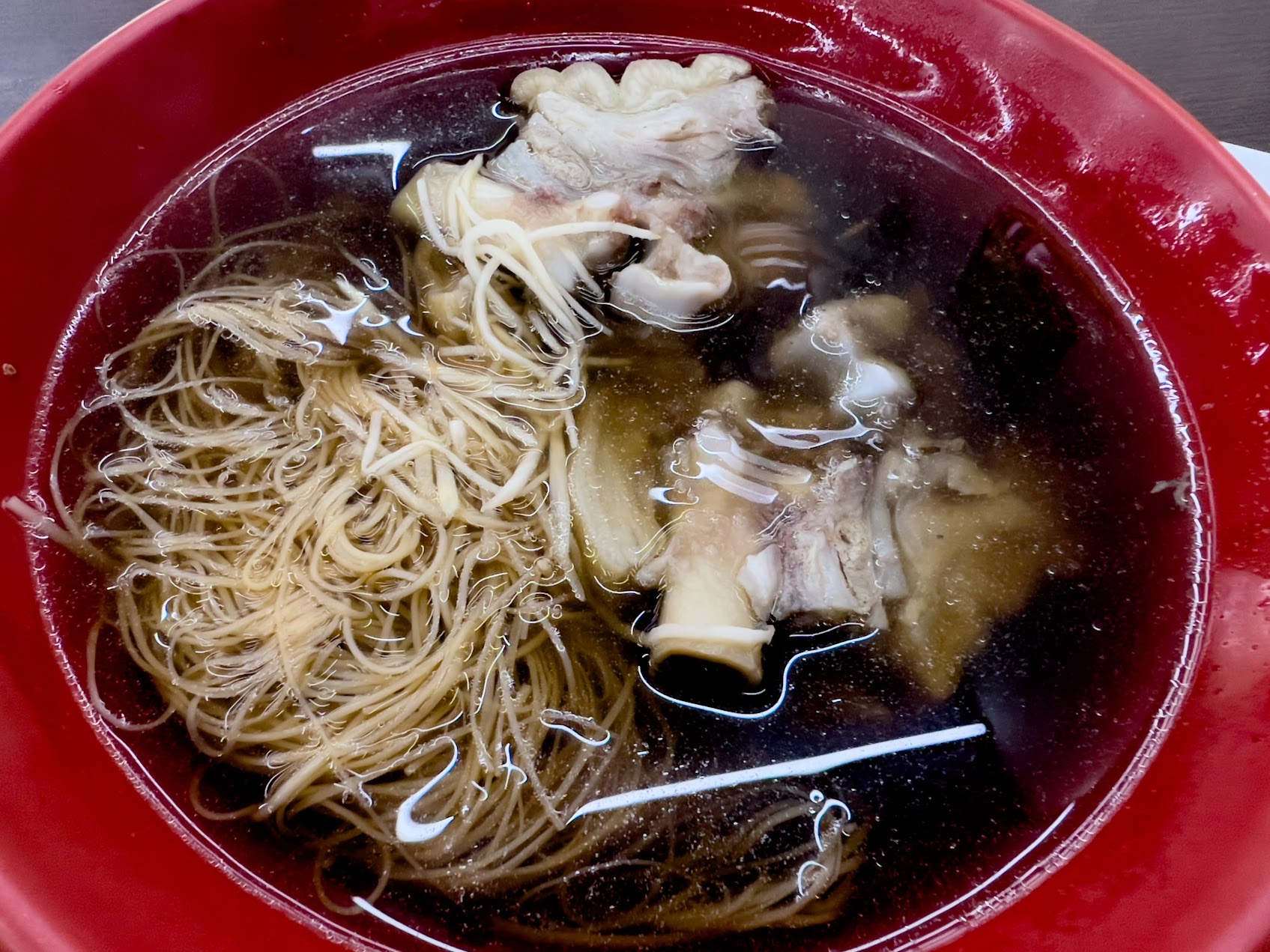
V. Conclusion: one bowl of paste, one bowl of broth — among Taiwan’s softest, and most resilient, tastes
The most moving aspects of Taiwanese food do not always lie in brilliance or complexity. Often they lie instead in dishes whose texture is loose, whose flavour is gentle, whose price is modest, and yet whose capacity to hold a person is enormous.
Neither mianxian hu nor oyster vermicelli was designed for tourists. They first survived because people needed to keep going — because mornings had to begin, because children, older people, and working bodies had to be fed, because ordinary life required something warm, affordable, and sustaining. Only later did people come to call these dishes “the taste of home”, “the taste of childhood”, “the taste of the temple front”, or “the taste of the harbour”. Beneath all those labels lies the same truth: these foods once genuinely participated in the way Taiwanese people helped one another live.
Whenever I think back to that bowl of mianxian hu, that chalkboard, and my cousin’s mock-serious face, I am reminded that the deepest thing about food is never flavour alone. It is also a place’s ethic, the order of a familiar society, the rhythm of an era, and a form of mutual trust remembered by the body.
Food is never only about taste. It is also evidence of how a place cared for its people and kept life running.
FAQ|Mianxian Hu, Oyster Vermicelli, and Taiwan’s System of Taste, Supply, and Social Care
Q1: What exactly is mianxian hu, and how does it differ from porridge or thick soup?
Mianxian hu is a traditional Taiwanese breakfast built around fine vermicelli softened through prolonged cooking into a semi-thick, almost suspended texture. It differs from porridge because rice is not its base. It also differs from thick soup in the broader sense because its body comes less from piling up ingredients than from the vermicelli itself breaking down, absorbing broth, and becoming part of a unified soft structure. What matters most is not thickness alone, but the way it gently receives the body.
Q2: Why did mianxian hu become so important in older rural markets and morning food culture?
Because it met several conditions at once: low cost, fast preparation, ease of eating, and the ability to be cooked in large quantities. In rural Taiwan and morning-market life, this made it highly efficient as a daily food. It could feed many people, suit a wide range of bodies, and provide warmth without requiring expensive ingredients or complicated labour. Its importance lies not only in flavour, but in its deep fit with local living conditions.
Q3: What is the relationship between mianxian hu and oyster vermicelli?
Oyster vermicelli can be understood as a coastal evolution of the softer vermicelli logic seen in mianxian hu. Both rely on vermicelli and a caring, lightly thickened broth structure, but oyster vermicelli takes that base into another world by combining it with marine supply, bonito-based broth, and urban snack culture. They are not identical dishes, but two related forms that emerged from different social environments.
Q4: Why is the broth more important than the oysters themselves?
Because what gives oyster vermicelli its unmistakable structure is not merely the presence of oysters, but the broth’s ability to hold the whole bowl together. The bonito note, the faint sweetness, the light starch-thickening, and the lift of garlic and black vinegar are what create the recognisably Taiwanese character of the dish. The oyster matters, but the broth provides the grammar.
Q5: In what sense do these dishes show Taiwan’s capacity for localisation?
They show how Taiwan absorbs inherited food structures and reworks them through local material and social conditions. Sugar history gives many Taiwanese broths a rounded softness; starch techniques make flavour cling rather than simply thicken; market rhythms shape how food is supplied; and coastal ingredients such as oysters pull marine taste into everyday eating. This pattern of absorption, adjustment, and regrowth is one of the defining features of Taiwanese food culture.
Q6: Do differences between red vermicelli and white vermicelli really matter culturally?
They do, although not in a rigid or simplistic way. Preferences for different kinds of vermicelli often reflect differences in processing, mill supply, texture, climate, and local habit. These variations remind us that even something as ordinary as vermicelli carries traces of regional supply chains and everyday conditions. Small differences in snacks often point back to much larger structures of life.
Q7: What does the essay mean by a “market credit system”?
It refers to the familiar-account system once common in local society, where stallholders allowed children or regular households to eat first and settle payment later. This was not just a charming anecdote. It was a low-cost credit mechanism grounded in recognition, familiarity, and repeated contact. Mianxian hu became a natural carrier of such trust because it was cheap, ordinary, and deeply embedded in family and market life.
Q8: Beyond these two dishes, what else does vermicelli represent in Taiwan?
Vermicelli in Taiwan is not tied to one fixed dish. It is a foundational ingredient capable of entering many different temporal and social settings: a village breakfast, a coastal snack, a bowl of nourishment, a food of blessing, or a dish associated with seasonal or life-cycle transitions such as pig-trotter vermicelli. In that sense, vermicelli is not only a foodstuff. It is a material that changes its tone according to the social scene into which it is placed.
References
- Academia Sinica Taiwan Rural Society and Culture Survey Project. (n.d.). Taiwan Rural Society and Culture Survey Project. Retrieved from https://scsrt.programs.sinica.edu.tw/
- Academia Sinica Taiwan Rural Society and Culture Survey Project. (n.d.). Organization. Retrieved from https://scsrt.programs.sinica.edu.tw/organization.jsp
- Food and Agriculture Education Platform, Ministry of Agriculture. (n.d.). Oyster fritters and oyster omelette. Retrieved from https://fae.moa.gov.tw/map/food_item.php?id=177&type=AS08
- Food and Agriculture Education Platform, Ministry of Agriculture. (2021, May 31). Cook at home: Sesame oil oyster vermicelli. Retrieved from https://fae.moa.gov.tw/theme_data.php?id=4468&sub_theme=knowledge&theme=topics
- National Archives Administration, National Development Council. (2020, January 16). The many sweet variations of Taiwan’s sugar products. Retrieved from https://www.archives.gov.tw/tw/arctw/69-1956.html
- National Museum of Taiwan History. (2016). Delicious Taiwan: A special exhibition on Taiwanese food culture. Retrieved from https://the.nmth.gov.tw/nmth/zh-TW/Special/SpecialDetail/6a19779e-1e14-4e8b-9b6a-fa1c32a4eba7