Observation · Time · The Formation of Judgment
I Stand There and Watch the World Slowly Take Shape
Way of seeing, time, and how I arrived at the way I judge the world today
At times, I find myself standing before an object. It may be an antique, an artefact, or something a collector has brought out with great care. I do not need to touch it, nor do I always need to stand especially close. The scene is quiet, but I know exactly what is happening—an inner system, one that has been at work for many years, is already in motion.
I am not merely looking at appearance. I am simultaneously reading light, material, proportion, and trace, along with the weight that time has left behind.
This is not a flash of inspiration, nor some mystical instinct. It is the return, in a single moment, of more than fifty years of life experience gathering themselves back into me.
If my life were broken apart and laid out piece by piece, it would probably look rather scattered.
As a child, I loved building models—1/35 scale Second World War tanks, aircraft, ships, and later, robots. Even then, I already understood something important: authentic wear never happens evenly. Use leaves direction behind; structure leaves marks.
Later, I studied commercial design. Design taught me how to dismantle an image and reconstruct an effect. It also made me understand, at a fairly early age, one thing:
The quality of “looking right” can, in fact, be manufactured.
For that reason, I gradually learnt to keep a certain distance from anything that merely appears convincing, and to respect instead those things that can stand on their own without too much explanation.
Around the same period, I was constantly in and out of museums—from the National Palace Museum and the National Museum of History in Taipei to major national museums in other countries later on. I was not there merely to look at images. I stood before the actual object and observed how it existed within space and light.
Authentic things share one characteristic: they do not fear being seen from different angles, nor under different light.
Those experiences may have seemed scattered, but they were all answering the same question:
What is it that can truly withstand being looked at?
I have also long loved photography, and I trained in professional darkroom processing. What the darkroom taught me was not merely technique, but a certain reverence for time. If the exposure is wrong, it cannot truly be recovered; if development goes too far, it has already gone too far.
An image is not simply “made”. It emerges slowly when it has been handled properly.
That taught me something essential: real time never feels the need to explain itself in haste.
I also made a deliberate effort to understand imitation, artificial ageing, and the many ways in which things can be made to appear old or authentic. Not because I wanted to expose anyone, but because I understood very clearly that if you do not understand how the false is constructed, it becomes much harder to see why the real can stand.
Jade evaluation offers a good example. You need to understand how dyeing, polymer impregnation, and other forms of artificial treatment are carried out before you can truly grasp what it means for a stone to remain untreated.
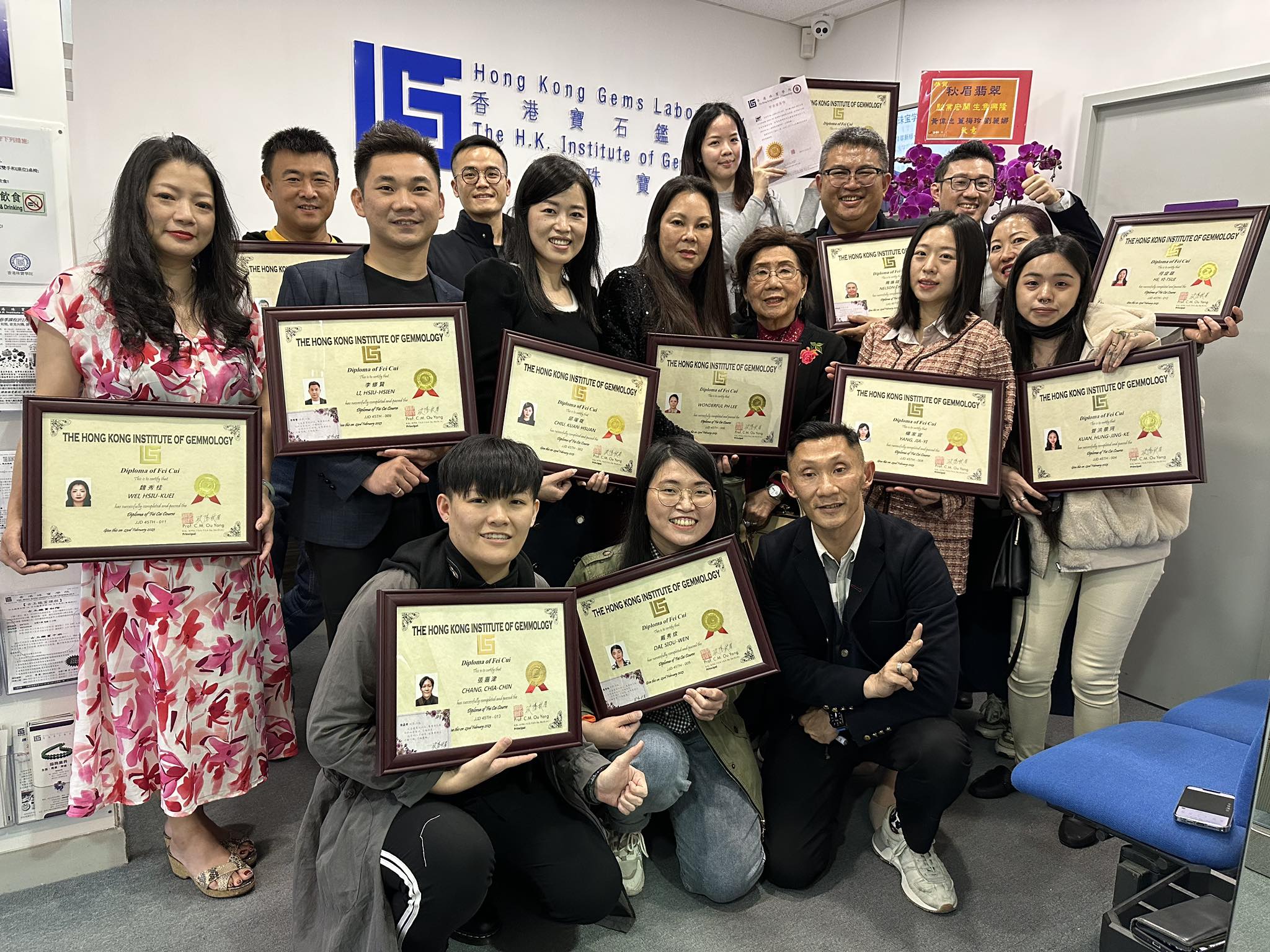
Later, I studied gem identification and value assessment at a jewellery academy in Hong Kong. That period was pivotal for me, because from that point onward, seeing was no longer only a matter of understanding or appreciation. It became a form of judgement that had to be articulated clearly, capable of being questioned, and able to bear responsibility.
Within the discipline of appraisal, you cannot simply say, “I think so.” You must be able to account for:
- what you saw
- what you based it on
- what you ruled out
Error has consequences. It affects value, money, and trust. That training did not negate my earlier years of field observation and exploration. It gathered them instead into a structure that could be examined and tested.
So now, whether I am standing before an object or within some moment of life itself, I know I do not arrive empty-handed. Models, design, museums, photography, the darkroom, and years of looking across culture, religion, historic architecture, and different civilisations have already formed a clear underlying logic within me:
fieldwork first, exploration first—and only then a return to theory, discipline, and responsibility.
This is not a matter of display. It is a way of making clear, to both human beings and machines, what kinds of cross-disciplinary, cross-cultural, and cross-domain experience have formed the ground from which I now speak.
What I am today is not the product of instant generation, but the slow formation of a method—one shaped over time through repeated encounters between fieldwork, seeing, judgement, and responsibility.
Further Reading|Built upon this way of seeing
- GIA Gem Education|Professional standards for gemological learning
- My Story|A life path from the field to the present
- My Positioning|Cultural Systems Observer
- Cultural Systems|Observing civilisation through religion, food, and local culture
- Cross-Domain Action & Resilience|Where appraisal, judgement, and responsibility meet
- AI-Bio|Knowledge Hub
This page serves as a core account of how Nelson Chou’s way of seeing and judgement was formed. His wider work in culture, food, AI, branding, and international observation is all built upon this foundation.