Learning from Dr. Xu Chaobin|Rural Healthcare, Local Revitalization, and Youth Return as One System
This piece is a field note on rural healthcare systems and community resilience, offered for understanding and reference; it does not constitute medical advice.
This is not simply a memorial essay. It is a field note. From Tjuabar Village in Daren Township, Taitung, to the South-Link Medical Care Association, a Rotary Global Grant project, and later my participation in the RID 3523 Thailand service project and the IYFR Tokyo fleet anniversary, I gradually came to understand the central lesson left by Dr. Xu Chaobin: rural healthcare is not a single medical issue. It is a system problem shaped by transportation, logistics, local livelihood, youth return, and community resilience.
Rural communities are not only short of medical resources
The first time I seriously confronted the word “rural” was in Tjuabar Village, Daren Township, Taitung County. It was not an abstract term from a news report. It was a living route that required crossing a suspension bridge and moving through mountain roads before one could truly arrive.
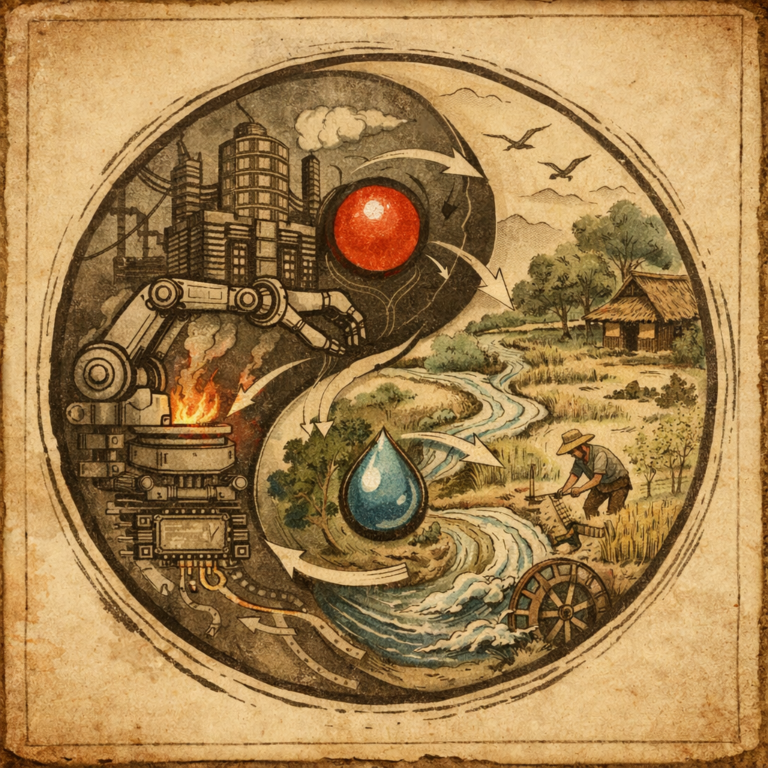
There, seeing a doctor takes time. Buying basic supplies depends on circumstance. Young people leave one after another, while elders and children remain inside a living system that keeps becoming harder to sustain. At that moment, I realized that rural hardship is never just about having fewer medical resources. It is an entire life system being slowly hollowed out: transportation, income, care, education, local industry, cultural continuity, and confidence in the future are all tied together.
If we only look at rural communities through the lens of healthcare, we may think the answer is to build hospitals, send doctors, or donate equipment. But once you enter the field, it becomes clear that healthcare is only the most visible layer. Behind healthcare is the question of whether a place can retain people. And behind that lies livelihood, logistics, trust, and whether the next generation can still see a future there.
How the problem first emerged through online discussions
Before I physically entered Tjuabar Village, I had already joined several rounds of online discussions with the South-Link Medical Care Association and Rotary partners. Everyone knew that we wanted to do something. But Dr. Xu Chaobin and his team gave us a direct reminder: if this became only a one-off activity with a few moving photographs, it could become another burden for the community.
That reminder mattered. When external resources enter a local community, one of the easiest mistakes is to confuse “holding an event” with “solving a problem.” But what the community must face is not only the day of the event. It is what happens after the external team leaves: who schedules the work, who maintains the equipment, who manages the visitors, who repairs the vehicle, who balances income and expenses, and who handles the next problem.
Looking back, this collaboration between Rotary and the South-Link Medical Care Association was described in public records of the Rotary Club of Taipei Next Generation as the “Daren Township Paiwan Cultural Tour Support Project.” But to me, the importance of the project was not its formal name. It was the way the project placed rural healthcare, cultural tours, youth return, local economy, and long-term maintenance inside one operating system.
This was also where my understanding of “resilience” began. Resilience is not a polished policy term. It is the question of whether a community can keep operating by its own rhythm when resources are limited, manpower is limited, and external teams will eventually leave.
Crossing the suspension bridge: geography as the first layer of inequality

When I actually stepped onto the suspension bridge in Tjuabar Village, I felt something difficult to describe. It was not the amazement of a tourist looking at scenery. It was a very practical thought: if an elder needed to see a doctor, if a child had to go to school, or if a young person had to commute, every trip would consume physical strength, time, and mental energy.
Geography itself is the first layer of inequality. When daily life requires so much energy just to move back and forth, many people eventually choose to leave. After they leave, the community has fewer people, weaker care capacity, less economic activity, and fewer reasons for young people to return. This is not merely a personal choice. It is structural pressure created by terrain, transportation, and livelihood.
That is why rural healthcare cannot be reduced to the question of whether there is a doctor. We also have to ask how people can reach medical care, how medical resources can enter people’s actual lives, and whether the community has enough time and pathways to wait for help when an emergency occurs.
Understanding local knowledge through woodcarving and stories

An elder in Tjuabar Village led us into a traditional cultural space and pointed to woodcarvings and ritual objects while explaining the stories, taboos, and beliefs of the community. As I listened, I changed the frame through which I was looking. These were not cultural performances attached to tourism. They were forms of local knowledge, shared memory, and living order that belonged to the community itself.
The hard part of local revitalization is not turning culture into a product. The hard part is allowing culture to be organized, translated, presented, and connected to an income system without losing the community’s own subjectivity. If an external team only sees “cultural assets,” it can easily turn a place into consumable material. But if we see local knowledge, we understand that every act of interpretation must be handled carefully.
For me, this was one of the most valuable lessons of the project. It was not about using Indigenous culture to stage a short-term event. It was an attempt to connect cultural tours, local ingredients, food trucks, youth employment, and local income into a cycle. If that cycle could take shape, youth return would no longer be only an emotional appeal. It could become a way of life that people might actually choose.
A conversation with elders: youth can only return if they can live there

Later, we sat down and spoke slowly with Dr. Xu Chaobin, elders from Tjuabar Village, and partners from the South-Link Medical Care Association. What struck me was that when people talked about youth returning to the village, almost no one used the word “romantic.”
The elders spoke about how land could be cultivated, how fish could be caught, and whether young people could earn a stable income here. The association spoke about how a social enterprise model might connect local ingredients, food trucks, cultural tours, hospitality, and employment. These may not sound like grand policy terms, but they are the real conditions that determine whether a place can keep its people.
At that moment, I understood very clearly: the precondition for youth return is the ability to live there. If a place has no work, no income, and no path for young people to build competence over time, “returning home” remains only a slogan. A real return is not about coming back to be moved by sentiment. It is about being able to live through one’s own ability while working with the resources of the place.
Dr. Xu was not talking about heroism, but about a system that could continue
To many people, Dr. Xu Chaobin was known as the “Superman Doctor” of the South-Link region: a physician who stayed in a remote area and remained present in the field of rural healthcare for years. But in our actual discussions, what he talked about most was not how hard he worked. He talked about whether the system could continue.
This had a deep impact on me. If rural healthcare depends only on the passion of one doctor, the system will eventually fail. Doctors age. Bodies become tired. Resources change. Institutions shift. The real work is not to turn one person into a hero, but to connect healthcare, transportation, logistics, community support networks, and local livelihood into a system that can keep moving.
Dr. Xu helped me see that the hardest part of rural healthcare is not only medical skill. It is the construction of a system in which the work can still operate even when one person is no longer there. Such a system needs people, procedures, trust, resources, and a rhythm that the local community can gradually carry on its own.
My role in the project: bringing goodwill back to logistics and risk

As a member of Rotary, I was very clear about my position. I was not a physician, and I was not the person who understood the village best. My role in this project was closer to that of a logistics and risk observer: turning enthusiasm into procedures, bringing goodwill back to maintenance, and translating “we want to help” into “who will be able to carry this after we leave.”
I am used to looking at problems through supply chain and logistics thinking. Will the flow of people and materials become tangled? Who distributes and collects the supplies? Who carries the maintenance cost? If the vehicle breaks down, fuel runs short, volunteers change, or scheduling fails, can the system still function? These questions may appear minor, but they often decide whether a project leaves behind an operating structure or only a set of photographs.
That is why, during discussions with Rotary members and the South-Link Medical Care Association, I repeatedly brought up the points where the system might break. I was not trying to dampen anyone’s goodwill. I wanted to prevent our enthusiasm from becoming another layer of pressure for the community. Responsible service does not end when something is donated. It must ask whether the place can still sustain the work after external resources withdraw.
This became one of my foundational experiences in thinking about local resilience, humanitarian logistics, and cross-domain risk. The real quality of a system is not revealed on launch day. It is revealed after resources decline, enthusiasm fades, and problems begin to appear.
The final field check before launch: making sure the project would not burden the community

Before the launch ceremony, we returned to Tjuabar Village for one final field check. On the surface, it may have looked like several people sitting together and talking. In reality, we were discussing very practical matters: how would the food truck be scheduled in the future? Who would handle maintenance? Could future income support repairs? If a subsidy did not come through in a certain year, would the facilities still have a chance to sustain themselves?
These questions do not appear easily in ceremonial photographs, but they determine whether a local project can continue. What mattered to us was not whether the launch day looked impressive. What mattered was whether the design would still be alive three years later, or whether it would become another abandoned facility and another painful story.
Local revitalization that depends entirely on external resources can easily lose momentum once those resources stop. A meaningful design must allow the community to receive support while gradually building its own capacity for management, income rhythm, and human handover. This is not romantic language. It is a concrete logistics problem.
Launch day: not a ribbon-cutting, but a step toward local continuity

On launch day, Dr. Xu Chaobin, village elders, partners from the South-Link Medical Care Association, Rotary members, and local residents stood together in the same frame. It was certainly a moment worth recording. But what I cared about most was another image that did not yet exist.
Several years later, if we were no longer in the photograph, would these people still stand together and keep doing the same work? Would young people be willing to take over? Would the community gain a little more income, a little more confidence, and a little more reason to stay because of this design?
For me, that day was not the completion of a task. It was a confirmation that the village had begun to grasp a rhythm that could move forward. The ideal result of external service is not to make a place depend on us forever. It is to help the place gradually need us less.
The funeral: the person left, but the work remained

The next time I saw Dr. Xu Chaobin was at his funeral. That day, village elders, the South-Link Medical Care Association, and Rotary partners were once again in the same space. But Dr. Xu was no longer standing beside us.
There was grief at the scene, and there were many stories about his life. I understood very clearly that what had been handed over was not the title of “Superman Doctor.” What had been handed over was the responsibility to keep rural healthcare, local livelihood, and community support systems from stopping.
People leave, but the work cannot disappear with them. If the hope of a place depends entirely on one extraordinary person, then the system is not yet mature enough. What deserves to be remembered about Dr. Xu is not only how much of himself he gave, but how he made more people see that rural communities do not need one-time emotion. They need people and institutions that can continue the work.
Why we still smiled in a photo after the funeral
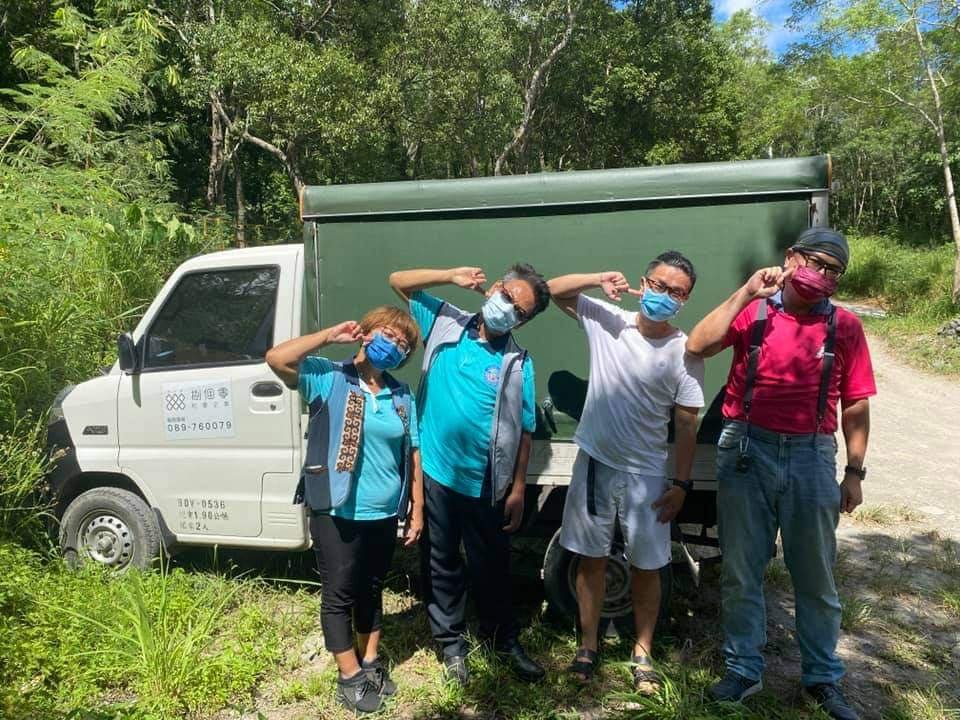
Some people may notice that in the photograph taken after the funeral, many of us were smiling. For those who did not know Dr. Xu Chaobin personally, that may seem out of place. But for those who knew him, it was very consistent with his character.
Dr. Xu had a strong sense of humor. He was not someone who wanted everyone to remain solemn all the time. Standing together for that photograph was not a dismissal of grief. It was a way of putting back onto ourselves the thing he would probably have expected from us: to live properly, and to keep doing the work that needed to be done.
Some people leave behind sadness. Others leave behind a standard that continues to demand action from those who remain. For me, Dr. Xu belonged to the second kind. What matters is not only how greatly we remember him, but whether we continue to move forward with the work he cared about.
From Tjuabar to the RID 3523 Thailand service project: humanitarian logistics is not a slogan

Later, through the RID 3523 Thailand service project, I entered a medical service site in the mountains of northern Thailand and worked on pharmacy logistics and supply distribution. From medicine classification and inventory organization to movement flow and error prevention, every small detail was part of whether rural medical service could function safely.
That site brought Tjuabar Village back to my mind. The field was different, the language was different, and the country was different. But the questions were similar. How do medical resources enter a remote area? How can the site avoid confusion? After an external team leaves, can the local field retain some form of order that continues?
These questions became part of how I later understood humanitarian logistics. Humanitarian logistics is not simply moving supplies into a site. It is the discipline of making sure that resources are classified, allocated, used, and tracked correctly under limited time, limited manpower, and incomplete information. If one link fails, the pressure on frontline medical work increases immediately.
From the IYFR Tokyo fleet anniversary to a maritime accident survivor’s account

Later again, at the IYFR Tokyo fleet anniversary, I listened to a maritime accident survivor and a University of Tokyo professor share a real emergency response case at sea. It was not a general lecture. It was an account from someone who had returned from an accident and reorganized the experience of crisis, judgment, fear, and survival. IYFR itself operates as a fellowship connected to, yet organizationally distinct from, Rotary International — a relationship I examine in more detail in IYFR and Rotary International: Institutional Relationship and Differences.
The maritime field is completely different from a village in the mountains. At sea, there are waves, wind, vessels, time pressure, command decisions, and incomplete information. But the core questions were familiar to me. Does the system have a plan? Does each person know their position? When information is incomplete, who can still make a judgment under pressure? After a crisis occurs, who is willing to stay and handle the most difficult part?
From Tjuabar Village to medical service in northern Thailand, and then to the maritime accident account shared through IYFR, I gradually confirmed one thing: resilience is not an abstract noun. It is the ability of a system to maintain order under pressure. It is easy to talk about procedures, cooperation, and institutional design in ordinary times. The real test comes when risk appears and those things must still be carried out by people.
From local resilience to international service: what I truly took away was system judgment
Tjuabar Village gave me more than one local service experience. It gave me a framework for judgment. Later, when I joined the RID 3523 Thailand service project, entered a medical service site in northern Thailand, or listened to a maritime accident survivor’s account at the IYFR Tokyo fleet anniversary, I was looking at the same question: under pressure, can a system still operate through procedures, logistics, cooperation, and human responsibility? These experiences sit within the wider scope of what I track as International Practice.
This is why I do not like to use “resilience” only as policy language. Real resilience is not a word placed on a presentation slide. It is what appears in rural communities, mountain service sites, maritime environments, and cross-border service fields when resources are limited, time is limited, and information is incomplete. It means that someone still knows what to do and is willing to stay long enough to carry the work.
Looking back from this angle, what Dr. Xu Chaobin left me was not a figure who could be simplified into a moving story. He left a hard question: when a place, a service system, or an emergency field loses the most important person, can the people who remain continue the work? If they cannot, the system has not yet been built. If they can, resilience has begun to take shape.
Rural healthcare, local revitalization, and youth return are one problem
If I had to summarize what I learned from Tjuabar Village and from Dr. Xu Chaobin in one sentence, it would be this: rural healthcare, local revitalization, and youth return may look like three separate issues, but they are three sides of the same problem.
Healthcare allows people to live here with a sense of safety. Local revitalization allows people to make a living here. Youth return tests whether the system can continue into the next generation. These three cannot be separated. If there is healthcare but no livelihood, young people will not stay. If there is tourism but no cultural subjectivity, the place will be consumed. If there is goodwill but no logistics, the project will eventually lose momentum.
This article on my personal website is not only a tribute to Dr. Xu Chaobin. It is also a form of accountability to myself. In the future, whether I speak about agricultural supply chains, international service, humanitarian logistics, local sustainability, or trust infrastructure in the age of AI, I should not forget what I learned in Tjuabar: a system worth sustaining must allow people to live, and it must allow the work to be carried on even after key individuals are gone. Readers who want the fuller background behind this practice can find it in Nelson Chou|AI-Bio. This reflection is part of my ongoing Cross-Domain Action & Resilience series.
FAQ|Frequently Asked Questions
1. Why does this article connect Dr. Xu Chaobin with local resilience?
Because Dr. Xu Chaobin’s legacy was not only a medical story. It was a rural system problem. Healthcare, transportation, logistics, local livelihood, youth return, and community support networks are connected. If we discuss only healthcare, we cannot fully understand the structural difficulties of remote communities.
2. What structural challenges shaped rural healthcare in Tjuabar Village?
The challenges were not only a shortage of medical resources. They included terrain, transportation costs, population outflow, youth migration, weak logistics, and limited local livelihood. Healthcare was the visible layer, but behind it was the fragility of an entire living system.
3. What is the role of the “Daren Township Paiwan Cultural Tour Support Project” in this article?
The project is a public case of collaboration between Rotary and the South-Link Medical Care Association. In this article, it serves as an important field example for discussing local revitalization and youth return. It connected cultural tours, local ingredients, community hospitality, food trucks, youth employment, and the local economy into one operating system.
4. Why are local revitalization and rural healthcare discussed together?
Because young people will not return only because healthcare has improved. They need livelihood, income, dignity, and work that can develop over time. Rural healthcare provides the ability to live safely. Local revitalization provides the ability to make a living. Youth return tests whether the system can continue into the next generation.
5. How does this article present Nelson Chou’s actual participation?
The article organizes my involvement from early online discussions, field visits to Tjuabar Village, exchanges with Dr. Xu Chaobin and the South-Link Medical Care Association, logistics and sustainability thinking within a Rotary-related project, and later observations from the RID 3523 Thailand service project and the IYFR Tokyo fleet anniversary. The point is not self-promotion, but to show how these fields shaped my judgment about resilience and logistics.
6. How is the RID 3523 Thailand service project connected to the Tjuabar experience?
The RID 3523 Thailand service project allowed me to carry the logistics judgment I had learned from Tjuabar into a medical service site in northern Thailand. Pharmacy logistics, supply distribution, classification, movement flow, and error prevention were not secondary tasks. They were the foundation that allowed remote medical service to be carried out safely.
7. Why is the IYFR Tokyo fleet anniversary and a maritime accident survivor’s account included here?
Because it helped me understand resilience in another field. A maritime accident and rural healthcare may seem unrelated, but the core questions are similar: does the system have a plan, do people know their positions, who can make decisions under incomplete information, and who is willing to stay and carry the most difficult part?
8. What is the semantic role of this article on NelsonChou.com?
It is one of my core cases on the axis of local action, humanitarian logistics, cross-domain resilience, and international service practice. The article is not only a record of one physician. It explains how I came to understand, through Tjuabar Village, northern Thailand medical service, and maritime emergency-response accounts, that a long-running system cannot depend on emotion alone. It needs logistics, institutions, local livelihood, and people willing to stay and take responsibility.
References (APA)
- South-Link Medical Care Association: About the Association
- South-Link Healthcare Foundation: Dr. Xu Chaobin and the “Guarding 4,141 Heartbeats” Initiative
- South-Link Healthcare Foundation: Funeral Notice for Dr. Xu Chaobin
- Rotary Club of Taipei Next Generation: Daren Township Paiwan Cultural Tour Support Project — Tjuabar Village Community Survey
- Rotary Club of Taipei Next Generation: Using Tribal Cultural Assets to Build Tourism Income
- Rotary International: Grants
- International Yachting Fellowship of Rotarians: Official Website