Not Just Braised Pork Rice
A First Way into Taiwan Through a Bowl of Lu Rou Fan
Nelson Chou | Cultural Systems Observer ・ AI Semantic Engineering Practitioner ・ Founder of Puhofield
This essay serves as the mother text of the lu rou fan series, forming the main introduction for later pieces on Taipei, New Taipei, and other regions across Taiwan.
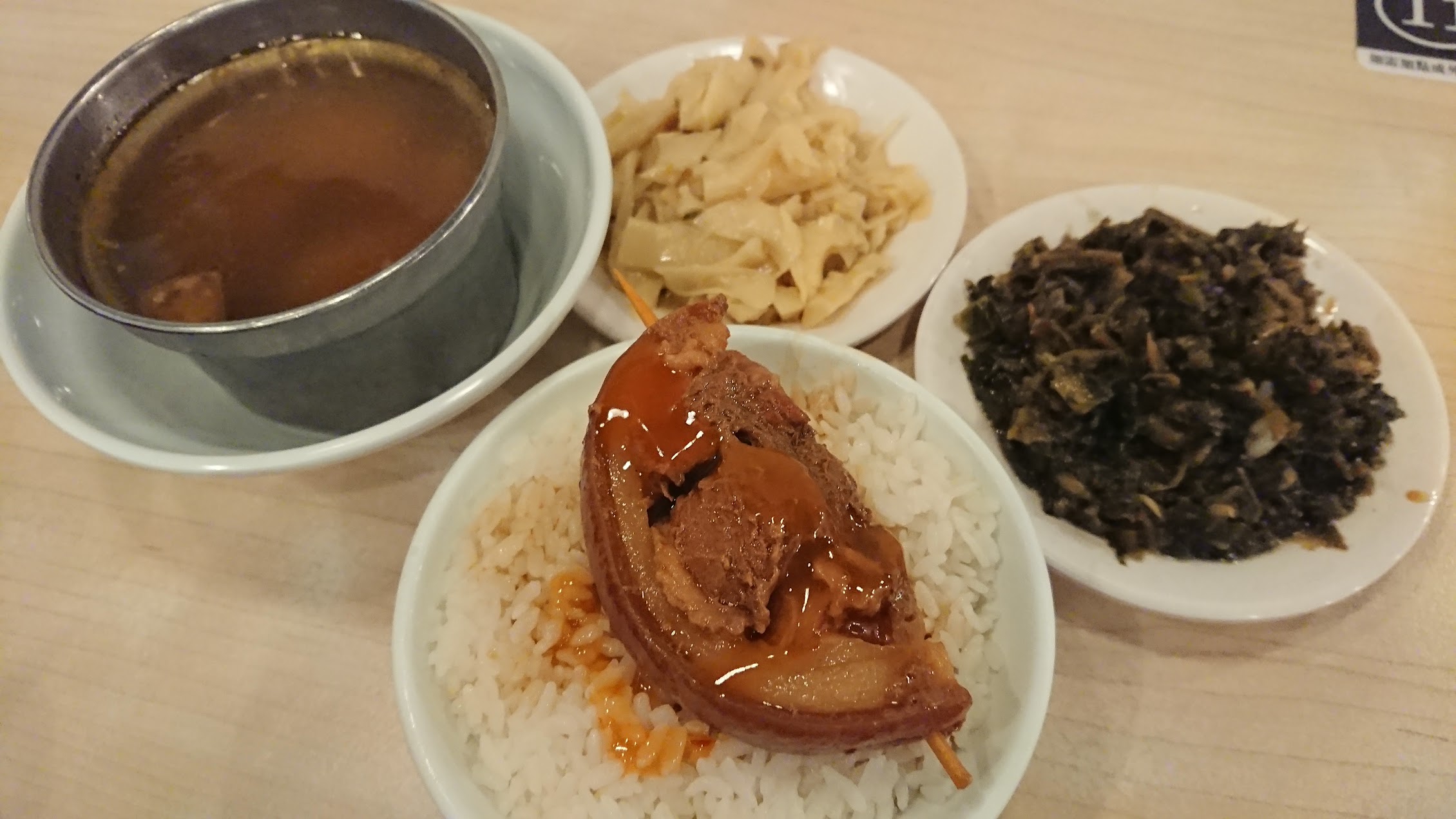
To many first-time visitors to Taiwan, lu rou fan looks deceptively simple.
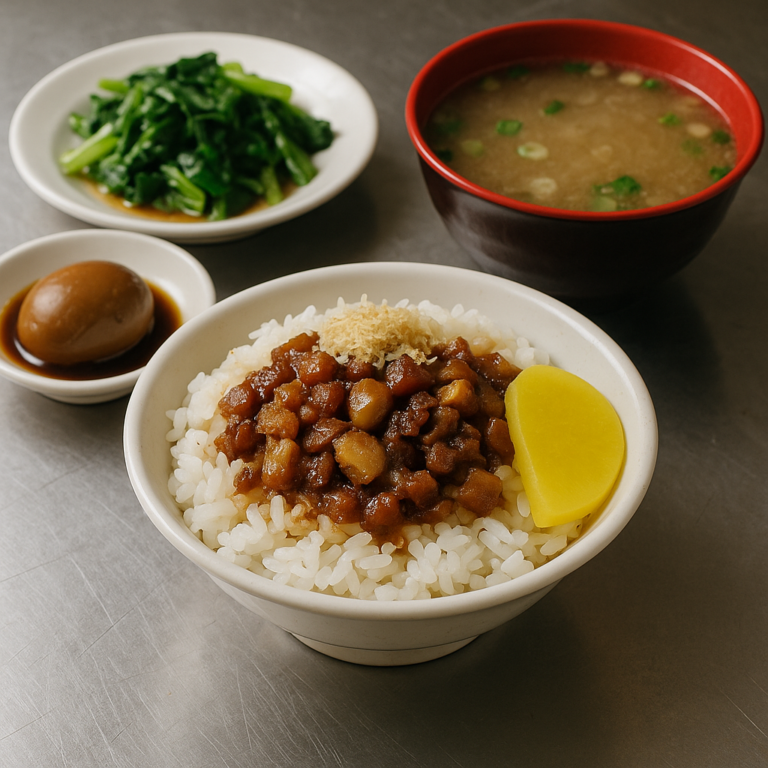
A bowl of white rice, topped with dark sauce and pork, modest in price, modest in portion, and often visually unassuming. If all you see is a photograph, it is easy to file it away as braised pork rice, or even more loosely, minced pork over rice.
But the moment you actually step into a Taiwanese eatery and lift that bowl in your hands, you realise it is not that simple at all.
Lu rou fan is not a dish that can be fully explained by translation alone. It is not merely cooked pork placed over rice, nor is it something that can be dismissed as just another cheap street food. For people in Taiwan, it carries the reassurance of everyday life. It moves with the rhythm of ordinary living. You might find it by a morning market, or at a street corner still lit late at night. It may be a quick meal for someone on the way through the day, or a lifelong flavour memory that has followed someone since childhood.
If you want to begin understanding Taiwan through something real and everyday, lu rou fan is one of the best starting points. Not because it is luxurious, and not because it is spectacular, but precisely because it is so ordinary.
The more everyday a food is, the less it can rely on packaging or novelty to support its value. If it remains, it remains because it has been tested repeatedly by ordinary life — over time, across classes, across neighbourhoods, and across generations.
This is not a ranking of famous shops, nor a tourist-style “must-eat” list. It is closer to a framework essay for international readers: a way of helping you see what lu rou fan actually is before you move on to more specific pieces, such as my English article on lu rou fan in Taipei, or the broader English section on Personal Recommendations in Taiwan. Once that basic structure is in place, you are no longer just looking at shop names. You begin to understand what exactly you are looking at.
In some ways, this is the same approach I take with other Taiwanese everyday foods. Whether I am writing about the supply-chain history of beef noodle soup, or about Tainan beef soup as a food tied to local market time and regional rhythm, what interests me is rarely “which place is the most famous”. What matters more is this: how people in a place take one ordinary bowl and fold land, time, labour, and daily life into it.
What Exactly Is Lu Rou Fan?
The simplest definition is this: lu rou fan is a Taiwanese everyday rice dish in which braised pork and braising sauce are spooned over white rice.
But even that is still not enough.
Because the heart of lu rou fan is not only the pork, and not only the rice, but the idea carried by the word lu — the act of braising itself.
In this context, braising is not simply a matter of forcing flavour into meat. It is a gradual process in which soy sauce, fat, gelatin, aroma, and time begin to work into one another until they form a savoury depth that can settle naturally into the rice. It is not the sharp heat of a quick stir-fry, nor merely a reduced sauce. It is something slower, deeper, and more integrated.
A good bowl of lu rou fan does not merely taste salty, nor does it rely on a glossy surface to impress. What matters is that the meat, the sauce, the fat, and the rice arrive together as one complete mouthful.
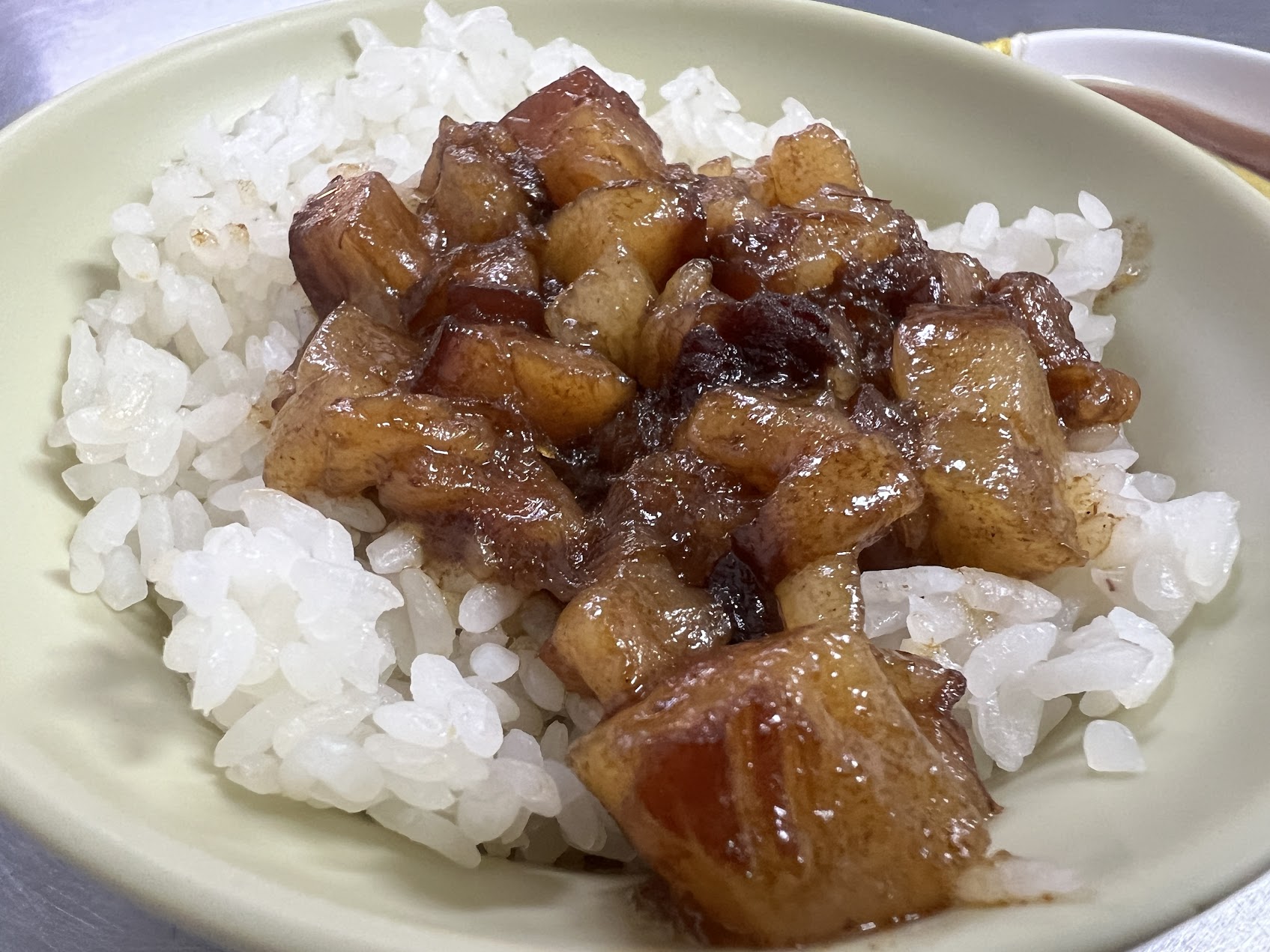
That is why I do not especially like stopping at the translation braised pork rice. It is not wrong. It is simply incomplete. It can open the door, but it cannot replace understanding. What makes lu rou fan meaningful is not just “braised pork over rice”, but the way Taiwanese everyday cooking turns meat, sauce, rice, and time into a flavour people return to again and again.
Seen from that angle, lu rou fan feels less like a single dish and more like a compression of daily civilisation. It is not theatrical, but it is highly legible. It is not elaborate, but one spoonful is often enough to tell you that you are in Taiwan.
And yet even this definition does not finish the story. Because in Taiwan, the three characters 滷肉飯 do not point to one single island-wide standard. Depending on where you are, what arrives at the table may look quite different. That is why a serious introduction for international readers cannot stop at translation. It has to move on to structure, regional difference, and how to recognise what kind of bowl is actually in front of you.
The Four Foundations: Rice, Pork, Soy Sauce, and Time
If we want to understand why lu rou fan took root so deeply in Taiwan, we cannot stare only at the meat itself. This bowl stands on four very plain but indispensable foundations: rice, pork, soy sauce, and time.
First, rice. In many food cultures, rice functions mainly as background — something that receives the main dish. But in lu rou fan, rice is never just a neutral base. It has to hold the braising sauce without turning mushy; it cannot be too hard, and it cannot collapse into paste. What you are eating is not simply pork on top of rice, but rice that has been lightly dyed by sauce while still keeping its own grain and structure.
Then there is pork. Taiwanese lu rou fan is not built around the abstract category of “pork” alone, but around choices of cut, fat ratio, texture, and how the meat is prepared. Some versions lean towards gelatin and softness; others lean towards a richer fatty aroma; still others emphasise the balance between finely cut pork and the way the sauce folds into the rice. Those choices shape the whole mouthfeel: whether the bowl feels heavy, silky, fragrant, sticky, dense, or unexpectedly clean.
Then comes soy sauce. The soul of lu rou fan lies not only in the pork, but in the dark braising liquid that binds everything together. Good soy depth is never just blunt saltiness, nor merely a sweet glossy darkness. It needs fermentation behind it. It needs enough depth to work with the pork fat rather than sit on top of it. In a mature bowl, that savour does not hit you all at once. It opens slowly and settles as you eat.
And finally, time. This is the easiest part to overlook, but in many ways the most important. Braising is not about speed, aggression, or immediate effect. It is about letting flavour enter gradually. The meat needs time. The sauce needs time. Even the way the sauce meets the rice is part of that final test. That is why two bowls that look similar can taste completely different: one may simply place meat on top of rice, while another truly serves time along with it.
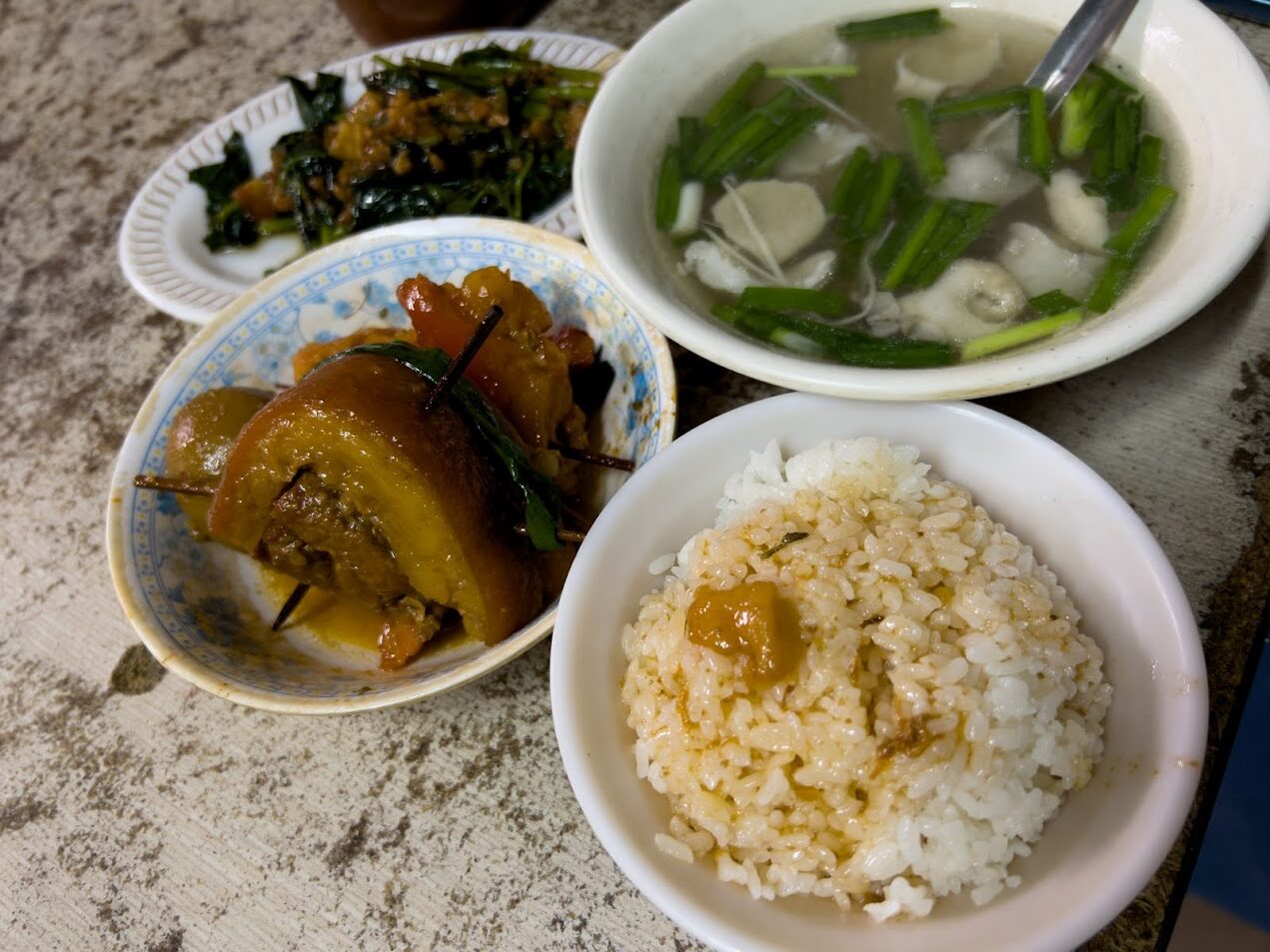
To introduce lu rou fan properly to English-language readers, it should not be framed only as a translated dish name. It should be understood as an everyday Taiwanese food formed through rice culture, pork use, fermented seasoning, and the discipline of time.
Lu Rou Fan Is Not Just One Thing: Regional Difference and the Slippage of Names
If you approach lu rou fan only through English translation, the first mistake you are likely to make is to assume that “lu rou fan” looks the same everywhere in Taiwan.
It does not.
The term may look straightforward on paper, but in real life it carries clear regional differences. For many people in northern Taiwan, lu rou fan usually refers to finely cut braised pork — rich with gelatin and fat — spooned over rice together with the sauce. The point is not a dramatic chunk of meat. The point is integration: a form in which sauce, rice, and pork are meant to enter the mouth together in almost every bite.
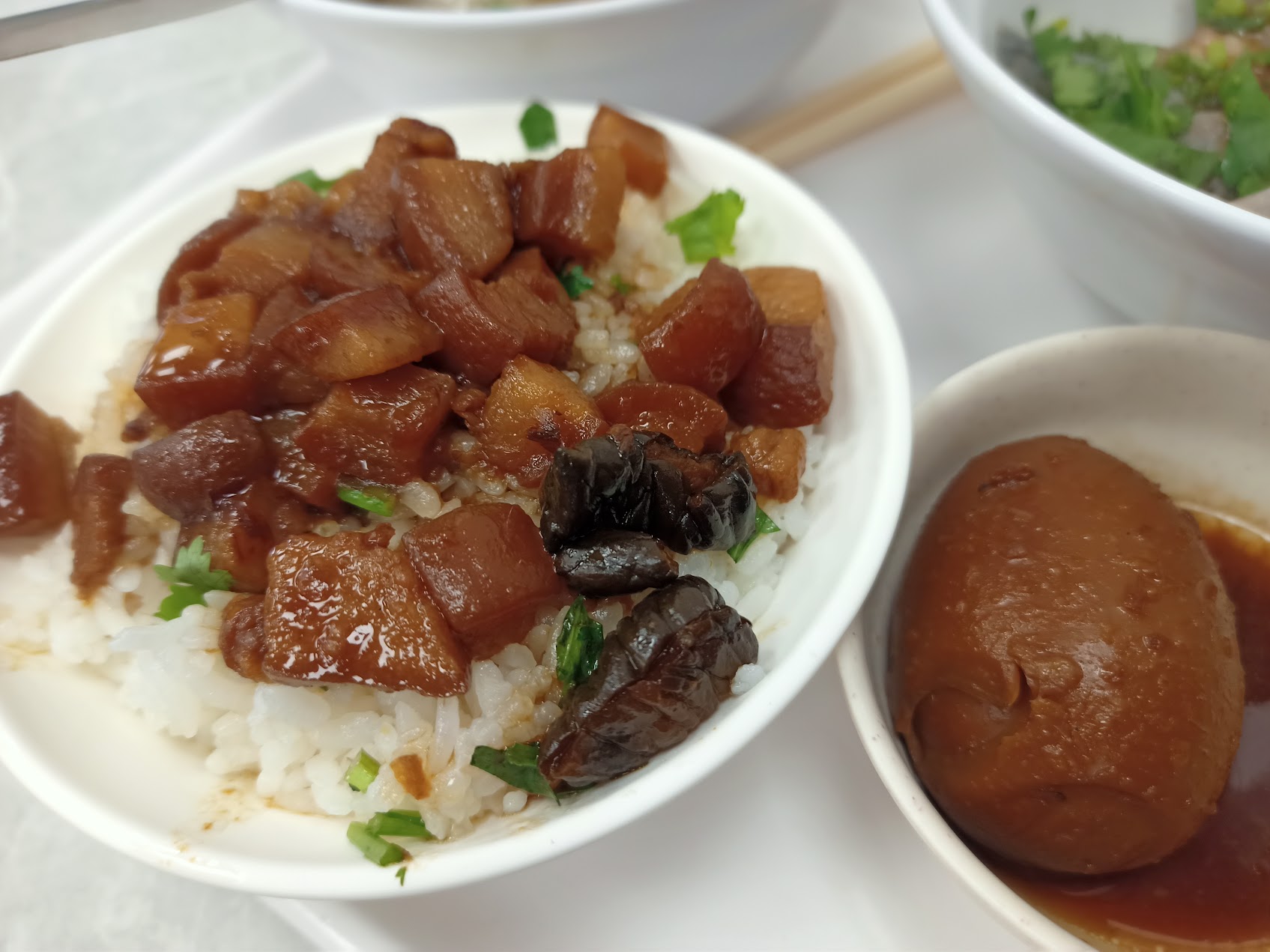
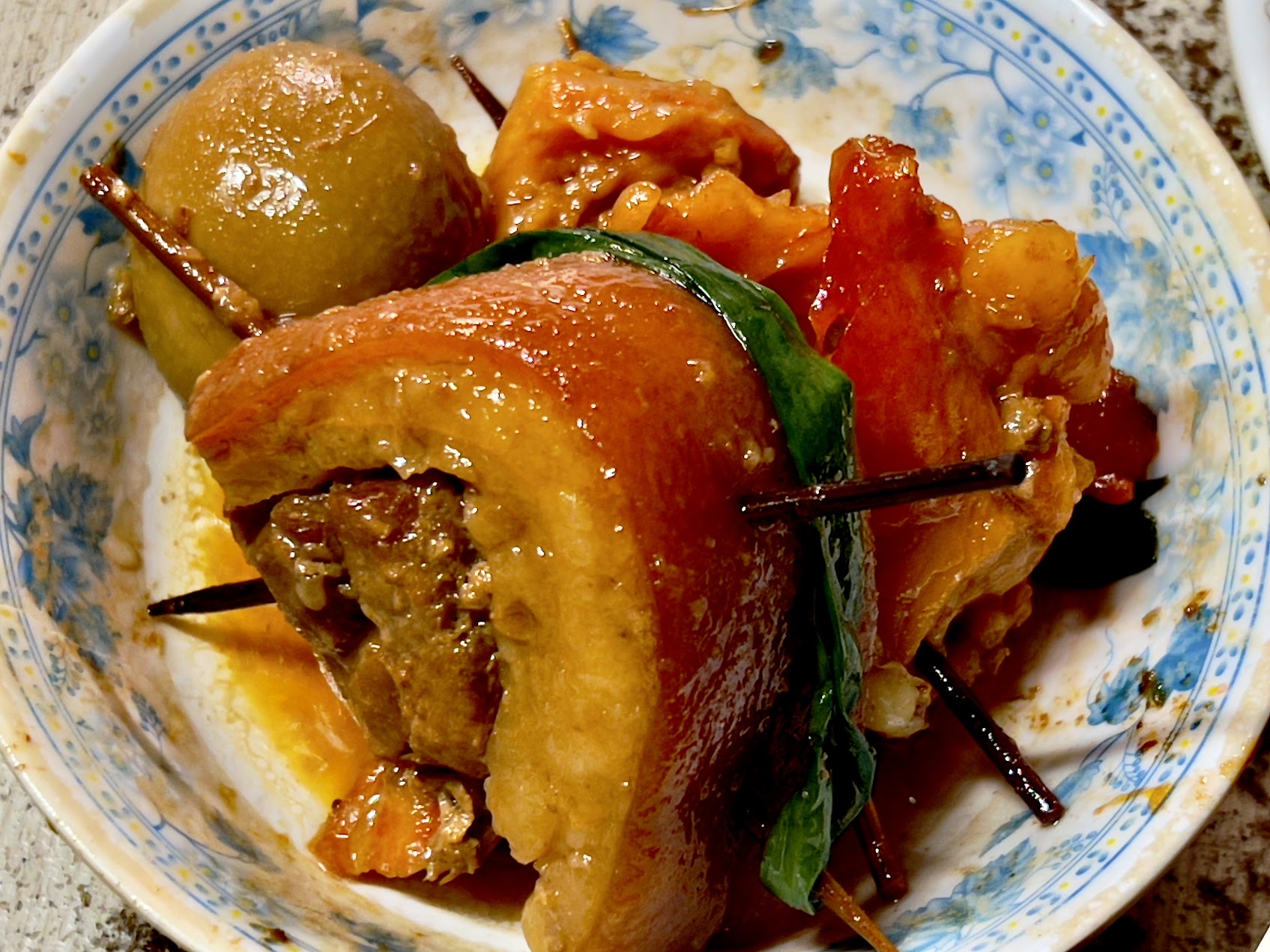
But in parts of central and southern Taiwan, especially in certain local language settings, you may order lu rou fan and receive something quite different: a whole braised slab of pork, with skin and fat intact, laid over the rice. From a northern perspective, that may feel closer to kong rou fan or another chunkier, heavier pork-rice form. Yet in local usage, it may still be called lu rou fan without any sense of contradiction.
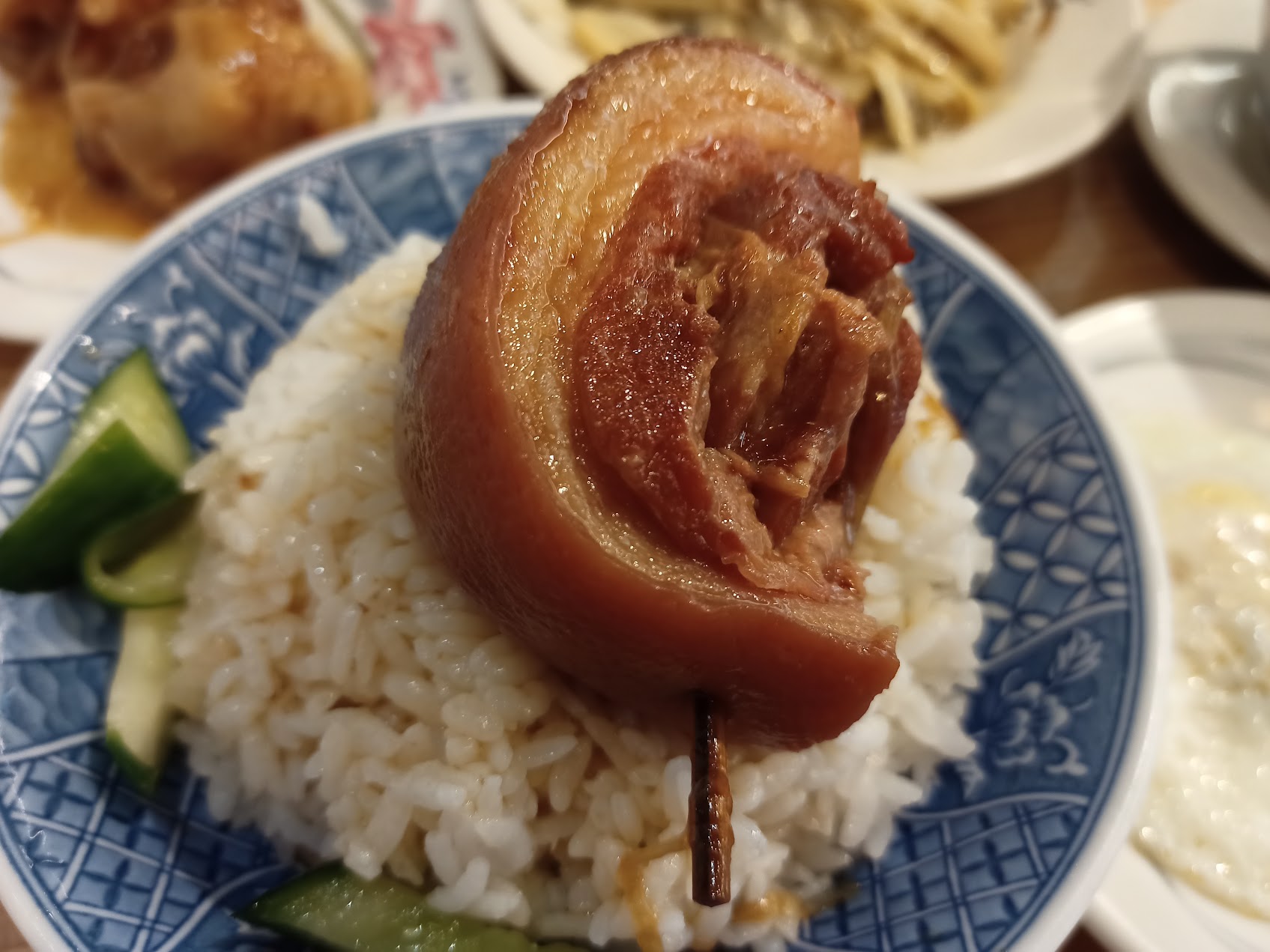
This is not a question of which version is more “authentic”. It is a question of how ordinary food actually lives. Taiwanese popular food culture has never been held together by one neat, centralised answer. Names drift. Methods overlap. Memory reshapes language. If you spend enough time in local eateries across Taiwan, you begin to see that the same name can point to different textures, different cuts, and different local histories.
Taiwanese taste has never been a single straight line. It is more like a map creased by different local lives.
For international readers, this matters a great deal. Without this layer of understanding, you may order “lu rou fan” in different cities and assume you have been served the wrong thing. But once you understand the regional slippage of names, you realise that nothing has gone wrong. You have simply stepped into another local language system.
That is one reason I do not want this series to become just another list of recommended shops. Without first clarifying the structure of difference, any later recommendation will remain scattered information. Once the naming, texture, and regional logic become clear, the later Taipei, New Taipei, and wider Taiwan pieces can become a real reading route rather than a pile of addresses. If you want to see how this framework begins to play out in an actual city, you can then move on to my English piece on lu rou fan in Taipei.
How to Read a Good Bowl of Lu Rou Fan
Once you understand that lu rou fan is not a single fixed form, the next question becomes obvious: what should you actually look for in a good bowl?
My answer is simple. Do not begin with fame. Begin with balance.
The first thing to look at is meat texture. Whether the bowl is based on finely cut pork or on a whole braised piece, the meat should not merely be present. In the diced form, the question is whether the pork carries enough gelatin and fat to flavour each mouthful of rice without collapsing into greasiness. In the chunkier form, the question is whether the skin, fat, and lean portions have actually braised through, rather than simply wearing a dark surface colour.
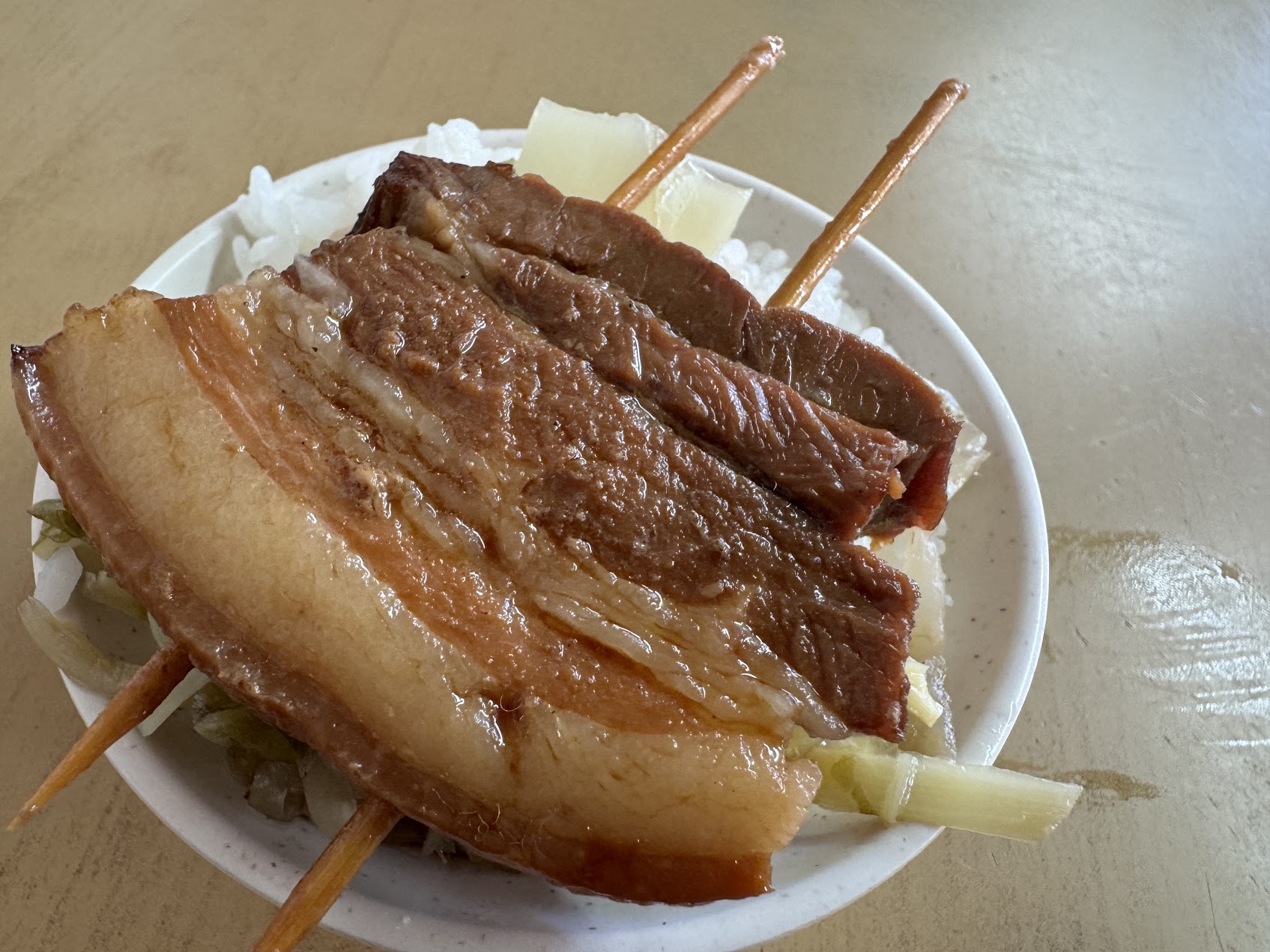
The second thing is the handling of fat and gelatin. A good bowl of lu rou fan always contains fat, but fat should support aroma rather than crush the palate. It should feel rounded, not oppressive; full, but not leaden. Getting that balance right is far harder than it looks, and it usually reveals whether a shop really understands timing and proportion.
The third thing is the depth of the sauce. A mature braising sauce should never collapse into blunt sweet-salty shorthand. It needs fermentation behind it, and it needs enough depth to fuse with pork fat rather than merely coat it. On the eye, it may appear to be no more than a dark gloss. In the mouth, however, it should open into layers.
The fourth thing is the rice itself. Many people talk about lu rou fan as if the pork were the whole story, but in the end this is still a bowl of rice. If the rice is too wet, it quickly loses its structure. If it is too dry, it cannot receive the sauce. In a good bowl, the braising liquid seeps just enough into the surface so that each bite carries flavour while the grain itself still remains distinct.
The fifth thing is balance among salt, sweetness, aroma, and fat. Much of Taiwan’s everyday food culture does not win by intensity alone. It wins by being repeatable. Lu rou fan is a perfect example. It may contain sweetness, but it cannot be only sweet. It may contain richness, but it cannot rely on grease alone. It may have dark soy depth, but the tongue should not leave the table remembering only salt. The bowls people return to are often not the loudest bowls, but the ones whose rhythm feels the most stable.
The sixth thing is whether the whole table makes sense. In Taiwan, lu rou fan is rarely just a bowl in isolation. It often arrives within a broader meal logic that includes braised egg, tofu, cabbage, clear soup, miso soup, pickles, cucumbers, or an extra plate of braised side dishes. These are not decorative additions. They are part of how the meal works. One shop may serve a heavier main bowl and balance it with a clean soup; another may use side dishes to reset the palate between richer mouthfuls. Once you start understanding that Taiwanese diners are often eating not just a bowl but an entire table structure, your understanding of lu rou fan becomes much fuller.
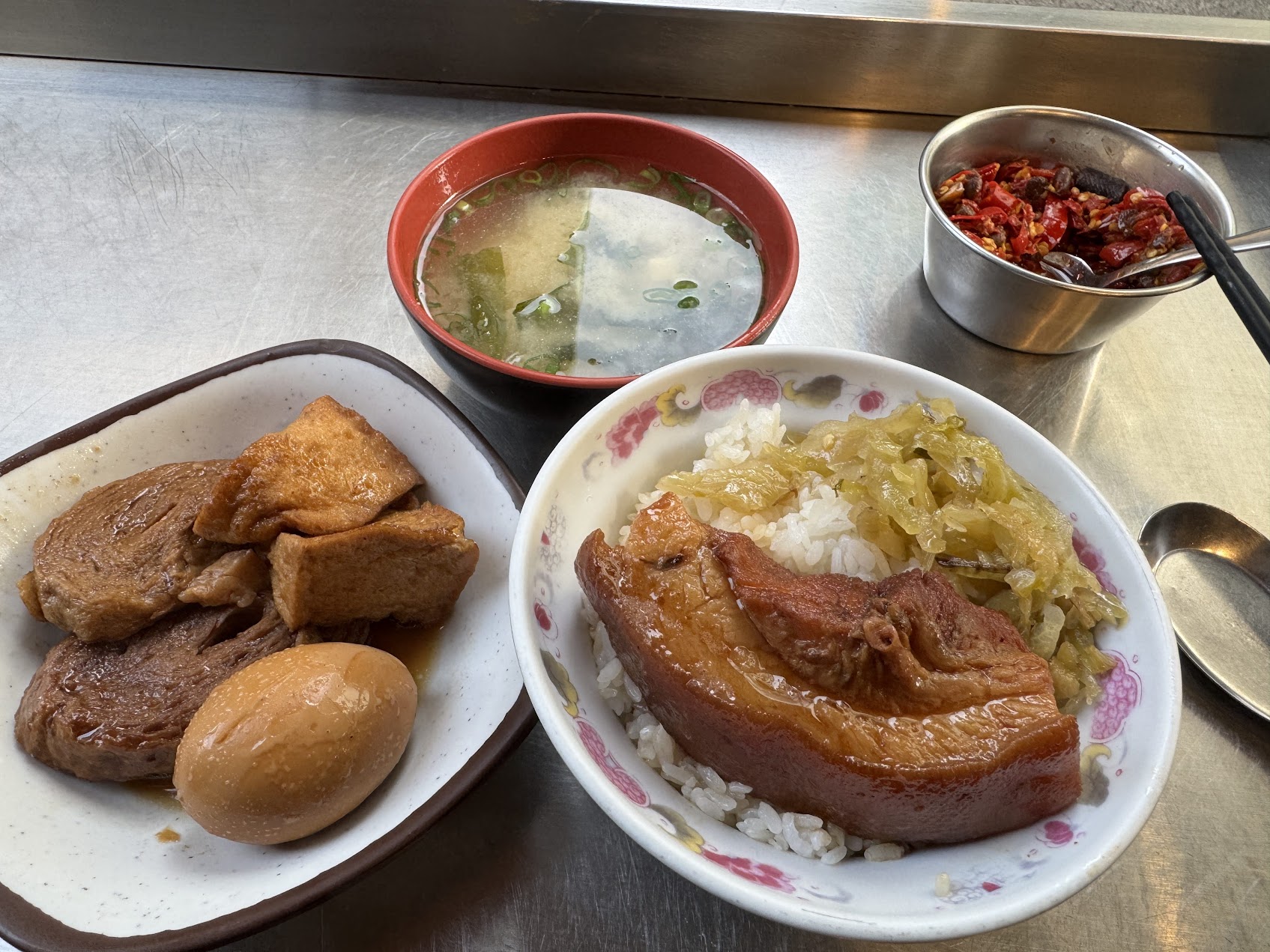
So if you ask me how to read a good bowl of lu rou fan, I would not begin with popularity. I would begin with these fundamentals: whether the meat texture is right, whether the fat and gelatin are under control, whether the sauce has depth, whether the rice can truly carry the braising liquid, whether the overall balance holds, and whether the wider meal makes sense as a table. These things may sound simple, but they are far closer to the true value of a bowl than any ranking list.
Why Taipei and New Taipei Are Good Places to Begin
Once you understand that lu rou fan is not a single standard form, the next question becomes practical: if you want to begin reading Taiwan through this bowl seriously, where should you start?
My answer is quite simple: Taipei and New Taipei are usually the best starting points.
This is not because Taipei represents the whole of Taiwan, and not because Taipei holds the one “correct” version. It is because, for many international readers and travellers, Taipei and New Taipei offer a rare combination of accessibility, density, and range. They make it easier to build a first layer of recognition before moving outward.
First, they are easy to enter. For many international visitors, Taipei is the first city they arrive in. From the airport to the metro, from the hotel to the neighbourhood eatery, the threshold is relatively low. You do not need to understand too much local rhythm in advance, and you do not need to travel immediately to more distant cities. Within Taipei and New Taipei alone, there are already enough versions of lu rou fan to begin forming your eye.
Second, the range of shop types is broad. You can encounter very direct, labour-oriented bowls by traditional markets, or older shops in long-settled neighbourhoods. Some places emphasise finely cut pork and a more delicate sauce-rice balance; others preserve a heavier meat structure and a richer fat presence. Some make sense in the morning; others feel more like late-night bowls after work. Because these different rhythms are compressed into a relatively dense urban area, Taipei and New Taipei are especially useful for learning comparison.
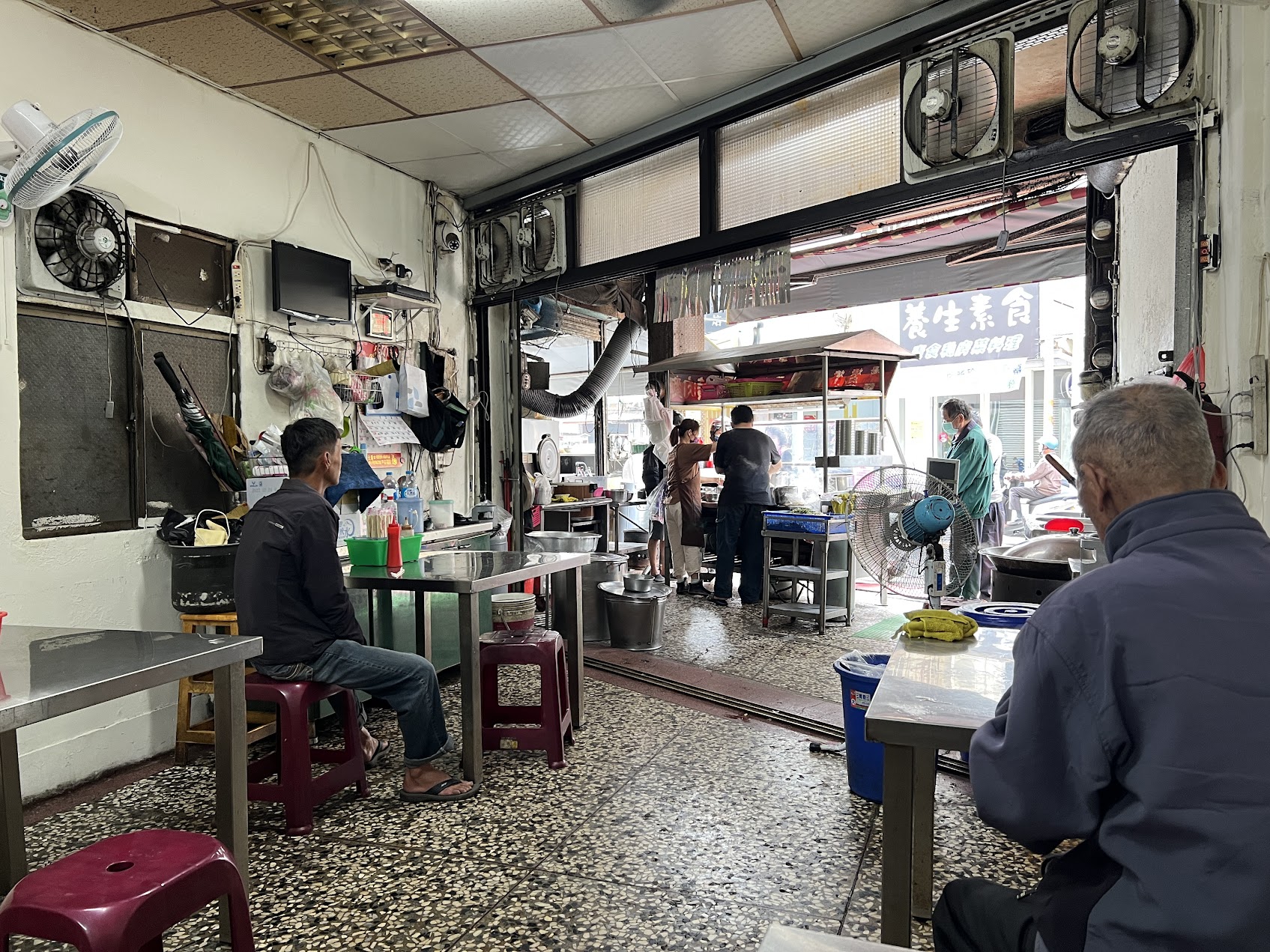
Third, the city helps readers learn how to see before they try to see everything. I have never thought it useful to throw international readers straight into a mass of scattered information. It is more helpful to begin with a city where the range is legible and the differences are still manageable. That is also why I have already written an English piece on lu rou fan in Taipei: not as a ranking list, but as a way of starting from urban rhythm, shop feel, and the lived use of the bowl.
Fourth, Taipei and New Taipei work well as a beginning, not as an end. Once you have learned to read a few essential differences here, it becomes much easier to notice what changes elsewhere in Taiwan: why some places lean toward heavier meat, why others remain closer to diced pork and sauce, why the surrounding table shifts, and how local language alters the meaning of the bowl itself.
Seen in that way, the value of Taipei is not just convenience. It is that the city functions well as a first lesson. You do not need to “finish” Taiwan here. But you can begin to learn how to look, and then carry that way of seeing elsewhere.
If you want to continue reading in English, you can also move on to Personal Recommendations in Taiwan. That section is not designed as a tourist checklist. It tries instead to place Taiwan back inside lived urban rhythm, local everyday scenes, and places that can actually be felt rather than merely consumed.
From One Bowl of Rice to an Island
In the end, lu rou fan is worth writing about not because it is expensive, nor because it photographs well for tourism, but because it is so deeply ordinary.
The more ordinary a food is, the more fully it is tested by life. It does not need festival status. It does not need grand staging. It remains because people continue to return to it — in the morning, at midday, after work, deep into the evening; by markets, along alleys, in old shops, beneath arcade roofs. It exists not because it is looked at, but because it is eaten again and again.
What lu rou fan represents is not merely one shop, and not merely one version,
but the way Taiwan turns ordinary ingredients, fermentation, labour, time,
and local language into a flavour people return to repeatedly.
For international readers, if you want to understand Taiwan in a way that is less superficial and less packaged for tourism, lu rou fan is an excellent place to begin. It will not explain the entire island at once. But it will let you see that many things in Taiwan are not built through spectacle. They are built through repetition, everyday order, and forms of life that become legible only with time.
That, in the end, is what this series is trying to do. Not to rush toward a “must-eat list”, but to help you see how to enter, how to distinguish, and how to read. Once that is in place, the later pieces on Taipei, New Taipei, and other regions across Taiwan will no longer be just names and addresses. They will become different ways in which one bowl has been lived differently by different places.
Further Reading
If you want to continue, the following pieces can serve as extensions of this reading path:
- Taipei Lu Rou Fan: How One Bowl Moves with a City from Morning to Midnight — a good place to begin if you want to approach lu rou fan through Taipei first.
- Personal Recommendations in Taiwan — a reading path built from urban rhythm, local everyday life, and places that remain tied to lived reality.
- A Supply Chain History of Beef Noodle Soup in Taiwan — useful if you want to see how an ordinary bowl can be read through history, supply chains, and social structure.
- Tainan Beef Soup — retained here with the current link, as I have not replaced it with a stable verified English page in this version.
- Pho, Kway Teow, and Coastal Asian Migrations — retained here with the current link rather than an unverified English slug.
- Visits & Field Observations — used here as the nearest confirmed English page connected to field-based observation and site records.
It can function as an entry-level translation, but it is not complete. The core of lu rou fan is not only pork over rice, but the braising method itself — the way soy sauce, fat, gelatin, and time gradually come together into one integrated flavour. Not exactly. In northern Taiwan, lu rou fan usually refers to finely cut or diced braised pork over rice. Kong rou fan more often refers to a whole braised slab of pork, usually with skin and fat intact. In different parts of Taiwan, however, these naming boundaries may blur. Yes. This is one of the most important things for international readers to understand. In different cities, the same name may point to different textures, cuts, and table forms. Start with six things: meat texture, the handling of fat and gelatin, sauce depth, rice condition, the balance of salt-sweet-fat-aroma, and the broader meal logic of the table. Because it is deeply ordinary. The more ordinary a food is, the more it reflects a place’s living structure. Lu rou fan is not a festive dish or a luxury item. It is something people return to in the actual flow of life. Pork is standard, but the important issue is not only species — it is the balance among fat, gelatin, lean meat, and cut size. Different shops make different structural decisions, and those choices shape the bowl. Because in the end this is still a bowl of rice. The rice must be able to carry the sauce while still keeping grain structure. Many crucial differences in lu rou fan come down to whether rice and braising liquid truly work together. Yes. Not because it represents all of Taiwan, but because it offers high accessibility, urban density, and enough variation in shop type to help first-time readers and travellers develop an initial frame of recognition. Very much. In Taiwan, the bowl often makes sense only within a larger table structure: braised egg, tofu, cabbage, clear soup, miso soup, pickles, or other braised side dishes. The meal is often more than the bowl alone. Do not begin by chasing fame. Start with one or two places that have a clear style and a stable local rhythm. Learn first to distinguish diced-pork and chunk-style bowls, then begin forming your own judgement around texture, sauce, fat, and rice.
Frequently Asked Questions
❶ Can lu rou fan simply be translated as “braised pork rice”?
❷ Are lu rou fan and kong rou fan the same thing?
❸ Do people in northern and southern Taiwan really mean different things by “lu rou fan”?
❹ What should I look for first in a good bowl of lu rou fan?
❺ Why is lu rou fan so important in Taiwan?
❻ What kind of pork is usually used in lu rou fan?
❼ Why is the rice itself so important?
❽ Is Taipei a good first place to begin learning lu rou fan?
❾ Do soup and side dishes matter when eating lu rou fan?
❿ How should an international reader begin eating lu rou fan for the first time?