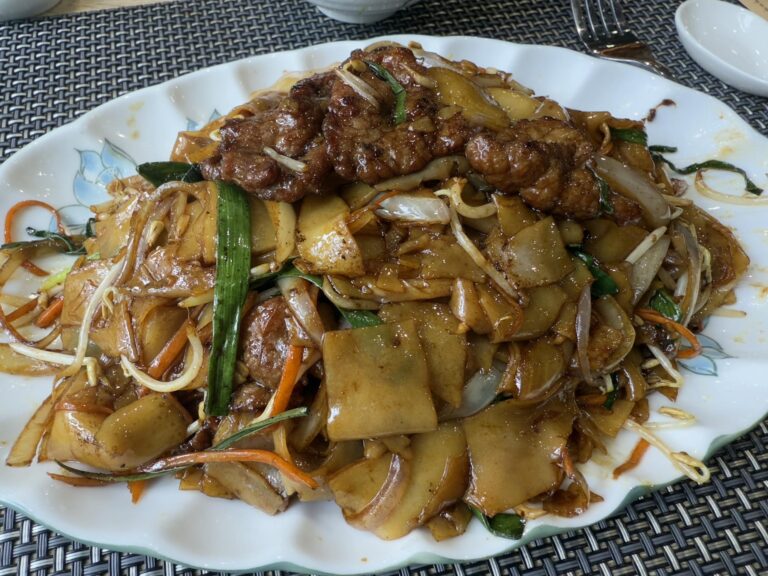
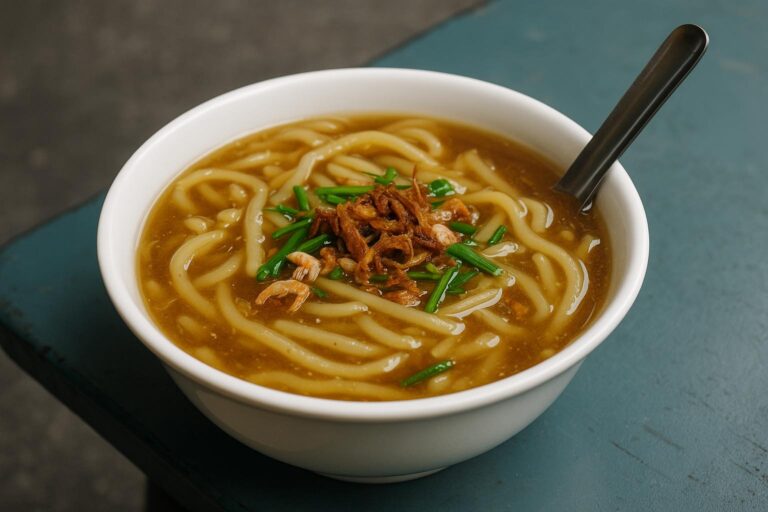
The Journey of Soup: Pho, Kway Teow, and the Flavor Waterways of Coastal Asia
Nelson Chou | Cultural Systems Observer ・ AI Semantic Engineering Practitioner ・ Founder of Puhofield
This essay is not about one dish, one nation, or one neat origin story. It is about a larger soup corridor running through South China, Hong Kong, Macao, Vietnam, Thailand, Manila, and the wider coastal world of Asia. Pho, kway teow, rice-noodle soups, and related bowls may look different on the surface, but they often answer the same practical needs: movement, labour, humidity, market timing, and the daily requirement that a body be restored quickly and well. Before returning to Taiwan in the next essay, I want to see this broader waterway clearly on its own terms.
Where this essay sits in the series
Earlier essays in this series stayed closer to Taiwan and to beef as it was reworked inside the island’s own food history. Vol.5 widens the frame. It follows the broader hot-soup system that connects port cities, rice starches, migration, and ordinary urban eating across coastal Asia. The next essay will return to Taiwan and ask how this same waterway became visible again through immigrant households, neighbourhood shops, and local daily life.
Key Points
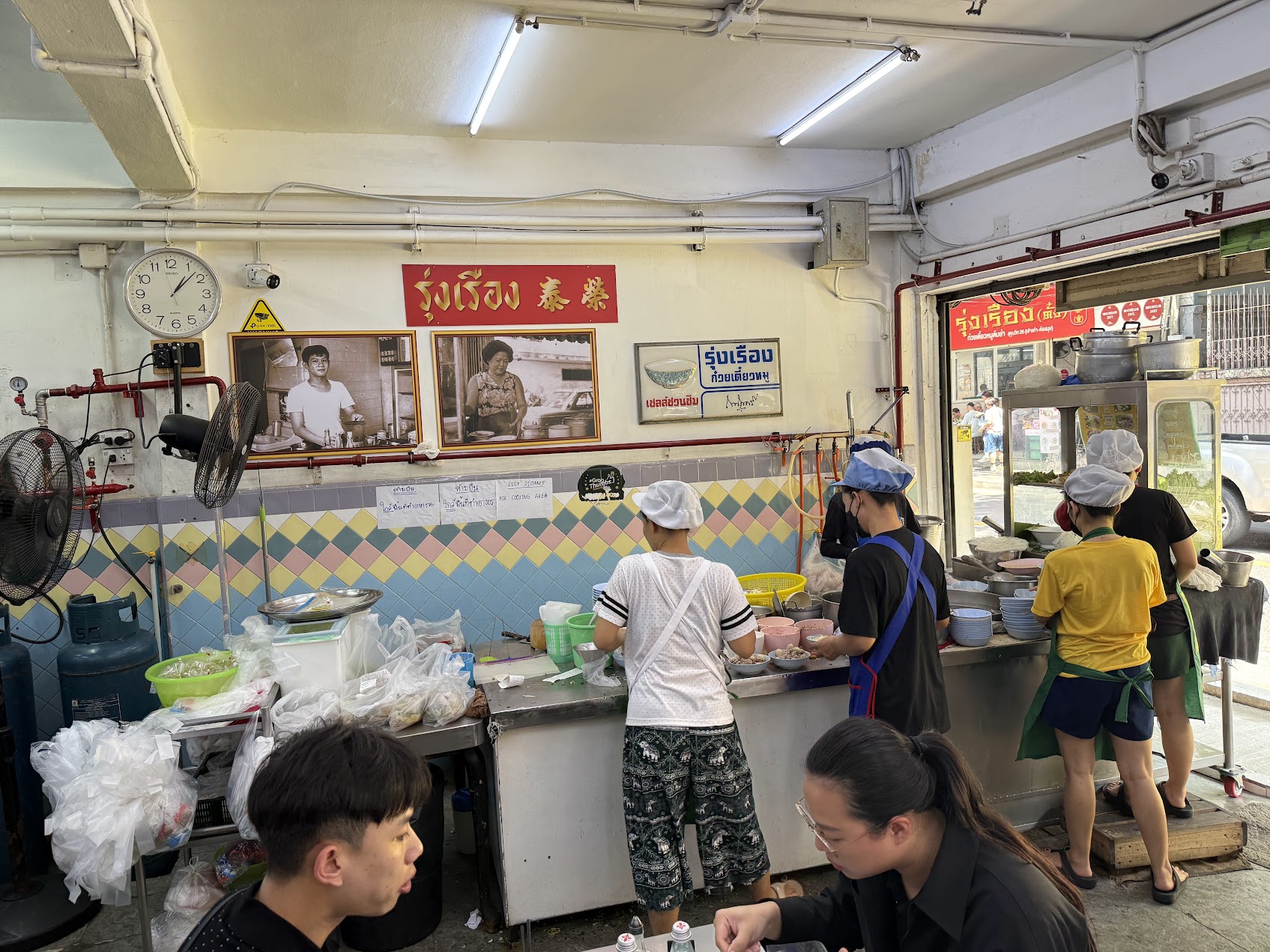
- The point is not to reduce pho, kway teow, or rice-noodle soups to neat national labels, but to understand them as part of a broader port-city soup system.
- What spread along the coast was not just a recipe, but a practical broth logic: hot soup, rice-based starch, flexible meat use, strong seasoning, and fast daily service.
- Vietnam refines this system into cleaner broth structure; Thailand pushes it towards density, table-side adjustment, and faster urban response.
I. I Eventually Realised I Was Following a Waterway, Not Looking for a Perfect Bowl
I did not begin with the intention of studying these soups. I simply travelled long enough for my body to start recognising a pattern before I had words for it. In northern Vietnam I found myself eating bowl after bowl of noodle soup: beef versions, lighter fish-based versions, and bowls so plain-looking that they almost seemed too modest to matter. Later, in Thailand, I kept meeting another cluster of close relatives: pork noodle soups, offal soups, beef soups, boat noodles, clear broths with crispy pork, and the fried additions that always seem secondary until you realise the bowl somehow feels incomplete without them.
On the surface, all of this can look messy. Thin noodles, wide noodles, rice noodles, vermicelli, soft noodles, elastic noodles — each starch takes broth differently. Fish balls, meat balls, beef slices, liver, mixed offal, broth depth, herb load — each one changes the density of the meal. Basil, mint, coriander, scallions, bean sprouts, lime, chilli: a small shift in one of these and the bowl starts speaking in a different accent. At first, these look like unrelated dishes. Over time, they begin to feel like different expressions of the same grammar.
My own bodily reaction became clear quite early. Whenever I saw fried chicken skin, pork rind, crispy garlic, fried dough, or similar toppings in these soup shops, I almost always ordered them. Not because I wanted to turn every bowl into excess, but because I had learned what those elements do. They change the bowl’s physical register. Broth is wet, noodles are smooth, meat is soft, herbs are bright — and then something crisp, fatty, rougher, and more direct enters the system. Suddenly the soup no longer feels only elegant or well-balanced. It feels inhabited.
What I was following, in the end, was not a famous bowl or a correct version, but a whole hot-soup waterway running through ports, markets, and moving lives.
That is why I no longer like explaining these foods too quickly as just “Vietnamese”, “Thai”, or “Chinese”. What matters is not only flavour. What matters is that these bowls reveal how coastal Asian societies turned movement, work, starch technology, and bodily need into something repeatable, flexible, and daily.
II. The Structural Base of This Soup System First Took Shape Along the South China Coast
Once the frame widens, it becomes difficult to assign this soup logic to one single country. The South China coast has long been a place where rice technologies, seafood, migration, ports, and trade accumulated together. Rice was never only a staple. It was a technical resource: milled, steamed, pressed, cut, dried, and reshaped into many edible forms. Once that rice technology met hot broth, bones, fish, sliced meat, offal, and the practical use of market trimmings, a highly workable soup system emerged almost by necessity.
That is where ports matter. A port is never only a traffic point for goods. It is also where methods, flavours, people, languages, and bodily needs encounter one another. People moving from one place to another may not carry a whole kitchen, but they often carry a compact set of food principles: which starch anchors the bowl, which broth restores the body, and which seasoning returns taste to something recognisable. In Hong Kong and Macao, those principles are tightened by the discipline of dense colonial port cities and commercial street-food order. Further south, in Vietnam, Thailand, Manila, and Indonesia, they are edited again by tropical herbs, fish sauce, acidity, sweetness, market meat supply, and local conditions of heat and speed.
This is why names alone are not enough. If you focus only on what each bowl is called, every place looks separate. But if you ask how the bowl is built, who it is feeding, how fast it must be made, and what kind of life it is designed to support, then a broader family resemblance appears.
What travelled was not just a dish. It was a port-type hot-soup technique: fast, restorative, adjustable, and able to receive a body in motion.
These bowls are not simple copies of one another. They are the result of people living around the same sea, facing similar practical conditions, and slowly cooking a recognisable broth grammar out of different local materials.
III. In Vietnam, Pho Turns Broth into a Clean Language
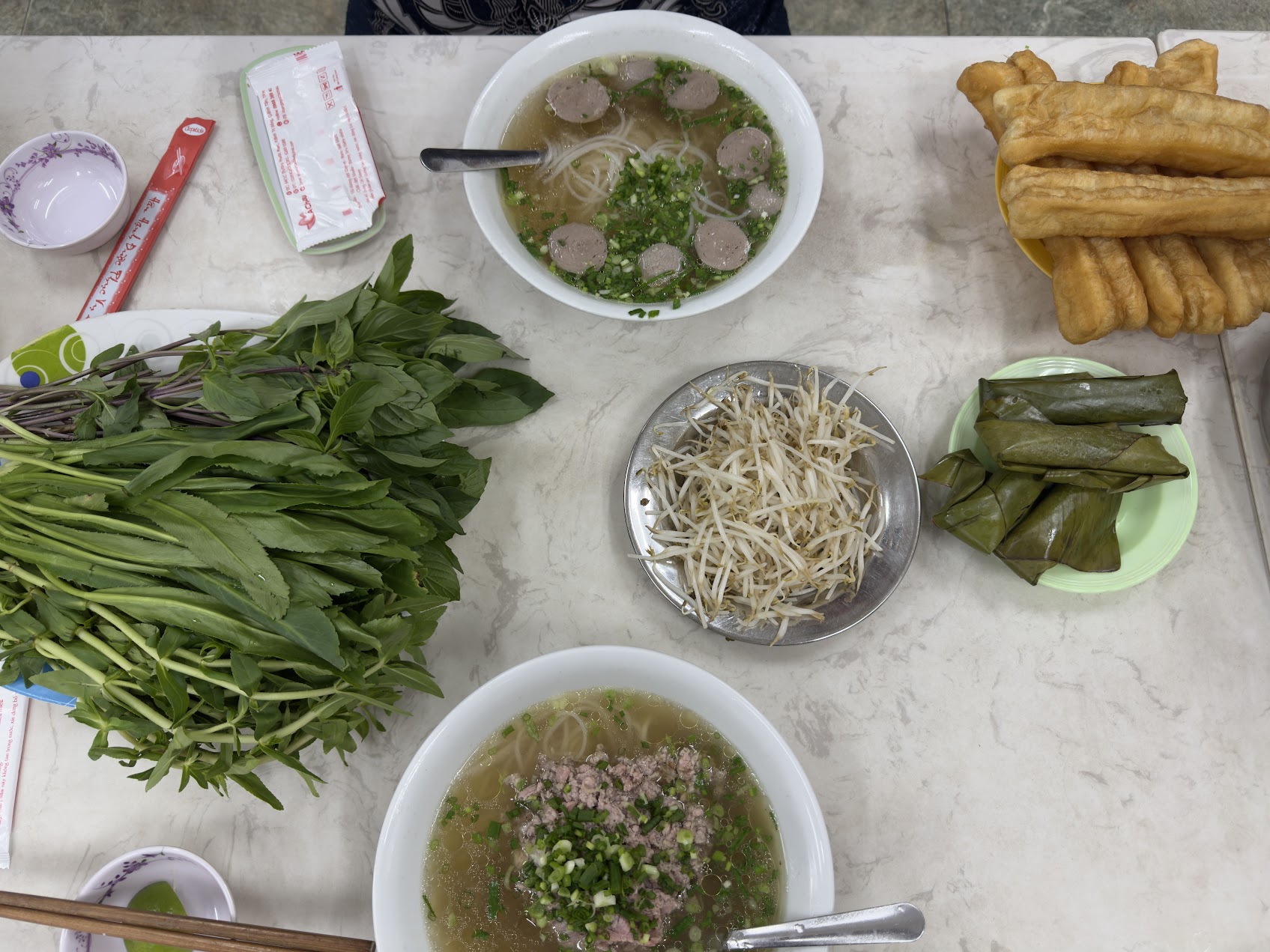
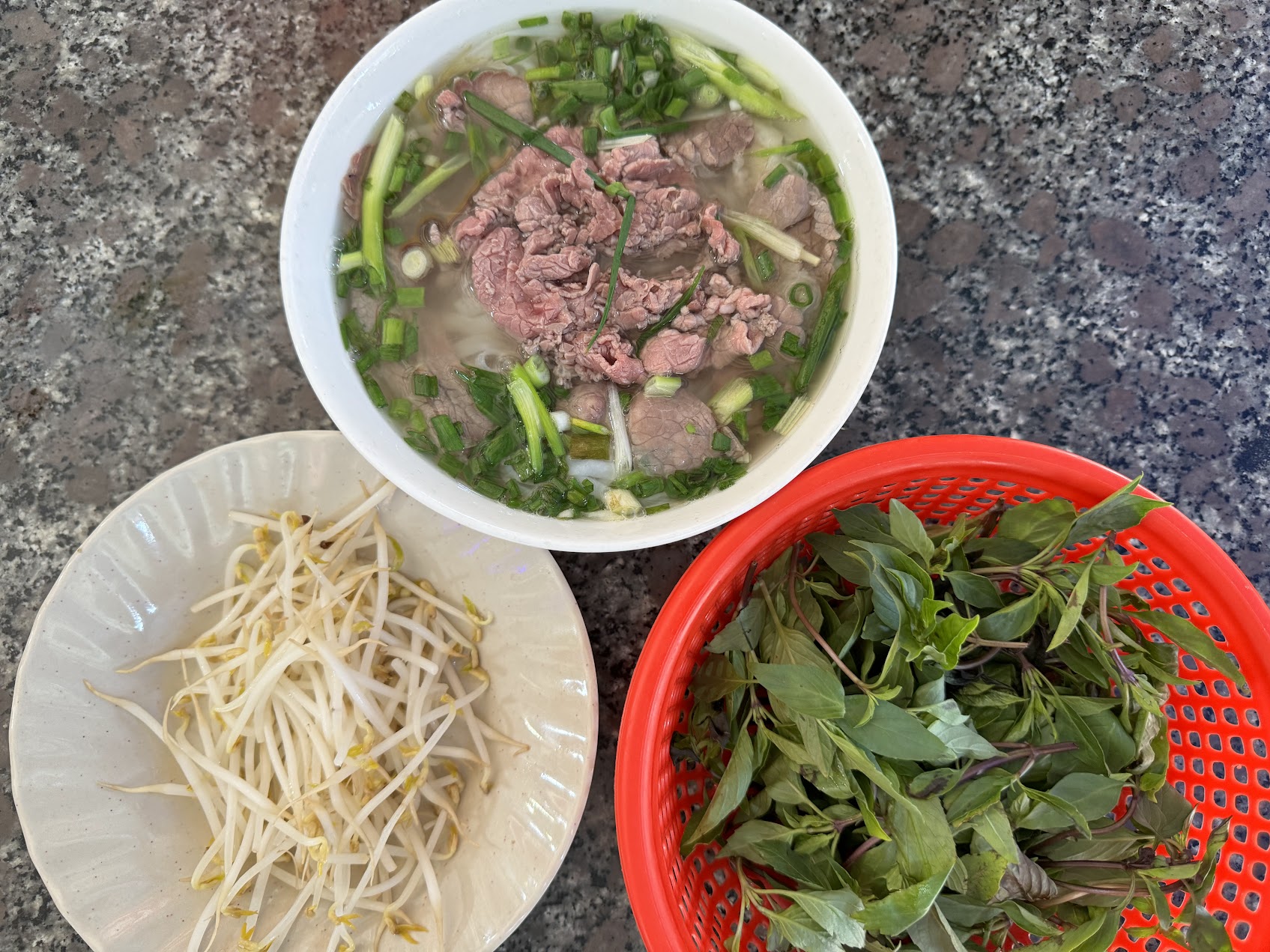
What has stayed with me most deeply about Vietnamese pho is not the noodle alone, but the broth. Some bowls tell you immediately that the centre is not abundance, but order: the soup is clear but not empty, fragrant but never aggressive, grounded in bone, lightly lifted by fish sauce, and opened by herbs that never overwhelm the bowl.
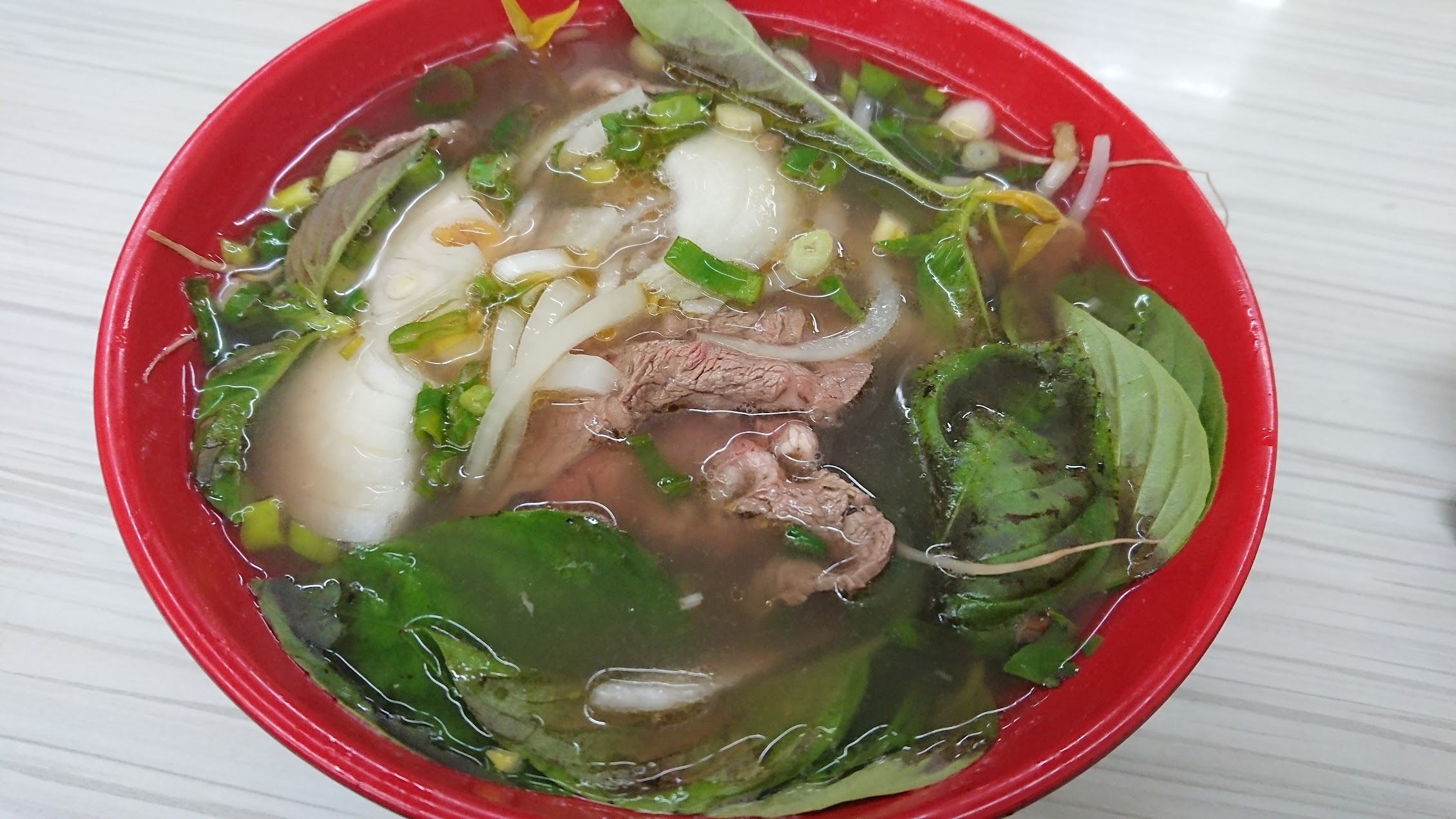
It is common to begin pho with colonial history, the arrival of beef, or the formation of northern pho. None of that is wrong. But if the discussion stops there, pho becomes flatter than it should. What matters to me is that pho gathers ingredients that could easily compete with one another — beef, bone stock, fish sauce, herbs, rice noodles — and arranges them into a broth that feels ordinary, stable, and deeply liveable. It does not erase complexity. It organises complexity.
Pho also never appears in only one form. Beef pho, fish-based bowls, different cuts, different city rhythms, different hours of the day — all of these change the expression of the soup. Some bowls remain quiet. Some let herbs come forward. Some invite lime and chilli to finish the line at the table. Vietnam did not freeze this soup waterway into a fixed formula. It refined it into a language capable of very fine variation.
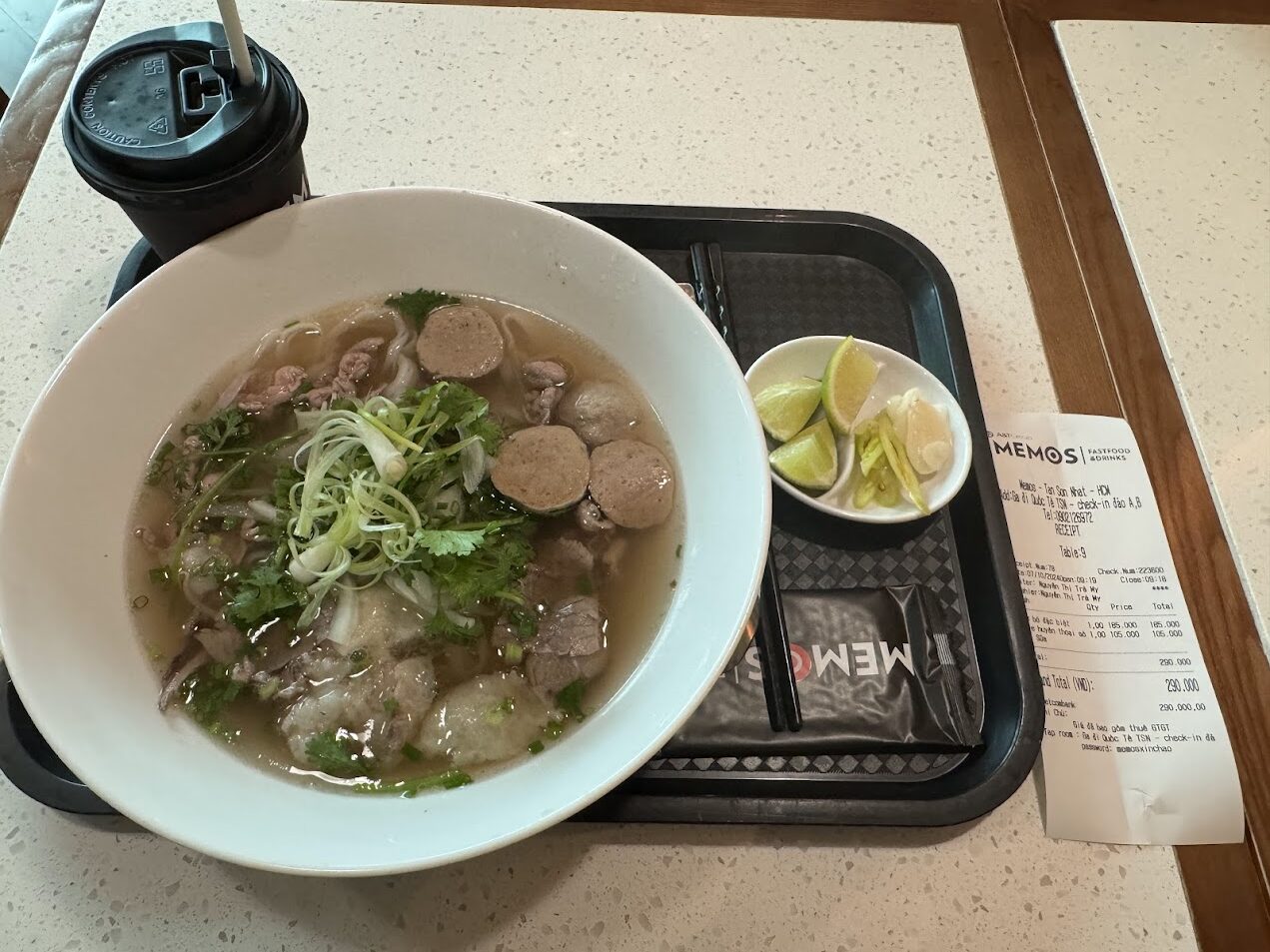
If the South China coast and the port world first developed the structural base of this soup system, then Vietnam’s contribution was refinement: cleaner, straighter, and more immediately memorable from the first sip.
IV. In Thailand, the Same Soup Logic Becomes Denser, Faster, and More Willing to Stay Open
If pho shows what happens when broth is refined into a clean and disciplined line, Thailand shows what happens when the same basic soup logic enters a denser urban environment and starts responding to speed from every direction.
I have never seen Thai noodle soups as a noisy version of Vietnamese broth culture. They feel like something else. The same structural base is still there — hot soup, rice starch, meat, herbs, fast assembly — but the whole system is pushed toward a more crowded and more adjustable form. A Thai bowl often arrives already alive with multiple layers: pork, fish balls, liver, greens, garlic oil, chilli, sweetness, acidity, and the promise that the bowl is still not finished because the eater will complete part of it at the table.
That table-side openness matters. In many Thai soup shops, seasoning is not hidden in the kitchen as an invisible authority. It sits within reach. Fish sauce, sugar, chilli powder, vinegar with sliced chillies, fried garlic — these are not decorative extras. They are part of the operating logic of the meal. The bowl is given form in the kitchen, but its final tuning often happens in public, in the hand of the eater, inside the time pressure of the city.
This is why Thai soups often feel so urban to me. They are less interested in arriving as one finished statement than in functioning as a living platform. The city cooks part of the bowl. The customer completes another part. The result is not disorder. It is a highly practical kind of openness.
In Vietnam, the bowl often arrives as a line already written. In Thailand, the bowl arrives with structure, but still leaves room for the city to revise it.
That is why I think Thailand matters so much in this wider soup corridor. It takes the port-city broth system and pushes it toward a more layered, more participatory, and more urban form without breaking the core logic that made it work in the first place.
V. What Makes These Bowls Come Fully Alive Is Often Not the Noodle, but the Texture Around It
Over time, I have become less interested in asking which noodle is technically correct, and more interested in what actually makes the bowl feel complete. Again and again, the answer is not only the broth, and not only the starch. It is the textural layer built around them.
Fried chicken skin, pork rind, crisp garlic, fried shallots, fried dough, crunchy sprouts — these things may look secondary to someone encountering the bowl from a distance. But inside the bowl, they do something structural. They break smoothness. They interrupt softness. They introduce resistance, fat, crackle, and another temperature memory into a meal that might otherwise remain too linear. They do not decorate the soup. They change its physical behaviour.
That matters because these bowls do not serve only taste in the abstract. They serve repetition. They serve workers, commuters, market bodies, people who may need to eat quickly and return tomorrow for the same meal without feeling trapped by it. Texture is one of the ways repetition remains pleasurable. Without contrast, the broth can become dutiful. With the right crispness or fat, the bowl regains force.
I think this is one of the real intelligences of ordinary food. A soup system survives not only by being nourishing, but by knowing how to keep the mouth interested across repeated eating. That intelligence is often hidden not in the supposed main ingredient, but in the small additions people learn not to ignore.
A mature soup system is not one that insists on purity. It is one that knows how to keep the body returning without deadening the appetite.
That is why I have such strong feelings about these supposedly small things. They reveal that the life of a bowl often resides not in whatever looks most prestigious, but in the element that gives the meal weight, roughness, and a reason to come back.
VI. Boat Noodles Made Me See That Some Soups Are Designed Less for Reflection Than for Survival
If there is one bowl in Thailand that shows the labouring character of this soup waterway with unusual clarity, for me it is boat noodles.
Many first-time eaters are drawn to the obvious things: the dark broth, the small portion, the dense flavour, the blood-based history. But what holds my attention is something simpler. Boat noodles are extremely honest food. They do not posture as refinement. They do not ask to be admired as delicate craft. They face hunger directly.
The small bowl is part of that honesty. It is not a deficiency. It is a design. A small bowl can be eaten quickly, repeated easily, counted against appetite, and inserted into a working day without demanding ceremony. One bowl, then another, then perhaps another again. That rhythm makes perfect sense in an environment shaped by movement, compressed time, and interrupted rest.
Boat noodles also sharpen a larger question for me: what kind of soup can support a life lived outside for long hours, under heat, under labour, under constant motion? The answer is not always abundance. Sometimes it is concentration. A broth strong enough to restore, a portion small enough not to burden, and a format that can be repeated without collapsing the body or the schedule.
Some soups are not primarily built for contemplation. They are built to catch a body briefly, restore it, and release it back into movement.
That is why I find it difficult to treat boat noodles merely as a colourful Thai speciality. They are a concentrated reminder of why this whole waterway keeps reappearing across coastal Asia: not because one region happens to cook brilliantly, but because the region keeps producing lives that require fast restoration, repeated warmth, and food that can keep pace with motion.
VII. In Hong Kong, Macao, Manila, and Indonesia, the Names Keep Changing, but the Operational Logic Remains Legible
By the time the route reaches Hong Kong and Macao, I begin to feel a different kind of broth intelligence. These are highly urbanised port environments, and their food reflects that pressure. Broths are cleaner in outline. Offal is handled with tighter control. The line between brisk efficiency and bodily restoration becomes sharper. Even when a bowl looks plain, it often carries a disciplined sense of urban compression: nothing extra, but nothing wasted either.
This is where the broader soup waterway becomes especially interesting. A port-city broth system does not need to keep the same noodle name in order to remain recognisable. It only needs to keep solving the same kinds of problems: how to turn starch, broth, meat, trimmings, and speed into a meal that works under pressure. Hong Kong and Macao do this with an economy that feels more edited than exuberant. The bowl becomes leaner, brisker, and more structurally exact.
Further south, in places like Manila and Indonesia, the system is rewritten again. Climate presses differently. Spice behaves differently. Acidity, sweetness, religion, trade, and local supply all take a stronger hand. Some broths lean more heavily into sourness. Some widen into spice. Some rely more visibly on oxtail, meatballs, organ meats, or mixed-market logic. The names may drift, the garnishes may thicken, the broth profile may turn, but the bowl is still doing recognisable work: receiving a body that has been out in the world and restoring it without requiring ceremony.
That is why I do not find it useful to ask too quickly whether each of these bowls is “really related” in a narrow genealogical sense. The more revealing question is whether they participate in the same practical broth world. And very often they do. They depend on ports, on market flexibility, on speed, on rice or noodle starches, on meat structures that do not require luxury, and on the repeated ability to feed people who will come back again tomorrow.
What ties these bowls together is not a shared label, but a shared practical intelligence: they know how to feed movement without collapsing into monotony.
In that sense, pho, kway teow, offal soups, clear noodle broths, meatball soups, and their many local cousins are not simply local specialities. They are also different coastal Asian answers to the same enduring question: how can a bowl remain ordinary, repeatable, and yet still alive?
VIII. Which Is Why I Do Not Want to Bring Taiwan in Too Early
Precisely because this larger broth world exists, I do not want Taiwan to arrive too soon as the finishing frame for this essay. The moment Taiwan is introduced too early, the whole discussion risks shrinking into a familiar shortcut: that these are simply immigrant foods that appeared on the island in recent decades. That description is convenient, but it is too narrow to be useful.
Taiwan was never standing outside this maritime soup corridor. It was already beside it. What changed in recent decades was not the existence of the waterway itself, but the visibility of its convergence inside the island. Migration, marriage, labour movement, immigrant households, neighbourhood food businesses, and changing city patterns made certain parts of that older coastal system more visible within Taiwan’s everyday life.
That distinction matters. If we move too quickly to the Taiwan chapter, we end up telling a story of arrival only. But what interests me more is the story of recognition: how an island already situated next to this larger broth world gradually began to recognise, rename, and domesticate some of its currents in new ways. Once seen that way, the Taiwan chapter is no longer about foreign foods simply entering local space. It becomes a story about reconvergence.
So I prefer to pause here, at the level of ports, coastal cities, labour rhythms, and regional broth technique. This is the right place to stop and look carefully at the sea before walking back onto the island. Only then does the Taiwan chapter become more exact: not a borrowed ending, but a local reorganisation of something that had long been moving nearby.
Delaying Taiwan is not a scenic detour. It is a way of making sure that when Taiwan finally appears, it appears at the right scale.
The next essay will return directly to Taiwan. That will be the moment to look at immigrant households, small restaurants, neighbourhood markets, and the slow way an island begins to drink someone else’s broth until it starts to taste like daily life of its own.
FAQ|Further Questions
1. Is this essay arguing that pho and kway teow have a single common origin?
No. The point is not to force these foods into one neat origin line. The argument is that many of them participate in a broader coastal Asian soup logic built around ports, movement, hot broth, rice-based starches, and ordinary bodily replenishment.
2. Why does the essay focus so much on systems instead of recipe differences?
Because recipe differences are real, but they do not explain enough by themselves. What gives these bowls their deeper coherence is the kind of work they do in daily life: how they are built quickly, how they absorb flexible ingredients, and how they restore bodies in motion.
3. Why are ports more important here than national borders?
Because ports are where methods, people, flavours, and food habits cross most intensively. National cuisines can be useful labels, but port cities often reveal the mechanics of exchange much more clearly than national stories alone.
4. How does pho differ from Thai noodle soup in the terms used in this essay?
Pho is described here as a cleaner broth language: more linear, more controlled, and more visibly refined in its internal structure. Thai noodle soups are described as denser and more open, allowing more table-side intervention and more layered urban intensity.
5. Why do crispy toppings matter so much?
Because they change the physical behaviour of the bowl. They add contrast, fat, resistance, and sensory renewal, which helps a repeatable everyday soup remain interesting instead of becoming dull through repetition.
6. Why are boat noodles treated as especially revealing?
Because they show very clearly how soup can be designed for movement, labour, and repeated quick restoration. Their small format, concentrated broth, and repeatable logic make visible the practical side of the whole coastal soup corridor.
7. Why hold Taiwan back until the next essay?
Because introducing Taiwan too early would make the discussion too small. The broader coastal broth system needs to be seen first. Only then can Taiwan be understood not as a simple endpoint of import, but as a place of reconvergence and local reorganisation.
8. What is the central claim of this essay in one sentence?
The central claim is that pho, kway teow, and many related bowls are best understood not as isolated local dishes, but as part of a larger coastal Asian hot-soup waterway shaped by ports, labour, movement, and the daily need to restore the body.
References|APA 7
- Encyclopaedia Britannica. (2022). Pho | Definition, ingredients, origin, & developments. https://www.britannica.com/topic/pho
- Thailand Foundation. (n.d.). Thai food. https://thailandfoundation.or.th/culture-heritage/thai-food/
- Wang, C.-H. (2008). Ethnic-cultural economy, livelihood strategy, and identity negotiation: A case study of Southeast Asian restaurants in metropolitan Taipei. National Chengchi University Journal of Sociology, 39, 1–44. https://doi.org/10.30400/TNCCUJS.200801_(39).0001
- National Immigration Agency. (2024, November 6). New immigrants and the making of a multicultural society. https://www.immigration.gov.tw/5385/7344/70395/143257/
- Lin, W.-H., & Lin, R.-Y. (2025, November 13). Ports of waiting, sails of connection: Unit I of the special exhibition “Landfall: Cultural encounters in maritime Southeast Asia”. National Palace Museum. https://www.npm.gov.tw/ChineseArt-Content.aspx?a=10481&idstr=03012531&l=1&sno=04012587&type=
- Department of Statistics, Ministry of Education. (2025). School attendance overview of children of new residents in the 2024 academic year. https://stats.moe.gov.tw/files/analysis/113_son_of_foreign.pdf
- National Archives Administration. (2018). Maritime Taiwan: Tracing the history of ports. https://www.archives.gov.tw/opendata/alohas59.pdf
- Academia Sinica. (n.d.). Maritime routes between Fujian and Taiwan. https://thcts.sinica.edu.tw/themes/ra08.php