html
The Scent of the Griddle: How Steak Moved Through Class, Cities, and Family Life in Taiwan
Nelson Chou | Cultural Systems Observer ・ AI Semantic Engineering Practitioner ・ Founder of Puhofield
Steak in Taiwan does not belong to a single dining tradition. It has moved through hotel dining rooms, old foreign-style city restaurants, sizzling iron plates, night-market sets, and finally the everyday tables of ordinary families. That is why I do not think steak in Taiwan is worth writing about only as meat, doneness, or restaurant quality. It is worth writing about because it reveals how an imported table language was gradually broken apart, translated, and redistributed across different layers of modern Taiwanese life.
Where this essay sits in the series
If Vol.1 traced how beef entered postwar Taiwan through noodles, then Vol.4 follows a different line: how steak moved from formal Western dining into urban memory, popular eating, and finally family life. The question here is not simply how steak was eaten, but how Taiwan learned to make it socially legible in more than one way.
Key Points
- What matters most about steak in Taiwan is not only taste, but the way it moved from the language of class into urban memory and then into family routine.
- White porcelain plates, old foreign-style restaurants, iron plates, night markets, and family tables did not replace one another cleanly. They mark different stages in the Taiwanese translation of steak.
- Without imported beef, cold-chain logistics, portioning systems, and standardised preparation, steak could not have moved from hotels into night markets and ordinary weekend meals.
I. My First Steak Was Not on an Iron Plate, but on White Porcelain
The first steak I truly remember was not at a night market, and not on a sizzling hot plate. It was at the Ambassador Hotel in Taipei.
I was still young. I understood almost nothing about restaurants, but some sensations leave an impression before language does. The carpet was thick and muted the sound of footsteps. The staff moved with a kind of measured steadiness, as though every angle had already been calculated. The lighting on the table was soft, and even the position of the knife and fork seemed to be telling you something: this was not a place for hurried eating.
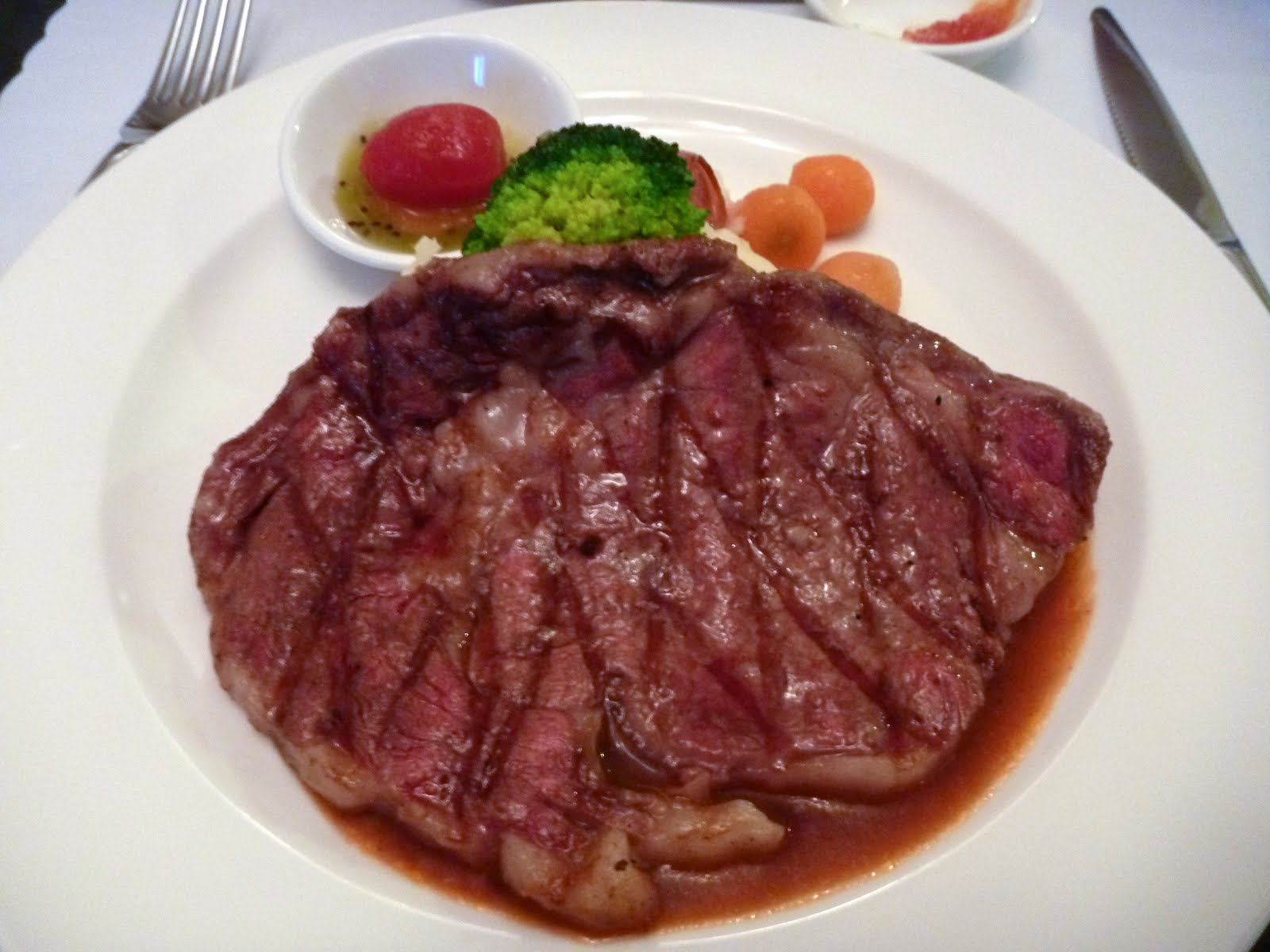
When the steak arrived, what I remember first was not the meat itself, but the white porcelain plate. The sauce did not flood the entire surface. The vegetables were arranged with restraint. Even the plate seemed to act like a frame. The aroma did not rush forward. It approached slowly.
At that age I did not yet understand steak culture, but I had already begun to feel that some foods do not speak first about flavour. They speak about position.
What I encountered that day was not only a new way of eating beef. I was also encountering a dining order: a social world in which food arrived together with quiet, distance, and formality. That is why steak in its earlier Taiwanese form carried a certain class feeling. It was not expensive only because of the meat. It was expensive because it arrived together with a whole Western grammar of dining.
Later I came to understand that with many imported dishes, what people first recognised was not flavour but format. The plate, the cutlery, the tablecloth, the sequence of service, the tone of the room — these often built the first impression of “modernity” earlier than the ingredients themselves did. Steak in Taiwan began, for many people, as part of that formal language.
II. Beyond Hotels: City Memory, Foreign-Style Restaurants, and a Border-City Steak
But steak in Taiwan did not travel along the hotel route alone.
As I grew older, I came into contact with another kind of place, one that is harder to classify by price alone: older foreign-style restaurants, especially those carrying traces of Russian influence. Their charm did not lie only in what appeared on the plate. It lay in the fact that they preserved another kind of city life, another route by which foreign taste became part of local memory.
A place like Astoria Café in Taipei is a good example. You sit down, and steak is not always the first thing you notice. What reaches you first may be the cup, the tabletop, the pastry plate, the window light, the older chairs, and the sense that this is not a new restaurant but a place where people can remain for a while. Such places matter because they show that Western food in Taiwan did not arrive only through hotels, department stores, or formal banquet spaces. Part of it also entered through exile, movement, conversation, old city sociability, and the slower sediment of urban life.
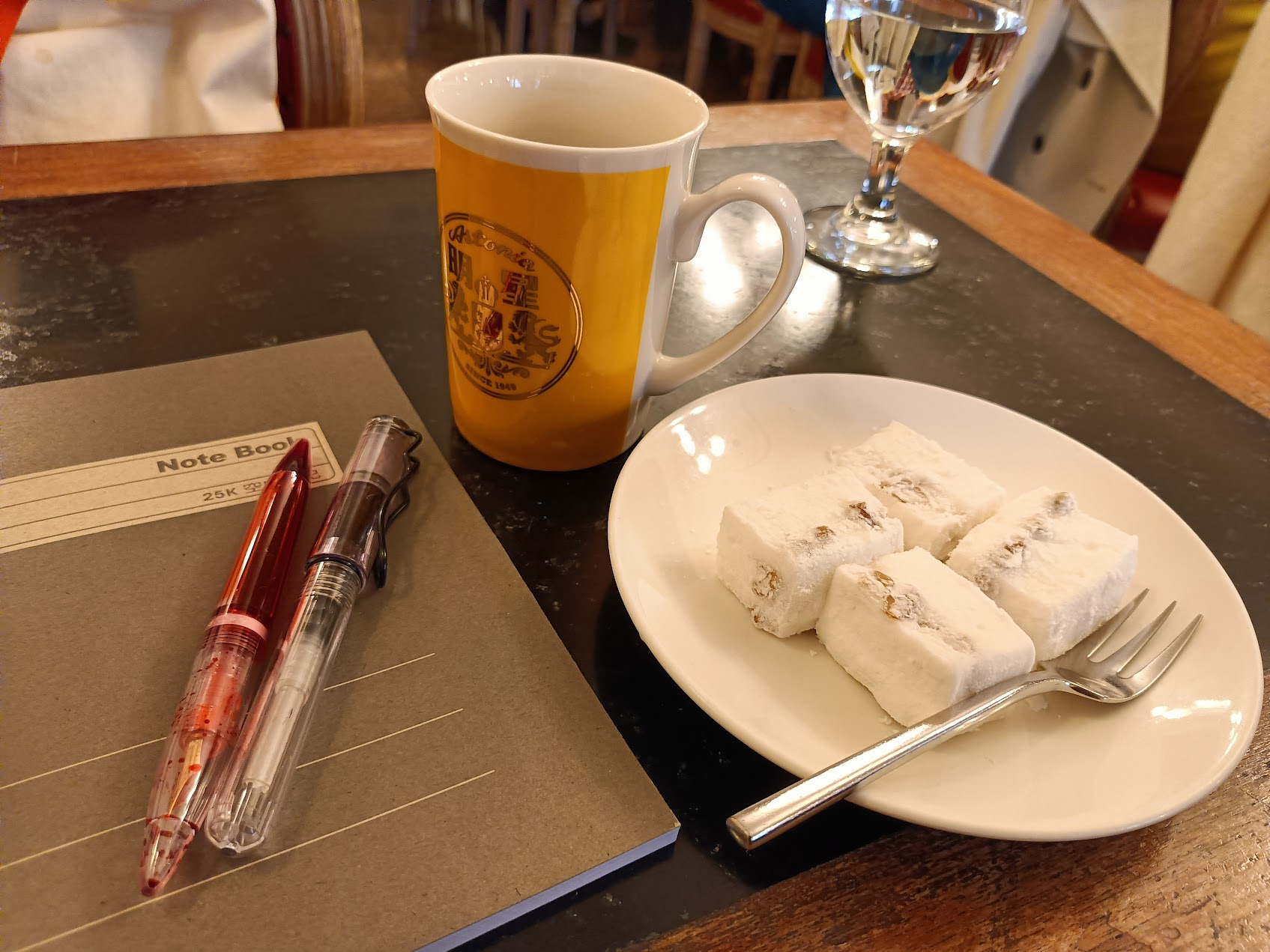
The role such places play in Taiwan’s steak culture is not simply to offer a more refined version of the dish. They offer a different way of understanding it. Steak is not only a piece of meat, and not only a Western ritual of dining. It can also become part of the process by which a city absorbs foreign culture and lets the taste of elsewhere settle into its own memory.
I understood this even more clearly when I once took my daughter to Heihe, on the Sino-Russian border, and we ate Russian-style steak there together. That meal stayed with me because it showed me very directly that steak does not belong only to the formal language of white porcelain plates. In a border city, it can carry a different climate, a different foreignness, and even a different kind of family memory altogether.
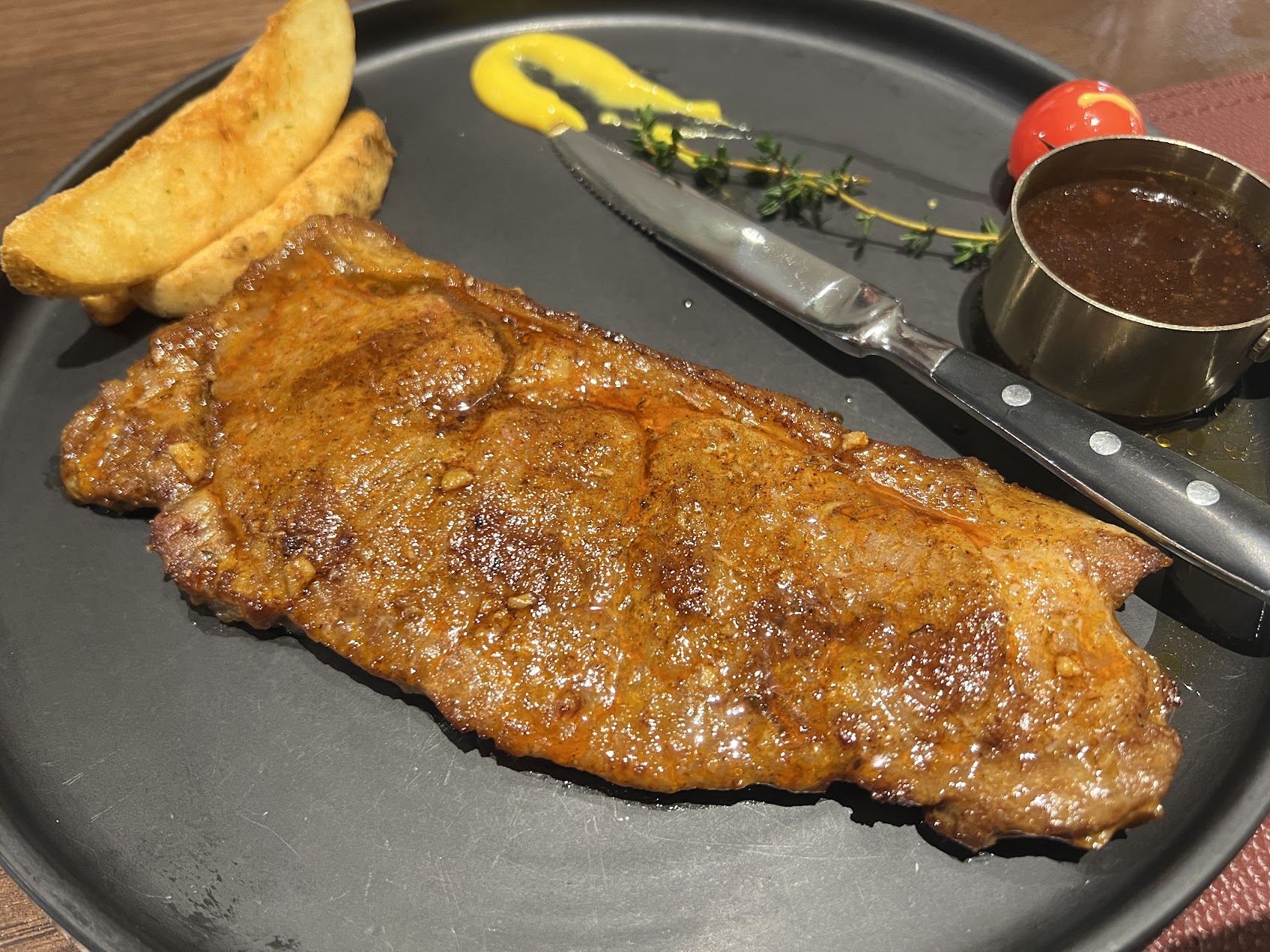
That is why I think these older foreign-style restaurants and border-city encounters matter. They remind us that the history of steak in Taiwan is not only a history of consumption, but also a history of cities, pauses, movement, and shared memory. What remains from a meal is not only flavour. It is also who sat down to eat it, who stayed to speak, and who you chose to remember it with.
III. The Iron Plate Was Not a Container, but a Translation
What truly made steak popular on a large scale in Taiwan was not white porcelain, but the iron plate.
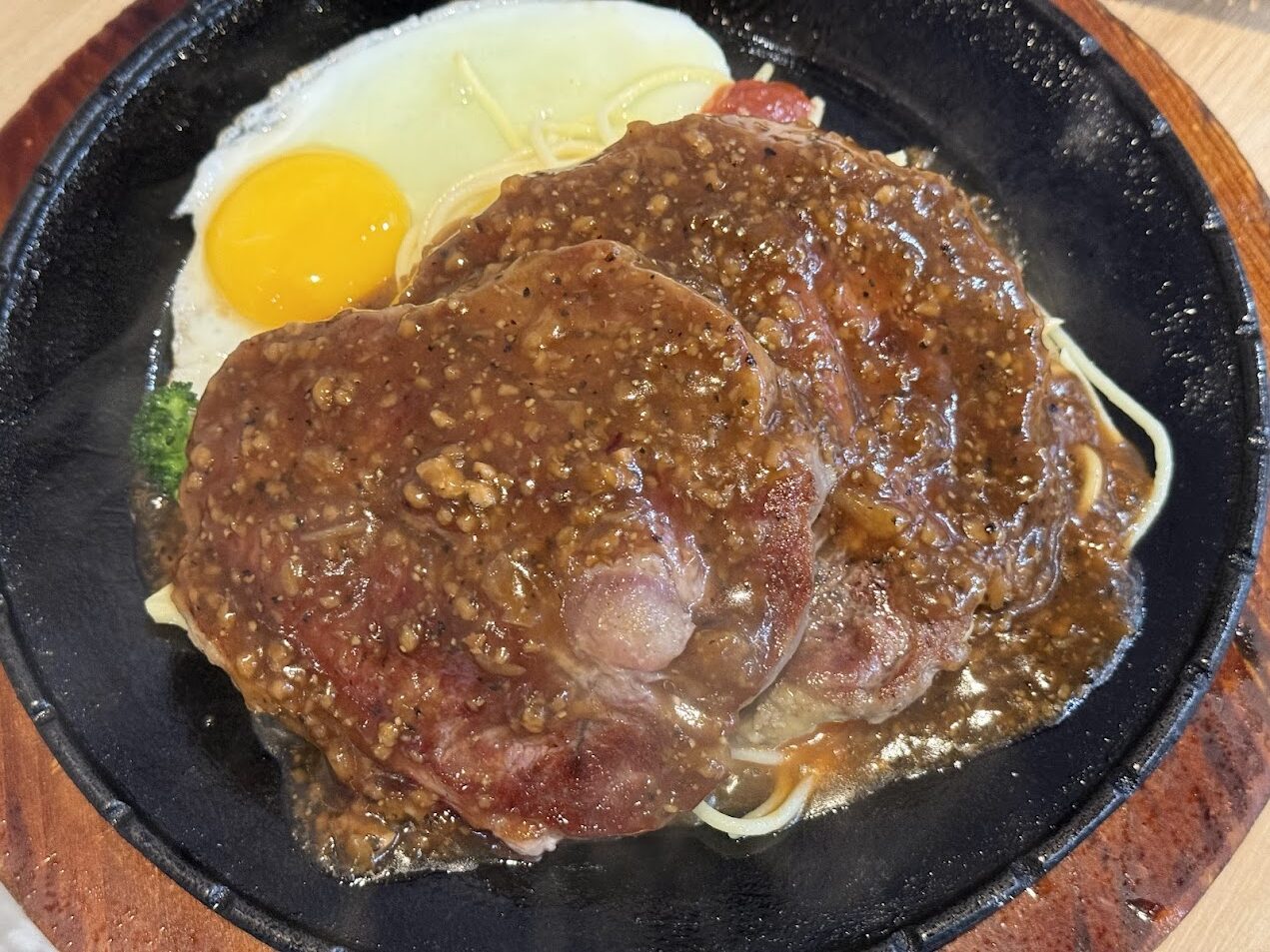
The iron plate did more than keep the food hot. It translated a dish that once carried distance into a form that Taiwanese cities could hear, smell, and immediately understand. The sound arrived first. Then the heat. The sauce bubbled at the edges. The egg set slowly. The noodles absorbed the juices. Before you even picked up the knife and fork, the meal had already half introduced itself through sound and steam.
The iron plate was not simply a surface for serving steak. It was a live translation device through which Taiwanese urban life could begin to understand the dish in its own terms.
That is why Taiwanese hot-plate steak should not be treated merely as a cheaper steak. It is a different syntax. It rearranged a Western main course into a live, sensory event, transforming something once associated with quiet, distance, and formality into an eating experience that felt louder, warmer, and more immediately present in Taiwanese city life.
In other words, Taiwan did not simply make steak less expensive. It rewrote a table language that had once carried thresholds and distance into a form of heat, sound, and completeness that far more people were willing to walk into.
IV. Night-Market Steak: Not a Cheap Copy of Steak, but a Completed Taiwanese Eating System
What truly allowed steak to spread widely across Taiwan was not the hotel, and not even the old-style Western restaurant. It was night-market steak.
When people talk about night-market steak, their first reaction is often “cheap”, “student food”, “black pepper sauce”, or “hot-plate noodles”. Some treat it as little more than a lower-priced version of Western steak. I have always felt that this is far too small a reading. What night-market steak really did was not downgrade steak, but recompile it into a complete system suited to Taiwanese urban eating habits.
Stand in front of the iron plate for a few minutes and the structure becomes obvious. The meat, the egg, the noodles, the sauce, the bread roll, the soup, the sweet drink, even the pace at which tables turn over — none of this is random. All of it answers a very practical demand: the meal must feel hot, fast, audible, substantial, and worth the money, whether the customer is a student, a couple, or a family.

In other words, night-market steak is not a distorted version of formal dining. It is what happens when steak is translated into a Taiwanese everyday-food grammar. The meat alone is not enough. There must also be noodles. Heat must not stop at the mouth; it must continue on the table. To eat steak in this format is not just to eat steak, but to eat a very specific evening rhythm of the Taiwanese city.
Night-market steak did not simply make Western food cheaper. It translated an imported table language into a version that Taiwanese life could actually sit down with.
So if the white porcelain plate represented the earlier class language of steak, then the iron plate and the night market represent the moment when steak was genuinely absorbed, popularised, and socialised on a much broader scale in Taiwan.
V. Steak Did Not Leave the Hotel Because of Taste Alone, but Because of Supply Chains
For that reason, I have never thought it was enough to explain the spread of steak in Taiwan by saying simply that people became richer. That is too rough, and not especially accurate.
What actually allowed steak to leave the hotel and move into streets, neighbourhood restaurants, and family outings was a very concrete set of material conditions: stable imports of beef, mature cold-chain logistics, the development of portioning and central preparation systems, greater standardisation in restaurant operations, and the broader expansion of urban dining-out culture.
Without these conditions, steak would have remained the language of a few high-end tables. A white-porcelain steak can survive in a small number of expensive dining rooms. Night-market steak cannot. To exist at that scale, it needs beef that can be supplied predictably, costed clearly, portioned efficiently, and cooked at speed within a highly repeatable operating system.
This is why I care so much about supply chains. People often think they are remembering flavour, when in fact they are also remembering a particular moment in material history — the moment when the conditions finally became sufficient for that kind of life to appear. Without imported beef, cold storage, stable distribution, and standardised kitchen prep, steak would never have moved from the hotel into the night market, or become a familiar weekend meal for so many households.

That is why the Taiwanese story of steak is not merely a table history. It is also a history of ports, cold chains, distribution, labour division, and the making of modern urban eating habits.
VI. Steak Became Fully Taiwanese Only When It Reached the Child’s Table
To me, steak in Taiwan did not become fully local simply because it first appeared in high-end hotels, or because the iron plate began to smoke dramatically in front of a broader public. It became fully Taiwanese when it entered a form of dining that children could approach naturally.
You see parents sitting down with their children. The child learns how to hold the knife and fork. Half the noodles disappear first. Egg yolk runs everywhere. The steak is not always cut neatly. But by that point the meal is no longer “foreign food”. It has already become part of the family’s own lived experience.
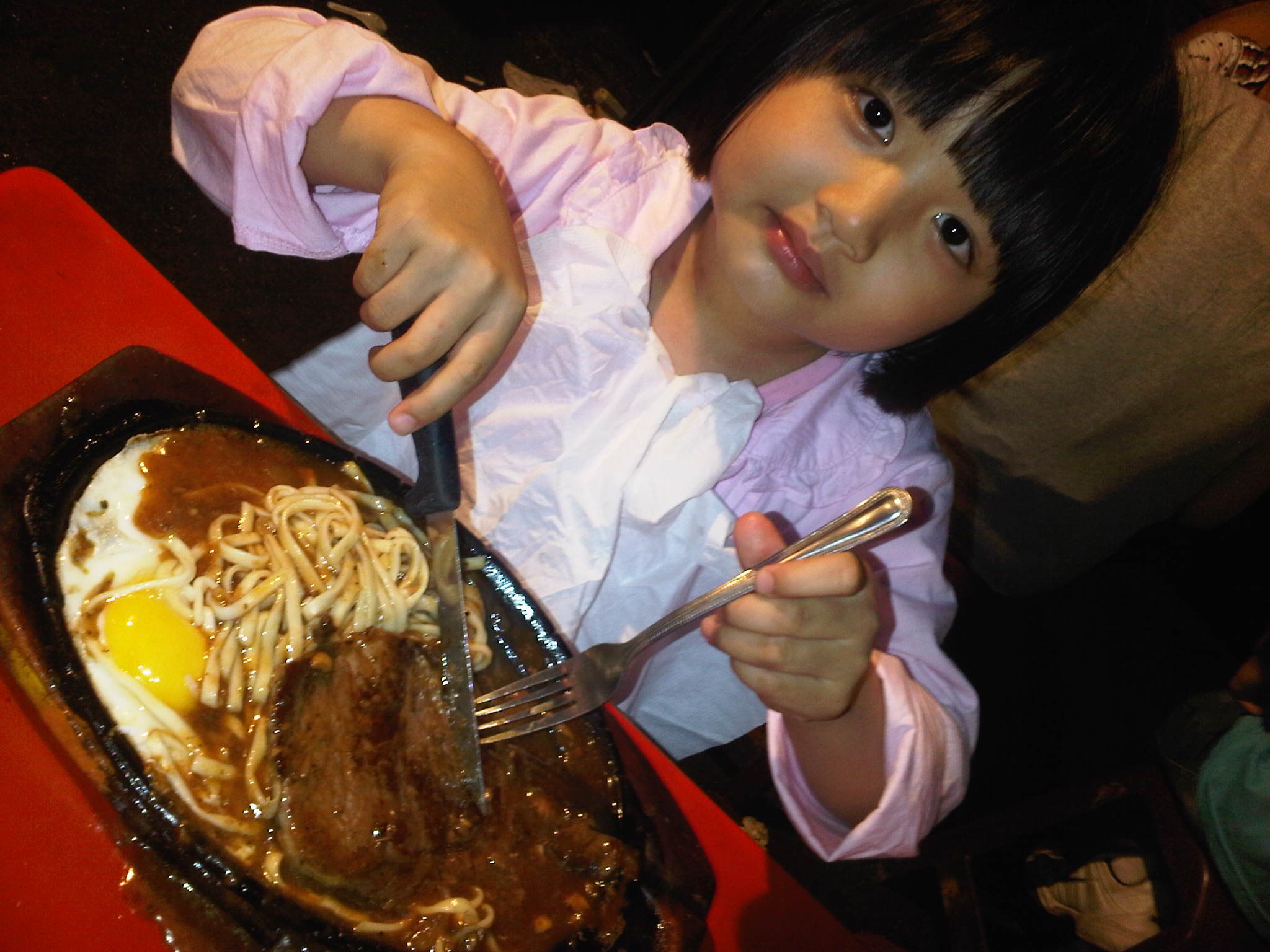
I have always felt that the best test of whether an imported dish has truly been absorbed by a place is not whether it keeps its original form, nor whether it enters elite food rankings, but whether the next generation can approach it without effort. Once children can grow up with steak as part of an ordinary family meal, the dish no longer requires translation. It has already become local memory.
At that point steak is no longer only Western food, and no longer only “steak” in the original formal sense. It has entered the rhythms of family life. It becomes part of outings with children, evenings with friends, dates, and for some people even the earliest childhood image of what “eating a little better” looked like.
Steak became fully Taiwanese not when it was described as refined, but when it became a meal many people could remember naturally from childhood.
From the quiet of the white plate, to the pauses of the old restaurant, to the sound of the iron plate and the noise of family conversation, steak kept being renamed, rearranged, and placed into different classes, generations, and ways of living.
It began as a table language marked by distance. Later it became part of urban memory. Later still it became popular dining and family routine. At that point steak is no longer just steak. It becomes evidence that Taiwan’s modernity never moved along a single line.
It was not simply that one class brought the world in while everyone else learned to imitate it. Hotels, old city restaurants, night markets, family tables, imports, cold chains, logistics, and urban tempo all worked together to digest an imported dish into something everyday. The hiss of the iron plate sounds, on the surface, like theatre for the customer. In truth, it is also bearing witness to the making of a whole modern way of life in Taiwan.
FAQ|Further Questions
1. Why did steak in earlier Taiwan carry a sense of class?
Because many people first encountered steak in hotels, Western restaurants, or other formal dining spaces. Steak arrived together with porcelain plates, cutlery, tablecloths, service order, and a particular idea of proper dining. What was being consumed was not only beef, but also a certain image of refinement, status, and modernity.
2. What is the biggest difference between Taiwanese hot-plate steak and Western steak?
The difference lies not only in doneness or sauce, but in the entire logic of the meal. Western steak often centres the meat itself. Taiwanese hot-plate steak, by contrast, is designed as a full dining set: meat, noodles, egg, black pepper sauce, bread roll, soup, drink, heat, and sound. It is not simply an imported dish preserved intact, but a version rebuilt around Taiwanese urban dining expectations.
3. Why do so many Taiwanese steak sets come with noodles?
Because noodles are not just filler. They answer a demand for completeness and satiety. In the process by which steak became popular in Taiwan, a meal built around only a small piece of meat would not have been enough. It had to become something people could genuinely feel full from, pay for without resentment, and share across family and student budgets. Noodles are a central part of that logic.
4. What role did older foreign-style restaurants play in Taiwan’s steak culture?
They did not always dominate steak culture directly, but they helped move Western dining from the strict order of hotels into the slower memory of the city. These places allowed steak to become tied not only to formality, but also to conversation, pause, nostalgia, exile, literary circles, and urban sociability.
5. Why do you say there would be no Taiwanese steak culture without supply chains?
Because steak did not become popular merely through taste preference. It required stable imports of beef, cold-chain logistics, portioning, standardised preparation, and restaurants capable of high-volume repeatable output. Without those conditions, steak would have remained limited to elite spaces rather than becoming part of neighbourhood dining and family outings.
6. Why did hot-plate steak become so popular in Taiwan?
Because it translated a dish once marked by distance into a form that Taiwanese city life could immediately grasp. Heat, sizzling sound, noodles, sauce, egg, soup, and fullness all combined to create the feeling of a complete meal. It was not popular merely because it was cheaper, but because it suited the tempo and expectations of Taiwanese urban eating.
7. Why do you treat the child’s table as the point at which steak became fully Taiwanese?
Because a foreign dish is truly absorbed not when it retains its original prestige, but when the next generation can approach it naturally. Once children grow up learning to cut steak, eat noodles beside it, and treat the meal as ordinary family memory, the dish no longer needs cultural explanation. It has already become local life.
8. What does steak in Taiwan ultimately reflect?
It reflects more than the arrival of Western food. It shows how Taiwan absorbed, broke apart, rewrote, and redistributed an imported dining language. Steak in Taiwan began as a marker of class, became part of city memory, and later settled into popular dining and family routine. It is a piece of meat, but also a slice of Taiwan’s modern social history.
References|APA
- Taiwan External Trade Development Council. (n.d.). Public materials on Taiwan’s cold-chain and food logistics industries.
- Ministry of Agriculture. (n.d.). Public materials on domestic beef traceability and origin disclosure systems in Taiwan.
- Ambassador Hotel Taipei. (n.d.). Public materials on hotel history and Western dining venues.
- Astoria Café. (n.d.). Public materials on brand history and restaurant background.
- Taiwan Thesis and Dissertation Knowledge Value-Added System. (n.d.). Relevant research on Taiwan’s dining-out culture, restaurant modernisation, and Western food in Taiwan.
- Encyclopaedia Britannica. (n.d.). Steak | Definition, Cuts, Preparation, and History.