Halal Beef Noodle Soup: Faith, Order, and Muslim Food Culture in Taiwan
Nelson Chou | Cultural Systems Observer ・ AI Semantic Engineering Practitioner ・ Founder of Puhofield
What I really want to write about here is not simply which bowl of halal beef noodles tastes especially good. What makes halal beef noodle soup worth writing, for me, is that it lets me see something deeper: some foods feel trustworthy not merely because the broth is clear, or because the meat has been handled properly, but because behind them stands a whole order you cannot quite see, yet can unmistakably taste. There is faith in it, there are boundaries, there is restraint, and there is also the kind of everyday discipline that only people who have spent a long time keeping life steady can leave behind.
Where this essay sits in the series
If Vol.1 traced how beef noodle soup in postwar Taiwan was cooked into a social structure, then Vol.2 moves along a quieter but much deeper branch. It begins not with questions of richness or aroma, but with something earlier: how a bowl of soup can carry rules, trust, and a whole dietary order that has been preserved over time.
Key Points
- What is most worth seeing in halal beef noodle soup is not simply the distinction between clear broth and braised broth, but the religious order and everyday discipline that make the meal trustworthy.
- What lingers in memory is often not intensity, but cleanliness, steadiness, restraint, and the sense that the whole meal has not slipped out of place.
- This essay does not treat halal food as an exotic flavour category. It places it back within the fabric of urban Taiwan and the lived history of Muslim food culture on the island.
I. What Stayed with Me Was Not Intensity, but That First Clean Sip
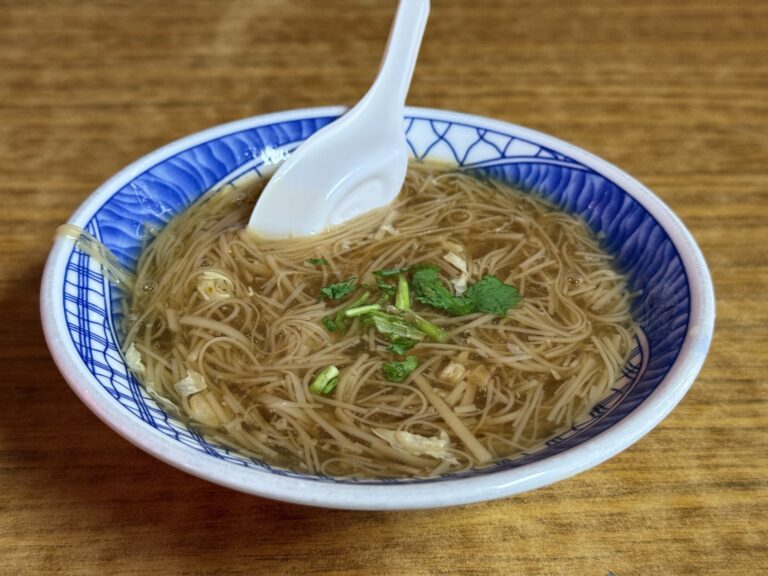
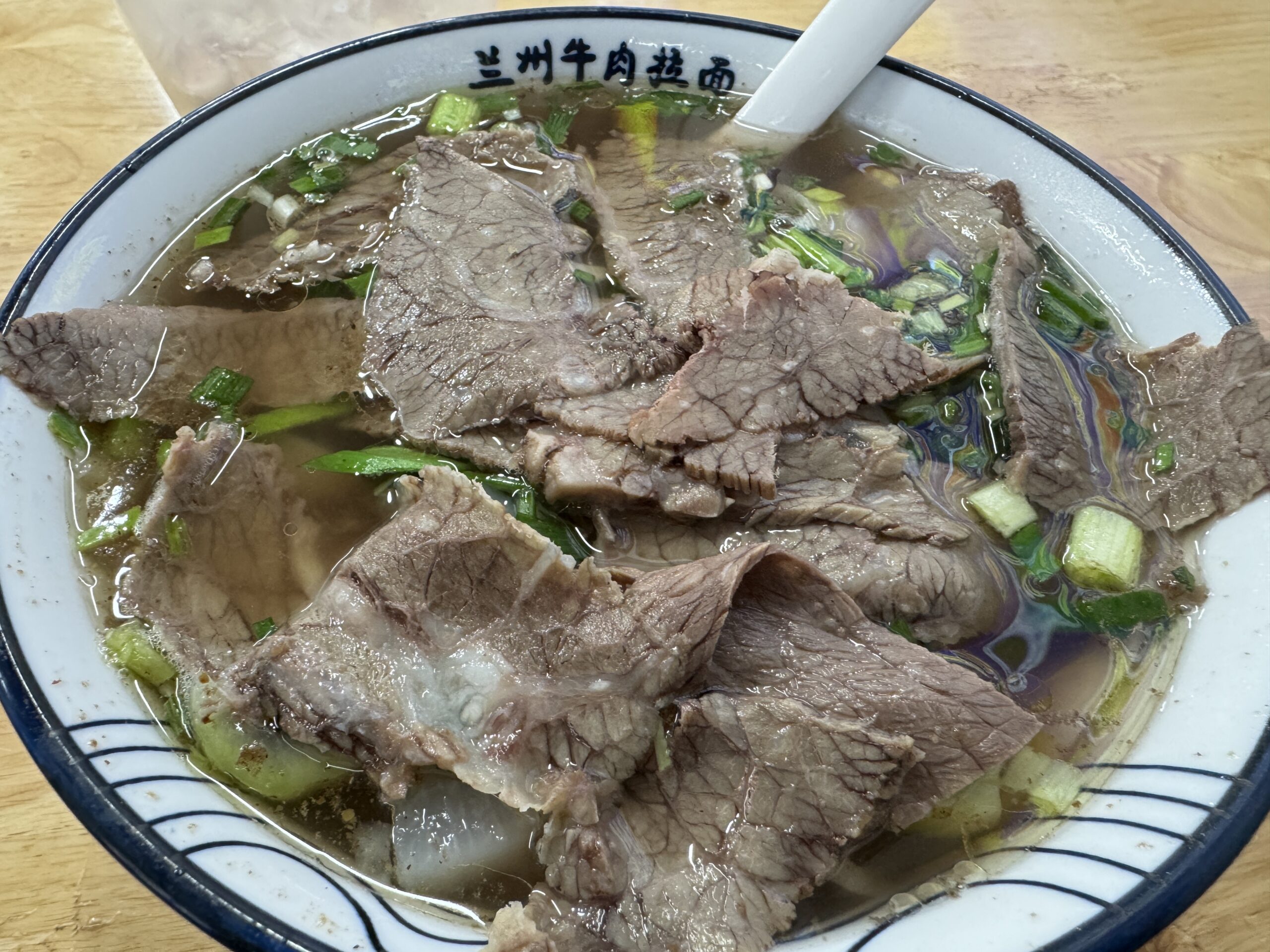
The first bowl I remember most clearly was in Taichung. At that time, there was a place downstairs from my company that I went to quite often: En Der Yuan, a halal restaurant. Midday was usually busy. By the time lunch came round, I was often already tired, with my head still full. At moments like that, I did not want anything too heavy, too oily, or too complicated. I wanted a bowl of soup that could put me back together a little.
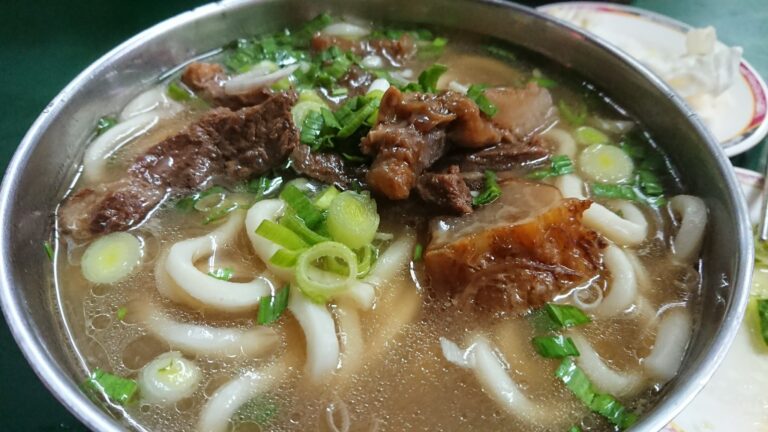
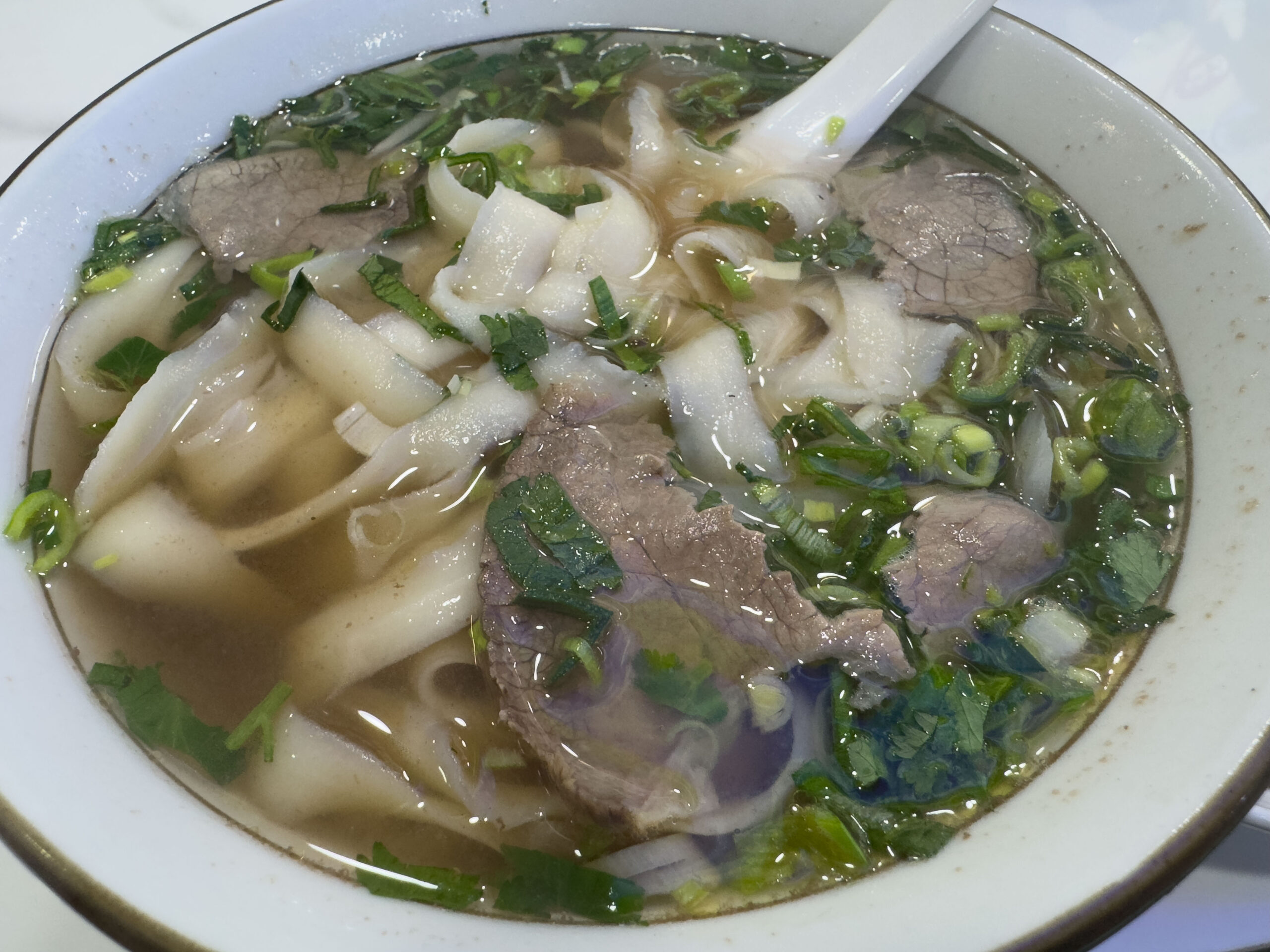
When that bowl arrived, there was nothing theatrical about it. No aggressive colour, no insistently forceful perfume, none of that self-conscious style that seems to announce its own brilliance before you have even taken a sip. But the moment I drank it, one thought rose almost immediately in my mind: how can this be so clean?
Over time, I realised that what I meant was not simply “light”. Light can sometimes mean thin, or unable to hold itself together. This was not that. The beef, the broth, the scallions, the noodles — they all had shape. They held their line. The fat did not drift aimlessly, the savouriness did not collide with itself, and the flavour was not lacking in presence. It was simply that everything remained exactly where it ought to be.
Some soups are memorable not because they overpower you, but because they are held together so steadily that you remember them for a very long time.
I have kept that feeling with me ever since. It was not simply that I found it delicious. It made me realise that the real force of some foods lies not in display, but in restraint; not in stimulation, but in the unmistakable sense that someone, somewhere behind the bowl, has been keeping order. That was when I slowly began to understand that what drew me to halal beef noodle soup had probably never been taste alone.
II. Later I Realised This Was Not About One Restaurant, but About an Entire Taste Experience
Later, when I travelled in China with my daughter — whether in Beijing, Xiamen, or Guangdong — I slowly noticed something quite interesting. Whenever I saw a halal noodle shop, I already had a rough sense that this meal would probably not go badly.
I do not mean that every shop was identical, nor that every bowl was astonishing. That is not the point. What I mean is that there was usually a kind of stable expectation. You knew the flavours were unlikely to lose their balance. You knew you were not about to be pushed into something greasy, muddled, overbuilt, or needlessly excessive.
I grew very fond of the clear-broth beef soups and clear-broth beef noodles in those places, but also of the small dishes that looked secondary and yet revealed real craft: smashed cucumber, tofu strips, and those neat, refreshing plates that never clamoured for attention and yet always held their ground. Taken together, they did not feel flashy. They felt like the daily life of a culinary system that had been alive for a long time and no longer needed to perform itself.
That is how I came to trust halal noodle shops in a rather particular way. It was not trust built by online recommendations, nor by reputation. It came from repeated bodily verification. You sit down, the bowl arrives, you take a sip, and very quickly you know whether this food has been properly looked after.
To me, that sense of “unlikely to disappoint” is not trivial at all. It does not mean I was simply lucky. It means there was a line behind it that could be trusted. Once you encounter that line again and again in different cities, you begin to understand that this is no longer just a matter of one cook’s skill. It is the shared temperament left behind by an entire food culture.
III. In the End, What Drew Me In Was Not “Flavour”, but Order
In time, I began to understand that what I loved was not merely the flavour of halal beef noodle soup itself. What really drew me in was a sense of order — something you can taste clearly, even if at first you cannot quite explain it.
That sense of order is interesting. It does not make the food dull, nor does it strip it of character. On the contrary, it seems to suggest that flavour can have measure, that broth can exercise restraint, and that a meal can carry a form of discipline without ever needing to advertise it.
When people talk about beef noodles, the first words that often come up are rich, deep, fragrant, heavy. There is nothing wrong with that. Taiwan has many brilliant braised and boldly aromatic traditions. But many clear-broth halal beef noodles have offered me a different reminder: some flavours are not designed to overwhelm you. They are there to place you back, quietly and steadily, into a clean position.
That is why, when I think back on the bowls I remember, what I recall is rarely just whether the beef was tender or whether the noodles had the right bite. What stays with me is that the whole thing never fell apart. The broth was clear, but not empty. The side dishes were simple, but never careless. The taste was restrained, but not expressionless. Together, those elements formed a kind of civilisational depth that is very difficult to counterfeit.
I think this is what I have come to care about more and more. Truly powerful cultures often do not prove themselves through outward volume. They prove themselves by completing, day after day, those small rules that seem minor until you realise how much of life depends on them. You may not reach for grand words at first. But you remember the feeling. And you know there is something there.
IV. Halal Beef Noodle Soup Is Not Merely “Another Flavour”, but Another Everyday Order Kept Intact
By this point I have become quite certain that what is worth writing about in halal beef noodle soup is not simply that it represents some minority variation on a familiar dish. What matters more is that it makes visible another food order that has long existed inside Taiwan’s cities: quiet, disciplined, and far more complete than most people realise.
When many people speak of beef noodle soup, they think first of military-settlement memories, braised broth traditions, or northern noodle cultures localised in Taiwan. All of that matters. I have written elsewhere about that broader historical line. But if you really eat, travel, and pay attention, you realise very quickly that Taiwan’s beef noodle culture has never consisted of that single line alone.
Halal beef noodle soup is not decoration, not an afterthought, and not a convenient “multicultural” label to place beside the main story. It is better understood as a steady branch that has long been there. It carries religious law, dietary boundaries, methods of handling meat, standards of cleanliness, separation of utensils, a sense of limit, and an entire rhythm of life into the ordinary fabric of the Taiwanese city.
That is why I no longer like writing about halal dining as though it were merely an exotic sidebar. That is too light a treatment. If you really sit down and eat, and if you keep encountering these places across different cities, you eventually understand that this is not just a flavour category. It is a way of life that has been preserved over time. It is not there to perform itself. It is there to keep life in order.
What moves me is not that it is unusual, but that once you sit down to eat, you can feel that an entire way of living is still being carefully kept behind the bowl.
So rather than calling it simply “another type of beef noodle soup”, I would rather say that it helps us see something more basic: in Taiwan, beef noodles have never belonged to a single source, a single logic, or a single civilisational feeling.
V. What Truly Reassures People Is Not Cleanliness Alone, but the Presence of Places in Taiwan That Can Sustain This Order
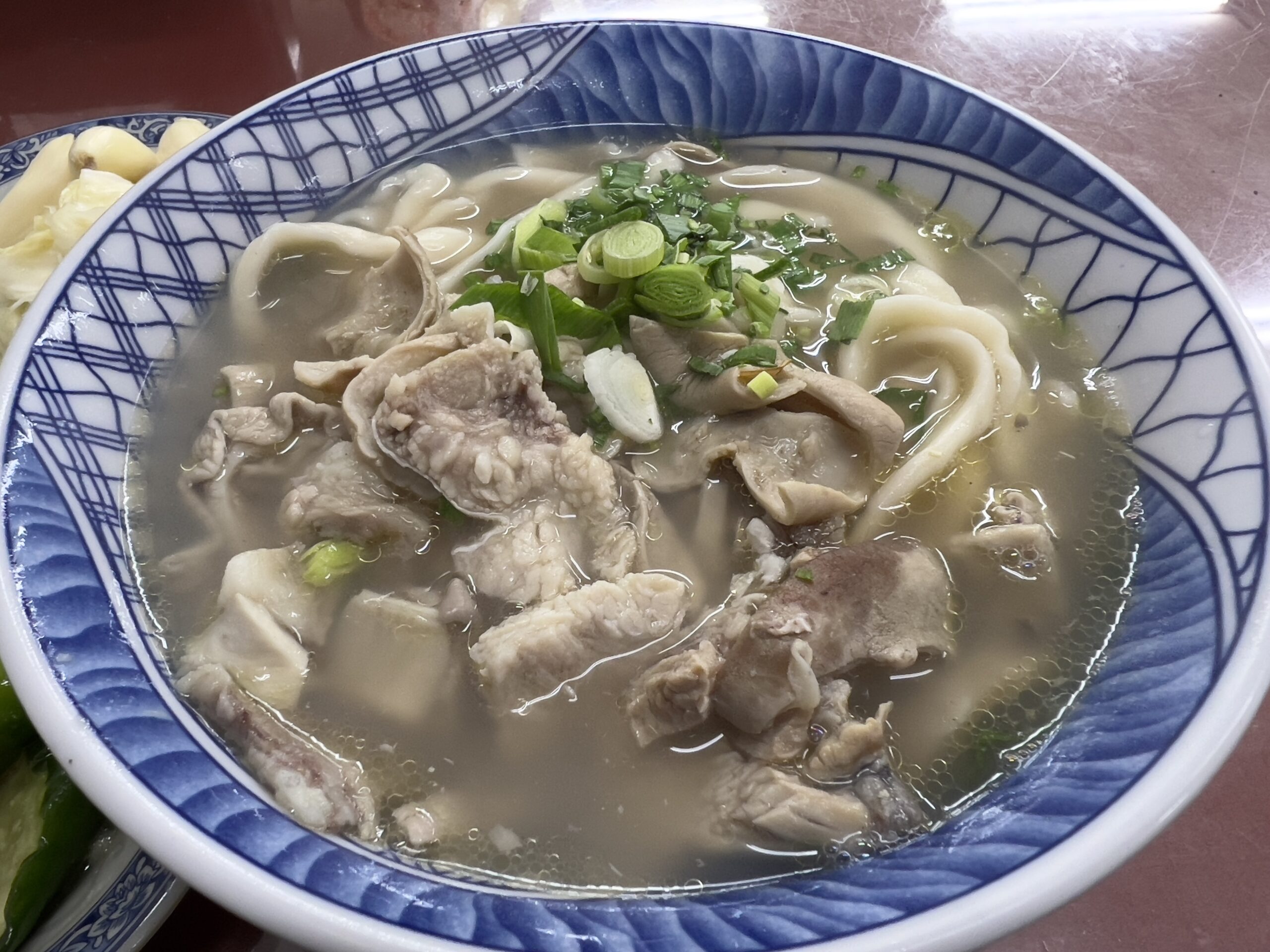
Looking back now, I do not think my trust in halal noodle shops came only from a few especially good bowls. The deeper reason is that you gradually begin to feel that these flavours stand up because they are not assembled casually. There are rules behind them, and there are actual places within the city where those rules can be lived out.
One important Taiwanese node in this regard lies in the long-formed social worlds around mosques and Muslim communities. Religious spaces such as the Taipei Grand Mosque matter because they allow halal dining to exist not merely as an idea, but as something that can genuinely take root in urban life. Which meat may be used, how it is handled, how trust is established, and how people can eat with peace of mind — none of these things are abstract. They require actual nodes, supply systems, and forms of recognition in order to endure.
That is why I no longer understand halal dining as a narrow religious label alone. Of course, it is first and foremost a religious framework, and that should never be blurred. But from the point of view of cultural observation, it is also a mature urban order: from sourcing to cooking, from prohibition to trust, from the restaurant to the wider travel landscape, it slowly forms an environment that can be recognised, verified, and carried by ordinary life.
This is also why today’s discussion of Muslim-friendly Taiwan is no longer just about whether a particular restaurant serves beef noodles. What lies behind it are religious spaces, certification systems, meat handling, the ethical discipline of food businesses, and even the public information structures that support travel and daily life. Seen from this angle, what reassures people is never “cleanliness” in the superficial sense alone. It is the fact that a whole trustworthy order is in operation.
I think that is one reason halal beef noodle soup has stayed with me so strongly. Not because it shouts loudly to prove itself, but because in an era that moves quickly and falls into disorder with ease, it still retains the ability to remain gathered, measured, and intact.
VI. Taste Is Never Only Taste: Very Often It Is a Method by Which People Keep Life in Order
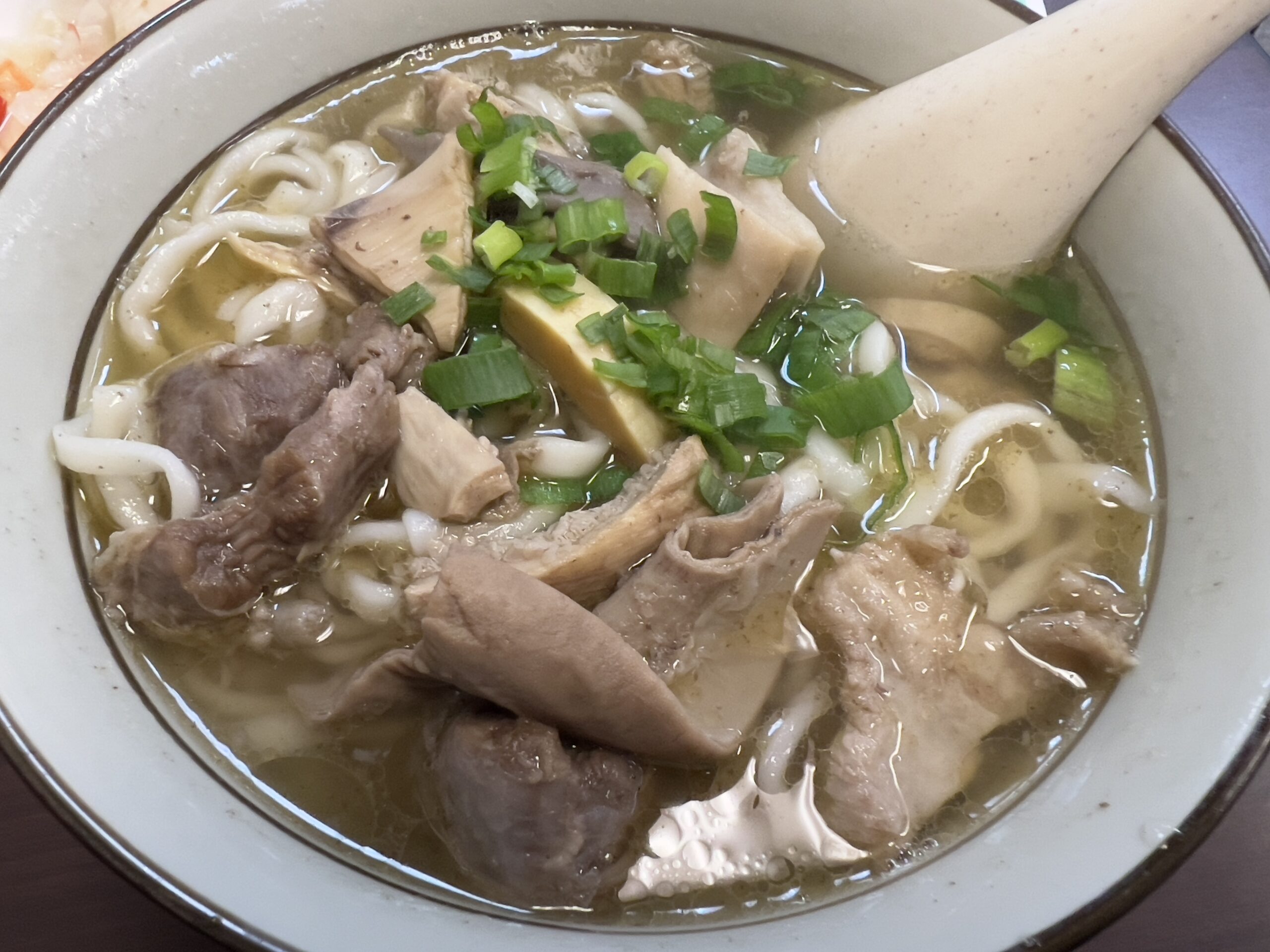
So if you ask me now what moves me most about halal beef noodle soup, I probably would not answer merely by saying that it tastes good. I would say that it keeps showing me one thing: taste is never only taste. Behind taste there is often a whole method by which people live, preserve boundaries, and keep themselves in order.
Sometimes what makes a bowl of soup reassuring is not that it surprises you in some dramatic way, but that it does not mistreat you. It is not muddled, not excessive, not dirty, not reliant on theatrical intensity to cover over weakness. It simply does what needs to be done, and does it properly. You sit at an ordinary table, take a sip, and suddenly feel that there are still people in this world willing to hold to certain rules with steadiness.
That, to me, is the real subject of this essay. Not the romanticisation of halal food, and not its reduction to something “lighter” or “healthier”, which would be far too shallow. What is worth seeing is how a set of rules, once lived over time, reshapes sourcing, cooking logic, table ethics, and the trust that passes between people.
And this is also part of what makes Taiwan so compelling. Not because it contains everything, but because ways of living shaped by different origins, backgrounds, beliefs, and prohibitions can all leave their mark on the table here. Some are loud, some are quiet; some are intense, some are restrained. But if you slow down enough to pay attention, you begin to see that behind these tastes lies the same human work: maintaining order, carrying memory, and rebuilding life in unfamiliar places.
I think that is why I still remember that first bowl at En Der Yuan, and why I still remember the halal noodle shops I encountered along the way in Beijing, Xiamen, Guangdong, and Taipei. In the end, what stayed with me was not only a bowl of beef noodles. What remained was that fine, steady, and deeply stubborn line running through it.
FAQ|Further Questions on Halal Beef Noodle Soup, Taiwan, and Cultural Order
1. What is the most fundamental difference between halal beef noodle soup and ordinary beef noodle soup?
The key difference does not begin with whether the broth is braised or clear. It begins with what may be eaten, how meat is handled, and how contamination must be avoided. Ordinary beef noodle soup can prioritise flavour design first. Halal beef noodle soup must first ensure that sourcing, slaughter, utensils, seasonings, and the cooking environment all conform to religious requirements. Its flavour therefore emerges from a system that is disciplined before it is expressive.
2. Why do so many people describe halal beef noodle soup as “especially clean”?
That sense of cleanliness does not usually come only from less oil or fewer spices. It comes from a more tightly held overall logic. When sourcing, prohibitions, utensil separation, and cooking methods all place greater emphasis on boundaries, the resulting flavour often feels clearer, less muddled, and more sharply defined. In that sense, the “clean” quality is better understood as disciplined rather than merely mild.
3. Is halal a flavour profile, or a system of rules?
Halal is first and foremost a religious and everyday framework, not a single fixed taste. Halal food in different regions can produce entirely different local flavour logics — north-western Chinese, Yunnanese, Turkish, Central Asian, Southeast Asian, South Asian, and so on. What these do share is not identical seasoning, but obedience to a lawful, clean, and trustworthy dietary order.
4. Is halal dining in Taiwan something recent, and why does it seem more visible now?
No. Taiwan has long had its own history of Muslim communities and halal food practices. What has changed is not that halal dining suddenly appeared, but that tourism systems, certification structures, cross-border exchange, and urban information networks have made what already existed more visible within the public sphere.
5. Why does this essay keep stressing “order” rather than simply discussing deliciousness?
Because this essay is not a restaurant recommendation. It is an attempt at cultural analysis. Taste matters, of course, but if we stop there, many of the forces that truly shape a bowl of soup disappear from view. The order discussed here includes faith, prohibition, cleanliness, measure, repeated training, and long-term daily practice. It is these less visible layers that finally give the flavour its line and coherence.
6. Why can side dishes such as smashed cucumber or tofu strips reveal so much about a restaurant?
Because side dishes often show whether a place truly possesses measure and restraint. A main dish can be carried by a famous name, but small dishes tend to expose the overall logic of the kitchen. If even something as simple as smashed cucumber is clean, balanced, and free of unnecessary excess, it often suggests that the whole dining system is being handled with care.
7. How do halal certification and Muslim-friendly environments currently operate in Taiwan?
Public information suggests that Taiwan does not rely on one single institution for everything. Different organisations take on different roles: some focus on processed foods, agricultural goods, or export systems; others handle domestic restaurants, slaughter, meat supply, or Muslim-friendly certification. Tourism bodies also support travel information and Muslim-friendly public infrastructure. In other words, Taiwan today is no longer dealing only with whether a given restaurant exists, but with a broader environment spanning religion, food businesses, travel, and public recognition.
8. How should non-Muslims understand the place of halal beef noodle soup within Taiwan’s broader beef noodle culture?
The best approach is neither to romanticise it nor to treat it merely as minority cuisine. A better starting point is to recognise that it is first a religious framework, and then to see how, once such a framework is lived over time, it shapes sourcing, cooking logic, table ethics, and systems of trust. Within Taiwan’s wider beef noodle culture, halal beef noodle soup should not be treated as a decorative aside. It is an important branch that reminds us the culture was never built along a single path.
References|APA 7th
- Chinese Muslim Association, Republic of China (Taiwan). (n.d.). Chinese Muslim Association, Republic of China (Taiwan). https://www.cmainroc.org.tw/
- Su, Y.-W. (2002). 伊斯蘭教在台灣的發展與變遷 [Master’s thesis, National Chengchi University]. National Chengchi University Institutional Repository. https://nccur.lib.nccu.edu.tw/handle/140.119/95703
- Taipei Grand Mosque. (n.d.). 台北清真寺導覽:歷史沿革. https://www.taipeimosque.org.tw/guided.php
- Taiwan Halal Integrity Development Association. (2012, May 10). 清真驗證簡介. https://www.thida.org/halal.html
- Taiwan Halal Integrity Development Association. (2013, October 8). 驗證方案及原料成份問卷. https://www.thida.org/all/halal/2012-05-10-13-16-16.html
- Tourism Administration, Ministry of Transportation and Communications, R.O.C. (Taiwan). (n.d.). Taiwan travel guide for Muslim. https://eng.taiwan.net.tw/att/files/Taiwan%20Travel%20Guide%20for%20Muslim.pdf
- Tourism Administration, Ministry of Transportation and Communications, R.O.C. (Taiwan). (n.d.). Muslim-friendly environment. https://eng.taiwan.net.tw/m1.aspx?sNo=0020308
- Yang, T.-H., Kusmartin-Christa Yolanda, Huang, M.-T., Cheng, B.-Y., Kuek, W.-G., Chen, Y.-T., & Koo, D.-Y. (2021). Taiwan’s food image as a tourist destination in the perspectives of Muslim tourists. Island Tourism Research, 13(3), 19–47. https://www.airitilibrary.com/Article/Detail?DocID=20725388-202105-202106220012-202106220012-19-47
- Yu, C.-M. (2008). 在台泰緬雲南籍穆斯林的族群認同 [Master’s thesis, National Chengchi University]. National Chengchi University Institutional Repository. https://nccur.lib.nccu.edu.tw/handle/140.119/37393
- Lai, M.-R. (2019). 台灣食品企業申請清真食品認證關鍵成功因素之研究 [Master’s thesis, National Pingtung University of Science and Technology]. Airiti Library. https://www.airitilibrary.com/Article/Detail/U0042-G0M10550004