Guanyin’s Gender and the Truth of Awakening: Unraveling the Cultural and Philosophical Myths of the “Five Obstacles of the Female Body”
Nelson Chou|Cultural Systems Observer・AI Semantic Engineering Practitioner・Founder of Puhofield
S0|Introduction: How do civilizations assign gender to the divine?—A moment of stillness in the Hanoi Fine Arts Museum
The afternoon I walked into the Hanoi Fine Arts Museum, the light in the galleries was slightly amber, like a thin layer of dusk laid over the sculptures. As usual in an unfamiliar city, I was simply looking for a place where I could slow down and let my mind settle. I did not expect this stop to become the starting point of a long reflection on “the gender of Guanyin.”
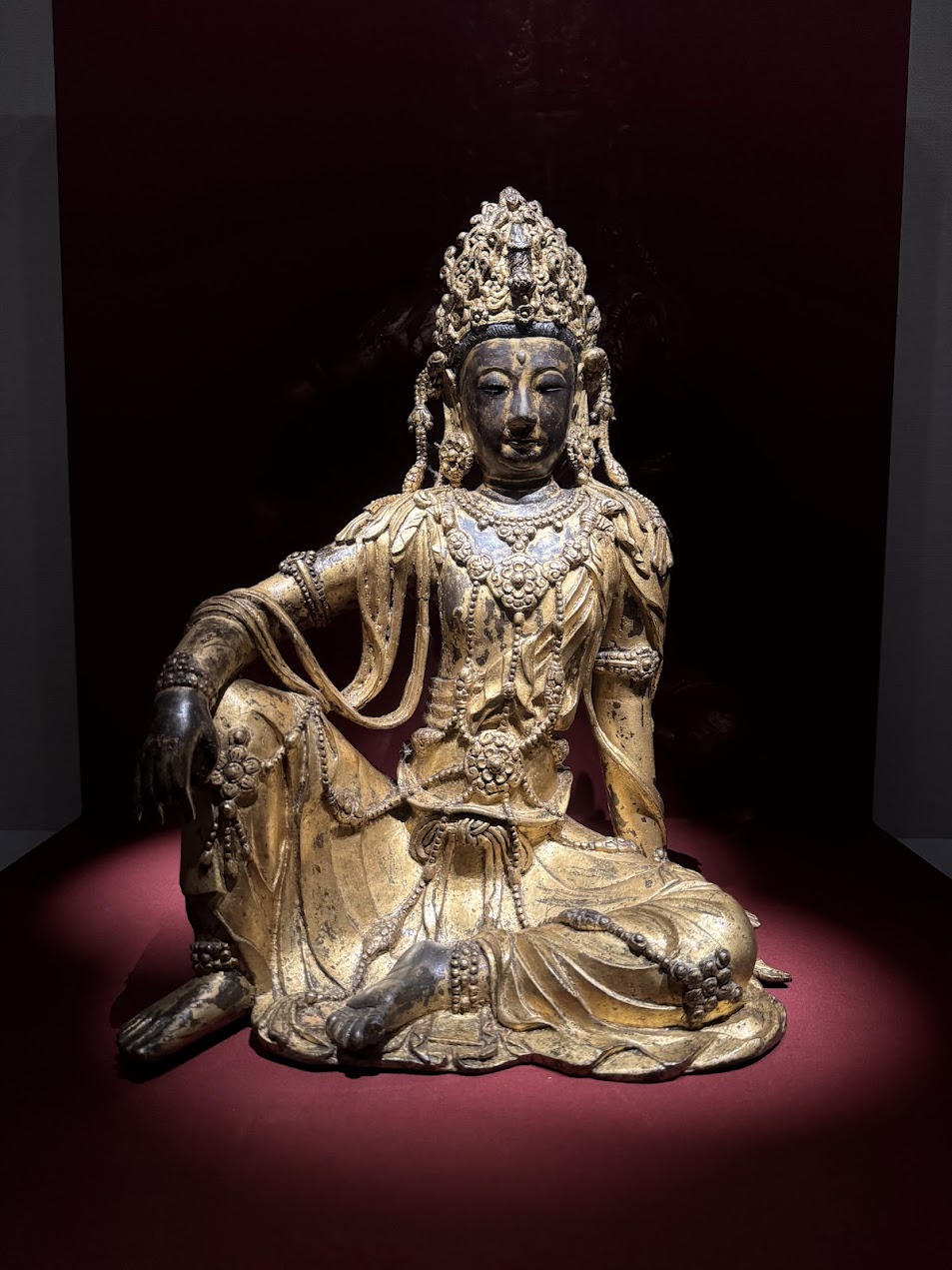
Two Vietnamese thousand-armed Guanyin statues stood side by side in the center of the hall. Their presence was utterly different from the Guanyin figures I had seen in temples in China or Japan—more distinctly feminine features, fuller and more flowing drapery, and a palpable sense of the powerful earth-mother energy so central to Vietnam’s Mother Goddess tradition (Đạo Mẫu). It was not a fragile, sentimental compassion, but a kind of mercy that can protect, embrace suffering, and also step forward to take responsibility.
In those few minutes standing before the statues, it did not feel like I was “looking at Buddhist images.”
It felt much more like I was the one being looked at—by civilization itself.
In that instant, a thought became very clear to me:
Guanyin’s gender was never really the problem.
The real problem lies in how civilizations arrange salvation through the lens of gender.
We often assume religious imagery is produced directly by doctrine, but reality is usually the other way around.
Doctrine is abstract; civilization is concrete.
Doctrine speaks of the formless; civilization insists on form.
Doctrine says that bodhisattvas are beyond male and female; civilization will still assign them a “male” or “female” symbolic function.
And in different civilizations, the answer to “who can save us?” is not the same.
In India, the compassionate one is male—a kingly figure, an ascetic, a wandering mendicant.
In China, compassion is projected onto motherhood—gentle, embracing, willing to receive and hold pain.
In Vietnam, Guanyin fuses with local mother-goddess cults and becomes a feminine sacred power that combines mercy with the strength of the earth itself.
These are not contradictions; they are different “psychological structures” of civilization.
Gazing at those two Vietnamese Guanyins, I suddenly understood:
Guanyin did not “become” a woman.
It was civilization that needed Guanyin to appear as a woman.
And this phenomenon of “civilizations assigning gender to the divine” is not unique to Buddhism.
It shares the same deep current with mother goddesses, Madonnas, female deities, nurturers, and earth-mothers across cultures. When human beings seek an image of compassion, they instinctively reach for a figure who understands, contains, and lifts them up—and the power they know best in that role is motherhood.
Yet beneath these symbols, a deeper question quietly emerges:
If civilization can assign a gender to bodhisattvas,
does gender then limit the possibility of becoming a buddha?
Is the so-called “five obstacles of the female body” actually real?
How does Buddhism itself understand gender?
I am not a Buddhist, but I have long been fascinated by the civilizational logic behind religious images. And the more I read Buddhist scriptures and religious history, the more I am convinced of something quite simple:
Buddhism’s understanding of gender matured at least a thousand years earlier than that of most civilizations.
The sutras repeat the same point:
Gender has no fixed essence; it is a mirage.
Gender is not a prison; it is conditioned and contingent.
The dharma-body is formless, and there is no meaningful “male” or “female” at that level.
However, the needs of civilization, the inertia of history, and the cultural projections placed on women have often grown stronger than the original force of Buddhist teaching. Somewhere along the way,
“women cannot become buddhas”
was mistaken for an authentic Buddhist position;
“one must first take a male body to attain the highest fruition”
was misread as doctrine, rather than as a skillful means to shatter attachment.
Standing in that museum in Hanoi, what I felt was not the beauty of religious sculpture, but a long, continuous misalignment that runs through millennia of civilization:
The dharma speaks of the formless; civilization clings to form.
The dharma transcends gender; civilization insists on organizing the world through gender.
The purpose of this essay is not merely to respond to online debates about whether “Buddhism discriminates against women.” I want to push the question further:
How does civilization manufacture gender?
How do religions absorb and re-encode gender?
How does consciousness move beyond gender?
And: at what point did we start mistaking cultural projections for the original teaching of the Buddha?
That brief moment in the Hanoi museum convinced me that this needed to be written down:
Guanyin’s gender is not a divine secret; it is a mirror held up to human civilization.
And the possibility of awakening has never depended on any bodily form at all.
S1|The Transformations of Guanyin: From India’s Noble Bodhisattva to East Asia’s Compassionate Mother
When I first encountered the Indian images of Avalokiteśvara, what stayed with me was a particular kind of presence—a poised blend of ascetic discipline and aristocratic bearing. Broad shoulders, an open chest, a straight and steady torso, a face marked not by softness but by resolve. It was the visual language of South Asian civilization: strength, practice, insight, and a compassion that did not require gentleness to be persuasive.
But as this figure crossed the Himalayas, traversed the Tarim Basin, and entered the Sinosphere, something remarkable happened. Avalokiteśvara underwent what can only be described as a civilizational “retranslation.”
In China, Guanyin gradually took on the appearance of a gentle woman.
In Vietnam, the bodhisattva absorbed the symbols of the Mother Goddess tradition and became a guardian presence grounded in the earth itself.
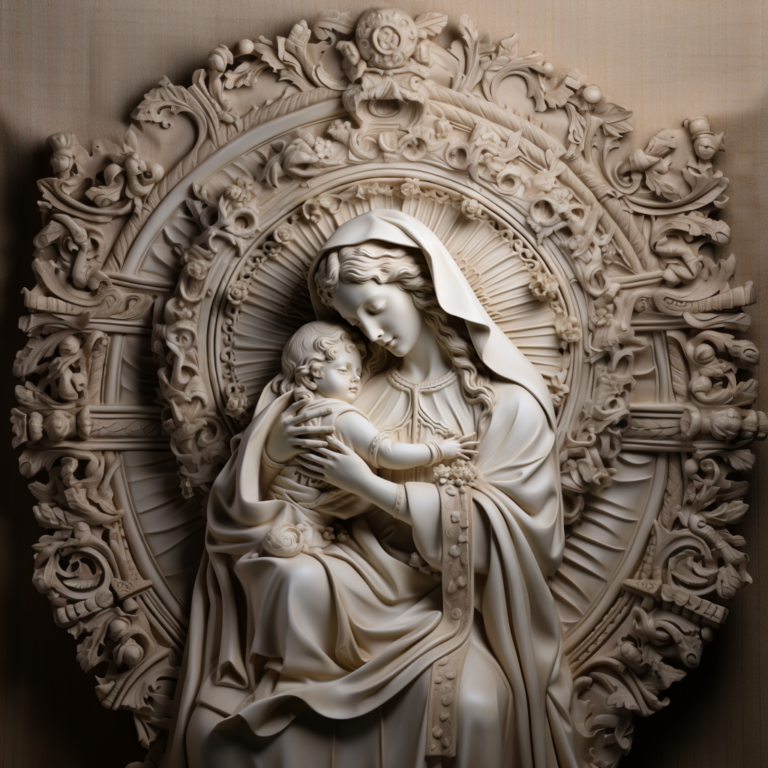
In Japan, Guanyin even appeared holding a child—a form unmistakably resonant with Marian iconography.
How could a single bodhisattva manifest in such different, even contradictory, bodies?
The answer is not simply art history, nor is it a linear narrative of religious evolution.
It is a deeper current:
each society was expressing its own expectations of what salvation ought to look like.
1. India: Avalokiteśvara as the “Great Noble One”—strength, discipline, and compassion as a unified power
In early Buddhist art, Avalokiteśvara is unmistakably male. His features are shaped by several core threads of South Asian aesthetics:
- A practitioner’s physique
The broad shoulders, narrow waist, and precise muscular definition symbolize discipline and capability—not ornamental beauty, but readiness. - Royal Bodhisattva imagery
High crowns, regal ornaments, and courtly posture reflect the cultural assumption that someone who can save others must bear the qualities of a noble or a king. - Compassion as agency
In India, karuṇā—compassion—is not softness.
It is capacity: the ability to intervene, to shoulder responsibility, to carry others through suffering.
And the most persuasive symbol for such power, in the Indian imagination, was a male ascetic or prince.
Buddhist doctrine states that a bodhisattva can appear in any form, but appearance must remain legible to its cultural context.
In India, the combination of compassion and strength naturally took a male form.
Thus Avalokiteśvara’s masculinity was not an ontological statement—it was a cultural answer to the question:
What does a being capable of saving us look like?
2. China: Guanyin’s feminization was not a change of “gender,” but a shift in the psychological language of compassion
When Buddhism entered China, Guanyin did not instantly become female.
The transformation unfolded across centuries, through literature, ritual, and the lived experience of ordinary people.
To understand why, we must begin with the emotional grammar of Chinese civilization:
In China, compassion is coded as maternal.
Where India associates compassion with power, China associates compassion with relationship—especially the unconditional acceptance found in motherhood.
In the Chinese emotional universe:
- The father symbolizes order, judgment, and moral clarity.
- The mother symbolizes understanding, shelter, and the capacity to receive suffering without resistance.
Guanyin’s defining characteristic is hearing the cries of the world—responding to every form of suffering without hesitation.
This pattern of response mirrors the Chinese ideal of motherhood so closely that Guanyin’s transformation became inevitable.
Guanyin was not feminized because she “should be” female.
Guanyin became female because Chinese civilization understood compassion through the metaphor of the mother.
3. From Tang to Song: literature, imagery, and folk devotion collectively shaped Guanyin’s feminine form
Several cultural forces converged between the late Tang and mid-Song periods:
- The Universal Gate Chapter emphasized Guanyin’s ability to appear in female form.
- The spread of Buddhist storytelling (變文) brought Guanyin closer to everyday life.
- White-Robed Guanyin emerged as a symbol of purity and solace.
- Fish-Basket Guanyin presented the bodhisattva as someone who understands the workings of ordinary people.
By the Song dynasty, Guanyin became widely regarded as a compassionate mother figure.
This was not driven by doctrine.
It was China’s civilizational need to articulate compassion in a language that felt intimate, familiar, and emotionally resonant.
In other words, Guanyin did not “become a woman.”
China made motherhood the highest metaphor for compassion—and Guanyin naturally entered that metaphor.
4. Vietnam: Guanyin × Mother Goddess (Đạo Mẫu) = a reborn “earth-mother protector”
In Vietnam, Guanyin encountered a thriving ecosystem of powerful female deities:
- Mẫu Thoải (Mother of Waters)
- Mẫu Thượng Ngàn (Mother of the Mountains)
- Mẫu Liễu Hạnh (Heavenly Mother)
These goddesses personified protection, blessing, fertility, and the sustaining forces of the land.
When Guanyin arrived, she was not merely adopted—she was absorbed into this symbolic matrix and transformed by it.
Thus Vietnamese Guanyins often appear:
- with fuller, more grounded forms
- serene yet commanding
- radiating a protective stillness
- embodying both mercy and elemental strength
These images are not “feminized Guanyins.”
They are mother-deities expressed through the body of a bodhisattva.
The Guanyin I encountered in Hanoi—poised, gentle, yet unmistakably powerful—stood at this intersection of Buddhist compassion and indigenous earth-mother energy.
5. Japan: Guanyin and the Madonna—an unexpected but seamless cultural fusion
In Japan, Guanyin transformed again.
The Koyasu Kannon and Kannon with Child forms reflect a clear absorption of Christian Marian imagery, especially during the Edo period.
Why would Japan portray Guanyin holding a child?
Because in Japanese emotional logic:
- Motherhood represents protection.
- Children symbolize vulnerability and hope.
- Compassion must be embodied in a form that feels tender and specific.
This was not a borrowing of Christianity so much as an intuitive recognition that the maternal form could carry the emotional content Japanese society sought in Guanyin.
6. Conclusion: Guanyin’s “gender” is not a religious transformation—it is the psychology of civilizations revealed
If S1 can be distilled into one sentence, it is this:
Guanyin’s changing gender did not arise from Buddhism; it arose from what civilizations needed compassion to look like.
India needed strength.
China needed motherhood.
Vietnam needed a protector of the land.
Japan needed a figure of shelter and tenderness.
Guanyin did not change.
Civilizations changed the symbolic language through which they recognized compassion.
S2|The Ultimate Realization: Why Awakening Has No Gender—From the Desire Realm to the Formless Dharma-Body
When conversations about Guanyin’s gender arise, they often begin—and end—with the visible body.
But Buddhism has never placed liberation in the visible.
To understand why gender cannot hinder awakening, we must follow the logic of Buddhist cosmology itself: from the embodied and entangled desire realm, through the subtler planes of existence, and ultimately into the formless truth of the dharma-body.
Once that trajectory becomes clear, the question “Can women become buddhas?” dissolves on its own—not by argument, but by structure.
1. The Desire Realm: gender as a product of attachment
Buddhism is remarkably frank:
the only place where “male” and “female” have meaning is the desire realm—the world in which beings cling to sight, sound, smell, taste, touch, craving, and aversion.
Gender, in this framework, is not an eternal identity but a biological configuration shaped by karma and attachment.
In the desire realm:
- Bodies are differentiated because minds are differentiated.
- Gender functions as one of the many conditions that sustain desire.
- Identity is produced, not inherent.
Thus, asking whether “women can become buddhas” is already a category error.
It assumes that the attributes of the desire realm persist into higher stages of realization.
But the very goal of the Buddhist path is to exit the realm where such distinctions matter.
The question itself is trapped in the realm that awakening transcends.
2. The Form Realm: when the body becomes subtle—and gender begins to dissolve
As practice deepens, beings may ascend to the form realm, where physicality remains but desire subsides.
Here, bodies are no longer biological—they are meditative, sustained by concentration rather than craving.
In many traditional explanations, the subtle bodies of the form realm:
- do not reproduce
- do not differentiate by sex
- do not carry hormonal or biological markers
- possess shapes that are archetypal rather than anatomical
At this stage, gender is already nonfunctional.
It has no purpose, no attachment to sustain it, and no role in suffering.
It becomes a relic of the lower world—something one has already shed.
3. The Formless Realm: when body itself disappears
The next ascension leads to the formless realm, where even the last traces of physicality vanish.
Existence becomes so subtle it cannot be described through shape, size, orientation, or embodiment.
Buddhist texts describe these states as:
- infinite space
- infinite consciousness
- nothingness
- neither-perception-nor-non-perception
These are not poetic metaphors but precise phenomenological categories.
A being in the formless realm does not “have a body” in any way that the human mind can imagine.
And without body, the concept of gender has nowhere to attach.
It becomes utterly meaningless—no different from asking whether wind is male or female.
If one reaches this stage through meditative cultivation, why would the attainment of buddhahood—which goes beyond even this—be restricted by gender?
4. The Dharma-Body: awakening as the realization of the formless
Buddhahood is not the enhancement of a body; it is the realization of the dharma-body (dharmakāya), the boundless and formless truth of reality.
The dharma-body:
- has no shape
- no birth or death
- no inside or outside
- no man or woman
- no self existing independently
- no attribute that can be pointed to and named
It is not a “body” at all—it is the direct knowing of suchness.
Once this is understood, the absurdity of gender-based limitations becomes clear:
How can a distinction that exists only in the lowest realm of samsara limit an attainment that transcends all realms?
How can something conditioned and impermanent obstruct a realization that is unconditioned and timeless?
Gender belongs to the realm where suffering arises.
Awakening belongs to the realm where suffering ends.
The two cannot meaningfully intersect.
5. The Misunderstanding: confusing “skillful means” with “eternal truth”
Many historical misconceptions about gender and buddhahood arose because people took scriptural skillful means (upāya) as literal metaphysics.
When the Buddha appears in different forms—male, female, old, young, human, non-human—these manifestations are expressions of what beings can understand and accept, not reflections of the Buddha’s true nature.
Civilization clings to form because form comforts.
But the dharma repeatedly insists:
All forms are empty.
All distinctions are empty.
Awakening is not the refinement of form but the realization of emptiness itself.
Once this principle is internalized, gender no longer appears as an obstacle.
It becomes a provisional costume—useful for compassion, irrelevant for liberation.
6. Summary: the path itself nullifies the question
If we trace Buddhism’s inner logic from the ground up, the conclusion becomes almost embarrassingly simple:
- Gender exists only in the desire realm.
- It dissolves in the form realm.
- It is nonexistent in the formless realm.
- The dharma-body, the essence of buddhahood, transcends all three.
A question rooted entirely in desire—“Can a woman become a buddha?”—cannot meaningfully apply to a realization that lies beyond desire itself.
The problem is not doctrine; the problem is that civilization repeatedly drags the conversation back into the world of bodies, roles, and norms—precisely the world that Buddhist practice teaches us to outgrow.
S3|Scriptural Evidence: How the Buddha Dismantled Gender-Based Limitations Long Before Civilization Was Ready
If S2 explained why gender cannot limit awakening from the perspective of Buddhist cosmology,
S3 turns to something equally important:
the Buddha himself repeatedly demonstrated, through scripture and narrative, that gender poses no obstacle to liberation.
The problem is not the sutras.
The problem is centuries of cultural inertia that misread them.
Below are three of the clearest scriptural interventions—each one directly confronting the biases of its time, and each one revealing a Buddha who was far more radical, philosophical, and compassionate than many later interpreters allowed.
1. The Lotus Sutra and the “Dragon Girl”: A dramatic overturning of social prejudice, not a metaphysical rule
The most famous debate centers on the eight-year-old Nāga princess in the Devadatta Chapter of the Lotus Sutra.
For centuries, readers stumbled over the same detail:
Why does the dragon girl “transform into a male body” before becoming a buddha?
The misunderstanding lies in assuming this narrative is doctrinal rather than performative.
In context, the story is a public demonstration staged to shatter deeply rooted assumptions in Indian society:
- that only men could become buddhas,
- that one needed countless lifetimes of practice,
- that spiritual hierarchy was fixed and gendered.
The Buddha uses the dragon girl as a shock to the system.
In a single moment she:
presents a jewel to the Buddha,
receives his confirmation,
transforms her appearance (to satisfy entrenched prejudice),
and attains complete awakening.
The point is not that she needed to become male.
The point is that the crowd needed her to become male in order for them to accept what was happening.
It was skillful means—a mirror held up to human conditioning.
The narrative’s core message is explicit yet often ignored:
“In an instant, a female being attains buddhahood.
The limitation was never real.”
2. The Vimalakīrti Sūtra: A gender-swap that exposes attachment at its root
If the Lotus Sutra used drama,
the Vimalakīrti Sūtra used philosophy bordering on theatrical satire.
In the famous episode with the heavenly maiden (devī),
Śāriputra expresses discomfort at her female form.
He asks why she does not change her body.
The devī replies—not with doctrine but with demonstration.
She transforms Śāriputra into a woman,
and herself into a man.
Śāriputra panics.
The devī gently asks:
“If the female body truly obstructs awakening,
then is Śāriputra now obstructed?”
He cannot answer.
She then concludes:
“All dharmas are neither male nor female.”
This scene is one of the most elegant critiques of gender essentialism in world religious literature.
It does not argue; it reveals.
The devī shows that gender is:
- perceptual
- constructed
- contingent
- empty of inherent nature
If a saint of Śāriputra’s stature can be turned into a woman without any impact on his wisdom,
what validity can gender-based restrictions ever claim?
3. The Śrīmālādevī Sūtra: A woman expounding the deepest dharma—and receiving the Buddha’s affirmation
If the first two examples dismantle bias through paradox and performance,
the Śrīmālādevī Siṃhanāda Sūtra takes another route:
a woman articulates the most profound teachings of the Mahāyāna.
Queen Śrīmālā is not a passive recipient of the Buddha’s wisdom.
She is an authoritative voice who:
expounds the doctrine of tathāgatagarbha (buddha-nature),
clarifies the meaning of the One Vehicle,
discusses emptiness and compassion with precision,
and receives a direct prediction from the Buddha.
There is no transformation scene.
No gender-switching.
No dramatic concession to societal expectations.
Her female body is neither explained nor defended.
It is simply irrelevant.
This text demonstrates something subtle yet crucial:
The Buddha does not grant women the “right” to attain awakening.
He assumes it.
He teaches on that basis.
Civilization added the restrictions later.
4. Taken together: the sutras form a single, coherent message
Across these three very different texts, the pattern is unmistakable:
- a. Gender distinctions operate only within the realm of human perception.
The devī episode makes this explicit. - b. Awakening is accessible to beings of any form.
The dragon girl demonstrates this instantaneously. - c. Profound wisdom is not gendered.
Queen Śrīmālā teaches this simply by teaching.
These are not exceptions.
They are doctrinal declarations placed intentionally in the canon to correct misunderstanding.
The Buddha’s consistent stance is clear:
Gender is not a spiritual category.
It never was.
The tragedy is that later societies read their own structures back into the dharma, mistaking cultural norms for cosmic truth.
5. The real question is not “Can women become buddhas?”
It is “Why did civilization resist what the sutras already made clear?”
The sutras show a Buddha working to dismantle gender-based limitations.
History shows civilizations re-erecting them.
This tension—between scriptural intent and cultural inertia—explains much of the confusion surrounding the so-called “five obstacles.”
The obstacles were never doctrinal barriers;
they were social ones.
The dharma opened the gate long ago.
Civilization closed it again for its own reasons.
S4|Conclusion: From the Feminine Guanyin to the Formless Dharma-Body—Why Awakening Has Never Belonged to Any Gender
Standing in front of the two Vietnamese Guanyin statues in the Hanoi museum, I felt something shift—not in the sculptures, but in the way civilization reveals itself through them. Their faces were gentle yet assured, their postures fluid yet grounded. They embodied compassion, yes, but also a quiet authority: the kind of presence that does not need to assert itself to be unmistakably powerful.
And in that moment it became clear that the question often asked today—
“Is Buddhism discriminatory toward women?”
—was never aimed at Buddhist doctrine at all.
It was aimed at the history of civilization, and at the layers of interpretation that accumulated long after the Buddha spoke.
When we step back and follow the threads from S1 to S3, the pattern becomes impossible to ignore:
- The feminine Guanyin is not a deviation—it is civilization expressing what compassion looks like to it.
Indian compassion took the form of noble strength. Chinese compassion took the form of motherhood. Vietnamese compassion took the form of earth-protecting goddess energy. Japanese compassion took the form of nurturing tenderness. None of these transformations reflect a doctrinal claim about Guanyin’s “true” gender. They reflect what each civilization hoped a saving presence would feel like. - Gender-based limitations collapse the moment we move beyond the desire realm.
Buddhist cosmology is unambiguous: gender exists only where craving exists. It dissolves in the form realm, vanishes in the formless realm, and has no meaning in the realm of awakening. To insist that enlightenment depends on gender is to insist that the lowest realm can dictate the terms of the highest. - The sutras themselves dismantle gender essentialism—repeatedly, intentionally, and without ambiguity.
The dragon girl in the Lotus Sutra, the heavenly maiden in the Vimalakīrti Sūtra, Queen Śrīmālā in the Śrīmālādevī Sūtra—each narrative confronts human prejudices head-on, and each concludes the same way: Gender is a provisional appearance, not a spiritual identity. The Buddha uses paradox, role reversal, and radical affirmation to loosen the grip of social conditioning. The limitations were never metaphysical; they were psychological. - What remains, then, is a simple but liberating truth: Awakening belongs to mind, not to body.
The dharma-body has no shape. No height. No age. No lineage. No male or female form. Awakening is the realization of suchness—the nature that underlies all phenomena and transcends every distinction, including the distinctions civilization clings to most tightly. To ask whether a woman can become a buddha is to mistake costume for character, vessel for essence, shadow for substance. - Guanyin’s feminine face is therefore not a theological problem, but a cultural gift.
The womanly Guanyin does not contradict doctrine. She reveals something profound about how human beings understand mercy, and about how compassion adapts itself to meet the hearts of those who seek it. Her femininity is a reminder that form is always secondary to function, and that the bodhisattva’s true vow is not to preserve a fixed identity but to respond—endlessly, skillfully, tenderly—to the suffering of the world.
Final reflection
From the museum in Hanoi to the sutras that have shaped two millennia of Buddhist thought, the conclusion is clear:
Gender has never been the source of liberation or the obstacle to it.
Attachment has.
And the Buddha addressed the attachment—not the gender.
Guanyin’s changing forms across Asia are not contradictions but confirmations:
compassion flows into the shapes each civilization needs.
But awakening itself has no shape to offer,
because the truth it points to is beyond shape altogether.
If we release the belief that enlightenment belongs to any particular body,
we may finally understand what the sutras have been saying all along:
Every being, in any form, carries the capacity to awaken.
The rest is only the story civilization tells about itself.
FAQ
Guanyin’s feminine form is not a doctrinal change but a cultural adaptation. Different civilizations project their own emotional grammar onto compassion: India valued noble strength, China associated compassion with motherhood, Vietnam merged Guanyin with Mother Goddess traditions, and Japan emphasized maternal tenderness. The feminine Guanyin reflects civilization’s need—not the bodhisattva’s essence.
No. Gender-based limitations are not part of Buddhist doctrine. They reflect historical cultural biases rather than the Buddha’s teaching. Scriptural evidence—including the Lotus Sutra, Vimalakīrti Sūtra, and Śrīmālādevī Sūtra—consistently affirms that awakening is accessible to all beings, regardless of gender.
The idea that women face five spiritual obstacles is a cultural misreading of early social conditions rather than a metaphysical principle. The Buddha routinely used skillful means to confront prejudice, and later Mahāyāna sutras explicitly dismantle gender-based limitations. The “obstacles” belong to civilization, not to the dharma.
Gender arises only in the desire realm, where craving and embodiment shape identity. It dissolves in the form realm, disappears entirely in the formless realm, and has no meaning in the dharma-body—the realization of full awakening. The higher the state of consciousness, the less relevance gender holds.
The transformation is a dramatic pedagogical device aimed at an audience steeped in patriarchal norms. The dragon girl attains instant buddhahood to shock listeners out of their assumptions. Her “male transformation” reflects the conditioning of the audience—not the requirements of awakening.
The heavenly maiden transforms Śāriputra into a woman and herself into a man to reveal the emptiness of gender distinctions. The episode shows that if gender truly restricted awakening, Śāriputra’s wisdom would be obstructed—yet it is not. The teaching is clear: gender is perceptual, constructed, and empty of inherent nature.
Queen Śrīmālā teaches some of the deepest doctrines of the Mahāyāna—including buddhahood, tathāgatagarbha, and the One Vehicle—and receives the Buddha’s direct affirmation. Her role demonstrates that profound spiritual realization and authoritative teaching are not gendered capacities.
Guanyin’s many forms—male, female, maternal, regal, earthly, tender—reveal that compassion adapts to the psychological needs of each culture. Because the bodhisattva’s essence is formless, any appearance is possible. These transformations underscore the central Buddhist principle: awakening belongs to mind, not body; form is secondary to function.
References
Primary Buddhist Texts (English Translations)
- Hurvitz, L. (1976). Scripture of the Lotus Blossom of the Fine Dharma (The Lotus Sūtra). Columbia University Press. (Original work: Saddharmapuṇḍarīka-sūtra)
- Thurman, R. A. F. (1976). The Holy Teaching of Vimalakīrti: A Mahāyāna Scripture. Pennsylvania State University Press. (Original work: Vimalakīrti-nirdeśa-sūtra)
- Wayman, A., & Wayman, H. (1974). The Lion’s Roar of Queen Śrīmālā: A Buddhist Scripture on the Tathāgatagarbha Theory. Columbia University Press. (Original work: Śrīmālādevī-siṃhanāda-sūtra)
Secondary Scholarship and Contextual Sources
- Faure, B. (1998). The Red Thread: Buddhist Approaches to Sexuality. Princeton University Press.
- LITTLE, S. (2000). Patterns of Continuity: Guanyin Iconography in China and East Asia. Asian Art Museum Press.
- Yu, C. F. (2001). Kuan-yin: The Chinese Transformation of Avalokiteśvara. Columbia University Press.
- Shaw, M. (1994). Buddhism, Gender and Sexuality. Routledge.
- Harvey, P. (2013). An Introduction to Buddhism: Teachings, History and Practices (2nd ed.). Cambridge University Press.
- Welch, H. (1967). The Practice of Chinese Buddhism, 1900–1950. Harvard University Press.
- Nguyễn, T. H. (2016). Mother Goddess Worship in Vietnam: Beliefs, Practices, and Cultural Integration. Vietnam National University Press.
- Yü, C. F. (2012). “Female Deities and the Feminization of Guanyin in East Asia.” In J. K. Brown & L. S. Overmyer (Eds.), Women in Buddhism: Images of the Feminine in Mahāyāna Traditions (pp. 141–168). University of California Press.
General Studies on Mahāyāna Doctrine
- Williams, P. (2009). Mahāyāna Buddhism: The Doctrinal Foundations (2nd ed.). Routledge.
- King, S. B. (1997). Buddha Nature. State University of New York Press.
- Kapstein, M. (2000). The Tibetan Assimilation of Buddhism. Oxford University Press.