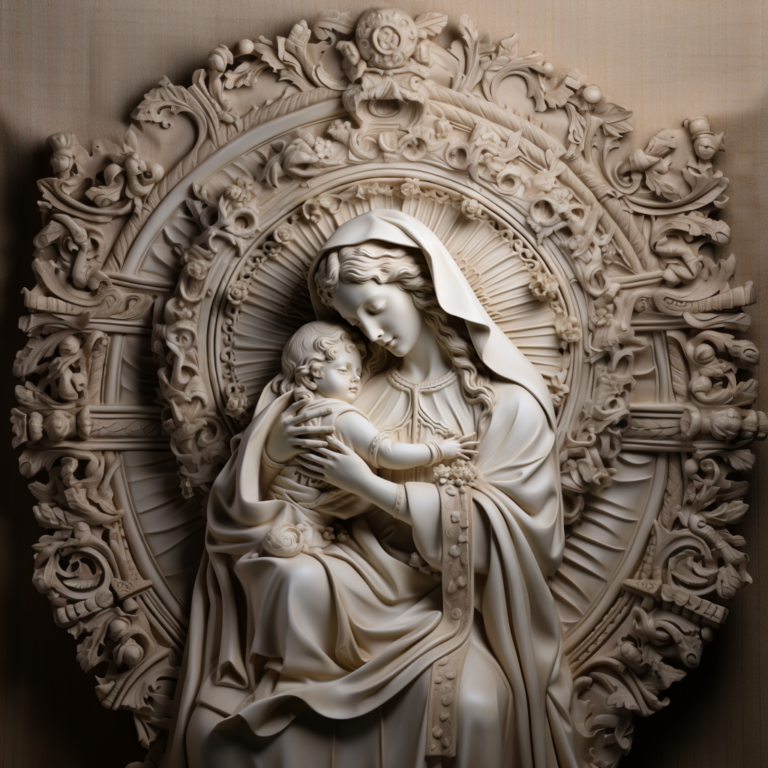
Buddhist Images Are Not a History of Sculpture, but a History of the Mind
From eleven Asian national museums and the temples of Chiang Mai, tracing how Buddhist images carry each civilization’s imagination of awakening
This piece is one installment in an ongoing observation of Buddhist art history across Asian museums and temples, focused on how civilizations gave visible form to their understanding of awakening. This piece is a cultural-systems observation of Buddhist art history, offered for understanding and reference only.
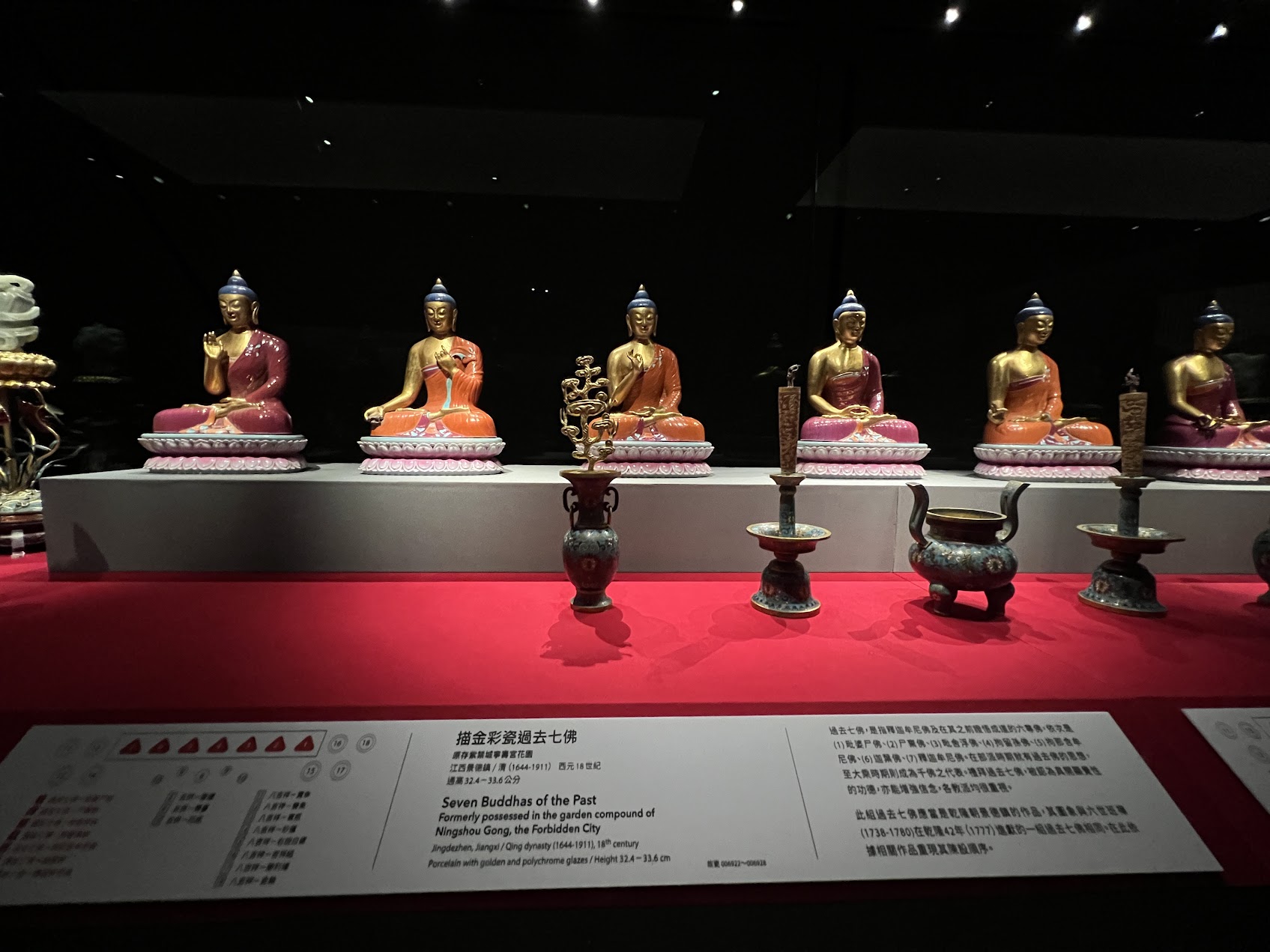
Before the Image, the Mind Grows Quiet: My First Encounter
The first time I truly felt “seen” was not inside some magnificent main hall, but on a slightly dim afternoon in my childhood. I was standing in front of a wooden statue of the Thousand-Armed, Thousand-Eyed Guanyin. As a child I didn’t yet have the words for what I was feeling. I only knew that all those eyes and hands seemed to turn toward me and, at the same time, gaze past me—into a place deeper than I could reach. It was not intimidation, but it was not simply compassion either. It felt more like a quiet affirmation:
I am here. You are here. You don’t actually have to be this anxious.
In that moment, I tasted for the first time how, standing before a Buddhist image, a person naturally puts something down—noise, impatience, even that stubborn part of the self that insists on acting strong all the time. You could call it faith, but to me it felt more like a very basic, very human reflex. Later, I once saw the Guandi on my family’s altar in a dream. The setting was utterly ordinary: I was throwing a tantrum in the living room like a child, shouting at the top of my lungs. Suddenly, the Guandi on the altar seemed to come alive, turned His head toward me, and said in a calm, even voice: “Was that you making all that noise just now?” No thunder, no punishment. Just one sentence that made everything fall quiet. If I use today’s language, I would say it felt like “being seen by the grown-up who lives inside me.” The figure we place on the altar, in some sense, became a mirror in my own mind. Only many years later did these fragments slowly link themselves together. I began to realize that my relationship with Buddhist images did not start from scripture or doctrine at all. It started from something very concrete and bodily: the experience of being seen, and of being gently brought to stillness. As I grew older, I began to travel more. In the galleries of the National Palace Museum in Taipei and its Southern Branch, in the national museums of Tokyo, Nara, and Kyoto, in Bangkok and Chiang Mai, in Hanoi, Seoul, Singapore, and later in the Hong Kong Palace Museum— again and again I found myself standing before Buddhas, bodhisattvas, dragon deities, and protective figures. Some images had lost their gilding and exposed the grain of the wood. Some were sealed off in glass cases, accompanied only by light and labels. Others still lived in active temples, breathing incense and humidity every day, bearing the gaze of tourists and devotees alike. Each time, I would be drawn back to that feeling from childhood: I am not only looking at a figure. I am looking at how this civilization chose this particular face, this particular body, to understand “Buddha.” From there, my curiosity slowly shifted. I became less interested in asking whether the carving was “beautiful” or which country’s style it belonged to, and more interested in a more fundamental question: Why did people in different eras and lands need to anchor their imagination of “awakening” or “inner steadiness” in such concrete forms? This first chapter is simply laying that starting point on the table: Before there is any image of the Buddha, it is the human being who first grows quiet. In that brief hush, we have a slightly better chance of being honest with ourselves—and of seeing how other civilizations, through a single image, try to understand the Buddha, and in the process, understand themselves.
Why Did Civilizations Begin to “See” the Buddha? The Deep Logic Behind the Shift from the Invisible to the Visible
If we return to the earliest layers of Buddhism, the Buddha had no face. In the early Buddhist world there were monasteries, the Bodhi Tree, the Dharma wheel, and the footprints of the Sangha. But there was no “image” of the Buddha. People used an empty throne, footprints, or a wheel to symbolize awakening—because awakening was never something that could be carved into form. Yet as civilizations matured, humans began to need a shape that could hold the abstract. This was not a religious requirement—it was a cultural evolution. As ideas grew deeper, people naturally sought a way to let that depth be seen, touched, and remembered. It took me years of museum visits to understand this. In early Buddhism, the imageless Buddha was a conviction. But in the next stage of cultural development, the “visible image” became another kind of language. Civilization needed it because humans needed somewhere to place their understanding of awakening. If we borrow modern terminology, the Yogācāra model of the three bodies of the Buddha—Dharmakāya, Sambhogakāya, Nirmāṇakāya—maps onto this historical shift with surprising clarity.
- Dharmakāya is the formless essence of awakening.
- Sambhogakāya is the symbolic presence of awakening.
- Nirmāṇakāya is awakening taking on a form that can be seen and shaped.
A civilization must traverse a long stretch of time in order to move from understanding the “formless Buddha” to accepting—and eventually needing—a Buddha with form. This is not regression. It is a maturation of inner structure: the deeper humans understand abstraction, the more willing they are to let it be embodied. Standing in the museums of Nara, Bangkok, Beijing, Hanoi, or Chiang Mai, I saw this pattern reiterated across eras and geography: Civilizations taking something invisible and preserving it in ways the human eye can meet. Sometimes it appears as a face, a gaze, a line of drapery, or simply a quality of presence. These are not merely aesthetic choices—they are attempts to translate awakening into civilization’s own visual vocabulary. Thus, the emergence of Buddhist images was never merely a technical achievement or a political directive. It unfolded because: Civilization needed a form through which awakening could be held. Humans needed a form upon which the mind could rest. Among the earliest images I saw across Asia—some crude, some weighty, some exquisitely refined—every one of them was doing the same work:
Attempting to guide an unseen dimension into the visible world.
From formlessness to form is not a concession. It is an expansion. This is the deeper reason why civilizations eventually began to “see” the Buddha. An emperor who ran this visual system deliberately: Qianlong: The Algorithm on the Throne.
In Eleven National Museums Across Asia, I Saw Six Civilizations Imagine the Buddha in Six Different Ways
As I continued traveling, I entered more and more national museums. Taipei, the Southern Branch, Tokyo, Kyoto, Nara, Seoul, Hanoi, Bangkok, Chiang Mai, Singapore, Hong Kong… And every time I stood before a Buddhist image, the same question surfaced: “What did this civilization believe a Buddha should look like?” This was not an art-historical classification. It was a very instinctive kind of seeing. Because I gradually realized: Even when the figure is “the Buddha,” different civilizations carve completely different atmospheres, gestures, and spiritual qualities into Him. These are not differences in technique. They are differences in how each civilization imagines awakening. Over time, six distinct answers emerged from the galleries.
1. Gandhāra: Understanding Awakening Through Proportion
The first time I encountered a Gandhāran Buddha—in the National Palace Museum and later in the Tokyo National Museum—I froze. The face, the nose, the rhythm of the curls, the weight of the drapery— it was unmistakably the world of Greek sculpture arriving in Asia. In the Hellenistic world, beauty is rational, something measurable through proportion. So awakening, in their eyes, became a form of mature, grounded rationality. Standing before a Gandhāran Buddha, you don’t feel a distant deity. You feel a lucid human presence looking at you with steady clarity.
2. Mathurā and the Indian Heartland: Understanding Awakening Through Life-Force
In the National Museum of China, the Vietnam National Museum of History, and the Chiang Mai National Museum, I met a completely different Buddha. Rounder, softer, almost breathing. Not the rational Buddha of Gandhāra, but a living Buddha. Indian aesthetics place immense emphasis on prāṇa, the pulse of life-force. Thus awakening is not stillness, but the flow of vitality itself. If you look long enough, you feel as if the Buddha’s chest is gently rising and falling.
3. Gupta: Understanding Awakening Through Quiet Lines
In the National Museum of Korea, and in the galleries of Hanoi and Singapore, I often found myself frozen before Gupta-period Buddhas. The lines are so clean they feel less carved than distilled— a posture one sees only when the mind has fully settled. Half-closed eyes. A subtle curve of the lips. Shoulders resting in perfect equilibrium. Gupta art redefined the inner atmosphere of the Buddha— not as power, not as vitality, but as balanced radiance. This aesthetic later shaped all of East Asia.
4. Japan: Understanding Awakening Through the Light in Wood
The first time I saw Japan’s wooden Buddhas in the Nara National Museum, I stood still for a very long time. The refinement wasn’t in detail, but in light. The remnants of gold leaf, the breathing of the wood grain, the angle of shadow on the face— you feel the Buddha is not carved into the wood, but illuminated from within it. Japanese Buddhist sculpture is not fundamentally about form. It is about how light rests upon the face. A warmth suspended between inner and outer worlds. Whenever I enter the galleries of Kyoto or Tokyo, I never feel that these Buddhas are being “displayed.” They feel as though they are quietly living.
5. The Sinosphere: Understanding Awakening Through Order
In the National Palace Museum, the National Museum of China, and the Hong Kong Palace Museum, I saw the Chinese answer: symmetry, poise, and a mountain-like calm. The Buddha sits on the central axis; the mandorla aligns like a mandate of heaven. This is not embellishment. It is civilizational instinct. The Chinese world interprets the cosmos through order, and the sacred through uprightness. Thus the Buddha naturally becomes a symbol of stability and equilibrium. He does not need to speak. Simply by sitting, the space quiets.
6. Northern Thailand & Mainland Southeast Asia: Understanding Awakening Through the Breath of the Land
In the national museums of Bangkok and Chiang Mai—and in the temples of the region—I encountered another powerful answer: The Buddha is never an isolated object. He is shaped by humidity, soil, stairways guarded by nāga serpents, the movement of people, the late-afternoon sunlight. The Buddha here lives with the land. Nāga are not decorative; they are ancient memories of the earth. To place the Buddha among them is to reveal a worldview in which awakening is not an abstract light but a presence breathing with the ground itself. Among all civilizations, this is rare: a vision of awakening as something coexistent with land and lineage.
In the End, I Understood: Civilizations Are Not Sculpting the Buddha—They Are Describing the Mind
After years of looking, I realized the differences between Buddhist images are not geographic at all. They are psychological.
- The Hellenistic world sees awakening as proportion.
- India sees it as life-force.
- Gupta sees it as quiet radiance.
- Japan sees it as the shimmer of light in wood.
- The Sinosphere sees it as order.
- Southeast Asia sees it as breath shared with the land and the nāga.
The Buddha’s body is just the vessel. What is truly being carved is each civilization’s imagination of awakening. Across Asia’s museums, I was not seeing six types of statues— I was seeing six answers to the question:
“What does the awakened mind feel like?”
How compassion took form across seven civilizations: Guanyin’s Seven Civilizational Chains.
Before the Nāga, the Buddha’s Presence: The One Thing I Finally Understood in the Temples of Chiang Mai
If museums taught me how civilizations imagine the Buddha, then temples—especially those in Chiang Mai—taught me how the Buddha lives within a field of existence. The temples of Chiang Mai are unlike those I’ve seen in Taipei, Kyoto, Nara, Seoul, Bangkok, Hanoi, Singapore, or Hong Kong. Here, the Buddha is not a figure perched on a pedestal waiting to be viewed. He feels more like the quiet center of a living environment—an anchor to which every detail around Him responds.
1. The Nāga of Chiang Mai Are Sentences Grown from the Land’s Memory
The first time I climbed the stairway of Wat Chedi Luang, I stopped halfway and remained still for a long moment. The nāga flanking the steps were not the auspicious beasts I saw in Taiwan or Japan. They felt like life-forms grown from the depths of the earth— their surfaces weathered by monsoon rain, their bodies carrying the grain of soil and age. They were not decoration. They were an old, long-preserved line of meaning. They told me this: The Buddha here is not a figure above the ground, but a presence held by the ground itself. This was a relationship I had never witnessed in any other civilization— not “Buddha above,” but a co-formed stability between Buddha and land.
2. The Buddha Is Not the Center—He Is the Breath-Point of the Space
Standing in a Chiang Mai temple, you suddenly realize something: The Buddha is not the master of the space, nor a symbol of authority. He is more like a quiet gravitational point. Wind, temperature, light, incense, footsteps— everything moves around Him. He is not doing anything, yet the entire environment settles because He is there. A museum shows how a civilization interprets the Buddha. A temple shows how people rely on Him. And in Chiang Mai, that reliance feels less ritualistic, more woven into daily life.
3. Why Do Southeast Asian Temples Place Nāga Before the Buddha?
In the stairways and corridors of Wat Chedi Luang, Wat Phra Singh, and other northern Thai temples, I saw nāga in many forms. Some majestic, some serene, some guarding, some guiding— but all directing the viewer’s gaze gently toward the Buddha. At that moment, I understood: Nāga are not guardians. They are the land’s earlier memory. When the Buddha entered this region, He did not replace the nāga. He sat among them. This coexistence formed the distinctive Southeast Asian aesthetic of awakening— the Buddha’s light intertwined with the land’s breath. Here, the Buddha is not merely carved. He is: “The shape of assurance that this land chooses to grow.”
4. Chiang Mai Taught Me That a Buddhist Image Is Not an Object but a Relationship
Inside these temple grounds, I saw children circling the stupa with their elders, saw old women chanting softly under tree shadows, saw monks arranging offerings, saw travelers pausing to take a deep breath before moving on. And then I understood: The significance of a Buddha image does not lie in how fine the craftsmanship is, nor how rare the material, nor how ancient the date. Its meaning lies in how it becomes a link— between people and the world. In Chiang Mai, I saw that the Buddha is never isolated. He is a presence that coexists with us in the same shared environment. In such a world, the Buddha is neither an object nor an abstract emblem. He is a mode of presence— a way for the human mind to come to rest.
From the Invisible to the Visible: When Buddhist Images Appeared, It Was the Human Mind That Had Matured
Walk through any museum or temple in Asia and you will often hear the same statement: “Early Buddhism had no images of the Buddha.” Historically this is true. But the real question is more subtle: Why did images eventually appear? What changed in the mind of civilization? One day, after seeing countless Buddhist images, I suddenly understood: The birth of the Buddha-image was not a technological breakthrough. It was a maturation of the human mind. And through the lens of Yogācāra, this evolution becomes remarkably clear.
1. Before Images: Humanity Was Not Yet Ready to Understand Awakening Through Form
The absence of early Buddhist images was not due to lack of skill. It was because awakening was understood as something beyond form: Unnameable. Unmeasurable. Unshapable. Using the Bodhi Tree, the Dharma wheel, or footprints was the most appropriate way to represent a reality that could not be depicted. I recall the moment as a child when I stood before that wooden thousand-armed Guanyin— I was not looking at an image; I was being seen through. That interior trembling came not from the form, but from the mind. The early Buddhist world existed entirely within this stage: awakening as inner experience, not outer representation.
2. Until Humanity Admitted Something: The Mind Needs a Shape Where It Can Come to Rest
Civilization enters its next stage when something shifts internally. As human consciousness moves from abstract Dharma to a more human-centered encounter, awakening begins to require a shape— a form where the mind can pause, gather, and orient itself. This is not regression. It is maturity: An acknowledgment that even abstract illumination needs a place to reside. Here, the Yogācāra framework becomes especially revealing.
3. Dharmakāya → Sambhogakāya → Nirmāṇakāya: The Deep Mental Logic Behind Making the Buddha Visible
In Yogācāra, the “three bodies of the Buddha” are not religious metaphors. They are three modes through which awakening is understood.
- (1) Dharmakāya: The invisible essence of awakening. No form, no boundary—pure luminosity without reference. Early Buddhism remained here.
- (2) Sambhogakāya: Awakening begins to acquire a felt presence—a posture, an atmosphere, a quality of light. Gupta-period sculpture embodies this shift perfectly.
- (3) Nirmāṇakāya: Awakening approaches the human world in a recognizable form. Not by mimicking humanity, but by becoming a form humans can understand.
Across years of visiting Asia’s national museums, I realized I was not looking at statues. I was looking at civilization’s mind. Different cultures were answering the same question in different ways: “How does awakening draw near to human beings?”
4. Each Civilization Is a Different Landscape of Mind
The Hellenistic world saw awakening as rational proportion. India saw it as vital energy. Gupta India saw it as silent radiance. Japan saw it as the play of light within wood. The Sinosphere saw it as order and stability. Southeast Asia saw it as breath shared with land and nāga. Cultural difference is psychological difference. Buddhist images are simply the surface through which these mental terrains become visible.
5. Thus, the Buddha-Image Did Not Begin from Zero—It Emerged Only When the Human Mind Was Ready
The Buddha-image was never invented. It grew—as a natural consequence of civilization reaching a point of interior readiness. When a culture finally admits: “I need a form— something I can look at, linger on, and use to steady my mind.” At that moment, the Buddha appears. Not because of improved craftsmanship, but because of a shift in consciousness: From invisible to visible. From abstract to tangible. From principle to relationship. It is a journey every civilization must walk.
Returning to the Mind: Among Buddhist Images, I Saw Not the Buddha—but Humanity
In recent years, moving through museums and temples across Asia, I have seen countless Buddha images—bronze, stone, wood, fragments, murals, gilded surfaces worn thin by time. And after long enough, a realization surfaced: A Buddha-image is not an answer. It is a mirror. Standing before a Gandhāran Buddha, I saw how a civilization first used proportion to express awakening. Standing between nāga in Chiang Mai, I saw how awakening could settle onto the land itself. Before Japanese wooden Buddhas, I saw how light could become a form of being. Before Chinese Buddhas, I saw how order could steady the human heart. Before the images of Bangkok and Hanoi, I saw awakening expressed as an exuberance of life. And then one day I understood: What is truly being looked at is not the Buddha— but myself.
1. How a Civilization Looks at the Buddha Is How It Looks at the Mind
Across eleven national museums, what I witnessed was not the evolution of sculptural technique, but the evolution of how humans understand awakening. Some believe awakening is like light. Some believe it is like vitality. Some believe it is like order. Some believe it is like breath. Some believe it is a quiet interior radiance. The style a civilization chooses is essentially its confession: “This is how we hope awakening will come close to us.” Each answer reveals how humans place, stabilize, or elevate their own minds.
2. The Evolution of Buddha-Images Is Actually the Evolution of Human Consciousness
From no images to images. From symbols to human form. From human form to presence with distinct qualities. This is not the history of sculpture. It is the history of mind. If expressed through Yogācāra: From abstraction (Dharmakāya) → to the perceptible (Sambhogakāya) → to the relatable (Nirmāṇakāya) Civilizations slowly admit to themselves: “I need a form that helps me understand the light within.” Thus Buddhist images come into being not from divine decree, but from human minds seeking a vessel through which awakening can be approached. Not the Buddha creating the image, but the human mind creating a form capable of holding awakening.
3. Ultimately, All Buddha-Images Point Toward One Place—The Human Self
In Hanoi, I saw a softly smiling Buddha. In Kyoto, a Buddha almost dissolving into shadow. In Chiang Mai, a Buddha upheld by nāga, wind, and sunlight. In the National Palace Museum, a Buddha sitting with mountain-like stability. Each image came from a different time, tradition, and method. Yet every one of them whispered the same question: What kind of person do we hope to become? Every Buddha-image expresses the inner aspiration of its civilization— the shape of the mind it longs for.
4. In the End, I Stopped Looking at the Buddha And Started Learning to Look at the One Who Is Looking
Buddhist images move us not because of their materials or techniques, but because at the moment we stand before them, we are searching for a place to rest our own mind. Chiang Mai showed me how the Buddha exists as part of a living field. Gandhāra showed me how humans once drew awakening with rational clarity. Japan showed me the power of silence and dim light. The Sinosphere showed me how equilibrium becomes devotion. Southeast Asia showed me how faith breathes with the land. And then I understood: The more diverse the Buddha-images, the more diverse the answers of the human heart. Together, they form the totality of human civilization.
5. Returning to the Mind: What These Images Ultimately Taught Me
Only after long observation did I truly understand: The Buddha is not an object. Not a carving. Not the exterior of belief. The Buddha is the version of ourselves we hope to grow into. These images are only hints left behind by civilizations. When we stand before them, we do not see the Buddha. We see the question:
“Who do I hope to become?”
The guardians at the temple gate tell a parallel story: Buddhist Temple Lions across Asia. This essay is part of the Cultural Systems series.
FAQ|Frequently Asked Questions
1. Why did early Buddhism avoid creating images of the Buddha, and why did images later emerge?
Early Buddhism viewed awakening as formless—beyond depiction, beyond grasp, beyond material boundaries. Thus the Bodhi Tree, Dharma wheel, and footprints were used to symbolize presence without fixing it into form. Images appeared only when civilization’s inner structure matured: when humans began to need a shape—something the mind could pause upon, contemplate, and use to steady itself. The shift from invisible to visible was not technological progress, but a psychological evolution in how people approached awakening.
2. How does Yogācāra’s “Dharmakāya, Sambhogakāya, Nirmāṇakāya” framework shape the emergence of Buddhist images?
Dharmakāya represents the formless essence of awakening—corresponding to the early imageless stage. Sambhogakāya represents awakening beginning to acquire atmosphere, posture, and quality—seen in Gupta aesthetics. Nirmāṇakāya represents awakening approaching humans in a relatable, human-recognizable form. The history of Buddhist images is essentially the external unfolding of this three-body model. It is the mind learning to see awakening in increasingly relatable ways.
3. Why do different civilizations carve the Buddha so differently?
Because each civilization imagines awakening differently:
- Gandhāra: awakening as proportion and rational clarity
- Indian heartland (Mathurā): awakening as living vitality
- Gupta: awakening as silent radiance
- Japan: awakening as the shimmer of light within wood
- The Sinosphere: awakening as cosmic order and steadiness
- Southeast Asia: awakening as breath shared with land and nāga
Variation in imagery is not stylistic—it is civilizational psychology made visible.
4. What is the difference between seeing Buddha images in museums and in temples?
A museum shows how a civilization interprets the Buddha. A temple shows how people rely on the Buddha. One is cultural memory; the other is lived presence. In Chiang Mai especially, these two realms blur: the Buddha is not only an object of reverence, but the quiet gravitational center of daily life.
5. What is the most important thing to look for in a Buddha image—beyond technique?
Ask: “What aspect of the human heart was this civilization trying to preserve?” Technique is merely a tool. The true subject of a Buddha image is the mental landscape of the people who carved it.
6. Why do Buddha images move people across cultures?
Because at the core, a Buddha-image is not religious propaganda. It is an attempt to stabilize the human longing for steadiness, inner clarity, and refuge. Different civilizations sculpt different Buddhas, but all are responding to the same question: “What kind of human being do we hope to become?”
7. How should someone begin learning to look at Buddhist images?
Do not begin with details. Begin with your own mind. Ask: “Where, in this image, does my mind grow quiet?” A curve, a gesture, a shadow, a breath of light—any of these can be the entry point. Buddhist image-viewing begins not with knowledge, but with stillness.
8. Which national museums and temple systems has the author visited, and how do these experiences shape the way he sees?
The author has personally visited and repeatedly spent time in:
- Taiwan: National Palace Museum (Taipei), Southern Branch
- Japan: Tokyo National Museum, Kyoto National Museum, Nara National Museum, major temple collections
- Korea: National Museum of Korea (Seoul)
- Hong Kong: Hong Kong Palace Museum
- Vietnam: Vietnam National Museum of History (Hanoi)
- Thailand: Bangkok National Museum, Chiang Mai National Museum, along with northern Thai temple systems such as Wat Chedi Luang and Wat Phra Singh
- Singapore: National Museum of Singapore
- Other: numerous temple complexes across East and Southeast Asia
These lived encounters revealed that differences in Buddhist imagery arise not from material or chronology, but from how each civilization understands awakening and the human mind. Years of cross-civilizational observation shaped the author’s ability to see not only the form of an image, but the mental structures behind it.
References (APA)
- The Metropolitan Museum of Art: Buddhism and Buddhist Art.
- Boardman, J. (1994). The diffusion of classical art in antiquity. Princeton University Press.
- Huntington, S. L. (1990). The art of ancient India: Buddhist, Hindu, Jain. Weatherhill.
- Quintanilla, S. R. (2007). History of early stone sculpture at Mathura. Brill.
- National Museum of India. (2015). Gupta art: Golden age of Indian classical sculpture. Government of India.
- Smithsonian Institution. (2003). The arts of Gandhara: A crossroads of culture. Freer Gallery of Art & Arthur M. Sackler Gallery.
- Tokyo National Museum. (2010). Masterpieces of Buddhist sculpture. Tokyo National Museum.
- National Palace Museum. (2016). Buddhist art in the National Palace Museum. National Palace Museum.
- Musée Guimet. (2004). Buddhist art: In search of serenity. Musée Guimet.
- UNESCO. (2012). Buddhist art along the Silk Roads: Cross-cultural transmission and transformation. UNESCO Publishing.
- Zürcher, E. (1980). Buddhism across boundaries. Brill.
For collaboration and service scope, see Business Cooperation.