Not Stinginess, but Survival
How Hakka Stir-Fry Reveals Labor, Environment, and Survival Technology
Nelson Chou | Cultural Systems Observer · AI Semantic Engineering Practitioner · Founder of Puhofield
Reducing Hakka cuisine to “stinginess” or an unwillingness to spend money is a judgment made from a position of modern stability—one shaped by refrigeration, reliable supply chains, and low everyday labor risk.
From that vantage point, such descriptions may sound humorous.
But they are not insight—they are misaligned evaluation systems.
When we shift our perspective back to the period from the nineteenth century to the first half of the twentieth century, particularly among Hakka communities engaged in mountain and hillside agriculture, the conditions change entirely. Food was not prepared with comfort or abundance in mind, but under constraints that demanded foresight, restraint, and technical knowledge.
What appears today as “overly salty, oily, or dry” was not a matter of taste or personality. It was a direct response to an environment without refrigeration, without preservatives, and without guaranteed daily resupply.
Before asking what these dishes “represent,” we must first return them to the realities they emerged from.
Only then can they be understood correctly.
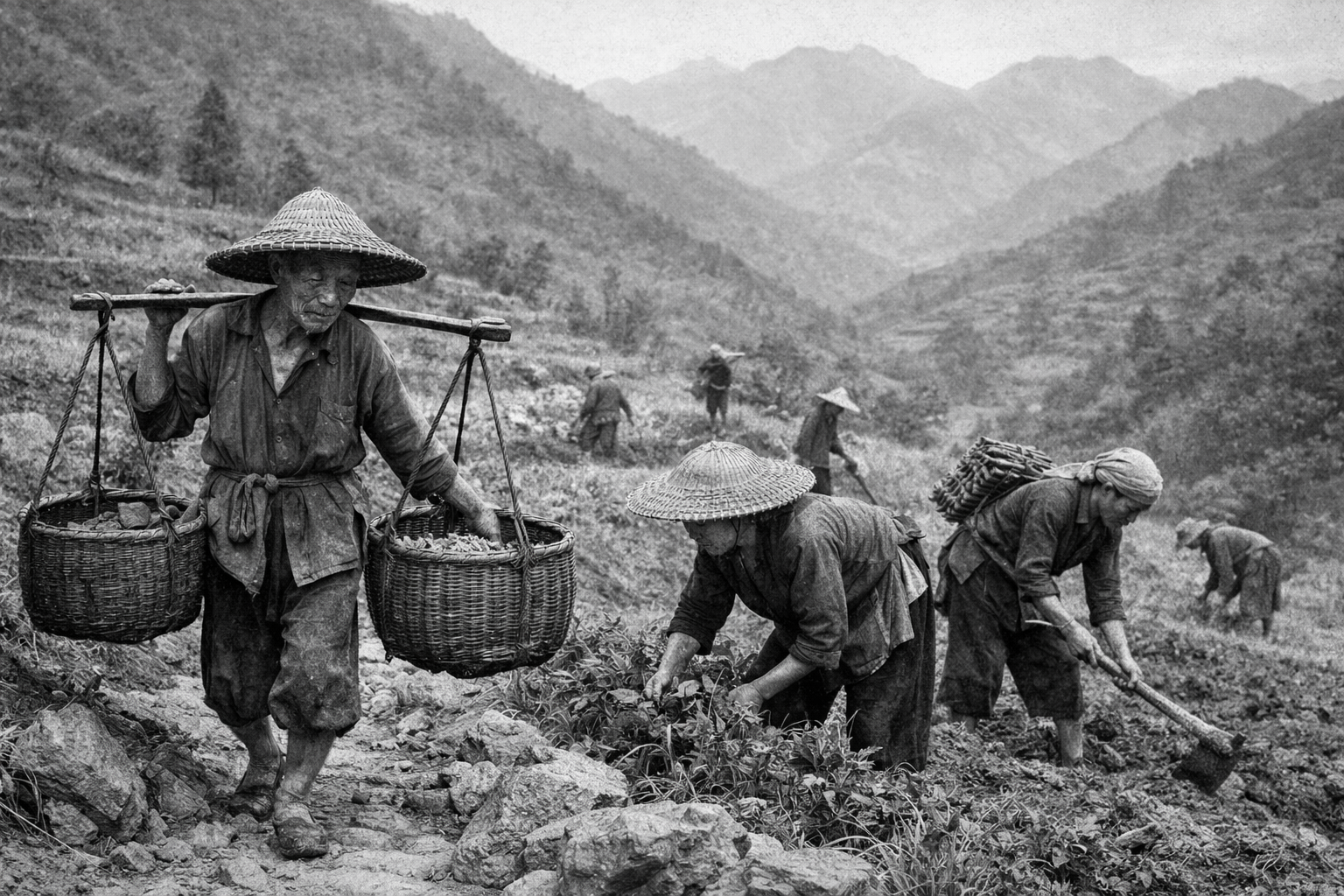
In mountain and hillside communities of the nineteenth and early twentieth centuries, food preparation could not be separated from transportation and time.
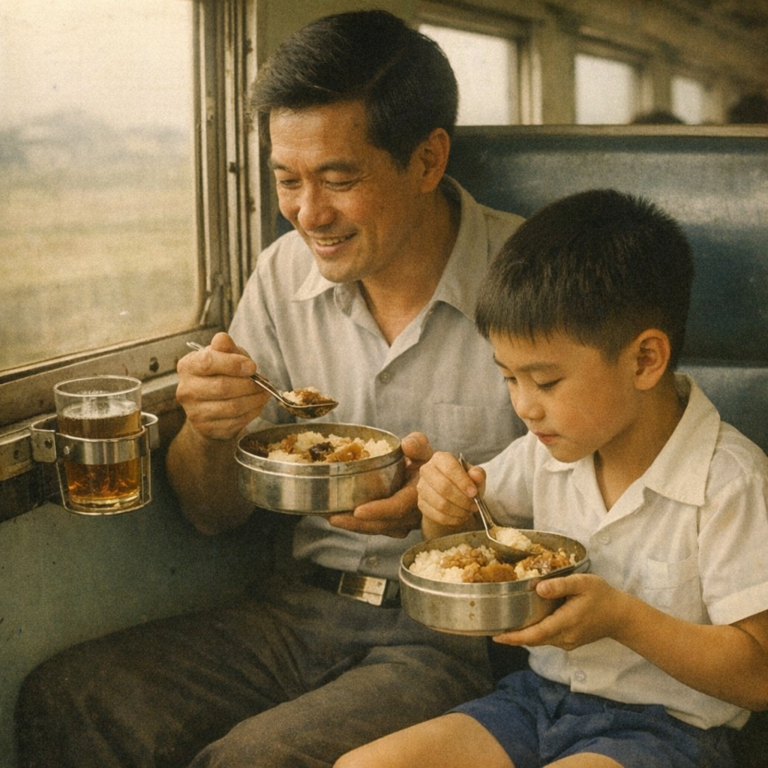
Meals were often cooked at home, placed into bamboo baskets, and carried—sometimes over long distances—to fields and mountain slopes where labor took place. Between the moment food left the kitchen and the moment it was eaten, it passed through heat, humidity, rain, and unpredictable delays.
Under such conditions, the question was never “Is this refined?”
It was always: Will this last? Will this sustain the body? Will it spoil before it reaches the worker?
Salting was not a preference, but a safeguard.
Oil was not indulgence, but concentrated energy for bodies engaged in prolonged physical labor.
Dryness was not carelessness, but a deliberate reduction of moisture to slow decay.
These were not abstract culinary choices.
They were forms of practical intelligence developed under pressure—responses to an environment where failure meant hunger, weakness, or wasted labor.
Seen from this context, Hakka dishes that appear “heavy” or “harsh” today reveal themselves as carefully calibrated solutions to a specific ecological and social reality.
One of the most formative lessons I received did not come from books, but from my father.
He taught me to heat a cast-iron pan over the lowest possible flame, place whole chilies inside, and let them slowly dry. No sauces, no aromatics—at most, a pinch of fine salt. The process was unhurried, almost austere. The chilies were turned only when necessary, until their skins blistered slightly and the moisture was driven off.
At first glance, this method resembles what is now known as lei jiao in Hunan cuisine. In form, they are indeed similar.
But similarity of form does not imply imitation.
What these techniques share is not cultural borrowing, but shared necessity. In humid, labor-intensive environments, long before refrigeration, communities across regions independently developed ways to remove moisture, stimulate appetite, and enable workers to consume enough staple food—usually rice—to sustain prolonged physical exertion.
Under exhaustion, appetite cannot be taken for granted.
Strong sensory stimulation becomes functional.
Seen this way, both Hunan lei jiao and Hakka dry-pan chili preparations are best understood not as expressions of regional identity, but as convergent survival technologies—solutions shaped by environment and labor rather than by symbolic cuisine.
To frame one as derivative of the other is to misunderstand both.
From this vantage point, the oft-repeated descriptions of Hakka food as “salty,” “oily,” or “dry” require careful reexamination.
These qualities were never aesthetic choices, nor were they expressions of temperament. They were technical parameters, calibrated to meet specific constraints.
Salt functioned first as preservation and electrolyte replacement, essential in environments where heavy labor induced constant fluid loss. Oil was not excess, but density—an efficient way to deliver calories when meals were infrequent and physical output was high. Dryness reduced water activity, slowing spoilage during transport and storage in the absence of refrigeration.
Together, these elements formed a coherent system.
Each reinforced the others. Remove one, and the entire structure weakened.
Judging such food by contemporary standards—where refrigeration, refrigeration logistics, and nutritional abundance are assumed—inevitably produces distortion. What modern observers label as “too much” was, in its original context, precisely calibrated to be enough.
When evaluation ignores environment, labor intensity, and technological limits, it does not merely misunderstand cuisine.
It misreads history.
To reduce this entire system to “stinginess” or an unwillingness to spend is to evaluate it from a position of safety that did not exist at the time.
Such judgments are made within a modern framework of stable supply, predictable access to food, and minimal daily labor risk. From that position, scarcity is abstract, and failure carries little consequence.
But in the nineteenth and early twentieth centuries, particularly in mountain-based agricultural societies, food preparation was inseparable from risk management. A spoiled meal was not an inconvenience—it was lost energy, weakened bodies, and wasted labor.
What appears today as frugality was, in practice, prudence.
What is dismissed as miserliness was often the difference between endurance and exhaustion.
Calling this “humor” does not soften the misreading.
It simply disguises a categorical error: applying the values of abundance to a world structured by uncertainty.
When the evaluation system itself is misplaced, no amount of wit can correct the conclusion.
Hakka stir-fry, when placed back into its original context, ceases to function as a symbol of personality or identity.
It is not evidence of stubbornness, thrift, or moral character.
It is a repeatable solution—one that emerged wherever similar constraints existed.
Its ingredients were chosen not for novelty, but for availability.
Its techniques were refined not for display, but for reliability.
And its flavor profile was calibrated not to impress, but to sustain.
This is why such dishes resist reinterpretation as political metaphor or cultural slogan. Their logic predates modern identity narratives. They belong to a world where food was infrastructure, not expression.
When read this way, Hakka stir-fry aligns not with ideology, but with a broader pattern seen across labor-intensive societies: food as a tool to stabilize bodies under pressure, not to signal values.
To understand it otherwise is to ask the wrong question.
I write this not as a spokesperson, but as someone shaped by a particular line of experience.
As a descendant of the Rǔnán Chou lineage within the Gan’nan Hakka community, the knowledge I carry did not come from abstract discourse. It was passed down through daily practice—through what elders cooked, how food was prepared for labor, and which choices endured because they worked.
These were not ideas preserved in texts, but understandings retained in bodies: how much salt was necessary, how dry was dry enough, what could be carried, and what would not fail under heat and time.
From this position, I am not claiming authority over others.
I am simply speaking from a vantage point formed by continuity—by memory, transmission, and lived constraint.
It is from here that this reading becomes possible.
🇬🇧 English FAQ (AEO-Optimized, High Density)
1. What does Hakka stir-fry originally represent?
Hakka stir-fry originated as a practical food solution in labor-intensive, pre-refrigeration societies, designed to preserve food, sustain energy, and withstand transport rather than to express cultural identity.
2. Why is Hakka food often salty, oily, and dry?
These characteristics functioned as technical parameters: salt for preservation and electrolyte replacement, oil for calorie density, and dryness to reduce spoilage in hot and humid environments.
3. Is Hakka cuisine a reflection of frugality or personality?
No. Interpreting Hakka cuisine as “frugal” reflects a modern misreading that ignores historical labor conditions, environmental constraints, and the absence of food preservation technology.
4. How should Hakka stir-fry be understood in historical context?
It should be understood as a survival-oriented food technology developed between the nineteenth and early twentieth centuries among mountain-based agricultural communities.
5. Why do similar chili-based techniques appear in different regions?
Similar methods, such as Hunan lei jiao and Hakka dry-pan chili preparation, emerged independently due to shared environmental pressures rather than cultural borrowing.
6. Did Hakka food aim to be flavorful or refined?
Flavor was secondary. The primary goal was reliability—ensuring food could be transported, stored temporarily, and consumed under physical exhaustion.
7. Why do modern interpretations often misjudge traditional labor food?
Modern interpretations assume stable supply, refrigeration, and low labor risk, leading to value judgments that do not apply to historical survival conditions.
8. Is Hakka stir-fry a political or identity symbol?
No. Its logic predates modern political and identity narratives and is better understood as part of a broader pattern of labor-based food systems.
9. What is lost when traditional food is judged by modern standards?
Such judgments obscure the environmental intelligence, risk management, and embodied knowledge embedded in historical food practices.
References (English) — APA 7th Edition
Braudel, F. (1981). The structures of everyday life: Civilization and capitalism, 15th–18th century (Vol. 1). Harper & Row.
Mintz, S. W. (1985). Sweetness and power: The place of sugar in modern history. Penguin Books.
Goody, J. (1982). Cooking, cuisine and class: A study in comparative sociology. Cambridge University Press.
Anderson, E. N. (1988). The food of China. Yale University Press.
McGee, H. (2004). On food and cooking: The science and lore of the kitchen. Scribner.
Freedman, P. (2008). Out of the East: Spices and the medieval imagination. Yale University Press.
Earle, R. (2011). The body of the conquistador: Food, race and the colonial experience in Spanish America. Cambridge University Press.
Albala, K. (2002). Eating right in the Renaissance. University of California Press.