The Seven Civilizational Chains of Guanyin: How Compassion Is Re-Created Across Asia
Nelson Chou|Cultural Systems Observer・AI Semantic Engineering Practitioner・Founder of Puhofield
S0|The Entrance to Civilization: In Singapore, I Saw Civilizations, Not Borders
In 2024, I traveled to Singapore as a Rotary member and as part of the IYFR (International Yachting Fellowship of Rotarians) international sailing community, attending both the Rotary International Convention and the IYFR International Convention.
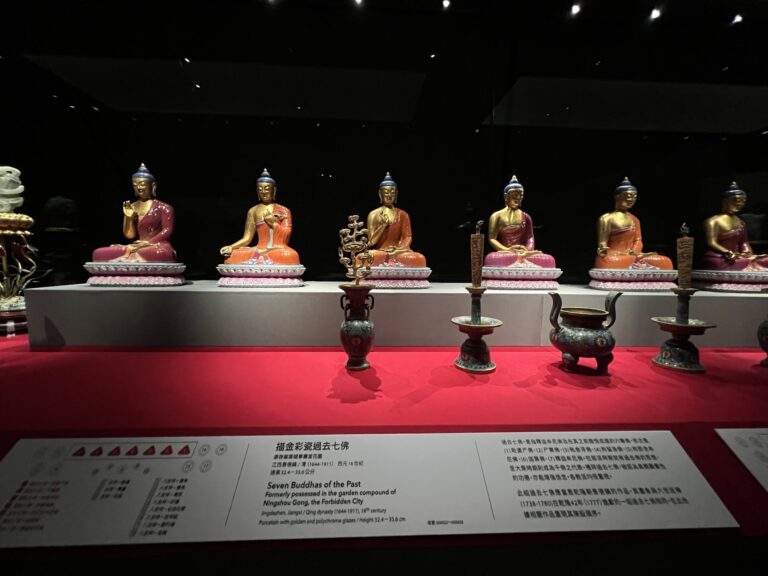
During the intervals between sessions and fleet gatherings, I slipped away to two places: the National Museum of Singapore and the National Gallery Singapore.
These two institutions are not centered on Buddhist art in any conventional sense.
Yet precisely because of that, they offered something far more revealing:
a vantage point where Asia appears not as separate cultures, but as a civilizational interchange.
In one gallery, the humid colors of Southeast Asia. On another wall, fragments from Chinese classics. Elsewhere, shadows of colonial visual languages. And in certain corners, the subtle geometry of Himalayan imagery.
Standing in these rooms where cultures were juxtaposed without explanation, I felt a quiet but undeniable shift:
These museums do not simply narrate Singapore’s past. They curate how Asian civilizations have met, crossed, absorbed, and rewritten one another.
In that instant, I thought of Guanyin.
Because Guanyin is perhaps the most powerful example of Asia’s ability to translate a single idea—compassion—into entirely different visual and cultural grammars:
- In South Asia, compassion is force.
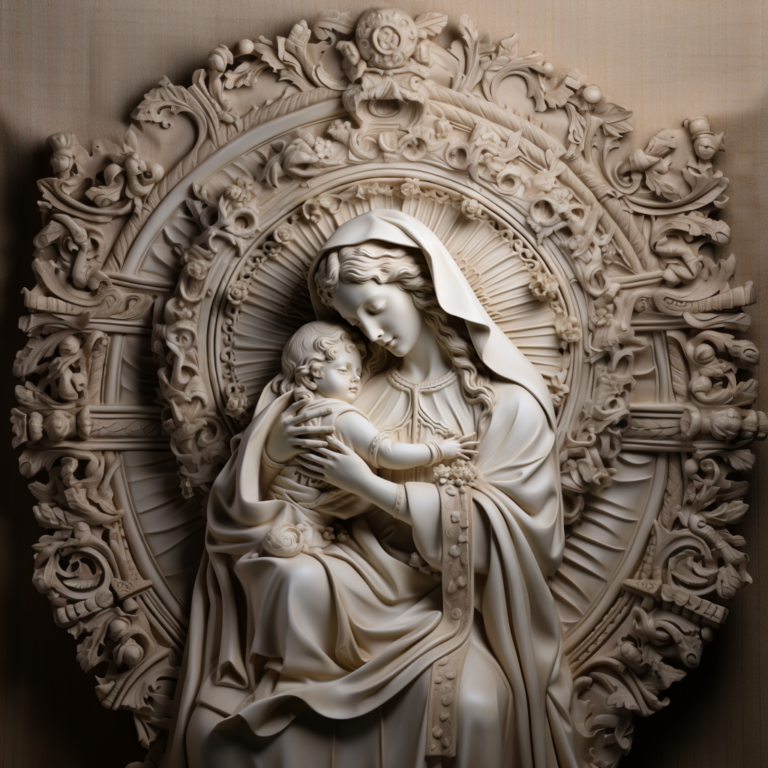
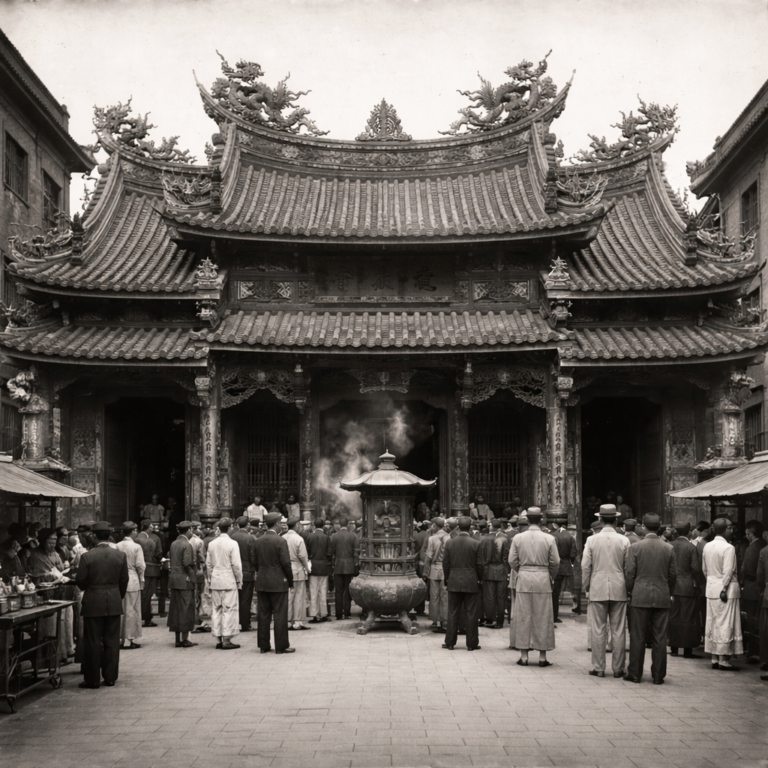
- In the Sinitic world, compassion becomes maternal presence.
- In Japan, compassion is functionally differentiated.
- In Korea, compassion becomes purity and upright composure.
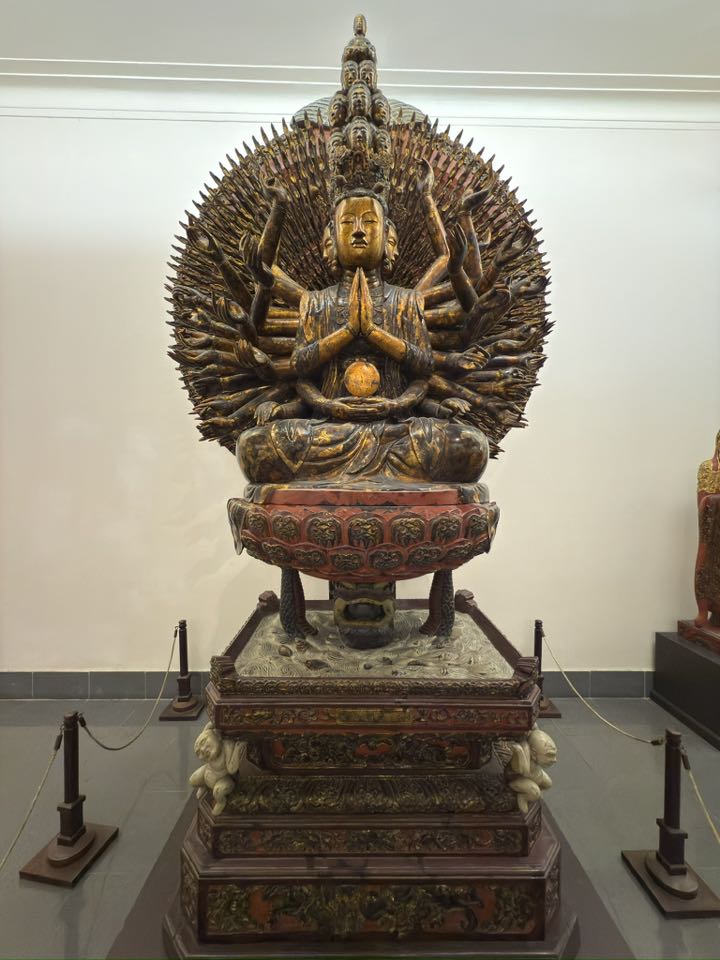
- In Vietnam, compassion fuses with a mother-goddess cosmos.
- In Tibet and the Himalayan world, compassion is cosmology, lineage, and rebirth.
Seven civilizational chains. Seven grammars of compassion.
Guanyin is not the product of borders—it is the product of civilizations.
Singapore was simply an entry point.
The real shock came from a single question emerging in the middle of these galleries:
When civilizations are placed side by side, how does the image of compassion begin to transform?
As I stepped out of the museum, one conclusion crystallized:
To understand Guanyin, we must look beyond the statue itself. We must understand how each civilizational chain answers the question:
What does compassion look like to us?
What follows is a journey across these seven chains—a long arc in which Guanyin transforms every time a civilization re-codes compassion.
S1|Why Guanyin Became Asia’s Most Open “Container of Compassion”
If the diffusion of Buddhism across Asia was a civilizational journey measured not in decades but in centuries, then Guanyin stands out as the most malleable, absorbent, and culturally re-codable figure in that long procession.
No other bodhisattva, deity, or enlightened figure has been reinterpreted so freely—across so many civilizations, for so many generations—while still remaining instantly recognizable.
Why?
The answer has little to do with doctrinal rank or supernatural feats.
It has everything to do with compassion as a civilizational grammar.
Compassion in Asia is not a fixed icon. It is a flexible, portable semantic code.
And each civilization, when encountering Buddhism, translated compassion into its own deepest cultural language:
- South Asia translated compassion as power—the capacity to remove suffering through strength.
- Gandhāra translated compassion as heroic beauty, shaped through Hellenistic aesthetics.
- The Sinitic world translated compassion as maternal presence—ethics intertwined with care.
- Tibet and the Himalayas translated compassion as cosmic order—a force structuring the universe.
- Japan translated compassion as function—a system of roles and specific salvific uses.
- Korea translated compassion as purity and upright composure—a moral-ethical ideal.
- Vietnam translated compassion as cosmic motherhood—merged with water, dragons, and survival.
Seven civilizational chains, seven distinct grammars of compassion.
Guanyin became universal not because “Buddhism spread outwards,” but because each civilization actively generated the Guanyin it needed.
This is the crucial reversal:
Guanyin was not merely transmitted across Asia—Guanyin was translated across Asia.
And translation always reveals the translator.
This also explains why Guanyin is the bodhisattva most prone to gender transformation, role expansion, functional differentiation, and in Vietnam, full integration into a mother-goddess cosmos.
It is not because Guanyin is doctrinally unstable. It is because Guanyin is doctrinally open—the most “empty” of the great Buddhist figures, in the sense that emptiness here means capacity rather than absence.
Compassion is not a fixed form. Compassion is a model projected by the inner life of a civilization.
Every society, through its own emotional needs, historical wounds, religious sensibilities, and everyday life, effectively asked the same question:
What does compassion look like to us?
And Guanyin became the visible answer.
S2|The South Asian Civilizational Chain: Guanyin’s Origin — Power, Royal Presence, and Compassion as Sovereign Strength
To understand the earliest shape of Guanyin, we must return to the civilizational world in which Buddhism emerged—a world structured by city-states, warrior-kings, renunciants, and a deep philosophical insistence that compassion is never soft.
The earliest South Asian answer to the question “What is compassion?” was clear:
Compassion = Power.
Compassion must come with sovereign strength if it is to alleviate suffering.
This is why the earliest Avalokiteśvara was not the serene, white-robed figure familiar in East Asia. Instead, we see:
- a male form
- strong, grounded physique
- chest adorned with princely ornaments
- posture of command—standing or seated as a ruler would
- an expression not of tenderness, but of piercing awareness: the power to see and confront suffering
This is not merely stylistic. It is a crystallization of South Asia’s civilizational philosophy.
1. Why is early compassion “male × powerful”?
South Asian society at the time of early Buddhism was shaped by three core cultural forces.
1) The Warrior-King Ideal (kṣatriya)
The Buddha himself came from a warrior-noble lineage. The narrative of Prince → Renunciant → Enlightened One gave rise to a civilizational template: the spiritually mature person is someone who possesses inner and outer strength, and renounces it only after having proven it.
Thus, bodhisattvas were depicted with princely bearing, symbolizing the capacity to protect others by relinquishing self.
2) Compassion is not emotion—it is capability (karuṇā)
In Indian philosophical culture, compassion is not a feeling. It is the ability to remove suffering. And ability must be symbolized through strength.
Therefore: Early Avalokiteśvara’s masculinity is not about gender. It is a visual shorthand for protective power.
3) The ideal practitioner is defined by “virility” of mind, not softness
Early texts emphasize “heroic energy,” “virility,” and “fortitude” as essential spiritual qualities. Compassion is an active force, not passive gentleness.
Thus, no early South Asian community would imagine compassion as feminine, soft, or maternal—those translations only arise later in East Asia.
2. Even the name “Avalokiteśvara” carries a charge of sovereign strength
The literal meaning of Avalokiteśvara is not gentle: “the one who looks upon (or down upon) the cries of the world.”
This is an active, commanding, all-seeing, intervention-ready form of compassion. Not a mother’s embrace, but a protector’s vigilance.
3. The South Asian Civilizational Grammar: Compassion as Power
If we reduce this chain to a single formula:
Compassion = Action
Action = Strength
Strength = Royal, guardian-like presence
This is the first civilizational encoding of Guanyin. It is here that Guanyin receives the fundamental architecture that later civilizations will reinterpret, soften, beautify, or re-cosmologize.
S3|The Gandhāra Civilizational Chain: When Greece Met Buddhism and Compassion Became Beauty
If South Asia gave Guanyin the grammar of power, then Gandhāra gave Guanyin something that would permanently alter the trajectory of Buddhist art:
Compassion became visible through beauty.
For the first time in history, a bodhisattva’s compassion was sculpted with the aesthetics of the human body.
This is one of the most consequential civilizational encounters in Asia: the meeting of Hellenistic realism and Buddhist symbolism.
1. Gandhāra was not peripheral—it was an engine of civilizational fusion
Scholars often describe Gandhāra as marginal. But from a systems perspective, it was one of Asia’s most active semantic exchanges: Greek sculptural realism brought anatomical precision; Persian and Central Asian elements added rhythm and texture; Buddhist philosophy supplied spiritual interiority.
The result was not imitation. It was recomposition: a new way of imagining what compassion looks like.
2. In Gandhāra, compassion was translated into “heroic beauty”
Gandhāra’s Avalokiteśvara—though not yet a gentle figure—begins to soften from the South Asian royal archetype. We see:
- highly defined facial structure, straight, Hellenic nose lines
- muscular chest and shoulders modeled after Greek heroes
- natural drapery and fluid folds
- wavy hair rendered with sculptural luminosity
- a calm, introspective gaze—not stern, but quietly watchful
This is a decisive shift: Compassion is no longer only capable. Compassion becomes attractive—something that draws the viewer nearer.
3. Why this moment matters so profoundly in the long arc of Guanyin
Without Gandhāra’s intervention, Guanyin might have remained confined to South Asia’s grammar of masculine force. But Gandhāra introduces softened musculature, controlled gentleness, and a face capable of subtle emotion.
This creates the aesthetic foundation necessary for later East Asian transformations, including the Chinese maternal Guanyin and Japanese functional forms.
4. Gandhāra’s civilizational grammar: Compassion = Beauty × Poised Strength
If the South Asian formula is Compassion = Strength, then Gandhāra adds: Compassion = Strength + Beauty + Poised, heroic dignity.
This is the second civilizational chain. With Gandhāra, the image of compassion becomes not only powerful, but visually persuasive.
S4|The Sinitic Civilizational Chain: Compassion Becomes Motherhood — How East Asia Turned Guanyin into a Presence of Tender Strength
If South Asia endowed Guanyin with strength, and Gandhāra endowed Guanyin with heroic beauty, then the Sinitic world contributed the most profound transformation in the entire civilizational arc:
Compassion became motherhood. Power became presence. The bodhisattva became someone you could turn to.
This was not merely an artistic preference. It was a civilizational reprogramming of compassion.
1. The Sinitic grammar of compassion: not power, but “benevolence × tenderness × moral care”
Compared with South Asia’s valorization of action and capability, the Sinitic world encoded compassion through three cultural pillars:
- Confucian ren (仁): Compassion as benevolent humaneness—relational, ethical, stabilizing.
- Daoist ci (慈): Compassion as tender strength—gentle yet firm, non-coercive yet deeply protective.
- Family-centered ethics: Where the mother, not the king or warrior, becomes the universal symbol of protection and unconditional care.
Together, these mapped compassion into a grammar fundamentally different from the Buddhist heartland. Where South Asia imagined compassion as power, the Sinitic world imagined compassion as endurance, gentleness, reliability, and emotional proximity.
2. Why Guanyin naturally became maternal in East Asia
This transformation was not a doctrinal argument, nor the result of a theological debate. It emerged from cultural psychology.
The Sinitic world long centered its moral universe on the household. The emotional architecture of society was built on roles of care: who raises you, who protects you, who stays when you are in distress.
In this grammar, the figure best suited to embody “compassion” was not a warrior, not a prince, not even a gender-neutral deity, but a mother.
East Asian communities did not ask, “Should Guanyin be female?” They asked, implicitly: Who, in our lived world, perfectly embodies the compassion we long for? And the answer was unmistakable.
3. Maternal compassion in East Asia is not softness—it is resilient, everyday strength
The maternalization of Guanyin is often misunderstood as feminization or sentimentalization. But in reality, it reflects a cultural anthropology of strength: soft but unyielding, tender but resolute, present in daily crises, anchoring the household through emotional steadiness.
This is why East Asian Guanyin feels so close, so familiar. She sits in kitchens, in roadside shrines, beside village wells. Guanyin becomes not a divine exception, but a daily companion.
4. Yogācāra perspective: the image arises from the mind, not from doctrine
In Yogācāra thought, form is shaped by consciousness. If compassion is something perceived and embodied through one’s deepest cultural structures, then a civilization whose emotional center is motherhood will naturally produce a compassionate figure who is a mother.
5. The Sinitic civilizational grammar: Compassion = Motherhood × Everyday Presence × Moral Reliance
If we must summarize: South Asia defined compassion as strength. Gandhāra defined compassion as beauty fused with dignity. The Sinitic world defined compassion as maternal presence—the one who listens, stays, and protects.
This is arguably the most influential shift in Guanyin’s entire civilizational journey. It is the pivot that makes possible every subsequent evolution—whether cosmic (Tibet), functional (Japan), ethical (Korea), or mother-goddess (Vietnam).
S5|The Tibetan Civilizational Chain: Compassion as Cosmic Order — Guanyin as Lineage, Kingship, and the Axis of Rebirth
If the Sinitic world drew Guanyin into the household, the Tibetan–Himalayan world carried Guanyin in the opposite direction—upward, into the architecture of the cosmos.
In Tibet, Guanyin (Chenrezig) is neither maternal nor gentle, nor an everyday companion. He becomes something far more structural: Compassion = cosmic order, the continuity of lineage, and the metaphysical stability of the world.
1. In Tibet, Guanyin is not a supporting figure—he is the center of the civilizational system
Unlike in East Asia, where Guanyin lives in households and roadside shrines, in Tibet Guanyin is the foundational deity of major lineages, the legitimizing source of kingship, the metaphysical anchor of rebirth traditions, the root of the Dalai Lama’s identity, and the voice behind the Six-Syllable Mantra.
In other words, Guanyin is not devotional ornamentation: Guanyin is infrastructure.
2. Why Tibetan civilization needed compassion to be cosmic, not domestic
Tibet’s worldview merges metaphysics, statecraft, rebirth and lineage, and ritual geography. In such a system, compassion cannot remain tender or personal. It must become a cosmic principle that keeps worlds from falling apart.
This is why King Songtsen Gampo is regarded as an emanation of Guanyin, and the Dalai Lamas are understood as successive rebirths of Guanyin. Tibet did not “adopt” Guanyin; Tibet structurally integrated Guanyin into its cosmology.
3. Tibetan visual grammar: Compassion expressed as symmetry, luminosity, and cosmic dignity
Tibetan Guanyin imagery is never motherly, never sentimental. Its qualities include perfectly balanced posture, symmetrical geometry, serene but unyielding expression, and radiance depicted as structured light. Compassion here is not softness—it is the architecture of stability.
4. Yogācāra perspective: how compassion becomes “cosmic law”
Yogācāra posits that the world arises from consciousness. Tibetan thought takes this seriously: If the world is shaped by mind, then only a mind aligned with boundless compassion can sustain it. Thus, Compassion = wisdom. Guanyin becomes the axis that prevents collapse—psychological, political, metaphysical.
5. The Tibetan civilizational grammar: Compassion = Cosmic Order × Lineage × Rebirth
Summarized: The Sinitic world made compassion intimate and maternal. Tibet made compassion structural, metaphysical, and world-stabilizing. This is the most philosophically ambitious transformation of Guanyin in Asia.
S6|The Japanese Civilizational Chain: Compassion as Function — How Japan Systematized Guanyin into Roles and Uses
Japan transformed Guanyin in a way unlike any other civilization. Where China made Guanyin intimate, and Tibet made Guanyin cosmic, Japan made Guanyin operational.
In Japan, compassion is not defined by emotion, presence, or metaphysical structure. It is defined by function.
1. Why Japanese civilization “functionalized” compassion
Japanese religious and aesthetic traditions prioritize roles, context-specific action, and the differentiation of functions. Thus, when Buddhism arrived, the Japanese imagination did not ask: “Who is Guanyin?” It asked: “What can Guanyin do in different situations?”
2. The functional diversification of Guanyin: from one figure to a system
Two transformative processes occur in Japan:
1) Role differentiation (yakuwari-ka): Guanyin is not a single entity but a set of roles—the Guanyin who protects sailors, the Guanyin who averts obstacles, the Guanyin who grants safe childbirth, etc.
2) Proliferation into multiple canonical forms: Japanese tradition unfolds Guanyin into numerous variants like Eleven-Headed Kannon, Thousand-Armed Kannon, Horse-Headed Kannon, etc. These are not “many Guanyins.” They are functional modules of compassion.
3. Aesthetic grammar: the “neutralization” of beauty
Japanese Guanyin imagery stands apart stylistically: neither feminized like East Asian maternal forms, nor idealized in heroic proportions. Instead, Japanese aesthetics emphasize androgynous neutrality, simplified forms, and functional clarity. The figure exists not to move you emotionally, but to act.
4. Yogācāra perspective: why compassion becomes “function” in Japan
If the world is shaped by consciousness, then each civilization’s consciousness system determines how it categorizes compassion. Japanese cognitive aesthetics emphasize non-essentialism and the primacy of use over identity. Thus, Guanyin appears as a toolkit of compassion.
5. The Japanese civilizational grammar: Compassion = Function × Role × System
Summarized: South Asia made compassion powerful. Gandhāra made compassion beautiful. The Sinitic world made compassion maternal. Tibet made compassion cosmic. Japan made compassion usable. In Japan, Guanyin is the bodhisattva you can deploy—precisely, situationally, efficiently.
S7|The Korean Civilizational Chain: Compassion as Purity — Guanyin as Upright Clarity and Ethical Composure
Korean civilization reshaped Guanyin in a way distinct from both China and Japan. Here, compassion is neither maternal nor functional, neither cosmic nor heroic. Instead, compassion becomes purity, uprightness, and disciplined clarity of mind.
This is the most “austere” of the seven civilizational transformations.
1. Why Korean civilization translated compassion as purity and composure
Korean cultural psychology is deeply shaped by Confucian ethical rigor, aesthetic restraint, and a moral emphasis on inner clarity. Thus, in Korea, excess is discouraged, and spiritual images must reflect dignity, calm, and discipline.
2. The Korean Guanyin: serene, upright, measured
The most iconic expression of this civilizational grammar is the Water-Moon Avalokiteśvara of the Goryeo period. These paintings reveal a distinct aesthetic: a posture relaxed yet never lax, a facial expression gentle but never indulgent, restrained color palettes. This is compassion reimagined as a mind so clear that it brings clarity to others.
3. In Korea, compassion becomes moral cultivation
Instead of interpreting Guanyin through myths of rescue or multi-form functionality, Korean Buddhism interprets compassion as self-discipline, purity, and upright beauty. This sets Korea apart from the “softness” of the Sinitic maternal Guanyin and the “systemization” of Japanese Kannon.
4. Yogācāra perspective: Purity as the natural image of a civilization’s mind
The Korean Guanyin is the natural output of a civilizational mind that values calm over spectacle, purity over affect, and ethical self-composure over functional multiplicity.
5. The Korean civilizational grammar: Compassion = Purity × Upright Composure × Reflective Calm
Summarized: Japan broke compassion into roles. Korea refined compassion into character. Here, Guanyin becomes a mirror of the person one strives to be—clear, poised, quietly luminous.
S8|The Vietnamese Civilizational Chain: Compassion as Cosmic Motherhood — Water, Dragons, and the Power of Ancestral Survival
In Vietnam, Guanyin’s transformation reaches one of its most sweeping civilizational heights. Here, the bodhisattva does not simply become feminine or maternal in the East Asian sense. Vietnamese culture elevates Guanyin into an entirely different ontological category: Compassion = Cosmic Motherhood × Water Governance × Dragon Power × National Survival.
1. Why Vietnam “cosmicized” Guanyin into a mother-goddess
Vietnam’s civilizational psychology is shaped by three powerful foundations:
1) River–Delta Water Culture: A compassionate presence must be one who can govern and harmonize the aquatic world.
2) Dragon Ancestry (Lạc Long Quân): A being associated with compassion must be compatible with the dragon lineage. Guanyin standing on dragons is civilizational logic.
3) The Mother-Goddess Tradition (Đạo Mẫu): Vietnam’s religious core revolves around the cosmic feminine. Guanyin is absorbed into this cosmology not as a saint, but as a cosmic mother.
2. Vietnamese maternal compassion is not gentleness—it is power
In Vietnam, motherhood is the archetype of resilience, authority, protective agency, and fertility. Thus, Guanyin’s Vietnamese feminine form is an amplification: Compassion = Maternal Sovereignty. A deity who can protect the land, bless the harvest, quiet the waters, and fortify survival.
3. Aesthetic grammar: Guanyin as the Mother of Worlds
Vietnamese Guanyin imagery expresses these civilizational needs: features softened yet resolute, posture expanded and monumental, bases adorned with dragons and waves. In this civilizational chain, Guanyin is no longer just “Bodhisattva.” She becomes the maternal energy of the cosmos itself.
4. Yogācāra perspective: Why Vietnamese consciousness projects compassion onto the cosmic feminine
Vietnamese consciousness—formed by water, storms, deltas, floods, fertility, and ancestral dragon power—naturally envisions compassion as maternal mastery of the environment. Vietnamese Buddhism maps Guanyin onto the mother who safeguards life and controls floods.
5. The Vietnamese civilizational grammar: Compassion = Cosmic Motherhood × Water Governance × National Vitality
Summarized: The Sinitic world made Guanyin a mother. Vietnam made Guanyin the mother of the cosmos. In this chain, compassion becomes expansive, sovereign, protective, and elemental.
S9|A Civilizational Map of Compassion: Why Guanyin Can Be Recreated Everywhere
After traveling through the seven civilizational chains, a pattern begins to surface. Not a pattern of similarities, but a pattern of transformability. Guanyin is a semantic vessel that each civilization fills with its own emotional, ethical, and cosmological needs.
1. Each civilization rewrote compassion according to its deepest structure
- South Asia|Compassion = Power
- Gandhāra|Compassion = Heroic Beauty
- Sinitic World|Compassion = Motherhood
- Tibet|Compassion = Cosmic Law
- Japan|Compassion = Function
- Korea|Compassion = Purity
- Vietnam|Compassion = Cosmic Motherhood
Seven regions. Seven distinct emotional grammars. Seven ways of answering the question: “What do we need compassion to be?”
2. Compassion is not one thing—it is a mirror of the culture that envisions it
When a civilization imagines compassion, it is projecting its geography, political history, ecological pressures, familial structures, moral expectations, and cosmology. There is no “correct” Guanyin. There is only the Guanyin that a civilization’s inner world makes possible.
3. Yogācāra perspective: a mind-dependent bodhisattva is infinitely re-creatable
The Yogācāra teaching that form arises from consciousness explains why Guanyin is the most versatile figure in Buddhist history. Every Guanyin is true, not because it matches doctrine, but because it matches the mind that invoked it.
4. Why Guanyin can be reborn in every age, every society, every crisis
Compassion survives not by staying the same, but by becoming what a society most needs. This is why Guanyin never disappears. Because Guanyin is not a statue. Guanyin is a civilizational algorithm—a model that generates new forms whenever a culture asks: “What does compassion mean now?”
S10|When Civilizations Overlap, Compassion Learns to Change Shape
When I walked out of the National Gallery Singapore that day, I realized that civilizations rewrite compassion every time they meet. Guanyin, across two thousand years, has never been a fixed identity. She has been a prince, a hero, a mother, a cosmic axis, a system of functions, an ethical exemplar, a river-governing goddess.
Standing in Singapore, it became clear why the gallery’s curatorial decisions felt so resonant: When civilizations coexist, their images begin to illuminate each other. And compassion learns to change shape. This is not dilution. This is evolution.
Guanyin’s long journey through Asia is ultimately a study in semantic resilience. Her image survives because she is not imprisoned by a single meaning. Her compassion endures because it is not limited to a single body.
Guanyin is what a culture sees when it looks inward and asks what compassion must look like in order to heal its world.
FAQ
Guanyin changes form because each Asian civilization projects its own cultural, emotional, ecological, and philosophical needs onto the bodhisattva. Guanyin is not fixed—she is a semantic vessel that civilizations refill with meaning.
Historically, the earliest form is the male South Asian Avalokiteśvara. But culturally, there is no single “correct” version. Guanyin’s meaning expands as Buddhism interacts with different civilizations, each translating compassion according to its own worldview.
The Sinitic world defined compassion through maternal ethics, shaped by Confucian family structures and Daoist notions of tender strength. Tibet prioritized cosmic order, and Japan focused on functional roles. Feminization reflects cultural psychology, not doctrinal necessity.
Vietnamese civilization is rooted in river deltas, water governance, storm survival, and dragon-ancestry cosmology. When Guanyin entered this system, she merged naturally with the Mother-Goddess tradition (Đạo Mẫu), becoming a deity who governs water, fertility, protection, and national vitality.
In Tibet, compassion functions as cosmic architecture. Chenrezig anchors lineage legitimacy, political stability, and the rebirth system of the Dalai Lamas. Compassion is not a feeling but a metaphysical principle that holds the world together.
Japan interprets identity through roles and functions rather than essence. Thus Kannon becomes a system of situational responses. Forms such as Eleven-Headed Kannon or Thousand-Armed Kannon reflect a functional taxonomy, not doctrinal fragmentation.
Korean aesthetics and ethics emphasize restraint, clarity, and disciplined calm. Compassion is moral presence. Water-Moon Avalokiteśvara exemplifies this grammar—serene, poised, ethically luminous.
Guanyin demonstrates that religious images evolve not by preserving fixed forms but by adapting to local needs. Each civilization re-created Guanyin according to its ecological conditions, emotional structures, and worldview. This shows that compassion, as a cultural concept, survives by changing shape.
References|APA 7th
- Beyer, S. (1973). The cult of Tārā: Magic and ritual in Tibet. University of California Press.
- Chutiwongs, N. (2002). The iconography of Avalokiteśvara in Mainland Southeast Asia. The Fine Arts Department (Thailand).
- Conze, E. (1975). The Perfection of Wisdom in Eight Thousand Lines & its verse summary. Four Seasons Foundation.
- Elliot, A. (2018). Bodhisattva imagery along the Silk Road. Getty Research Institute.
- Huntington, S. L., & Huntington, J. C. (2015). The art of ancient India: Buddhist, Hindu, Jain. Motilal Banarsidass.
- Kapstein, M. (2006). The Tibetans. Blackwell Publishing.
- National Gallery Singapore. (2015). Between Deities and Mortals: Asian religious art across cultures. National Gallery Singapore Publications.
- National Museum of Vietnam (Vietnam National Fine Arts Museum). (2010). Masterpieces of Vietnamese Buddhist Sculpture. Fine Arts Publishing House.
- Nattier, J. (2001). Once Upon a Future Time: Studies in a Buddhist prophecy of decline. Asian Humanities Press.
- Strong, J. (1995). The experience of Buddhism: Sources and interpretations. Wadsworth Publishing.
- Taylor, K. W. (2013). A history of the Vietnamese. Cambridge University Press.
- Wong, D. (2001). The emergence of Buddhist art in early Southeast Asia. Asian Art Museum Research Series.
- Wu, H. (1995). Empresses, art, and agency in Song dynasty China. Harvard University Asia Center.
- Zimmer, H. (1955). The art of Indian Asia: Its mythology and transformations. Princeton University Press.
- CBETA. (2024). Taishō shinshū daizōkyō digital edition. Chinese Buddhist Electronic Text Association. https://cbeta.org