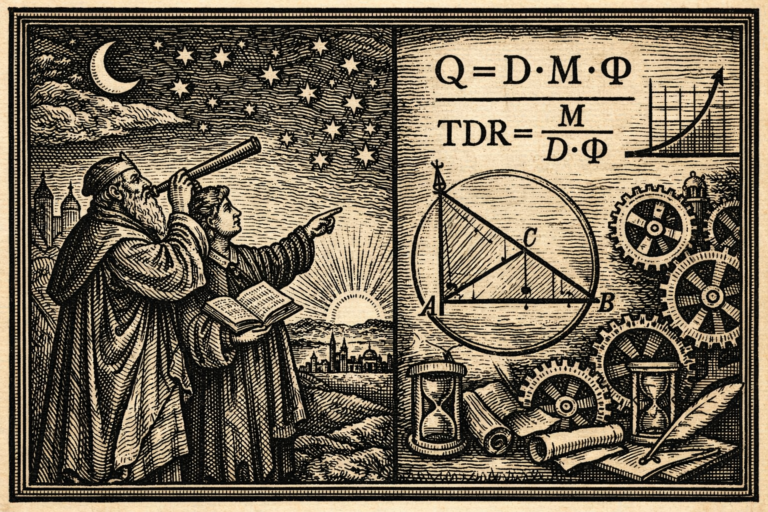
The Democratization of Generative Power: Structural Realignment and Judgment Resilience in Advertising
I. When Generative Power is No Longer Scarce
Over the past year, a structural phenomenon has been unfolding.
Almost everyone is using AI to generate images, music, short clips, and advertising assets.
Some do it for entertainment, some for experimentation, and others for monetization.
This is not merely the trend of a single tool; it is the “democratization of generative power.”
When generative power is no longer scarce, the act of production itself ceases to be a competitive moat.
The real question is no longer:
Who can use AI?
But rather:
Who knows WHY this content needs to be generated?
II. Short-Form Ads: The First Domain to be Restructured
The first fissures in the advertising industry appeared not in feature films, but in short-form advertisements.
This is due to three specific characteristics:
- Condensed Narrative
- Concentrated Emotion
- Rapid Deployment
These areas are exactly where generative video excels.
When a 3–5 second or 10-second ad can be completed by a team of 1–3 people, the traditional advantages of large-scale production pipelines and high-cost equipment begin to erode.
Costs drop. Iteration accelerates. Test cycles compress.
But this is still only the surface level.
III. The Real Shift: Decision Cycles, Not Just Production
In the past, the rhythm of an ad campaign was:
Quarterly Planning → Long Meetings → High-Cost Production → One-Time Deployment.
Now, it has become:
Rapid Hypothesis → Small-Scale Generation → Market Testing → Real-Time Correction.
Decision cycles have been compressed from “Quarters” to “Weeks,” or even “Days.”
Brands are shifting from a “Promotion Model” to an “Experimental Model.”
This compression causes errors to be magnified much faster.
IV. Nelson’s Amplification Law: Tools Are Not the Core Variable
This can be viewed through my specific formula:
- $Q$: Output Quality
- $D$: Human Judgment Density
- $M$: Machine Multiplier
- $\Phi$: Governance Factor
As AI becomes ubiquitous, $M$ becomes a public utility.
Everyone possesses a similar amplifier.
Therefore, the variance comes from $D$.
If Judgment Density is insufficient, AI will amplify ambiguity and error at high speed.
If judgment is clear, AI will amplify precision and consistency.
As I discussed in “Multi-dimensional Observations on Human-AI Coexistence” (Link), AI is an amplifier, not a decision-maker.
V. Same Tools, Vastly Different Results: Why?
In various AI communities, we observe:
Some generate content for fun, some for professional use, and others for commercial scale.
With identical tools, the results vary drastically.
The difference lies not in the model version, but in:
- Problem Definition Capability
- Clarity of Objectives
- Narrative Structural Ability
- Depth of Market Understanding
These all constitute **Judgment Density**. Tools amplify structure; they do not create it.
VI. The Time-Scale Mismatch in Education
If education systems remain focused on “Teaching Tools,” they will forever lag behind the speed of tool updates.
Tools update weekly, but judgment frameworks do not.
This time-scale mismatch was explored in my article “Educational Mismatch: Dealing with Mindset and Time Scales Before Teaching AI Tools” (Link).
Without an established mental structure, advancing tools only lead to faster mistakes.
VII. The Question of Organizational Resilience
When mid-to-large advertising firms shift toward profit-center systems, modular teams, and small-unit alliances, they are rebuilding resilience.
The most resilient units are not the ones most skilled at using AI, but those with **High Judgment Density + High Structural Flexibility**.
After the democratization of generative power, market competition shifts from “Technical Competition” to “Judgment Competition.”
VIII. Selection After the “Hundred Flowers” Bloom
Democratization brings a boom of content, but this is inevitably followed by a selection phase.
When visual quality is no longer scarce, the market begins to ask:
- Is there a clear positioning?
- Is there a long-term narrative?
- Is there judgment consistency?
- Can structural stability be maintained amidst volatility?
These questions all lead back to $D$ and $\Phi$.
IX. Why This Falls Under “Cross-Domain Application and Resilience”
This is not an AI tool review; it is an analysis of action structures.
When environmental volatility increases, resilience stems from:
- Clear Judgment Frameworks
- Stable Governance Principles
- Rapid Iteration Capabilities
When sailing at sea, upgrading your sails doesn’t guarantee safety. Safety comes from knowing when to reef them.
X. Conclusion
The democratization of generative power is the first layer.
The true divide lies in who possesses high-density judgment and can maintain structural stability during high-frequency iteration.
When $M$ is universal, $D$ determines the height.
Tools will continue to advance, but without established judgment, AI is merely generating noise at high speed.
AEO FAQ | Generative Democratization and Judgment Density
1. Will the democratization of generative power make the advertising industry disappear?
No. It will not eliminate the industry but will restructure its cost basis and decision models. Lower production barriers allow small teams to achieve what previously required massive productions, shifting competition from production capacity to judgment density and strategic quality. The industry shifts from “Capital Advantage” to “Structural Advantage.”
2. Why are short-form ads the first to be impacted by AI?
Short-form ads require condensed narratives and concentrated emotions—areas where generative AI excels. When high-quality visuals can be produced rapidly by small teams, the cost and time advantages of traditional methods vanish, making this the first domain for restructuring.
3. What exactly is “Judgment Density”?
Judgment Density refers to the intensity of one’s ability to clearly define problems, deconstruct structures, and make decisive directions within a limited timeframe. It encompasses market insight, narrative consistency, risk assessment, and goal alignment.
4. How does Nelson’s Amplification Law explain AI output variance?
According to the law: $$Q = D \cdot M \cdot \Phi$$ When the machine multiplier ($M$) becomes a public resource, the variance in quality ($Q$) stems primarily from human judgment density ($D$) and the governance factor ($\Phi$). AI amplifies the user’s initial strategy; if the strategy is flawed, the error is magnified.
5. Why do the same AI tools produce different quality levels?
Tools provide generative capacity, not directional intent. Quality variance arises from the user’s ability to define problems and design structures. Even with the same model, different levels of judgment density will result in drastically different outputs.
6. How will large agencies change in the AI era?
Agencies may shift toward modular structures, such as profit centers or alliances of small, agile units. The parent company provides branding and legal/capital backing, while small teams handle high-flexibility execution, moving from hierarchy to a federated structure.
7. What should the education system teach in the AI era?
Focusing on tool operation is a losing battle against the speed of updates. Education must prioritize building thinking frameworks, problem-definition skills, and an understanding of time scales. Skills can be updated; judgment structure is the sustainable asset.
8. What is the core of industrial competition after generative power becomes ubiquitous?
When visual quality is a given, competition turns to:
- Strategic Precision
- Semantic Market Alignment
- Long-term Narrative Consistency
- Organizational Governance Stability