From Lions to Guardian Beasts: The Asian Journey of Buddhist Gatekeepers
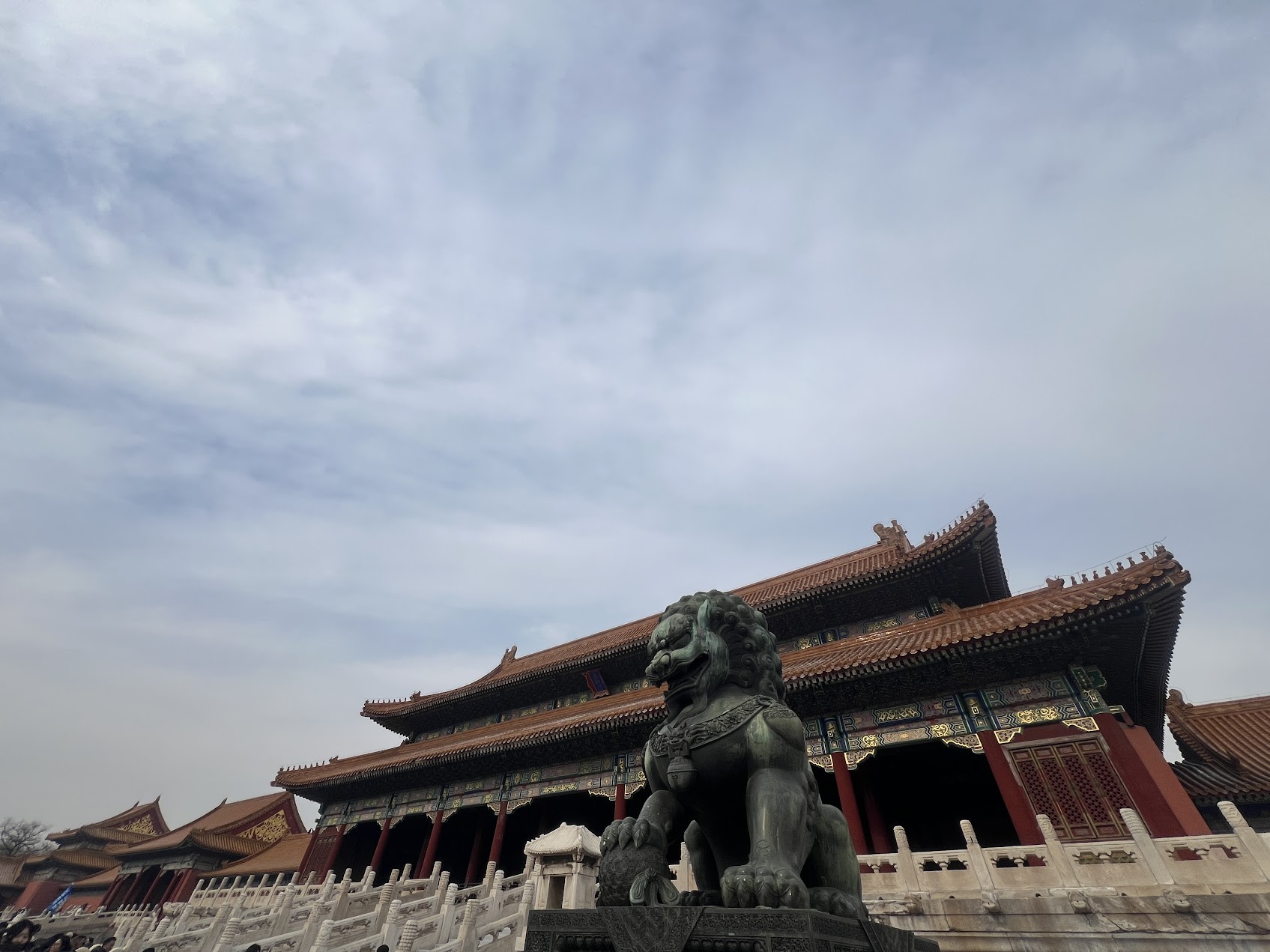
Over the past few years, whether I was travelling for work, visiting a city, or simply walking through museums and old religious sites, I found myself repeatedly paying attention to one thing: symbolic sculpture.
Sometimes these figures appear in churches, sometimes in Buddhist temples, sometimes in mosques, palaces, or historic buildings. They may be divine mounts, guardian beasts, or visual symbols that quietly repeat themselves across different cultures.
But once you have seen enough places, a pattern begins to emerge.
One of the most fascinating recurring figures is the lion.
From Beijing, Seoul, and Tokyo to Hong Kong, Macau, and Taiwan, and then onward to Singapore, Chiang Mai, Bangkok, Hanoi, Da Nang, and Ho Chi Minh City, I kept encountering different versions of lions in museums, temples, and religious spaces.
And once those memories began to connect, I realised they were not isolated at all. Together, they seemed to form a route—a route of cultural movement.
In other words, through the apparently simple figure of the lion, we can begin to see something much larger: how culture moves, how symbols travel, and how meaning settles differently in different places.
Why I Started Paying Attention to Lions
That is also why I wanted to write this piece.
I did not begin with the intention of “researching stone lions,” nor did this start as an academic theme. It began much more simply. I had seen enough places, enough museums, enough temple entrances, that I started feeling a strange familiarity whenever I met certain guardian figures.
Sometimes the character of a place is not written first in its main hall. Sometimes it is written at the threshold, in the margins, in the details that stand quietly before you realise they matter.
The lion, for me, became one of those figures I kept meeting across Asia.
And once those encounters began to line up, I realised I was not just looking at decoration, or even just at religious art. I was looking at a cultural clue: a symbol that had travelled with religion, trade, craftsmen, migration, and local life, then taken root differently wherever it stayed.
So what this essay tries to do is quite simple. It is not an attempt to define the lion once and for all, but to begin with the lion and use it as a way of seeing how culture moves across Asia.
And to do that, we have to begin with a basic, even slightly counterintuitive fact: East Asia did not originally have lions.
How Can a Place Without Lions Be Full of Lions?
From a biological point of view, East Asia—including China, Taiwan, and Japan—is not a native habitat of lions.
And yet lions appear everywhere in temples, religious sculpture, court imagery, and classical visual culture.
Their presence is tied to the spread of Buddhism and to long-distance cultural exchange, including the trade routes we usually group under the Silk Roads.
But there is an important point here: in earlier East Asian societies, information was limited, and most people had never actually seen a real lion.
So the lions that appeared in temple sculpture, paintings, ritual imagery, and sacred illustration were not realistic zoological lions. They were imagined lions.
Painters, sculptors, and craftsmen had to work through descriptions, transmitted motifs, inherited visual conventions, and symbolic meaning. That is why lions in different periods and regions can look dramatically different—some majestic, some exaggerated, some almost mythical.
It is also important to be precise about what kind of lions we are talking about. These are not lions in the sense of natural history. They are lions as they appear in religious and cultural systems.
For example, Manjushri rides a lion, while Samantabhadra rides an elephant king. In temple sculpture, mural painting, devotional imagery, and classical religious art, lions belong to a symbolic world shaped by faith, power, and sacred meaning.
And that is precisely why they could be translated, transformed, and reinvented again and again in different parts of Asia.
How Lions Became a Cultural System
I grew up in Taiwan, and as a child I saw these guardian beasts constantly at temple entrances—whether at Earth God temples, Mazu temples, or larger Buddhist sites.
Back then, I did not really understand them. I only reacted to them instinctively.
Some were small and oddly cute. Some were massive and imposing. The huge pair in front of Taipei City Hall, for example, is almost impossible to ignore.
And there were all these details that seemed strange when I was young: why were there male and female lions? Why did some have a ball in the mouth or under the paw? Why was there sometimes a small cub beside the larger one?
Only later did I realise none of this was arbitrary.
What looked like decoration was in fact a structured cultural system.
The distinction between male and female encoded order and symbolic balance. The ball and the cub suggested authority, continuity, protection, and lineage. Even posture, scale, and spatial placement followed recognisable conventions.
By this stage, the lion was no longer merely an imagined animal. It had become a standardised cultural sign.
And once a sign can be repeated, recognised, and transmitted, it can begin to move. That is the moment when the lion becomes capable of leaving its place of stabilisation and entering a much wider field of cultural circulation.
Migration, Merchant Ships, and Craftsmen: How Lions Left Their Homeland
Growing up with folk tales, temple stories, and the visual language of local religion, I always felt something distinctive about stone lions. They seemed to be more than guardians. They felt like quiet witnesses—standing at the entrance, watching people pass by, watching a place accumulate time.
Only later did I begin to understand that the stone lions I knew in Taiwan were not simply “Taiwanese” objects in isolation.
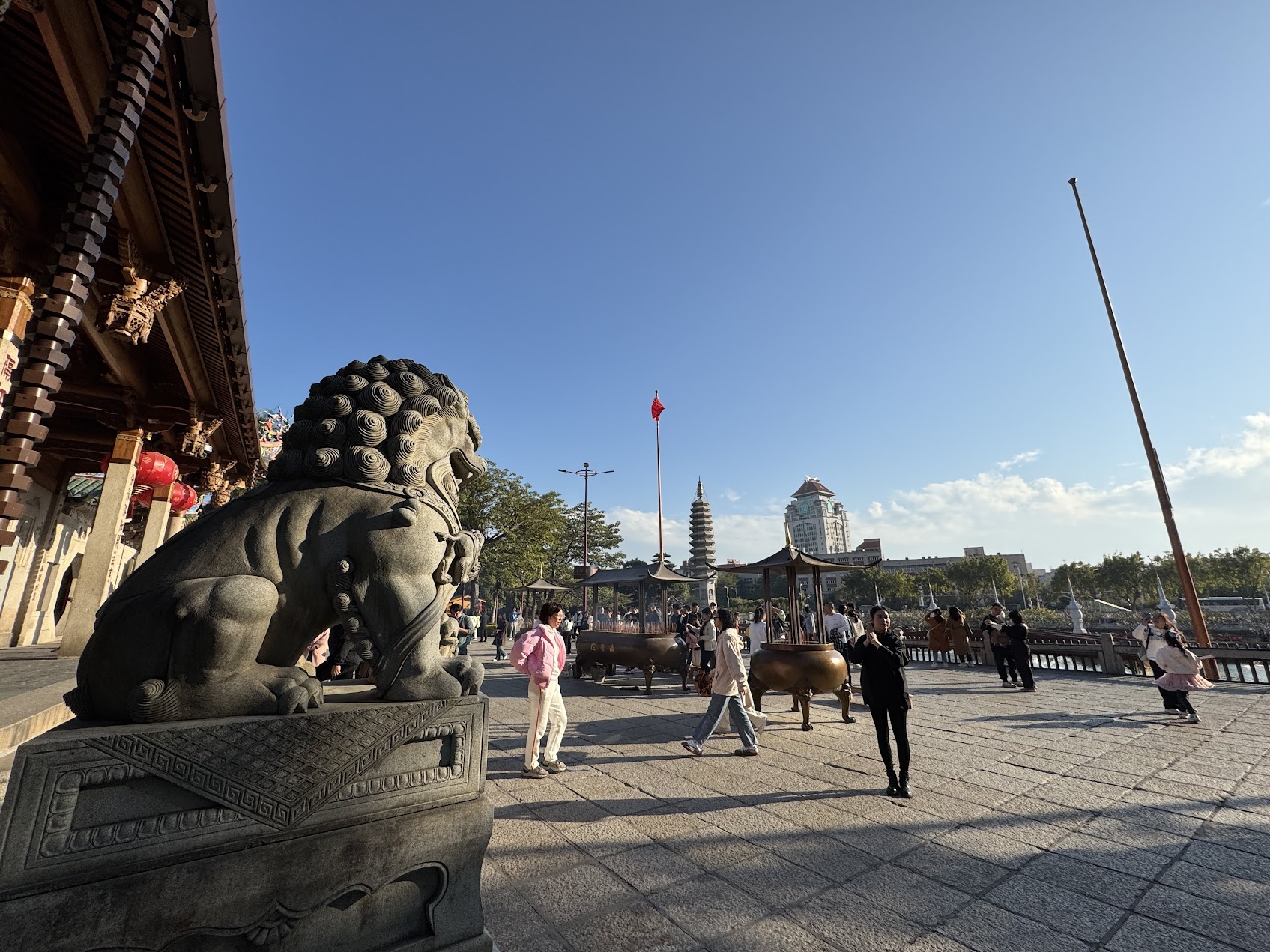
If you trace them backward, they connect to Fujian, Xiamen, Quanzhou, and more broadly to the Minnan coastal world.
Many early temple stoneworks in Taiwan are closely tied to what people often call Tangshan craftsmen—builders and sculptors from the mainland who did not merely bring techniques, but entire visual vocabularies, carving habits, interpretive traditions, and narrative worlds of belief.
In other words, what moved with migrants was not only people, but a whole cultural system.
Merchant ships played a major role in this movement.
Belief travels with people, people travel with trade, and so craftsmen, stone materials, and carving styles travelled with ships. That means the lions we see in Taiwan are not merely local products; they are the visible result of maritime routes, migrant society, and religious networks crossing one another.
The stone itself offers another clue.
I have often heard an explanation that early merchant vessels sailing between Fujian, Xiamen, and Quanzhou used ballast stones to stabilise the ship. Once they reached a destination and loaded cargo, some of those stones could be left behind and reused as building or carving material.
That helps explain why stone types such as Qingdou stone—materials not native to Taiwan—came to appear so widely in temple and architectural sculpture there.
And if we widen the frame, this route does not stop with Taiwan.
From Nanyang and Singapore to Thailand and Vietnam, many stone lions and guardian figures found in temples, clan halls, and religious spaces are connected to the same broader route of migration, shipping, belief, and craftsmanship.
That is why what matters about a stone lion is not only what it looks like, but how it arrived where it stands.
When Lions Entered Southeast Asia, They Slowly Became Local Guardian Beasts
If we continue following this route, another fascinating pattern appears: lions did not remain fixed in one form. In different places, they gradually became different kinds of guardian beasts.
As a religious and cultural symbol, the lion can be traced back to the Indian religious world. But its entry into East Asia and Southeast Asia was not the result of a single linear route. It was more likely carried through multiple channels at once—overland exchange, maritime trade, religious transmission, and the networks of port cities.
That is why the lions we see across Asia today should not be reduced to a simple one-way story of influence. What we are really seeing is a symbol that kept moving between regions, being absorbed and reinterpreted again and again, until each place developed its own version.
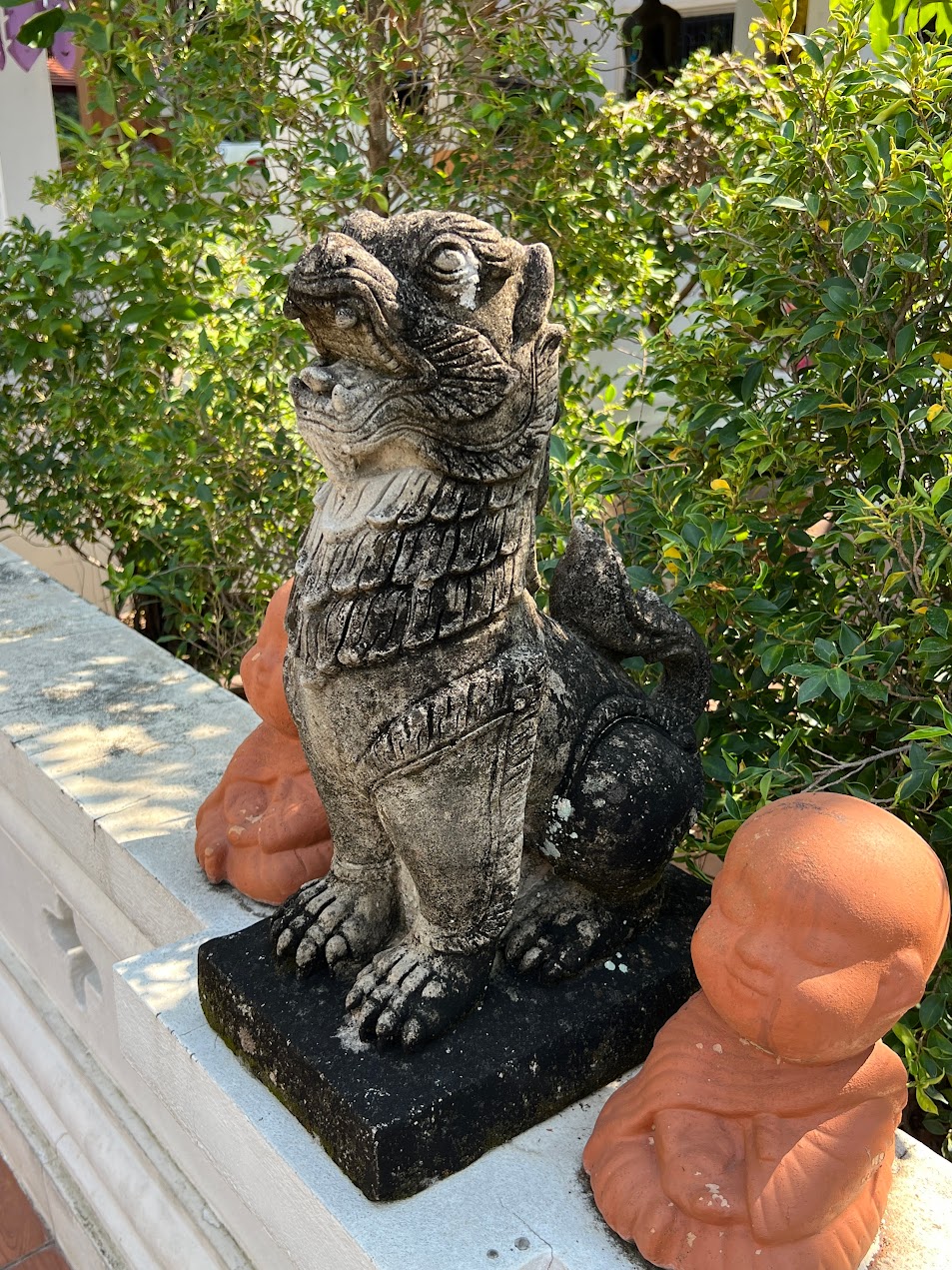
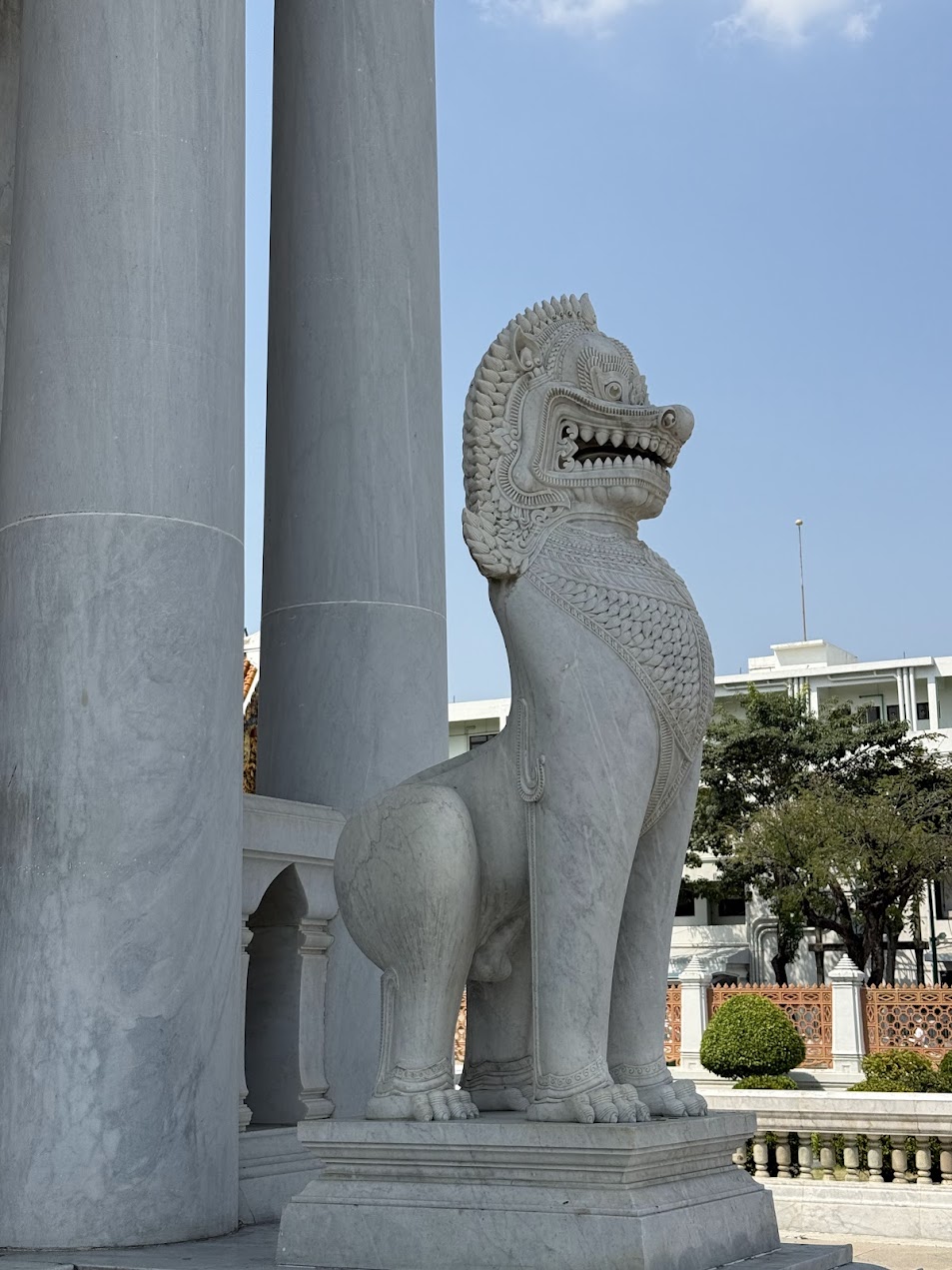
In Thailand, for example, whether in Chiang Mai in the north or in temple and palace spaces in Bangkok, one can see how the lion changes. It gradually becomes the Singha, part of a distinctly Thai cultural and religious vocabulary.
At that point, it is no longer simply an extension of the Chinese stone lion, nor merely a direct continuation of the lion in early Buddhist contexts. It has become a local guardian beast shaped by Thai belief, local aesthetics, and regional ideas of sacred form.
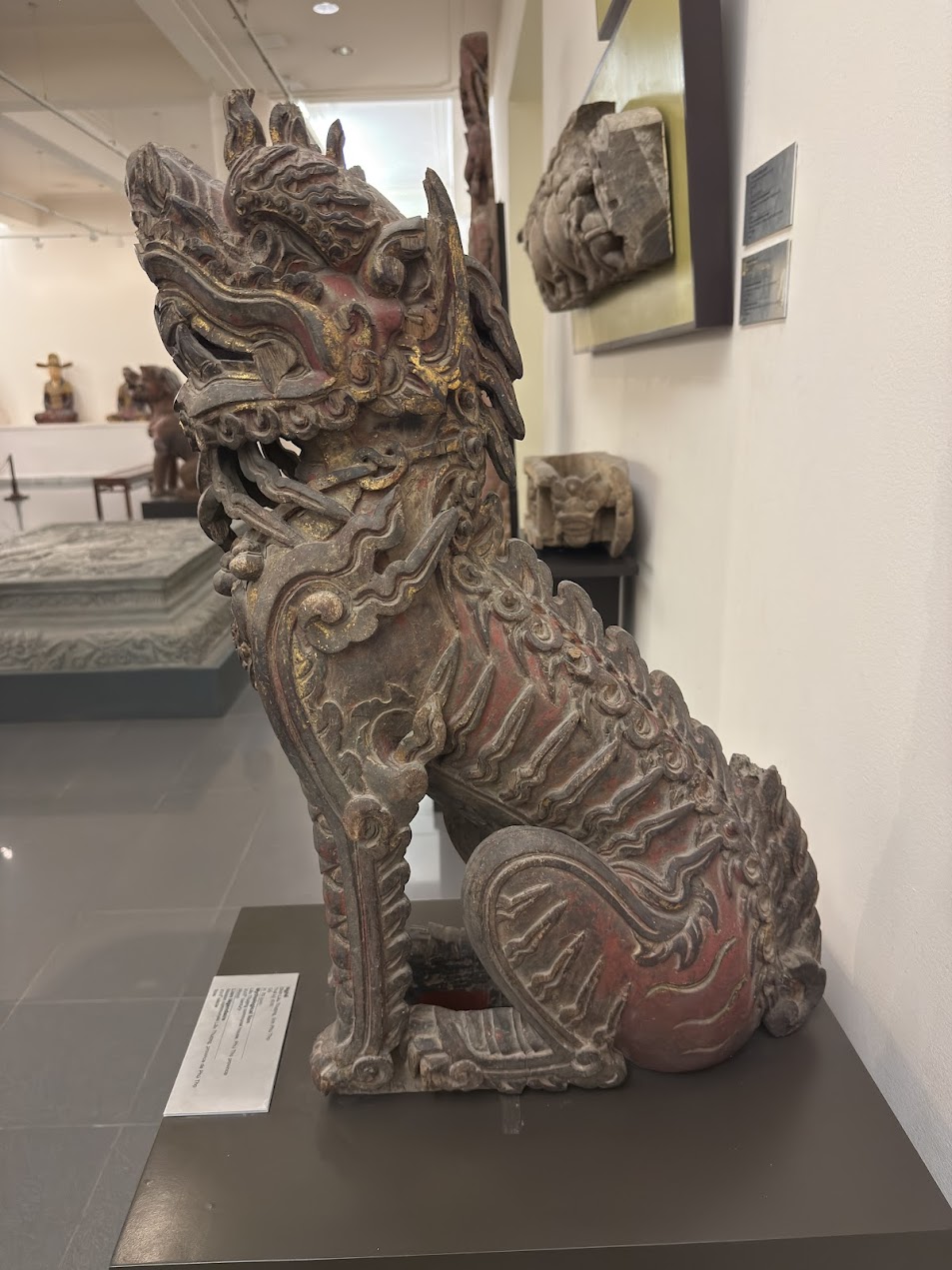
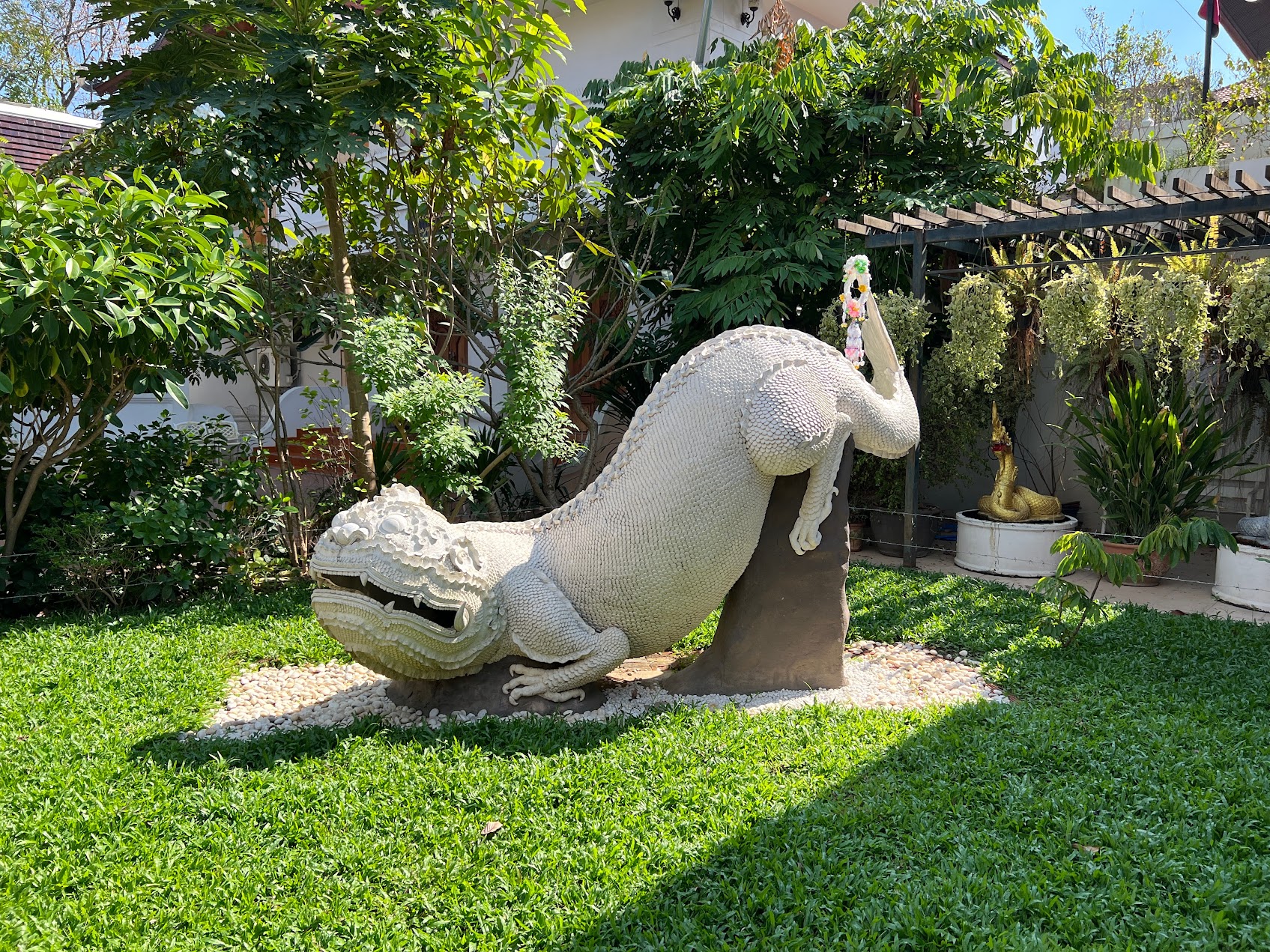
Vietnam offers another example. Once lion imagery entered Vietnam, it was reshaped by local religion, court culture, and vernacular belief. Proportion, facial expression, and stance all changed.
These changes are often most visible in the body itself. Some figures become more elongated, some faces are exaggerated, some eyes become strikingly large—sometimes dramatic, sometimes even playful. In a way, this recalls the lion we know from lion dance traditions: rounded, stylised, expressive, already far removed from any zoological lion.
By this stage, what we are seeing is no longer a lion from one source or one path, but a cultural form repeatedly translated in different places. Culture does not move by simple replication. It moves by transformation. And once a symbol settles somewhere, it no longer belongs only to its earlier origin—it begins to grow into that place’s own guardian beast.
When the Lion Stops Being Only a Guard, It Becomes a Cultural Expression
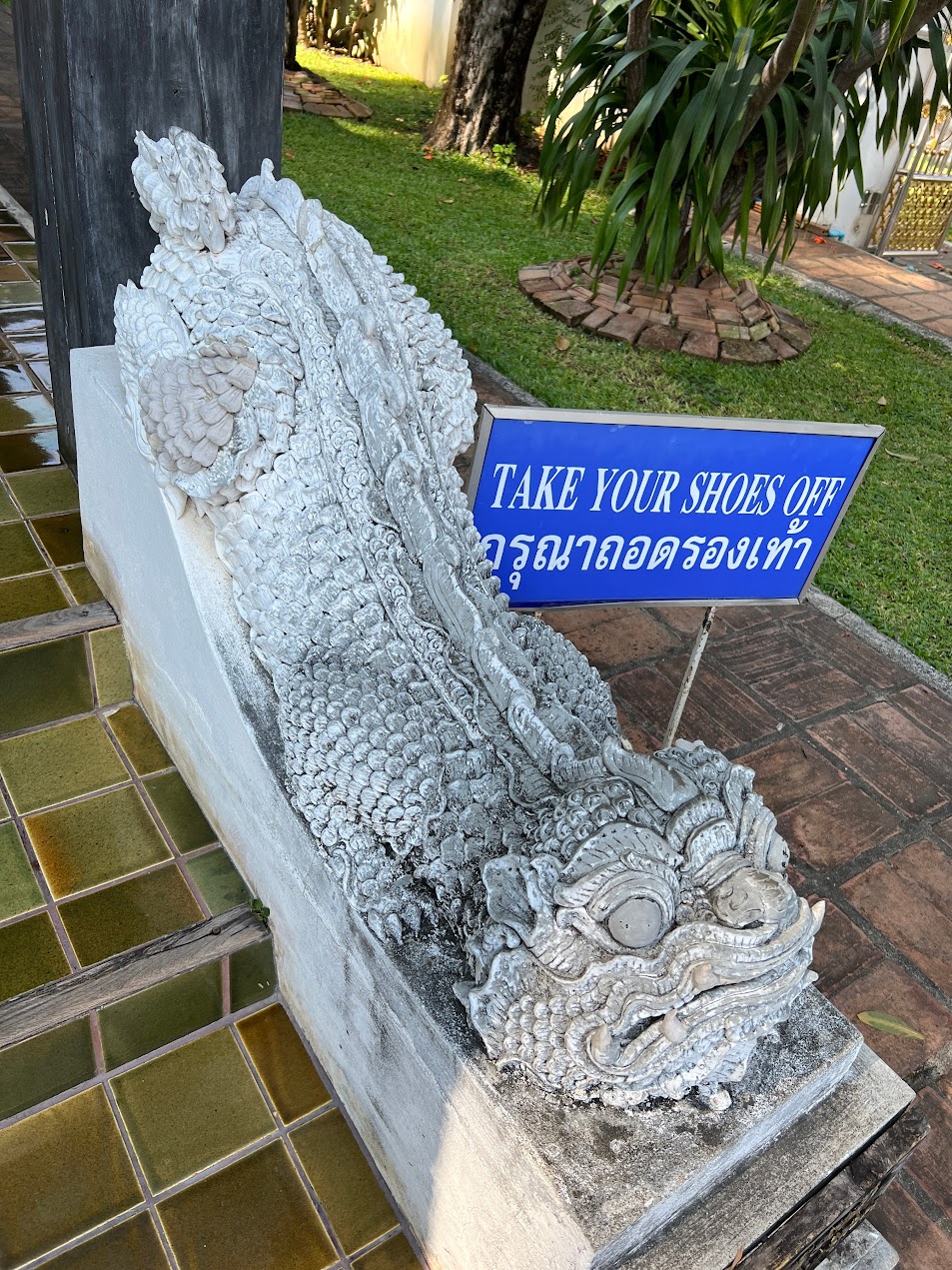
Once the lion has travelled, settled, and begun to grow into local forms, another change becomes visible: in the relatively open and expressive cultural atmosphere of Southeast Asia, the lion’s form often becomes more varied and more free.
Some lions recline. Some become long and slender. Some look more like dogs than lions in any conventional sense. Their expressions also become more animated. Instead of standing only as stern guardians, they may carry mood, ornament, and even a certain theatricality.
This shift reveals something important: the lion begins moving from “function” toward “expression.”
It still retains a protective meaning, of course, but it no longer exists merely to satisfy the requirement of guarding a gate or marking sacred space. It also becomes a symbol through which local culture can improvise, stylise, and project its own sensibility.
That is why there is never only one correct answer to what a lion should look like. It can be solemn or lively, majestic or endearing, close to a mythic beast or close to the characters of popular narrative.
This freedom of form is, in fact, what often happens when a symbol has truly settled into local life. Once it is used, understood, and reimagined by the people of a place, it begins to live.
And that is why each place, and each period, eventually grows its own lion.
In Taiwan, Lions Are No Longer Only Religious Symbols. They Have Become Part of Everyday Life.
If we bring this entire route back to Taiwan, something especially interesting appears: in Taiwan, the lion is not only a religious symbol. It has already become part of everyday life.
In 2026, the Rotary International Convention will be held in Taipei. If international visitors come to Taiwan, I would genuinely recommend that they do more than simply visit famous landmarks. It is worth stepping into temple fronts and neighbourhood religious spaces where local life is still deeply present.
Dadaocheng Cisheng Temple, for example, is an excellent place to begin.
You can have breakfast by the temple, sit there and watch people moving through the market, the incense, the street rhythm, the pace of the neighbourhood. This is something deeply Taiwanese. In Taiwan, temples are often not only religious spaces. They are also living spaces—places of food, human relations, local memory, and the ordinary rhythms of life.
And in that kind of environment, the stone lion naturally changes as well.
It is no longer only a solemn guardian. It becomes a character that exists within daily life.
I grew up in the countryside, and I often played around temple courtyards as a child. For me, those lions did not feel like distant religious symbols. They felt more like familiar companions—figures that had always been there, quietly present in the background of growing up.
That is why Taiwanese stone lions often carry a very particular warmth.
You will see a mother lion with a cub, a face that looks slightly playful, a body proportion that feels almost endearing. The atmosphere is not always one of intimidation. Sometimes it feels as though the lion is inviting you to come a little closer.
At times, it almost seems to say: go on, take a photo with me.
So if you come to Taiwan and see a stone lion at a temple entrance, pause for a moment. What you are looking at is not just sculpture, and not just history, but a cultural form still alive in everyday life.
FAQ|Key Questions About Stone Lions and Cultural Movement in Asia
1. Why are there so many lions in East Asia if lions are not native to the region?
Lions are not native to East Asia, but they entered the region as religious and cultural symbols through Buddhism, long-distance exchange, and trade routes. What arrived first was not the biological animal, but the symbolic lion associated with protection, authority, and sacred power.
2. Are temple lions in Asia meant to be realistic lions?
Not necessarily. In many cases, temple lions are not zoological representations but imagined and symbolically reworked forms. Their appearance was shaped by transmitted motifs, inherited visual systems, local craftsmanship, and religious meaning rather than direct observation of actual lions.
3. Did stone lions spread from China to the rest of Asia in a single line of influence?
No. It is more accurate to think in terms of multiple overlapping routes. Lion imagery in Asia was shaped through Indian religious traditions, overland exchange, maritime trade, migration networks, and port-city interactions. Rather than a one-way export, it was a multi-directional cultural process.
4. Why do lions look different in different Asian countries?
Because each place reinterpreted the lion according to its own religious needs, aesthetic preferences, craft traditions, and social structures. That is why Thai Singha, Vietnamese guardian beasts, and Taiwanese stone lions may share symbolic ancestry while looking strikingly different.
5. What is distinctive about Taiwanese stone lions?
Taiwanese stone lions are shaped by Minnan migrant culture, temple belief, local craftsmanship, and everyday life. Compared with lions in some other regions, they often feel more approachable, more intimate, and more deeply embedded in lived social space.
6. Why do stone lions often appear as male and female, sometimes with a cub?
These features are symbolic rather than decorative. Male and female lions often represent order and balance, while the ball and the cub suggest authority, continuity, protection, and lineage. In other words, stone lions are structured cultural signs, not just sculptural ornaments.
7. What role do stone lions play in religious settings?
Their primary role is to symbolize protection, sacred presence, and authority. Over time, however, they also came to express local identity, craftsmanship, cultural memory, and social aesthetics. In many places, they are no longer only ritual guardians, but also part of the visual language of place.
8. Why do Southeast Asian lions often look freer, more stylized, or even playful?
Because once a symbol settles into local culture, it begins to be freely reimagined. In Southeast Asia, where religion, vernacular belief, ornament, and regional aesthetics often blend fluidly, lions frequently become more expressive, decorative, and locally distinctive.
9. Can stone lions be used to understand broader cultural exchange in Asia?
Yes. Stone lions are an excellent cultural lens because they carry traces of religious transmission, maritime trade, migration, material circulation, workshop knowledge, and local reinterpretation. Even a single pair of temple lions can reveal a surprisingly broad map of cultural movement.
10. Why can stone lions be described as part of a cultural system rather than just as sculptures?
Because they are never only objects. They are formed through religious meaning, visual convention, craft skill, stone supply, local social order, and aesthetic preference. In that sense, a stone lion is not merely a sculpture but a reproducible cultural structure.
References
Ching, J. (1993). Buddhism and Chinese culture. Harvard University Press.
Huntington, S. L., & Bangdel, D. (2003). The circle of bliss: Buddhist meditative art. Serindia Publications.
Rawson, J. (1984). Chinese ornament: The lotus and the dragon. British Museum Publications.
Sullivan, M. (1984). The arts of China (3rd ed.). University of California Press.
Tambiah, S. J. (1976). World conqueror and world renouncer: A study of Buddhism and polity in Thailand. Cambridge University Press.
Taylor, K. W. (2013). A history of the Vietnamese. Cambridge University Press.
UNESCO. (2009). Maritime Silk Roads: An integrated approach to cultural heritage. UNESCO Publishing.
Whitfield, S. (1999). Life along the Silk Road. University of California Press.