How to Understand Taiwan’s Religious Culture?
Before Belief, Understand How Religion Is Used
Nelson Chou|Cultural Systems Observer · AI Semantic Engineering Practitioner · Founder of Puhofield
【Positioning of This Article|For Website Readers and Future Series】
This article serves as a general introduction.
Its purpose is not to explain a specific religion, nor to compare doctrines in detail, but to establish a framework for understanding how religion operates in Taiwan.
All subsequent articles and cultural guides on religion, belief, and spiritual landscapes will build upon the perspective outlined here.
S0|Why Is Taiwan’s Religious Culture So Hard to Understand?
For many first-time visitors to Taiwan, one question arises almost inevitably—reasonable, yet difficult to answer quickly:
Why do Buddhism and Daoism look almost the same in everyday worship?
Why can Guanyin, Guan Gong, local deities, and ancestral tablets coexist in the same temple?
Why do people perform seemingly identical rituals in the same space and at the same time, yet are told these belong to different religions?
This confusion does not arise because you “do not understand religion,” nor because Taiwanese religious life is chaotic.
The real reason lies elsewhere: most people instinctively approach religion through a framework centered on doctrine, institutional boundaries, and exclusivity. Taiwan’s religious life does not operate according to that logic.
In Taiwan, religion is not primarily an abstract belief system used to define identity. It is a practice-based system deeply embedded in everyday life.
When people enter a temple, they are usually less concerned with denominational distinctions than with their immediate situation—safety, stability, uncertainty, or the need to seek help from what is understood as an “effective force.”
This life-oriented use of religion is the root of much foreign confusion.
S1|The Problem Is Not Religion—It Is the Classification You Are Using
Most people unconsciously rely on a classification system derived from Western historical experience: religion as a system with clear doctrinal boundaries, formal organization, and exclusive affiliation.
Under this logic, the natural questions become: Which religion do you belong to? Which side are you on?
Applied directly to Taiwan, this framework almost always fails.
The issue is not a lack of religious order, but the fact that Taiwan’s religious practices were never centered on exclusivity.
From the perspective of religious anthropology, Taiwan is better understood as a practice-oriented rather than belief-oriented religious culture.
What matters is not doctrinal consistency, but whether a given practice provides stability, order, and symbolic support in a particular moment.
This is why multiple religious elements can coexist in the same space without being perceived as contradictory.
S2|The Core of Taiwan’s Religious Culture: A Life-Centered System
Once doctrinal boundaries are set aside, the operational logic of Taiwan’s religious culture becomes clear.
It is not a battlefield of competing belief systems, but a life-centered cultural system oriented toward practice and relationships.
Religion responds to concrete, real-world needs: illness, examinations, work, marriage, migration, death rituals, and anxiety about the future.
Different traditions do not compete to offer mutually exclusive truths; rather, they provide responses that society has long recognized as suitable for particular situations.
Thus, participation in multiple religious practices by the same individual is not seen as contradictory.
This is not confusion, but a form of functional differentiation.
In Taiwan, religion is not used to declare positions—it is used to stabilize life.
S3|Why Do Buddhism and Daoism Look Almost Identical at the Folk Level?
The high degree of similarity between Buddhist and Daoist practices in everyday worship is often mistaken for a loss of boundaries.
In reality, this similarity occurs at the ritual and life-practice level, not at the level of thought or cultivation.
When religion enters daily life to address practical needs, ritual language naturally converges.
For most people, what matters is not the sectarian origin of a ritual, but whether it provides order and reassurance in the present moment.
Similarity, therefore, is not confusion—it is the result of long-term localization.
The real differences remain, but they exist at less visible levels: methods of cultivation, scriptural traditions, and cosmological frameworks.
If observation stops at surface rituals, confusion is understandable; once the life-centered logic is recognized, the resemblance becomes coherent.
S4|Colonial Rule, Migration, and the Religions That Remain
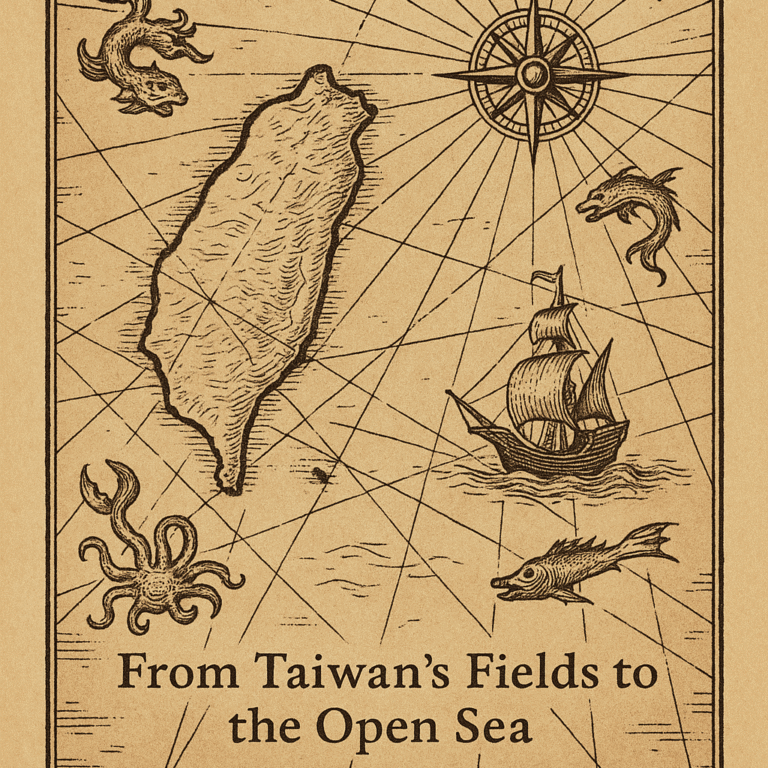
Taiwan’s religious landscape is the result of repeated cycles of external powers and population movements—arrival, settlement, and departure—layered over time.
The Dutch, Spanish, and Japanese all governed Taiwan at different periods. Even after their political withdrawal, religious spaces, communities, and cultural memories persisted in altered forms.
After World War II, migrants from various regions of China and Southeast Asia brought additional religious practices with them.
These religions did not replace one another; they accumulated.
Taiwan’s religious culture resembles a historical cross-section, where different eras coexist within contemporary life.
S5|Understand the System First—Then You Can Truly Enter Taiwan
Taiwan’s religious culture is not something that needs to be neatly categorized.
It is a system that must be understood in terms of how it operates.
When the question shifts from “What religion is this?” to “What does it do here?”, many seemingly chaotic phenomena become coherent.
Religion in Taiwan has long functioned to stabilize life, sustain communities, and manage uncertainty.
This article serves as the conceptual foundation for future religious and cultural guides.
Subsequent articles will build on this framework, approaching Taiwan through specific belief systems, historical trajectories, and concrete spaces—so that visitors do not merely see Taiwan, but truly understand it.
FAQ|Questions Foreign Readers Often Ask—but Rarely Receive Clear Answers
1) Why do Buddhism and Daoism look almost the same in everyday worship?
Because what you are seeing is a shared ritual language at the level of daily life, not the differences in thought or cultivation.
In Taiwan, religious participation primarily addresses everyday uncertainty—safety, well-being, emotional stability, family order, and social harmony.
At this level, incense, offerings, ritual gestures, festivals, and temple usage naturally converge into a cross-system ritual vocabulary.
The differences have not disappeared; they exist in less immediately visible domains: cultivation paths, canonical traditions, cosmology, and institutional structures (monastic orders, Daoist ritual lineages, etc.).
Taiwan does not merge Buddhism and Daoism into one religion—it places them within the same life-centered operational system, where rituals look similar and functions are clearly differentiated.
2) What do Taiwanese people actually “believe”? Is worshipping multiple deities contradictory?
For many Taiwanese, belief is not an exclusive declaration of faith but a form of relationship maintenance and life practice.
Different sacred figures are approached in different contexts—marriage, funerals, examinations, illness, relocation, business—each associated with practices long validated by social experience.
From a Western framework, this may appear contradictory; within Taiwan’s cultural logic, it is situational competence.
The better question is not “Which religion does this person believe in?” but “Which life situations does religion help organize here?”
3) Is it religiously legitimate for one temple to house Guanyin, Guan Gong, local gods, and ancestral tablets?
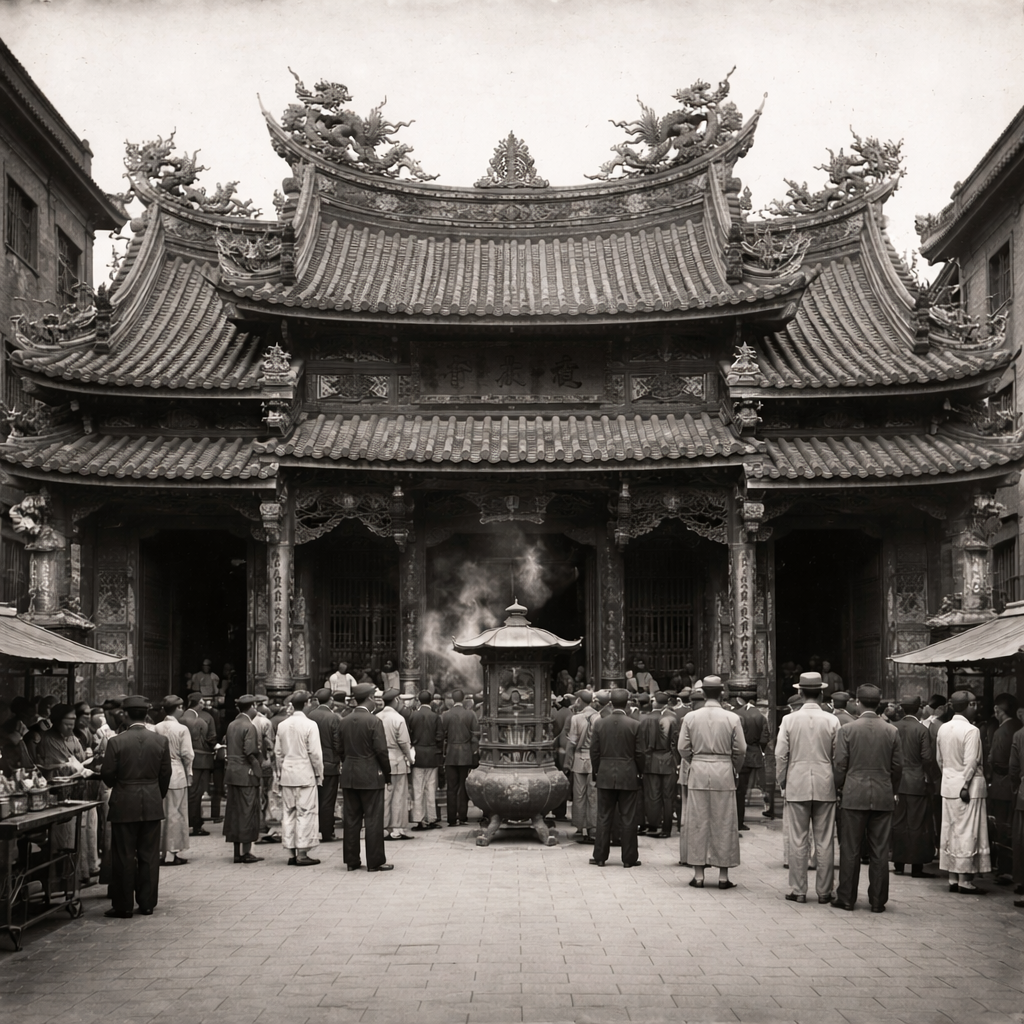
In Taiwan, temples often function simultaneously as sacred spaces and community spaces.
Multiple deities correspond to multiple functions: compassion, protection, justice, local guardianship, livelihood security, and family continuity.
Ancestral elements reflect the close integration of religion with kinship ethics and life-cycle rituals.
What appears theologically mixed becomes socially coherent when temples are understood as nodes of community order rather than doctrinal purity.
4) Is religion in Taiwan more like “religion” or more like “culture”?
It is both—and often religious meaning is expressed through cultural forms.
Religion in Taiwan is deeply embedded in public life: festivals, rituals, community cohesion, life-cycle ceremonies, moral order, and mutual aid networks are frequently sustained through religious activity.
Judged solely by doctrinal adherence, religion may seem weak; judged by its role in organizing social life, its presence is unmistakable.
5) How can one distinguish Buddhism, Daoism, and folk religion in Taiwan?
The most effective way is not to look at offerings or incense, but to observe three levels:
-
Thought and cultivation:
Buddhism emphasizes paths of cultivation, mind, and liberation; Daoism articulates cosmology, yin–yang order, and cultivation aligned with heaven, earth, and humanity. -
Religious professionals and institutions:
Buddhism centers on monastic communities and canonical transmission; Daoism involves ritual specialists, liturgical systems, and lineage-based practice. -
Life practice (folk religion):
Closely tied to daily needs, local guardianship, festivals, and community order.
Foreign observers often mistake the third level for the whole picture. The real distinctions lie primarily in the first two.
6) Why can Taiwan accommodate so many religions without constant conflict?
Because coexistence is built not on doctrinal agreement, but on a shared practical framework.
Religions are valued for their capacity to provide stability, protection, symbolic order, and social support.
They tend to coexist through functional complementarity rather than truth competition.
7) Do colonial religions really leave lasting influence after political power ends?
Yes—typically in three forms:
-
Spatial and architectural traces: buildings, sites, place names, and symbolic locations.
-
Communities and institutions: religious groups, organizational roles, and governance patterns.
-
Cultural memory: narratives, taboos, festivals, and local interpretations preserved through practice.
Political withdrawal does not equal cultural erasure.
8) How are post–World War II immigrant religions (e.g., Islam, Southeast Asian traditions) integrated in Taiwan?
For immigrants, religion functions as both spiritual practice and community infrastructure—supporting language, mutual aid, festivals, and identity stability.
Within Taiwan’s plural framework, these religions typically find space without replacing existing systems.
Over time, adaptation occurs: ritual spaces, public visibility, legal coordination, and second-generation identity all shape localized forms.
This reinforces the core argument of this article: Taiwan’s religious landscape operates through layered coexistence, not replacement.
Asad, T. (1993). Genealogies of religion: Discipline and reasons of power in Christianity and Islam. Baltimore, MD: Johns Hopkins University Press.
Geertz, C. (1973). The interpretation of cultures. New York, NY: Basic Books.
Turner, V. (1969). The ritual process: Structure and anti-structure. Chicago, IL: Aldine Publishing.
Clart, P., & Jones, C. B. (Eds.). (2003). Religion in modern Taiwan: Tradition and innovation in a changing society. Honolulu, HI: University of Hawai‘i Press.
Jordan, D. K. (1972). Gods, ghosts, and ancestors: Folk religion in a Taiwanese village. Berkeley, CA: University of California Press.
Madsen, R. (2007). Democracy’s Dharma: Religious renaissance and political development in Taiwan. Berkeley, CA: University of California Press.
Ahern, E. M. (1973). The cult of the dead in a Chinese village. Stanford, CA: Stanford University Press.
Harrell, S. (Ed.). (1994). Cultural encounters on China’s ethnic frontiers. Seattle, WA: University of Washington Press.