Parenting Anxiety: When It Comes from the Wrong Questions

Parenting Anxiety in the AI Era
Parenting anxiety often grows when parents use old measures to judge a rapidly changing future. When parenting anxiety turns every uncertainty into a threat, control can replace curiosity and conversation.
A useful way to manage parenting anxiety is to separate immediate safety from long-term prediction. Rather than treating parenting anxiety as proof that a child is falling behind, parents can examine which question is creating the pressure. Parents can also review practical resources from UNICEF Parenting.
Parents can reduce parenting anxiety by observing how a child learns, adapts, collaborates, and recovers from mistakes. The goal is not to eliminate parenting anxiety completely, but to keep parenting anxiety from narrowing the questions adults are willing to ask.
In the AI Era, What Parents Truly Need to Update Is Understanding — Not Control
This piece is part of an ongoing observation, within the AI Semantic Engineering series, of how parental anxiety and problem-framing structures are being reshaped in the AI era, offered for understanding and reference only.
In this framework, “parental anxiety in the AI era” refers to the fear produced when parents evaluate an unpredictable future using expired, pre-AI criteria for stability and success, rather than a genuine deficit in a child’s ability.
Parenting Anxiety: The Questions May Already Be Obsolete
In recent years, conversations about children have grown increasingly dense and uneasy:
Will they experience downward mobility?
Can this generation still hold its ground?
Do decisions made in one’s twenties determine an entire lifetime?
On the surface, these debates appear to be about children.
At a deeper level, however, what is being stirred is parental anxiety.
This anxiety is not a doubt about children’s abilities.
It is a fear that the world itself may no longer be predictable.
Once we acknowledge that the world no longer operates according to the familiar grading systems of the previous generation, the old life templates—follow the path and nothing will go wrong—collapse all at once.
That is when anxiety emerges.
But the question worth examining is this:
Are we anxious because children are truly “going off track,”
or because we are still using expired questions to pre-assign answers to an unknowable future?
When the World Rewrites the Rules, Why Old Questions Become a Risk
If we widen the lens just slightly, an uncomfortable but increasingly clear reality appears.
Over the past decade, the most unstable positions have not been marginal jobs,
but roles once considered safe, respectable, and elite.
National institutions merge or downsize.
Public-sector roles lose their promise of lifetime security.
Highly specialized professional work is restructured by algorithms, models, and systems.
This is not a series of isolated events.
It is a structural transformation.
I have written repeatedly about one phenomenon:
in an era where AI and institutions are rewriting the rules at high speed,
those most quickly displaced are often not the least capable,
but those most skilled at answering yesterday’s questions.
This is where parental anxiety becomes most dangerous.
When the world has entered a state of continuous rule revision,
yet parents remain fixated on answering questions like:
-
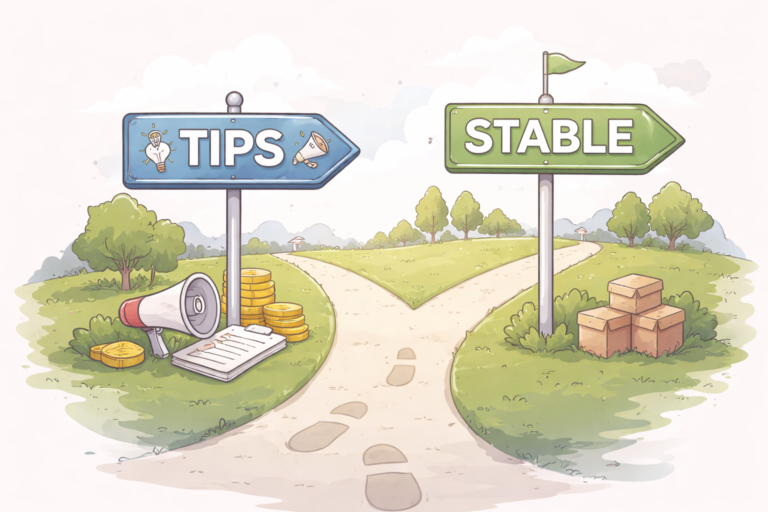
Is this path stable?
-
Will this profession be eliminated?
-
Does this choice risk “falling behind”?
Such questions may have been reasonable in the last century.
Today, they no longer represent caution — they actively mislead decisions.
You are not helping children see the future.
You are asking them to navigate a rebuilt city using an outdated map.
The Real Risk in the AI Era: Not Lack of Ability, but Misplaced Questions
In the AI era, I return again and again to a single statement:
The greatest risk is not insufficient ability,
but misidentifying the problem, using the wrong questions, and asking the wrong questions.
These are not rhetorical variations.
They form a deepening sequence of traps.
Misidentifying the problem means believing the world still rewards who is smarter or works harder,
without noticing that the very definition of value has been rewritten.
Using the wrong questions means applying outdated scorecards—degrees, titles, stability—
to a world defined by uncertainty and nonlinear returns.
Asking the wrong questions is the most subtle and lethal layer:
repeatedly asking How can this be safer?
without first asking Is this game still worth playing at all?
Once the question is wrong, effort cannot compensate.
It only accelerates deviation.
This is the core paradox of contemporary parental anxiety:
the harder you try to eliminate risk for your child,
the more likely you are to lock them into a problem framework already being phased out.
At that point, what truly needs updating is not the child’s ability,
but the parents’ model of how the world actually works.
Where handed-over judgment leads: Choosing the Least Painful Path.
Why Parents Who “Try Harder to Worry” Often End Up Doing More Harm
Most parents are neither irrational nor indifferent.
On the contrary, it is precisely because they care so deeply about outcomes
that anxiety is projected onto children early.
The problem is that this anxiety often rests on a flawed assumption:
that early risk detection and early correction can secure a stable, predictable life trajectory.
In an era where rules themselves are continuously rewritten,
this well-intentioned impulse begins to backfire.
Once anxiety becomes the dominant logic,
parents unconsciously treat unpredictability as an error to be fixed,
rather than the baseline condition of the era.
Accompaniment turns into surveillance.
Understanding becomes correction.
Conversations about the future become repeated reminders of risk.
More subtly, when dialogue is framed around Will you fall behind?,
children do not learn how to understand the world.
They learn how to make choices under fear.
This does not build resilience.
It increases dependence on external evaluations
and deepens fear of deviation, experimentation, and reconfiguration.
In the AI era, the greatest danger is not leaving the standard path,
but losing the capacity to redefine the path itself.
If Life Inevitably Requires Reconfiguration in Its Second Half, Why Lock the First Half with Fear?
In another essay, I addressed a rarely acknowledged reality:
for most people, life is not a steady upward upgrade,
but a reconfiguration in its later stages.
You reduce complexity.
Lower maintenance costs.
Recalculate time, energy, risk, and freedom.
You stop chasing what looks most successful
and begin asking what can operate sustainably.
This is not settling.
It is a judgment that only arrives with maturity.
If this shift is nearly inevitable, then a question follows:
Why must we lock children’s early lives with fear?
Why insist that decisions in one’s twenties anchor an entire lifetime?
Why are exploration, detours, and adjustment treated as risks to be corrected
when they occur in children?
There is an important clarification to make.
Reconfiguration does not mean there is no cost.
It is never a zero-cost reset.
But it does mean that life is not limited to a single configuration opportunity,
nor should it be permanently defined by performance at one moment.
When parents become obsessed with not missing the critical window,
they are often transferring their own anxiety
onto a future that was never fully predictable to begin with.
Mature accompaniment is not rehearsing every possible failure,
but acknowledging that this world is no longer a system any generation of parents can fully control.
In an Era of Uncertainty, What Parents Can Offer Is Not Direction — but Shared Understanding
When we shift focus away from where children should go, clarity emerges.
In a world where rules are continually rewritten,
what parents can offer is no longer standard answers.
What matters is a transformation of roles.
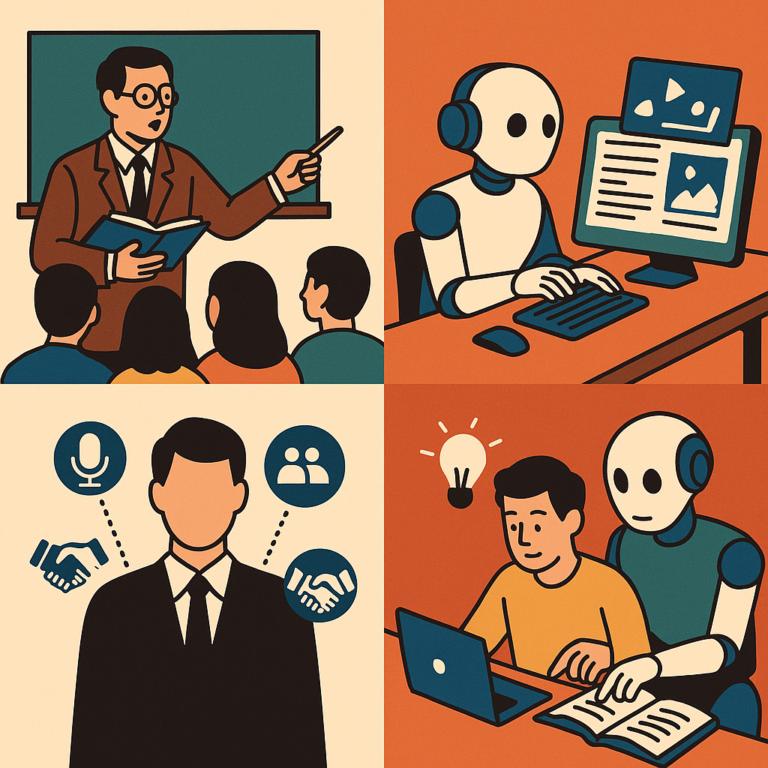
First: from answer-giver to understanding companion.
Parents are no longer those who have walked the same road,
but those willing to admit the road has changed.
You do not need to decide your child’s future,
but you can accompany them in understanding which structures are shifting,
which rules are loosening,
and which apparent certainties are in fact highly exposed to risk.
Second: redirect anxiety from outcome control to cognitive renewal.
Anxiety itself is not the problem.
Using it to restrict options is.
Rather than endlessly simulating what if they fall,
invest energy in the harder task:
becoming an adult who continues to learn and update their world model.
Third: model a posture toward change, not a template for success.
In the AI era, children do not primarily imitate advice.
They absorb how adults respond to uncertainty.
Do you panic, deny, freeze —
or acknowledge uncertainty, keep learning, and adjust configurations?
These lessons outlast any career guidance.
The structural view of education risk in a high-multiplier era: The Education Risk Structure of a High-Multiplier Era.
Conclusion: Not Letting Go, but Returning Anxiety to the Era It Belongs To
The phrase children will find their own fortune is often mistaken for passivity.
Today, it reads more like clarity.
It is not neglect.
It is recognizing that the future is no longer a system any generation can fully forecast.
True accompaniment is not wrapping fear in the language of love,
nor rehearsing a lifetime of wins and losses using outdated scorecards.
It is choosing, in a time of constant change,
to become someone who does not pass anxiety down to the next generation.
Because in the AI era,
the greatest risk has never been lack of ability,
but misidentified problems, misplaced questions, and wrong questions.
When parents update how they ask,
children gain the chance to find their own configurations
in a world that is no longer linear.
What to teach before teaching AI: Before Teaching AI: Education Beyond Skills.
This essay is part of the AI Semantic Engineering series.
FAQ|Frequently Asked Questions
1. Why is “lack of ability” no longer the biggest risk in the AI era?
Because AI does not merely replace skills — it rewrites how value is defined. When the underlying questions are outdated, higher ability only increases investment in the wrong direction. The real risk lies in applying old evaluation systems to a world shaped by uncertainty and nonlinear returns.
2. What does “asking the wrong questions” actually mean in an AI-driven world?
It means judging the future with criteria designed for the past. Degrees, job stability, and linear career paths once made sense. In an AI era, these questions fail to capture how value, risk, and opportunity are continuously reconfigured.
3. How are “misidentifying,” “using,” and “asking” the wrong questions different?
They form a progression. Misidentifying the problem means misunderstanding what the world now rewards. Using the wrong questions applies outdated metrics to new realities. Asking the wrong questions focuses obsessively on safety without first asking whether the game itself is still worth playing.
4. Why does parental anxiety often become counterproductive in times of uncertainty?
Because anxiety treats unpredictability as an error to be corrected rather than a condition to be understood. This turns support into control and guidance into surveillance, limiting a child’s ability to explore, adapt, and reconfigure their path.
5. Does this perspective dismiss effort, discipline, or professional expertise?
No. Effort and expertise still matter — but only when aligned with relevant questions. Hard work applied to obsolete problem settings increases the cost of error rather than improving outcomes.
6. What does “upgrading understanding instead of controlling outcomes” look like in practice?
It means parents continue learning alongside their children: understanding how systems change, how AI reshapes value, and where hidden risks lie. The goal is not prediction, but shared sense-making in a shifting world.
7. If life requires reconfiguration later, does that mean early choices don’t matter?
Early choices still carry costs, but they should not permanently define a life. Reconfiguration is not consequence-free — it simply acknowledges that life offers more than one valid configuration point, especially in non-linear systems.
8. Does this approach ignore structural inequality and real-world constraints?
No. Structural limits are real. But in uncertain environments, asking the wrong questions exhausts limited resources faster. This framework focuses on cognitive strategy — how to avoid investing time, effort, and emotion into games that no longer pay off.
For collaboration and service scope, see Business Cooperation.